Retiring teacher, coach urges Colony grads to ‘find their 68’
By Jeremiah Bartz Frontiersman.com A football coach using a hockey reference as the centerpiece for his keynote address may


MAT-SU — Mat-Su Career and Technical High School has always been a relatively small school with 425 full-time students and about 100 part-time students. Career Tech received $16.1 million, the third largest allocation last year for schools in the district, to fund an addition to the school.
The first thing on principal Mark Okeson’s mind was trying to keep the small-school feel as it transitions into being a more traditionally sized high school.
“It’s what makes us unique,” he said.
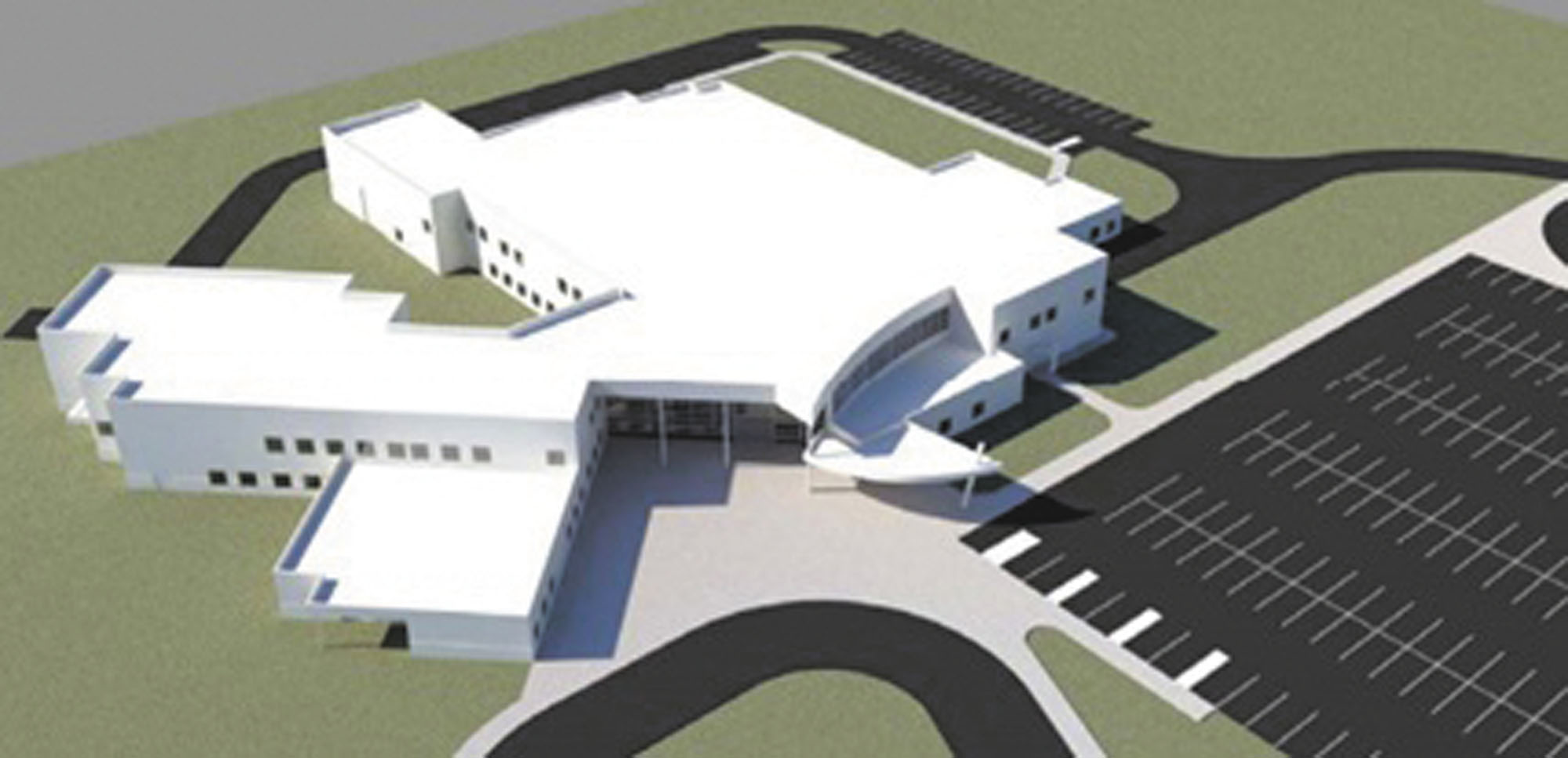
But with more room — 33,000 square feet, to be exact — comes the potential to house a larger student body. An estimated 250 more full-time students can enroll once the addition is complete in 2015. Changes are already in the works to accommodate this influx, including more parking spaces and moving and expansion of the bus and parent pickup and drop-off areas.
McCool Carlson Green, the architect firm that designed the original school, is back to add on to its award-winning design. The School Building Design Committee — which includes Ray DePriest, MSBSD director for career and technical education; Don Carney, MSBSD assistant director for OPM/facilities coordinator; Mark Okeson, Career Tech principal; and Patricia Zugg, MSBSD career and technical education instructor, among others — has worked closely with the McCool Carlson Green team to come up with the best design possible.
Plans include keeping much of the exterior and interior design concepts the same as the established building. The existing south glass wall and garage door will pivot over to the building addition. The concept of a visible working building, with exposed parts of the building, including wiring, cabling and beams, will continue on into the addition to provide the same continuous learning experience.
New features also have been considered for the addition. A diagonal orientation of the addition set at an angle to the main part of the school will prevent any blocking of sunlight to existing classrooms. An open, two-story media/exchange center is to be directly connected and open to the existing main building entry. It will house the school’s shared print and electronic resources and allow for collaboration in meetings and research. A multipurpose testing center is planned to be located near the media center. Its use will range from hosting testing activities to small lecture and classroom functions. As it is adjoining two flex areas, this testing center can be expanded to allow occupancy of up to 100 students.
Along with the open media center, there are also proposed informal learning areas. The hallways and circulation spaces are larger than average to allow for studying outside the formal classroom. These areas include nooks under and around the open stairs and the bridge that will connect the existing and new addition at the second level.
Also being developed are three new pathways to add to the existing five: Tourism, Health, Business, Building and Fitness. A Human Service Pathway is intended to encompass careers in law enforcement, education, EMT training and counseling. Emphasis on dental and veterinary care is also being considered.
The Transportation Pathway is planned to comprise three areas of emphasis: aviation, diesel power generation and process technology. These three areas will focus on small plane construction and repair, hydraulics and diesel engine repair, monitoring and controlling process systems, and learning assistance in maintenance and coordinating repairs. Lab spaces for each of these subjects are intended.
A Natural Resources Pathway will examine careers related to managing natural resources in Alaska. Traditional and outdoor skill building activities will allow students to have a chance to study soil and water conservation, wildlife and fisheries management, forestry and recreation. A multi-purpose classroom, natural resources lab, science lab, prep room and flexible instruction space will all be included in the addition for use in this pathway.
Years of time, planning, discussion and collaboration have brought us to this point. The community has agreed that a school as unique as this needs to be further invested in. It is in the architect’s and the School Building Design Committee’s best interest to preserve the exceptionality that the community has come to know and expect from Career Tech. With this addition, not only will the school improve, but the whole community as well.
Anita Laulainen is a senior at Mat-Su Career and Technical High School.

By Jeremiah Bartz Frontiersman.com A football coach using a hockey reference as the centerpiece for his keynote address may

By Katie Stavick Frontiersman.com The next generation of leaders took flight this week as the Houston High School Class

By Kyle Wilkinson For the Frontiersman Keynote speaker and Carry the Cure President Bill Pagaran’s words boomed through the

By Jeremiah Bartz Frontiersman.com The community of Palmer is known for a couple of things. At or near the