Retiring teacher, coach urges Colony grads to ‘find their 68’
By Jeremiah Bartz Frontiersman.com A football coach using a hockey reference as the centerpiece for his keynote address may


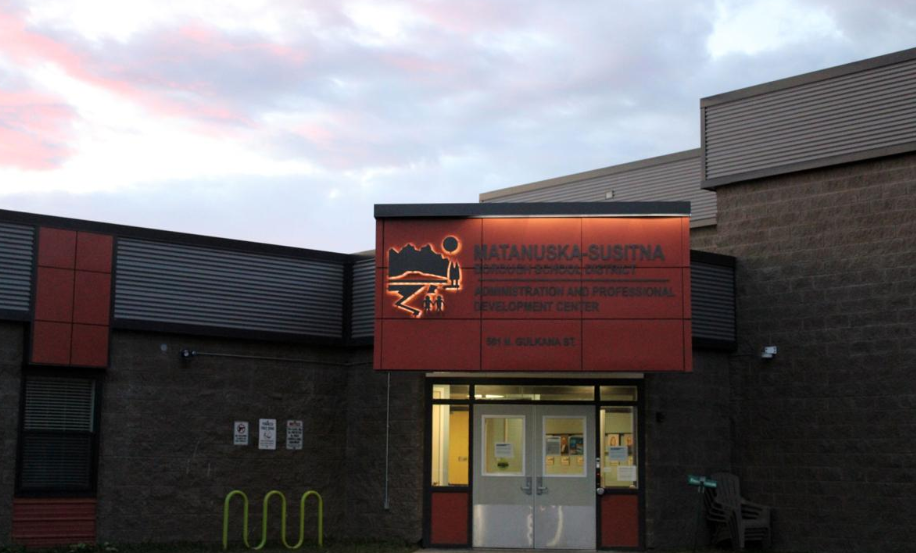
Students at the Matanuska-Susitna Borough School District entered their winter break last week, marking the halfway point for the school year. While students begin counting down the days until spring, then summer break, others are taking stock of the school year so far. Before the holiday break commenced, MSBSD Superintendent Dr. Randy Trani discussed the school year thus far, along with progress in his Long-Term Strategic Plan, which he presented during the MSBSD School Board meeting on December 14.
Today, part 2 looks at student achievement, capital planning, and his outlook for the future of MSBSD.
A continued source of pride for the superintendent has been student achievement. MSBSD has seen an increase in students in advanced courses and 8th grade students taking Algebra 1.
“I’ve been very happy to see an increase in enrollment in AP classes,
“We have the highest graduation rate so far,” he says.
The MSBSD boasted a four-year cohort spring of 2021 graduation rate of 84 percent. That’s also above the Alaska state average of 78 percent.
One thing that Dr. Trani credits for the improved graduation rates is the boost in Career and Technical Education (CTE) courses offered throughout the district.
“It is known that there is increase in graduation rates when students take CTE courses,” Dr. Trani states, a statistic backed up by data from the Department of Education.
According to the DoE, high school students who were CTE concentrators graduated from high school at higher rates than their non-concentrator peers, with an 8% increase in graduation rates.
“It’s fantastic we have moved ahead of the other big four (districts) and the state average for graduation,” Dr. Trani says, “but there’s more to be done to reach those who aren’t graduating.”
Another aspect of the long-term strategic plan that is making progress is the capital planning. There has been a lot of discussion about funding for a new Mat-Su Central school.
“I have a great feeling about everything. We have design, we have about 60% funded, so the potential is there.”
Dr. Trani says that improvements and building for other charter schools-Academy, American, and Birchtree-are in progress, with the hope of a purse state match for the funding.
“We had a great meeting with Valley legislators, and ideas were well-received, but really anything could happen in Juneau.”
There are a few obstacles that Dr. Trani sees, the biggest being the struggle to hire and retain teachers.
“We are lucky to get some teachers that will come in for a few years, but then they leave,” he says, pointing to the current retirement system that doesn’t offer an incentive to retain new teachers.
To put into some context, in the MSBSD, there are 48 schools that are staffed by nearly 1,200 teachers. While turnover is somewhere in the 10% range, far below the rural teacher turnover range of 50%, recruiting and hiring up to 120 teachers and professional staff a year is a big financial burden. It can cost up to $25,000 in direct expense for a school district to recruit and hire new teacher in Alaska, according to University of Alaska researchers.
Right now, the Teacher Retirement System is 100% vested in employee contributions immediately. Vested in employer contributions based on the 25% after 2 years of service, 50% after 3 years, 75% after 4 years, and 100% after 5 years.
Under the old retirement system, teachers were vested after 8 years of employment. Additionally, the old system provided for adjustments in cost of living allowances and inflation protection for Post-Retirement pension adjustments.
“We need to keep people invested and engaged in staying in Alaska. The old retirement system kept teachers invested, and we need something long-term like that from the state.”
On the other end of the spectrum is gaining new teachers. One solution that Dr. Trani has been promoting is an agreement with Chadron State College in Chadron, Nebraska, a small liberal arts college in western Nebraska with a long history as a teaching college.
Graduates of Mat-Su high schools interested in pursuing a teaching career can enroll in Chadron’s 4-year online “Academy” degree program. Students complete the course work remotely from home, and are able to work part-time as a teaching aide in Mat-Su schools, gaining practical class experience.
How does Dr. Trani feel about the progress the district has made on the long-term strategic plans?
“I’m very happy. There’s been a big shift in education and we are offering the most career and technical courses we’ve ever had.
As for how the superintendent is feeling about the school year so far, he says:
“Regarding education, things are great. I like where we are, even though there’s always room to improve. We’ve had challenges with the weather and bussing, but overall things look good.” He especially wants to give a shout out to the MSBSD employees.
“I want to thank the employees, particularly the maintenance department right now, for their continued hard work. And I want to thank the parents for being patient as we work the bugs out of the bussing, remote learning, and everything else. I know it’s been trying on them.”

By Jeremiah Bartz Frontiersman.com A football coach using a hockey reference as the centerpiece for his keynote address may

Frontiersman.com With its headquarters in Wasilla, the Frontiersman has been a primary source of news for the Matanuska-Susitna

By Katie Stavick Frontiersman.com The next generation of leaders took flight this week as the Houston High School Class

By Kyle Wilkinson For the Frontiersman Keynote speaker and Carry the Cure President Bill Pagaran’s words boomed through the