Retiring teacher, coach urges Colony grads to ‘find their 68’
By Jeremiah Bartz Frontiersman.com A football coach using a hockey reference as the centerpiece for his keynote address may


PALMER — Personnel changes, new lessees, and the settlement of a federal complaint have things at the Palmer Municipal Airport looking up, officials say.
The federal complaint dealt with land use practices around the airport and dated to 2009. The city settled the complaint by agreeing to pay $857,000 in fines. The settlement avoided potential payments exceeding $1 million, city officials said at the time.
The new personnel has actually been on the job for a while. The Palmer City Council recently voted unanimously to move Jeffrey Combs, the former part-time airport superintendent, into a full-time job. The council justified the expanded position by citing additional business there. The city added Combs to the staff last year to reduce the workload on city Public Safety Director Jon Owen.
The two potential lessees are considering signing to take up two of the facility’s larger lots.
The airport boasts the Valley’s longest runway — 6,008 feet, long enough to accommodate C-130s and other large cargo planes employed by the Alaska Division of Forestry.
Officials are also seeking to participate in a pilot program for the construction of a standardized helipad design, which, if accepted, could become the first such pad at an airport, Combs said. Three previously constructed helipads of the design are located next to hospitals.
“They’re looking for a place with adverse weather and low light,” he said. “This seems like a good fit.”
Combs is excited about the prospects at the airport. A veteran of both the US Air Force and Army, he was a combat helicopter pilot in Iraq and Afghanistan, and worked for two years at UPS before accepting the superintendent position part time in 2013.
“I told the city manager and I told the council members and the mayor that more than anything else, I wanted the extra time to put into the airport,” he said. “Coming through, getting hired after the resolution with the DOJ, this corrective action plan, the FAA, the City Manager and myself have formed a really good working relationship.”
Combs relocated to Alaska in 2011 because the weather reports seemed promising.
“Most of the places I was stationed — other than Korea — were just unpleasant and hot,” he said. “Of course, the coup de grace was my introduction to Kuwait. I was at the port in Kuwait city, and it was 135 degrees, and you felt every bit of it.”
Managing the airport’s resurfacing, and the placement of a collapsible, or frangible, fence separating the end of the airport runway from the adjacent golf course are among the top tasks Combs will face in coming weeks. The city is also working on an airport master plan, with several public meetings to be held before the plan is finally released, tentatively set for June, Combs said.
The arrangement is a compromise designed to allow the golf course, which benefits from being airport-adjacent, to remain untouched while still allowing for safety, city officials say.
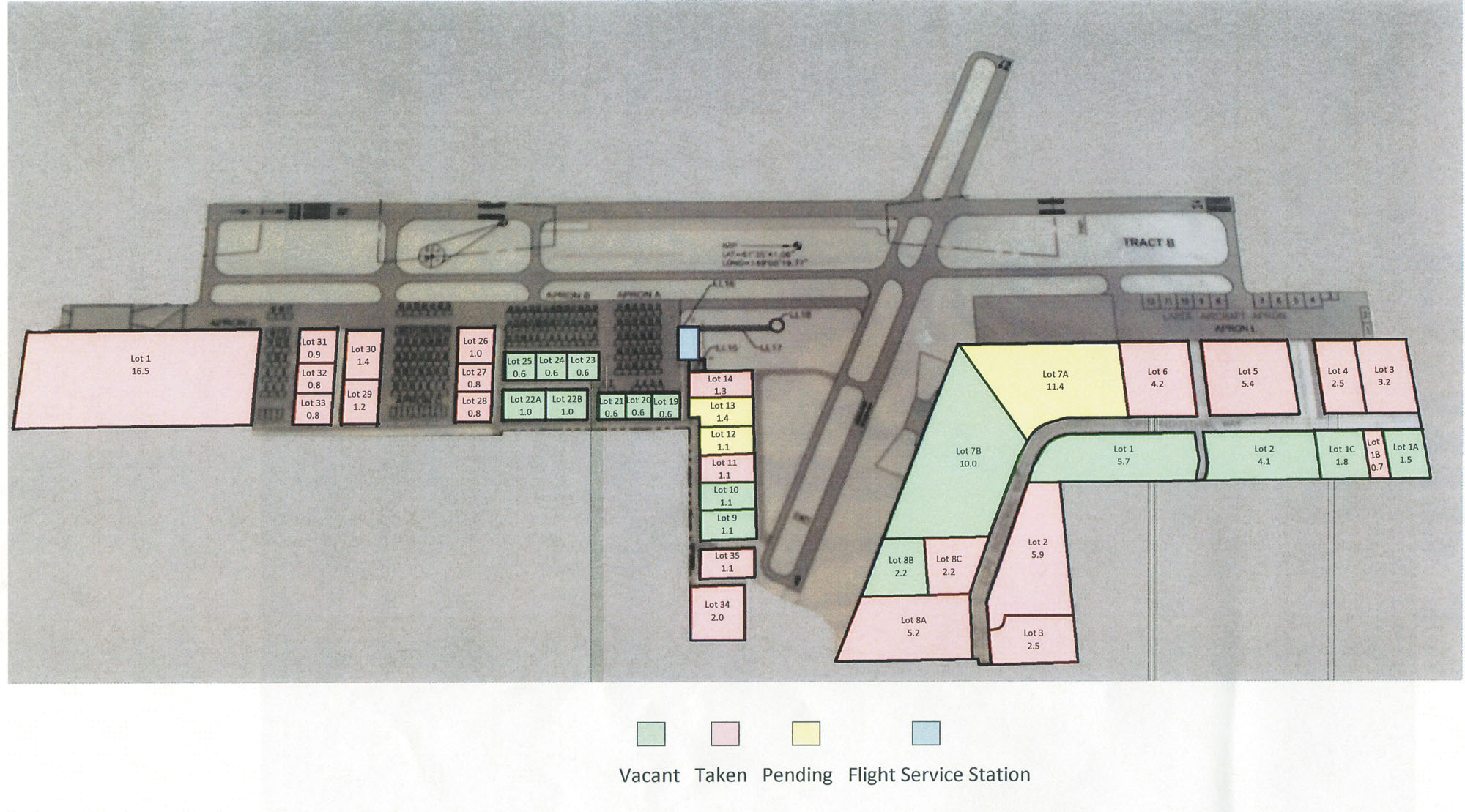
While Forestry will remain the largest tenant for the moment, with 16.5 acres, the acreage for potential tenant Alaska Fuel Haulers combined with another lease for a skydiving outfit, totals 12.8 acres altogether. The fuel hauling lease would turn Lot 7A, the second-largest undivided lot at the airport (Hinchenbrook Aviation maintains three lots combining for 11.1 acres), into a revenue generator worth about slightly more than $450,000 per year, according to figures provided by Combs. The third-largest undivided lot — 5.7-acres — remains vacant.
Alaska Air Fuel, which fields a fleet of DC-4 planes, could turn Palmer into something of an unofficial hub for winter aviation. The business specializes in flying planeloads of heating oil to isolated Alaskan villages in the winter months.
The relocation to Palmer just made sense, said Chris Houchen, Alaska Air Fuel’s owner. He lives in the area, and so do many of his employees.
“We’re in the fuel hauling business,” he said. “Palmer works for me. I’ve been out here for 37 years.”
While the geographic location makes sense, because it eliminates travel time to another airport, dealing with a government can be trying, Houchen said.
“We’ve had a lot of meetings with the city of Palmer making sure everything’s copacetic,” he said. “It’s time-consuming. We should have had a lease signed a year ago.”
However, Houchen said he understands the difficulty officials face.
“That’s the decision-making process,” he said. “They’re just trying to make sure they’ve got all their bases covered.”
Another possible incoming business could boost airport use and commerce in the area more generally. Alaska Skydive Center struggled to find an airport willing to accommodate them, said drop zone owner Shannon Jardine.
“I looked at any field I could find on Google Maps,” he said. “I didn’t have this as the best one.”
Some airports would struggle to reach a decision others simply said “we don’t want you,” Jardine recalled.
“Sometimes they think we’re a bunch of yahoos,” he said. “It’s a dangerous activity, people think. It’s actually safer than flying, safer than driving. The times we get in trouble is when the planes run into trouble taking off.”
Its first year in operation, the center provided 300 tandem dives, which is the introductory level, and for many skydivers, the end point, Jardine said. However, the business sometimes has flights comprised only of dedicated jumpers known informally as “fun jumpers,” according to Jardine.
“Not all takeoffs and landings have a tandem jump,” he said. “Sometimes it’s just fun jumpers.”
The center managed to run two planes steadily last year, Jardine said.
Skydives from Palmer feature world-class scenery, Jardine said.
“It’s the absolute beautiful-est spot,” he quipped.
The business has received approval from the airport advisory commission. Combs hopes they’ll stick around.
“We hope to see them grow,” he said. “That’s one of our hopes for growth out here. People come from all over the world to jump here.”
“One of the things that general aviation airports need to help grow is its niche,” Combs added. “If you have the only skydiving center in Alaska, that’s a draw.”
That draw could turn the airport into a source of revenue for area businesses, according to Combs.
“For every person that comes out to jump and get that on their bucket list, they bring two or three relatives with them,” he said.
While the airport might have a potential climb in front of it, commercial aviation is still a long way off.
“That’s one of the things that gets asked of me often by the public,” he said.
While the runway could potentially accommodate planes the size of commercial jetliners, approaches for the runways aren’t suited to that, Combs said. Some charter flights use the airport to ferry North Slope workers north.
“It’s not going to really ever be cost-efficient to hop a plane out of here to Anchorage,” he said. “It’s just not.”
However, the Palmer airport could eventually accommodate a smaller terminal, like regional carrier Raven (which currently operates a maintenance hangar on the territory), though that would be unlikely to happen within the next five or ten years, according to Combs.
“Living in the Valley I’ve got a lot of folks that tell me ‘I don’t care if it costs an extra $100, I’d rather fly out of here to go to Fairbanks than go into Anchorage.’”
“Maybe down the road,” Combs added. “That will come out in the master plan as a possible recommendation.”
Contact Brian O’Connor at 352-2269 or brian.oconnor@frontiersman.com.

By Jeremiah Bartz Frontiersman.com A football coach using a hockey reference as the centerpiece for his keynote address may

Frontiersman.com With its headquarters in Wasilla, the Frontiersman has been a primary source of news for the Matanuska-Susitna

By Katie Stavick Frontiersman.com The next generation of leaders took flight this week as the Houston High School Class

By Kyle Wilkinson For the Frontiersman Keynote speaker and Carry the Cure President Bill Pagaran’s words boomed through the