Retiring teacher, coach urges Colony grads to ‘find their 68’
By Jeremiah Bartz Frontiersman.com A football coach using a hockey reference as the centerpiece for his keynote address may


BIG LAKE — Where can you find sunshine, sailboats and salmon this summer?
If you answered “Big Lake,” the home of the Alaska Sailing Club, you’d be right.
But how did the salmon get there? Where did they come from?
For those with a love for dipnetting, the answers to those questions may come quickly.
As Mat-Su residents, many of us have dipnetted for salmon and found it an experience we will never forget. Covered in silty, sticky mud and muck, standing shoulder to shoulder with the rest of the Valley, and envying those with four wheelers while patiently waiting for a red to swim into your net — that sounds about right.
In the Mat-Su, Fish Creek is our spot for this messy and exciting hobby, celebrated for its 30-minute ride down Knik-Goose Bay Road (rather than a four-hour drive and days-long trip to the other personal use fisheries in Southcentral).
But what most people don’t realize is that any salmon caught in Fish Creek is just passing through, likely destined for the shores of Big Lake to spawn.
The lake itself is 4.5-miles long, covers 2,495 acres, and has 26 miles of shoreline, most of which offers extremely valuable spawning habitat for sockeye and coho salmon. Big Lake is fed by a massive shoreline wetland complex and through groundwater seepage from more than 350 lakes, providing a constant supply of fresh water to the lake and the spawning beds along the shoreline. After the salmons’ eggs hatch, this network of lakes and shoreline wetlands with groundwater upwellings provides rearing and overwintering habitat for all the baby salmon born in Big Lake.
Unfortunately, the threats to water quality and to salmon production in the Big Lake watershed (and ultimately the Fish Creek personal use fishery) are many. The salmon suffer habitat loss through shoreline and wetland development around the lake; hydrocarbon pollution from boats; undersized and perched culverts on tributary streams and wetlands; stormwater runoff from roadways, paved driveways, parking areas and roofs; poorly maintained septic systems; and invasive northern pike (not native to Southcentral Alaska).
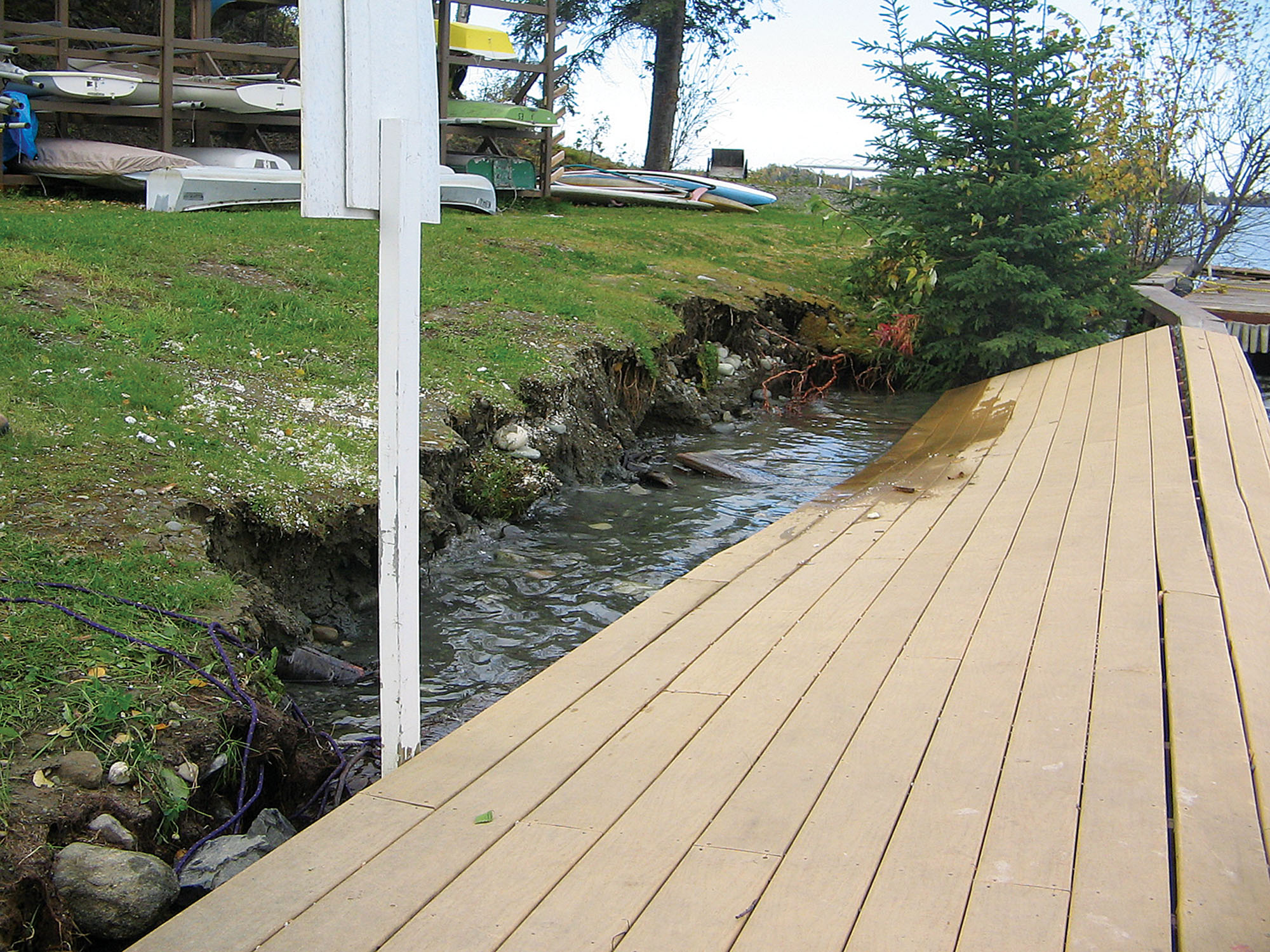
The Alaska Sailing Club, founded in 1967, owns 340 feet of shoreline in its own cove on Big Lake. Over the past few years, the club has become aware of how valuable shoreline habitat is to salmon production. As the club developed their docks and sailing facilities, they removed the native vegetation along the shore, and as a result, experienced substantial erosion.
In 2009, a windstorm inflicted significant damage on the already failing shoreline, eroding the rocky bank and spilling silt and dirt into the lake. After that, the sailing club decided enough was enough — restoration of that shoreline was necessary for both their club and the salmon to survive.
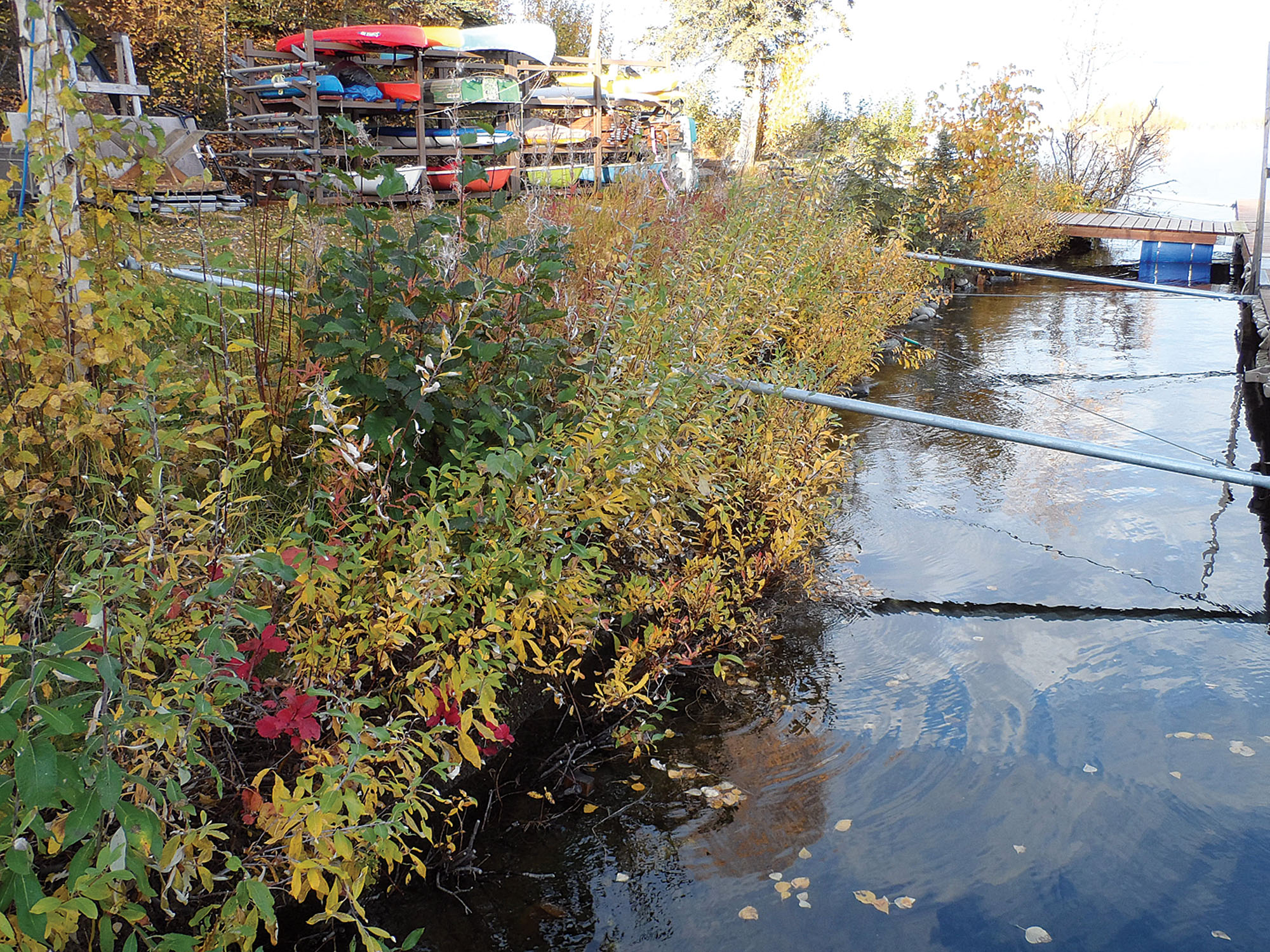
With financial and technical assistance from the Alaska Department of Fish and Game and U.S Fish and Wildlife Service, the club began phase one of their restoration project in 2013. Members amended a100-foot-long section of shore with coir logs (made from densely packed coconut fiber), willows cuttings and root wads — good, natural alternatives to the wall of tires that previously lined the shore. The project served as a training session for Fish and Game, aimed at teaching sailing club members and community volunteers how to install shoreline vegetation.
And understand things like permits.
“They have led me through this project,” said Bruce Lee, who served as commodore of the sailing club for a number of years. “It’s pretty paperwork heavy.”
In 2014, again with the state and federal agencies, the club began a second project on the opposite bank of the cove. This project also served as a training session for volunteers, who restored another 100 feet of the sailing club’s shoreline. Volunteers who participated in the training sessions — about half of them sailing club members, the other half local volunteers — are now trained on shore restoration techniques and have gone on to volunteer for additional projects on Big Lake, the Kenai River and other lakes in Alaska, Lee said.
This week, the Alaska Sailing Club begins work on a third project to preserve an additional 130 feet of shoreline.
“It’s a big project and a great idea but it’s a tremendous amount of work,” Lee said.
Still, with the skills and education the sailing club members now have after restoring their shoreline, they will not only help salmon but will also help the club thrive as they pass on their knowledge and maintain the shore.
“If we don’t train kids (to sail, do repairs), it’d be pretty easy for our club to go away,” Lee said.
Because the Alaska Sailing Club recognizes the importance of being good stewards of the land and important salmon habitat on their property, Great Land Trust has crowned them King Makers. Their actions support essential fish habitat and help ensure that salmon keep coming back to Fish Creek in healthy, harvestable numbers.

By Barbara Hunt Palmer Buzz It was 6:43 on Friday morning and the Plant Owner was sound asleep when

By Kyle Wilkinson Frontiersman Memorial Day Weekend was filled with a variety of events in Willow. From live music to

By Kyle Wilkinson For the Frontiersman The Susitna Valley Emergency Preparedness Fair will be held at the Willow Community Center

By Barbara Hunt Palmer Buzz Green-Up happened at exactly 9:34 am on Saturday morning in Palmer. This was