Retiring teacher, coach urges Colony grads to ‘find their 68’
By Jeremiah Bartz Frontiersman.com A football coach using a hockey reference as the centerpiece for his keynote address may


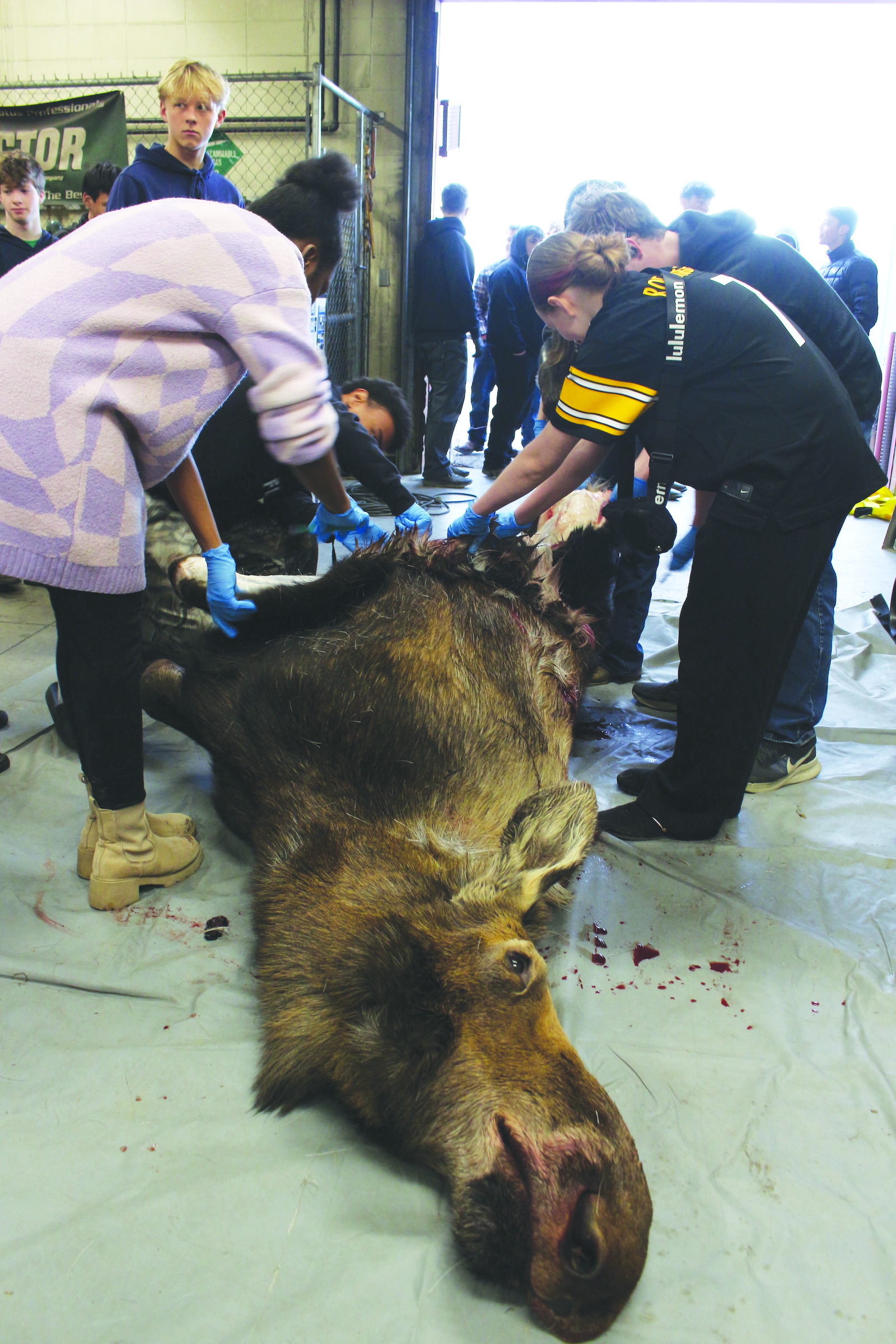
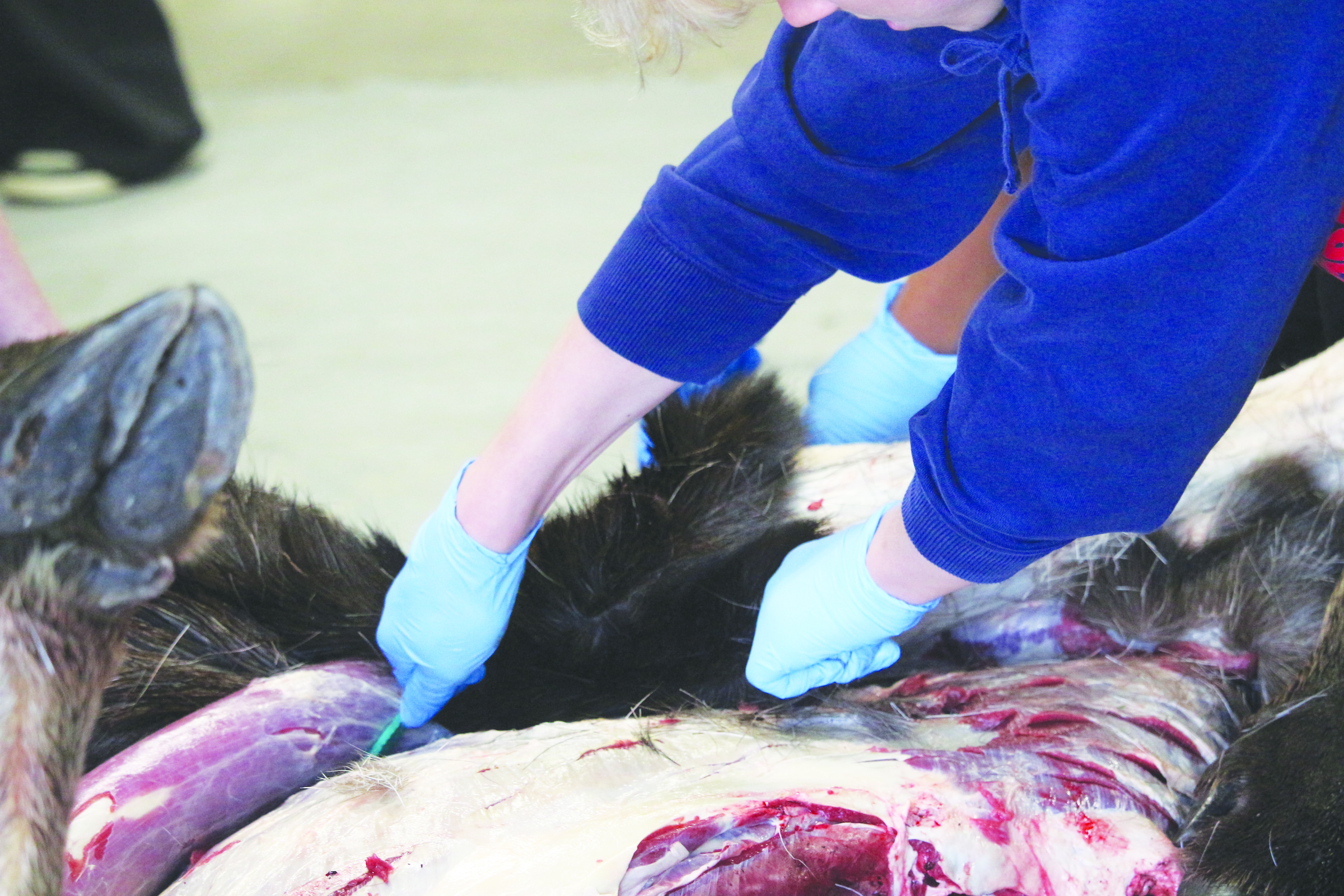
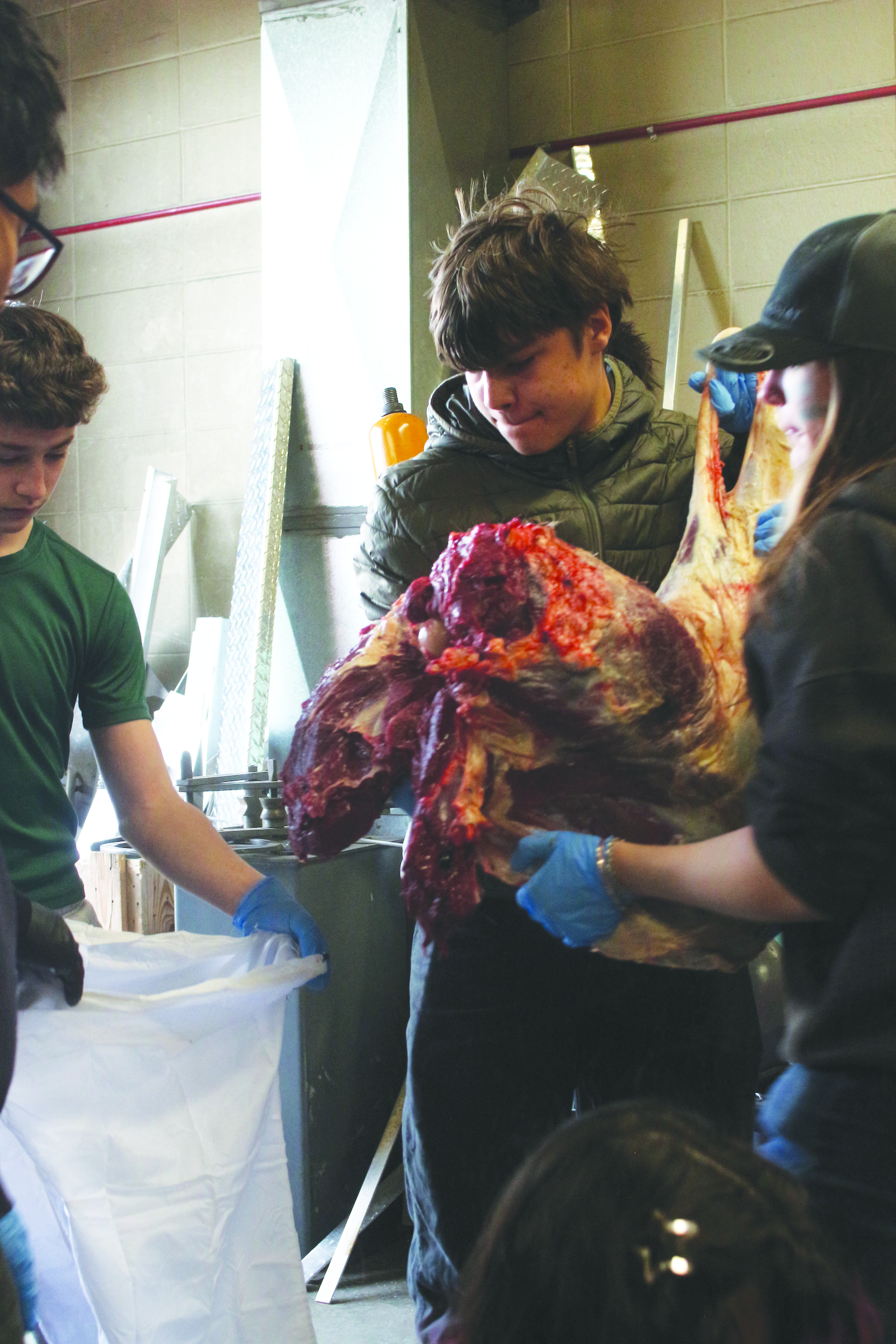
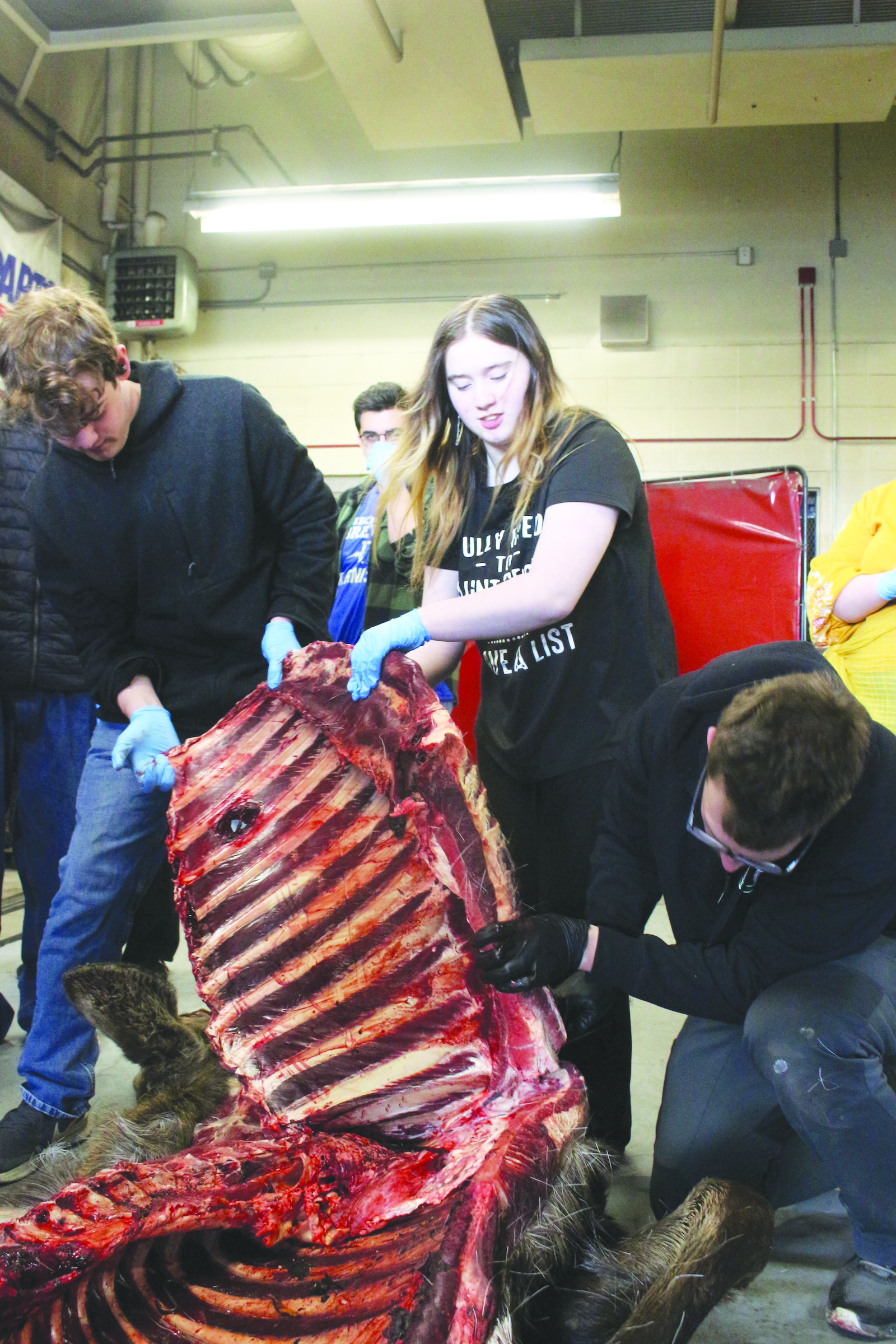
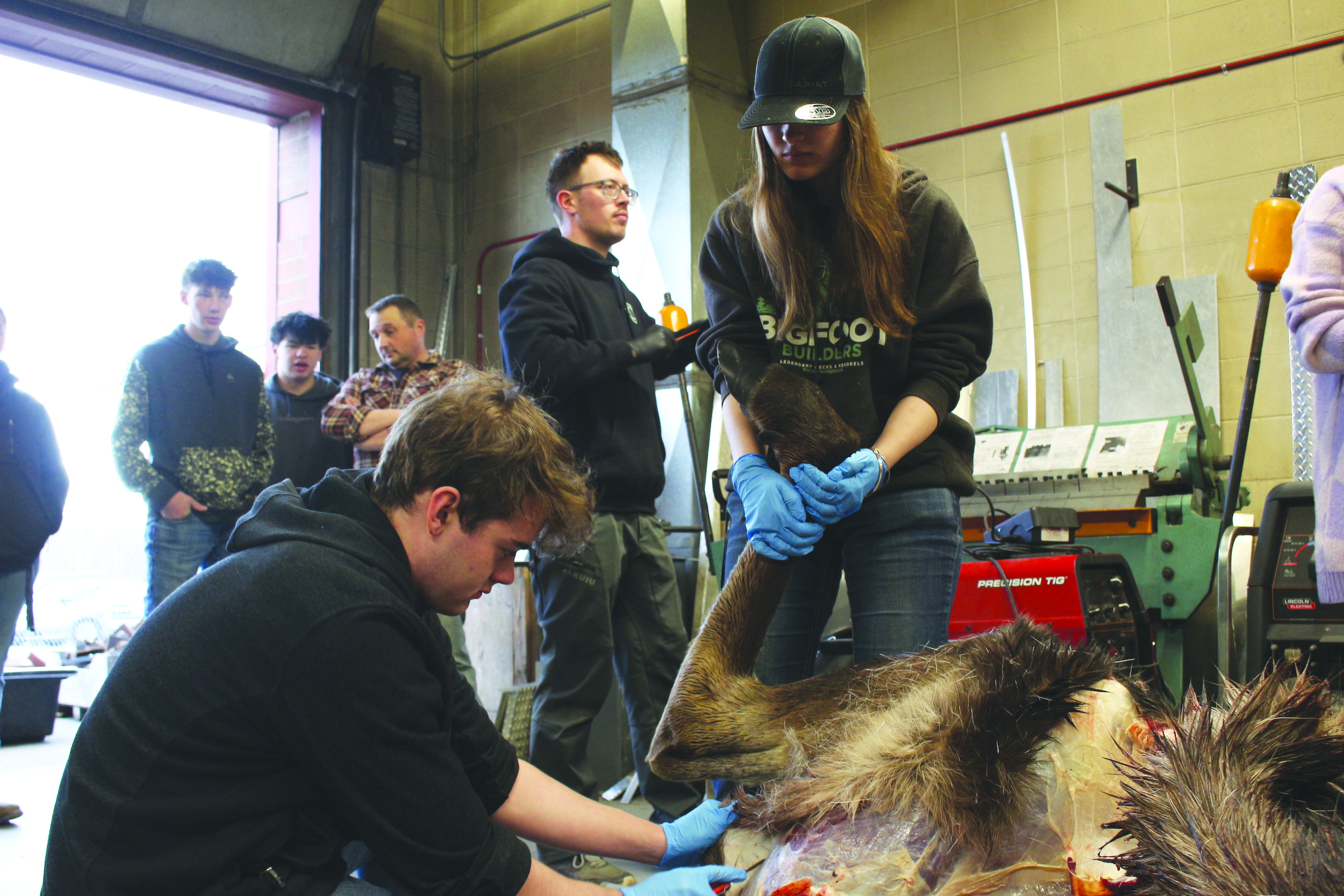
Colony High School students enrolled in the Alaska Wildlife Class donned rubber gloves and carefully wielded scalpels in the metal shop as they participated in the harvest and processing of a cow moose. A uniquely Alaskan opportunity, the students participated in the skinning, quartering and deboning the harvested animal as part of an Alaska Department of Fish and Game (ADFG) cultural education permit as received by teacher Ryan Judd. The goal was to bring awareness to a way of life that some Alaskans may never experience, and open young eyes to the world and culture around them.
“It’s a uniquely Alaskan thing,” Judd said. “We’re so lucky to live in a place where we can do things like this. They’re not doing this in a lot of states, in a lot of school districts. But it’s our cultural background here. It lends itself to doing awesome, experiential learning exercises like this at school.”
With support from the school district and building administration, Judd built a curriculum that focused on the cultural importance of subsistence meat harvest in Alaska. He took over a long-standing wildlife class last fall that had been taught for the last two decades by retired teacher Tim Lussow. Judd, a Colony High School alumnus himself, took the class from Lussow and looked forward to carrying on the legacy of the class he had built. And harvesting a moose was at the top of his list of activities to do.
The process to obtain the correct permitting started in fall as Judd worked with his school resource officer, administration and ADFG. He received the permit this spring that allowed him to harvest a moose in Unit 14A and he successfully took a young, barren cow the day prior to the school activity.
Colony High School Assistant Principal Peter Olson was one of those administrators Judd approached first. He jumped at the idea of offering this as part of the wildlife class.
“Our philosophy here is always trying to say yes to anything that’s going to be good for kids and experiential and ties to curriculum,” Olson said.
Olson referenced how students today are pragmatic in their educational choices. Looking for hands on experiences is what gets those students involved and excited about their education. He hopes that this can lead to even more outdoor-related curriculum and create new opportunities for students perusing a career in the outdoor field.
“Hopefully it leads to that, kids wanting to be in Alaska, work in Alaska and harvest from Alaska,” Olson said.
When Judd first shared the idea with his students, many of them were excited for the opportunity.
“When they first heard about it, a lot of them were pretty pumped,” Judd said. “Nobody so far has opted out. I gave them the opportunity to not do it if they didn’t want to, and nobody’s taken me up on it yet. All 30 of my kids from my first hour showed up so far.”
One of those students was freshman Hailey Hammersley-Wasson. Like many of her peers, she was hesitant at first. But her concerns were quickly squashed as she learned how to use her green scalpel and cleanly peel hide from the carcass and took advantage of the opportunity.
“I thought it was a really cool experience,” Hammersley-Wasson said. "You never know if you’re going to ever get to do something like this again.”
Hammersley-Wasson was joined by freshman Christabel Bazunu and the two worked together on the front shoulder and the backstrap of the moose. Bazunu emphasized the importance of learning how to break down an animal properly.
“It's a really good skill too if you’re ever out in the woods or if you’re trying to help someone out with their own kill,” Bazunu said. “It’s a really good skill to have.”
Part of the curriculum included a survey that Judd handed to his students prior to the moose harvest. He was surprised to see how many of the students did not have any previous experience with hunting and harvesting their own food for the freezer.
“There’s just different things that kids are into these days,” Judd said. “Getting them exposed to this kind of thing, it’s available to them living here. I think it’s really important for them to see. And it’s opening a lot of their eyes.”
And seeing that reaction from many of his students is what Judd enjoyed most.
“There’s a lot of shock value if you’ve never seen something like this. I really love giving kids experiences that they’re going to remember for the rest of their lives. They will not forget this,” Judd said.
Junior Dane Hufstetler was one of the first students to jump in and volunteer to make the initial cuts on the moose. He said that his only previous experience was dissecting pig fetuses in biology class. He also said he had never come from a hunting background and wanted to get “first dibs” on cutting some of the best looking parts of the moose. Being able to process a moose was something different that Hufstetler enjoyed and stayed for most of the school day for.
“It’s a nice change of pace,” Hufstetler said.
Colony High School Principal Kristy Johnston said she was excited about the opportunity and did all she could to work with the district to make it happen. A born and raised Alaskan herself, Johnston said she knew the importance of this cultural aspect of living in the Last Frontier and the need to bring that to the attention of the next generation.
“I think it’s important for people to understand that they have that opportunity here,” Johnston said.
Johnston referenced the amount of feedback she received from parents about their students being part of the processing. She said many were very excited, especially families that had no hunting background or home situation that would prevent them from being able to responsibly harvest an animal.
One aspect that surprised Johnston was how willing some of the students were to step in and take charge. One of those students was freshman Lili Bailey who skipped her lunch period to stay and finish processing the moose. She admitted that she was very apprehensive about the idea but quickly overcame her concerns and actually really enjoyed the process.
“I was scared and I didn’t think I was going to participate, especially not as much as I have been participating,” Bailey said. “I was definitely intimidated, but I’m happy that we’re doing it.”
Perhaps the most important lesson that students can take away from this project is learning to be more self-sustainable and having a desire to go hunting for themselves. This class helps to break down barriers and lets students try new things that they never thought possible.
“I might want to do more stuff like this in the future,” Bailey said. “And I might want to hunt more because of this. It’s not as scary and intimidating as I thought it was going to be.”
Educating the next generation and getting them interested in hunting is what will continue the culture for years to come.
“If we want hunting to continue in the way that it’s happening now, we need to get these kids interested and we need to get their kids interested,” Judd said. “We want to keep exposing them to these sorts of things so that we’re able to continue to do it.”
Judd expressed his appreciation for the Mat-Su School District and his administrative team for having his back. He also referenced the helpfulness and interaction with ADFG and coordination with local wildlife biologists to make this happen. And most importantly, Judd is thankful for his students being willing to try something new. The meat from the moose will be donated to a local church organization to assist those in need.

By Jeremiah Bartz Frontiersman.com A football coach using a hockey reference as the centerpiece for his keynote address may

Frontiersman.com With its headquarters in Wasilla, the Frontiersman has been a primary source of news for the Matanuska-Susitna

By Katie Stavick Frontiersman.com The next generation of leaders took flight this week as the Houston High School Class

By Kyle Wilkinson For the Frontiersman Keynote speaker and Carry the Cure President Bill Pagaran’s words boomed through the