Retiring teacher, coach urges Colony grads to ‘find their 68’
By Jeremiah Bartz Frontiersman.com A football coach using a hockey reference as the centerpiece for his keynote address may


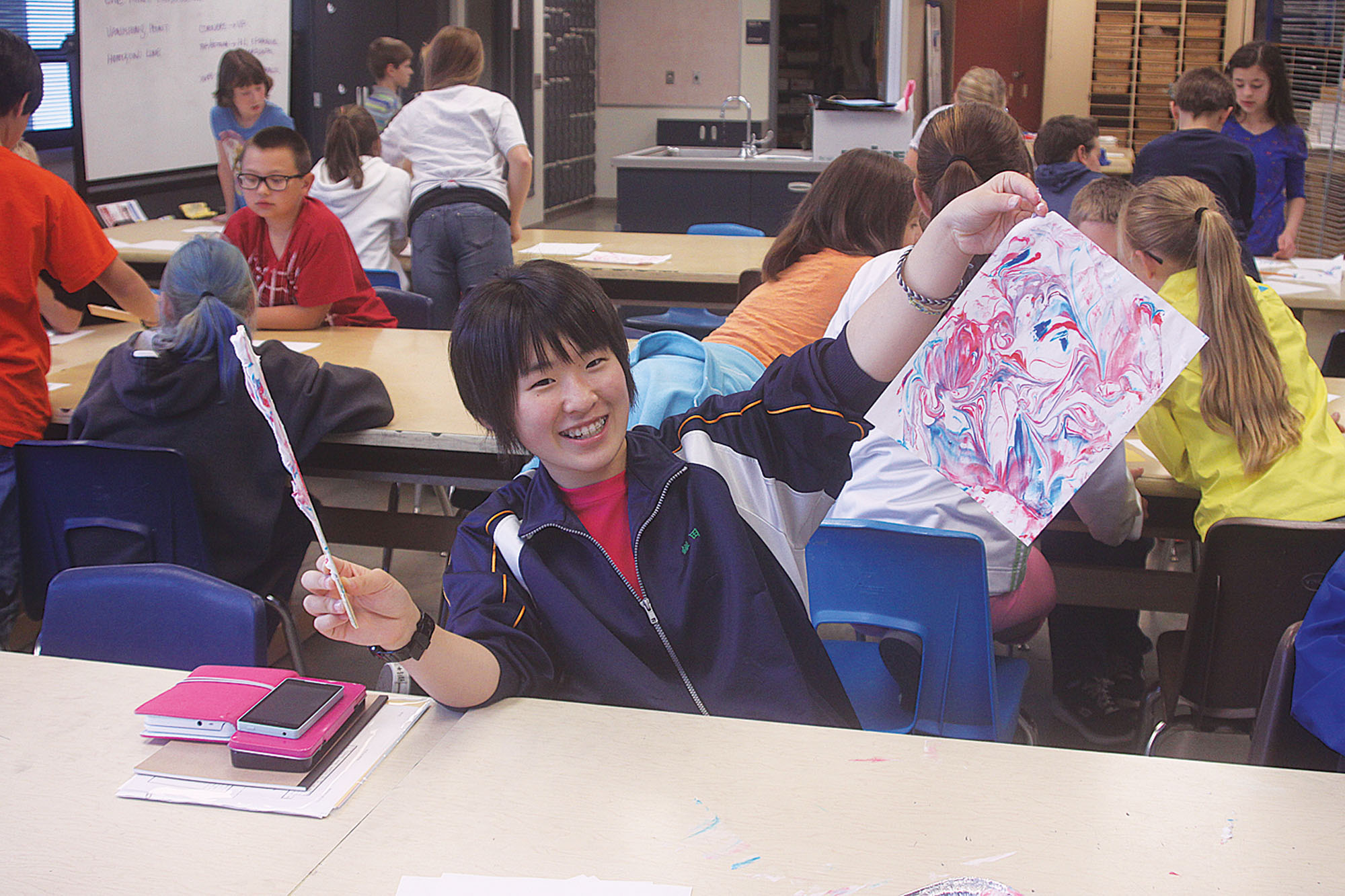
PALMER — Japanese students from the city of Saroma are in town for two weeks of tours, classes, prep football and Alaska food to celebrate cultural exchange.
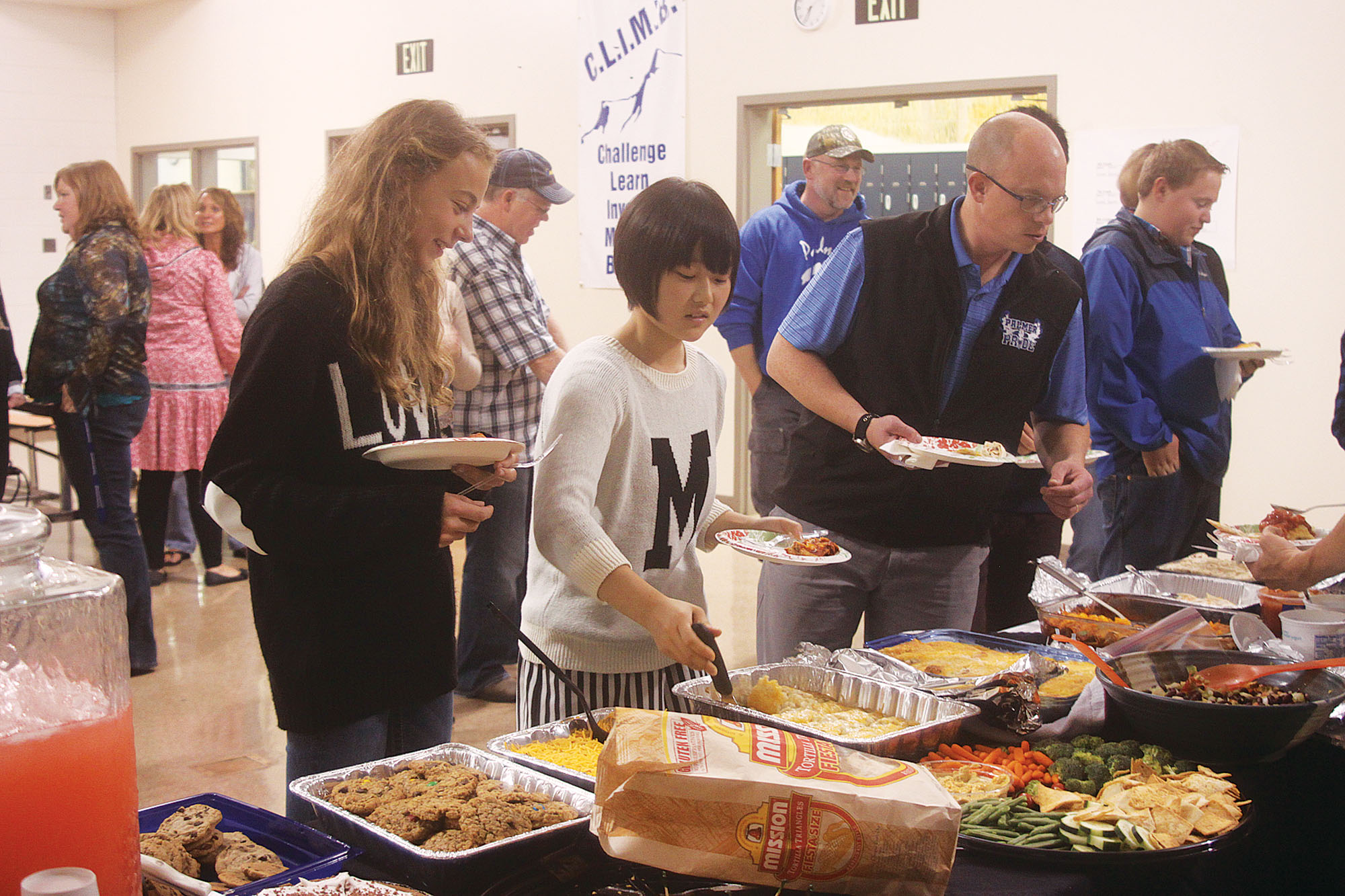
On Monday, Sept. 15 the city of Palmer and sister city program Palmer Saroma Kai were hosts to a community wide potluck at the United Protestant Presbyterian Church to welcome the students, teacher and city representative who recently arrived from Japan.
Every year since about 1990, Saroma’s chief administrator of schools Yuko Hirouchi said, Japanese and Alaskan students have “exchanged” homes through the sister city program, which began in 1980. From Sept. 9 through Sept. 23, seven Saroma Junior High and High School students stayed with the families of the Palmer Junior Middle and High School students who stayed with them in Japan earlier this summer.
“Going to Japan was an unforgettable trip,” wrote eighth-grade PJMS student Angelina Koroleva in a sister city newsletter. “I loved everything about it: the people, their culture, and my host family the Hatanakas.”
Koroleva had never been to Japan before, and her host sister, Shiho Hatanaka, had never been to “America” until now. When asked what she knew about Alaska, Hatanaka raised her hands to her head and said, “Moose!” in English.
Cameron Mayberry, a junior at Palmer High this year, also participated in the exchange, said he pleased to have done more than just survive the two-week stay in Japan.
“This trip at first seemed very frightening,” he wrote in the summer newsletter. “I would constantly ask myself, ‘Will I like the food there? Are the people nice? Will my host family be scary?’ Upon my arrival in Saroma, I soon discovered that I had nothing to worry about…”
Shion Kamada, Mayberry’s host brother, is a second-year student at Saroma High School, the equivalent of a junior in U.S. high schools. Kamada said he studied abroad in Canada earlier this year and hopes to continue his English studies and use it in his future job.
“I want to do something with English and music,” he said, in English.
But the exchange program isn’t just an opportunity to visit a foreign country and host a student from another nation.
“The first thing it does is broaden your horizons,” said Palmer Saroma Kai president Carla Swick. “You see (Japan) on a map or on the news, but to actually connect with the place, you have to have a real relationship.”
One reason to forge that connection between Japan and Alaska could simply be the comparatively short distance between the two places. If any of the airline companies had a direct flight from Anchorage to Japan, Swick said, it would only take about five hours, in contrast to the nine-plus it takes to get there from Seattle, Washington.
Another reason is trade history. Our “Pacific Rim neighbors,” as Swick called the Japanese, were the recipient of over 24.5 million barrels of oil between 1996 and 2004 — second to South Korea, but ahead of China and Taiwan, respectively — according to the U.S. Energy Information Administration (EIA) website. Although regular fuel exports to Japan have since ceased, the relationship remains. Last year, Japan was the fourth largest goods trading partner of the United States with $204 billion in total (two-way) trade, according to the Office of the United States Trade Representative website.
“I think people cannot live on their own,” Hirouchi said, speaking to both national and individual needs. “You have to live with someone else, and not always people you can understand.”
Although Saroma is a small town even by Alaska standards — about 5,800 people live there, Hirouchi said — “English is very important” for students and adults alike to learn for their future jobs. As the fishing and farming industries expand in Saroma, Hirouchi said, computers and the Internet have become more necessary. Even with the convenience of technology, small-town people are inconvenienced by their lack of foreign language and cultural understanding. For example, Hirouchi herself has been asked many times, she said, to translate documents detailing import and export processes and the like from English — the only available language in some cases — for Saroma’s small businessmen.
“English is an international language,” Hirouchi said. “It’s not a bad thing to learn.”
Neither is Japanese, of course, for Alaskans or U.S. Americans who wish to work and collaborate with the Japanese. Such collaboration is, of course, the reason for the two-way exchange.
“I think Saroma and Palmer have more things in common than different,” Swick said.
She compared the fishing industry in Alaska with the shrimping and fishing for scallops around Saroma, and Palmer’s giant cabbages with Saroma’s famous pumpkins and pumpkin-flavored everything. Perhaps if they’d been at the Alaska State Fair, the people of Saroma would have given Alaskans a run for their money.
“They both have fishermen, farmers, they’re both right around national parks, they both have outdoor beauty, they’re both small towns,” Swick said.
It isn’t just the commonalities between the two towns that bond them, but the commitments already made. The Saroma schools were once a part of the international Japanese English Teaching program (JET), Swick said, but after about a year the town officials decided that their sister city relationship with Palmer was “so important” that they wanted teachers specifically from Palmer and from Alaska. So, the city of Saroma declined future federal funding from JET and took matters into their own hands, supporting Palmer-Saroma exchanges — financially and otherwise — on a local level.
Be sure to stay on the lookout for the Saroma students and their chaperones around Palmer this week and say hello or “konnichiwa.”
To learn more about the sister city program, visit the city of Palmer website at bit.ly/1s10QgB.
Contact Caitlin Skvorc at 352-2266 or caitlin.skvorc@frontiersman.com.

By Jeremiah Bartz Frontiersman.com A football coach using a hockey reference as the centerpiece for his keynote address may

Frontiersman.com With its headquarters in Wasilla, the Frontiersman has been a primary source of news for the Matanuska-Susitna

By Katie Stavick Frontiersman.com The next generation of leaders took flight this week as the Houston High School Class

By Kyle Wilkinson For the Frontiersman Keynote speaker and Carry the Cure President Bill Pagaran’s words boomed through the