Retiring teacher, coach urges Colony grads to ‘find their 68’
By Jeremiah Bartz Frontiersman.com A football coach using a hockey reference as the centerpiece for his keynote address may


WILLOW — This time of year, the scenery never changes for Dallas Seavey’s sled dog team, not even the lead dogs.
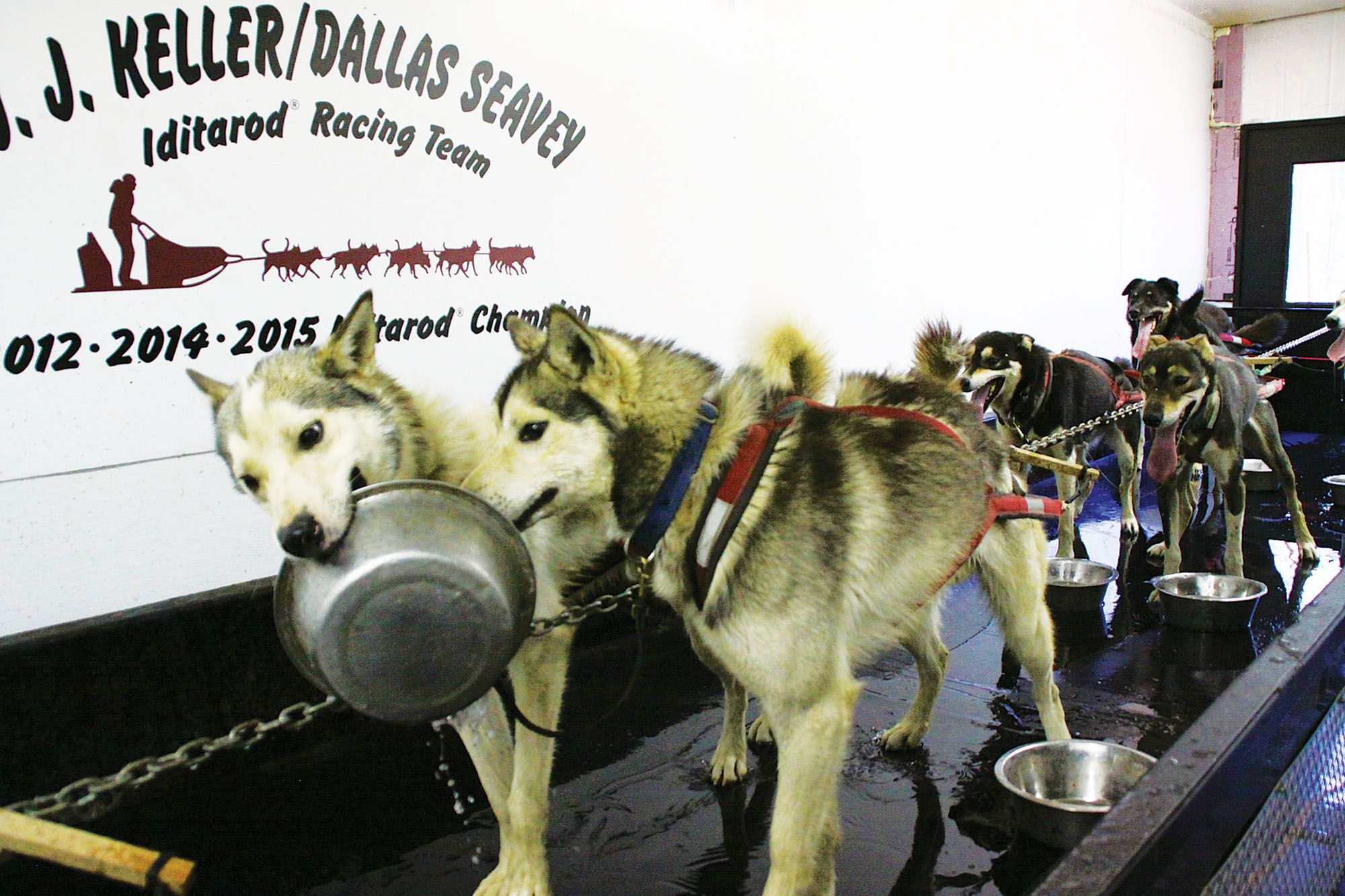
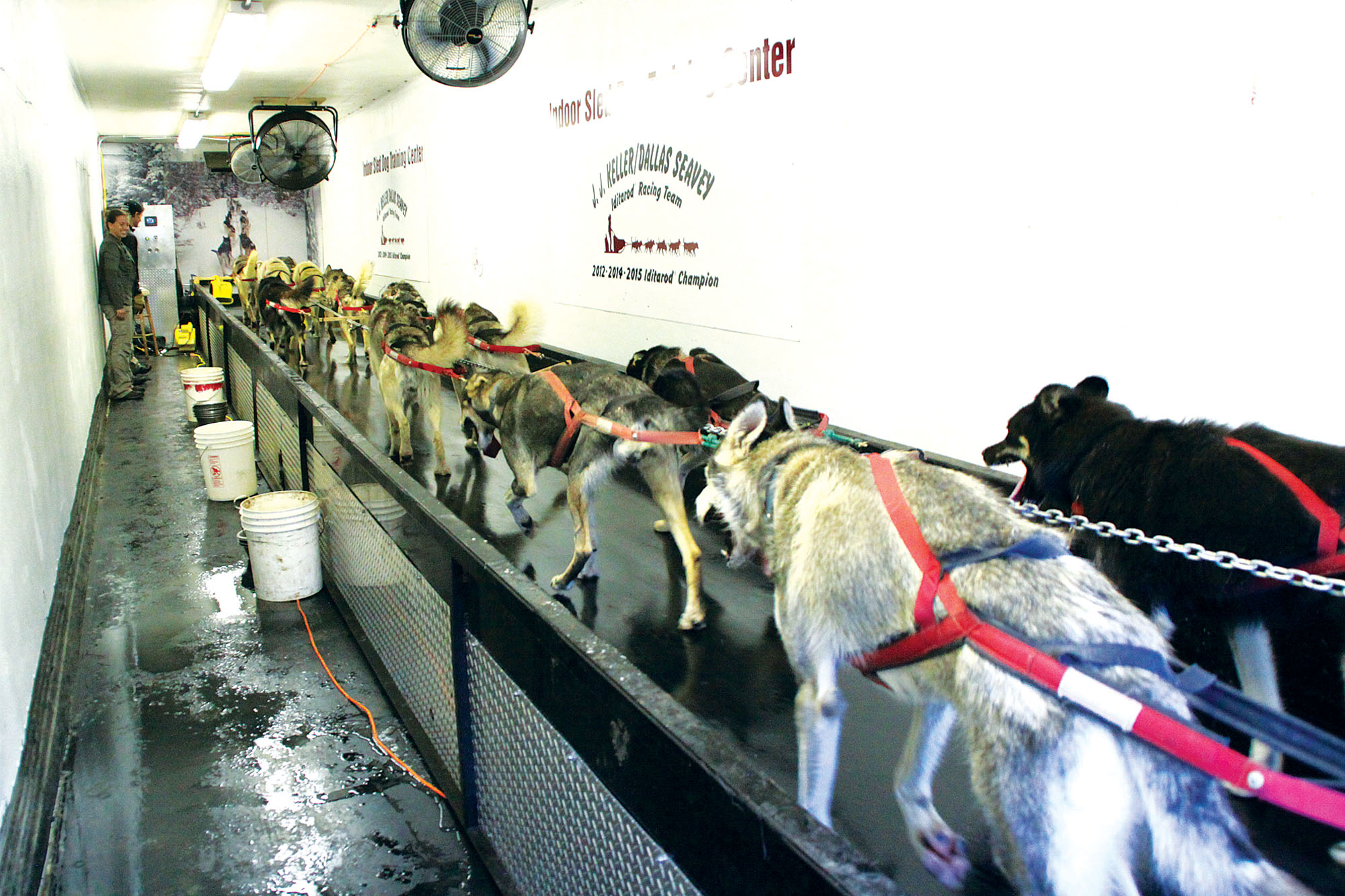
Outside in the dog lot the thermometer says 68 degrees, too hot to run sled dogs by about 25 degrees. But inside the J.J. Keller/Dallas Seavey Indoor Sled Dog Training Center, temperatures are around 40 degrees.
Maybe the 50-foot treadmill housed in a climate controlled trailer at Seavey’s Willow kennel is nothing more than a very expensive dog toy, but Dallas Seavey, 28, sees the treadmill as a tool to help keep his team happy and extend their training year-round.
The three-time Iditarod champ said he has wanted to build his own climate-controlled facility for his team for a couple years now. But between training his dogs in the fall and winter, and summers spent as part of the cast of Ultimate Survivor Alaska, Seavey said he didn’t have time until this year.
When he began looking online he found a treadmill in New Hampshire, which a mid-distance musher there had built. So instead of fabricating his own, Seavey said he ended up buying that treadmill and having it delivered to Willow.
“When the next 12 hours comes off the record, off-season training will be a big factor,” Seavey predicted.
Typically, summer in Alaska is off-season for sled dog training, he said. That means mushers must wait until fall to begin training their teams, Seavey said.
Not anymore.
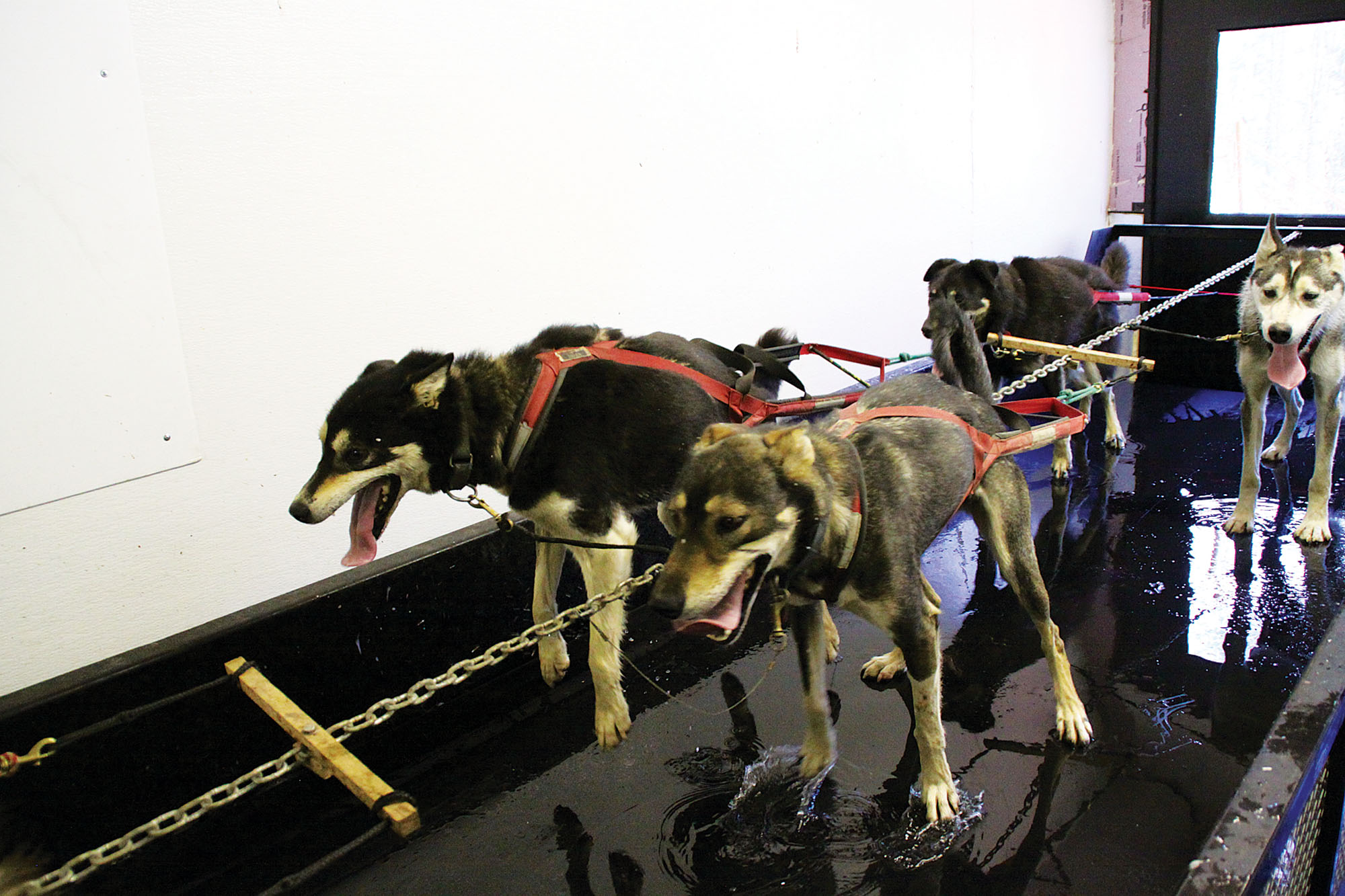
This climate controlled conveyance to nowhere means Seavey can clip as many as 16 sled dogs to the lines, set the desired run speed, and take off down the virtual trail.
He wasn’t sure what to expect the first time he began leading his dogs into the training trailer and hooking them to the stationary line two months ago, but he needn’t have worried.
“We didn’t have to slow walk any of them,” Seavey said.
Acclimating the dogs to this new form of “trail running” was easy, he said.
“We just snapped them in and turned it on,” Seavey said. “What else is a sled dog going to do? Their response to everything is to run. Now when they are led into the training center, they know where their slot is and hop right up.”
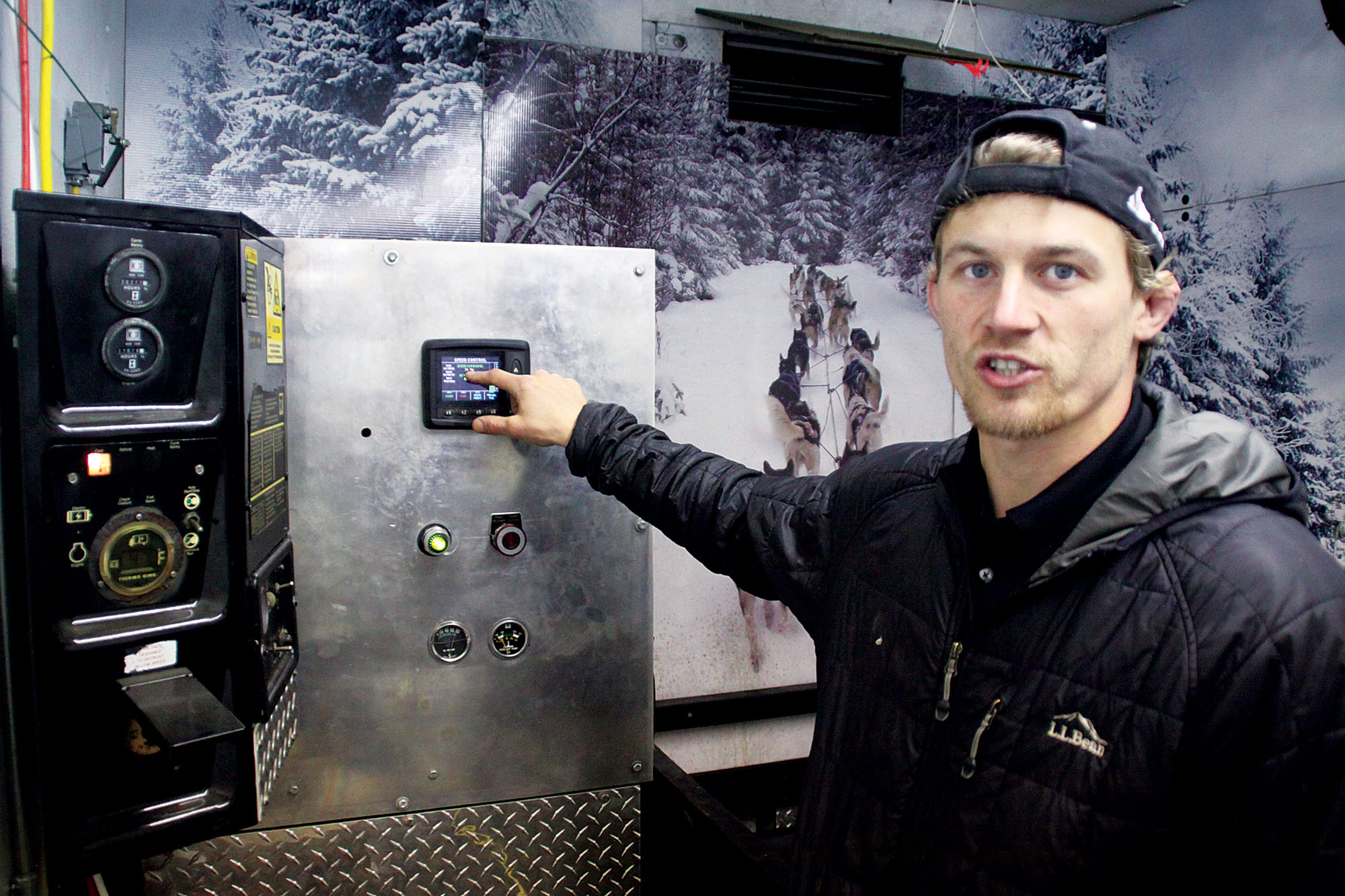
At the end of the trailer, a mural shows a sled dog team running down a trail. Seavey said they’d toyed with the idea of taking some GoPro footage and projecting it on the wall in front of the team to help them adjust to running on the infinite-loop track. But they soon discovered it was unnecessary, he said.
“They don’t seem to care that they aren’t going anywhere,” Seavey said. “When I come out here with the harnesses the whole yard goes bonkers.”
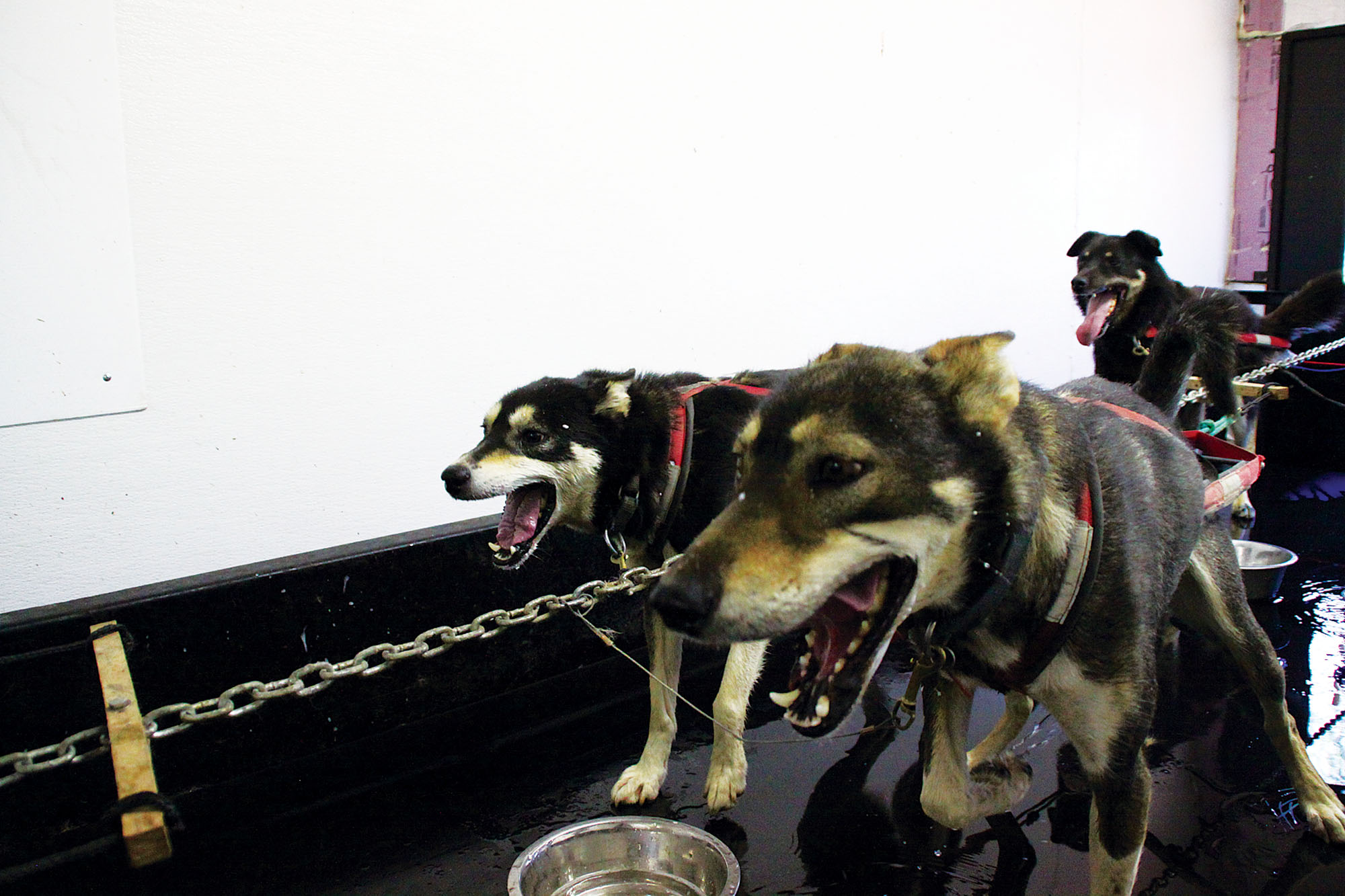
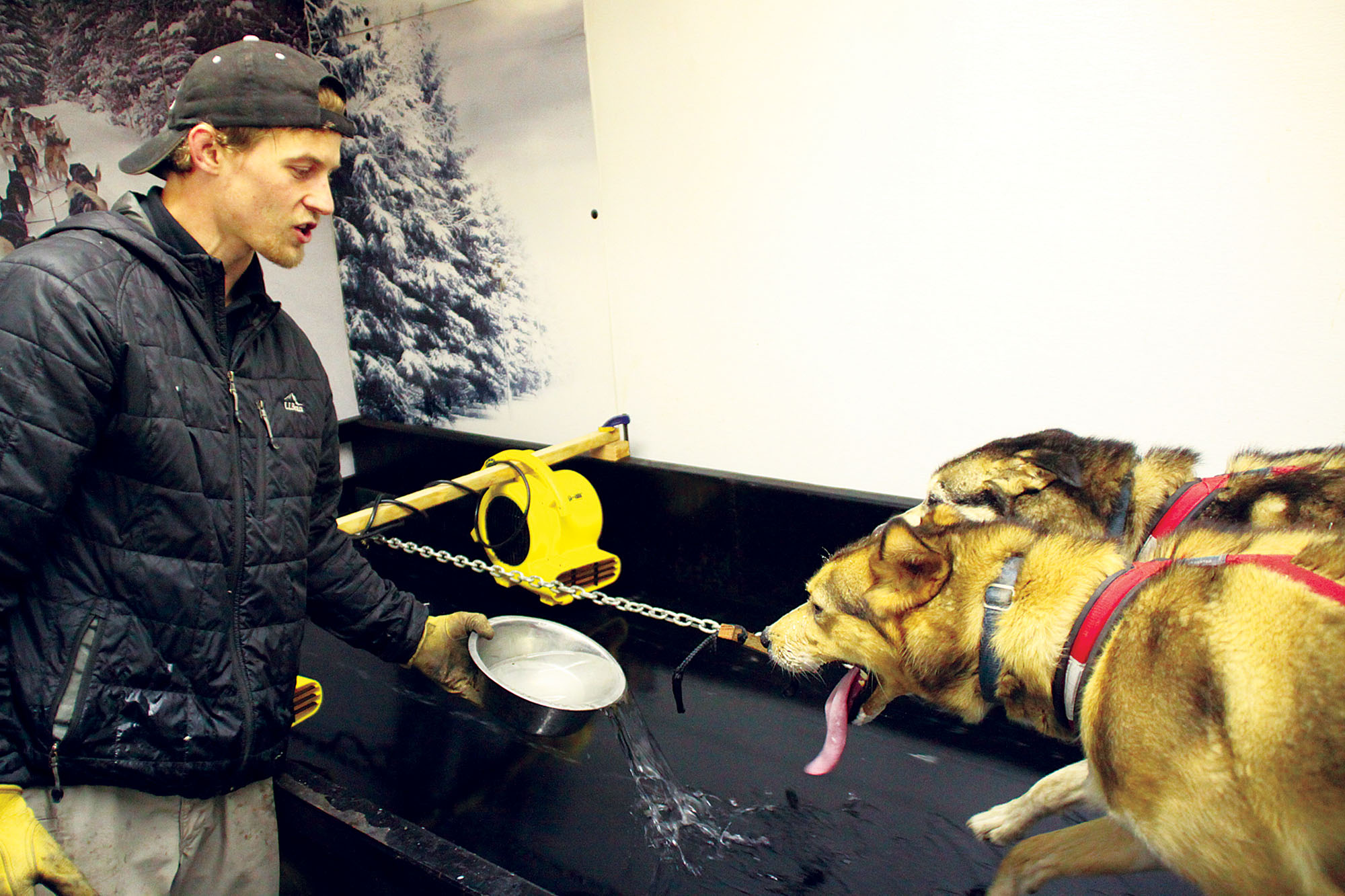
Every 2 miles, he stops the treadmill and waters the team of canine athletes. As soon as the last water bowl is placed in front of the last dog, a veteran timekeeper — Glitter — in the back of the pack begins barking and lunging against her lines.
“Given the opportunity to run — in any setting — that’s what they do,” Seavey said.
The treadmill won’t replace trail runs, he said. But it can eliminate the highest-risk parts of training, like running at 40 below, or before freeze up when the trails are soft and muddy, he said.
In Seavey’s Willow dog lot the temperature is 68 in the shade July 24. The forecast calls for a high of 77. But inside the training facility it’s a balmy 44 degrees.
Temperature-wise, it’s the difference between being able to run the dogs and only being able to turn on the sprinkler in the dog lot to help keep them cool, Seavey said.
It’s not just a treadmill that Seavey said he sees as a game changer. More than that, it’s the ability to cool the space so the team can train year-round, he said.
“It’s the two things together that could push the sport closer to year-round training.”
Glitter barks and lunges, signaling the end of another water break. Seavey pours the remaining water on the track and pushes a button on the computer console in the front of the trailer to start the track gradually moving until the team is trotting at a happy, long-distance traveling speed of 8.3 mph.
“It allows us to run a team exactly as we would in the wintertime,” Seavey says, adjusting the treadmill to 9 mph briefly.
He said the system was designed to stop and start gradually to prevent injury to the dogs. He said it also will be a useful tool for rehabilitating injured dogs as he can clip the dogs in and set the treadmill to go as slowly as necessary.
Having miles and months of training under their harnesses before trail work begins for the season also will help strength the dogs’ ligaments and tendons, he said. He said he thinks that will allow the dogs’ entire bodies to develop more evenly.
“We won’t reach their genetic potential until we are training year-round,” Seavey said.
Contact Heather A. Resz at 352-2268 or heather.resz@frontiersman.com.

By Jeremiah Bartz Frontiersman.com A football coach using a hockey reference as the centerpiece for his keynote address may

Frontiersman.com With its headquarters in Wasilla, the Frontiersman has been a primary source of news for the Matanuska-Susitna

By Katie Stavick Frontiersman.com The next generation of leaders took flight this week as the Houston High School Class

By Kyle Wilkinson For the Frontiersman Keynote speaker and Carry the Cure President Bill Pagaran’s words boomed through the