Retiring teacher, coach urges Colony grads to ‘find their 68’
By Jeremiah Bartz Frontiersman.com A football coach using a hockey reference as the centerpiece for his keynote address may


By day, Brad Alexander works as a counselor and case manager at Vita Nova Residential Treatment Center, part of True North Recovery (TNR) to help men and women struggling with substance use disorder, helping them to find hope and connection.
By night, however, Alexander works to instill those same values of hope and connection in young readers, using adorable characters to tell stories with themes of bullying, confusion, anger, and other heavier emotional burdens while reinforcing values of hope, change, resilience of faith, and love.
The idea to write came from wanting to do something creative for his clients when they graduate the program. “A specific client was getting ready to graduate, and as I was pondering and praying over what I could do for this client, to make his graduation stand out to him. And just like a bell ringing in my head, it was to write his story as a child’s story,” says Alexander.
He says from there, he just jumped in and began writing, using the client and staff members as characters, in this case animals, with many familiar names making cameos, including TNR and Vita Nova.
Alexander wants young readers to explore difficult topics like trauma and addiction in a safe and compassionate way.” It shows that change is possible, that hope is real, and that no one is ever too lost to find their way back.”
He did worry that other clients in the program would think he was minimizing their struggles and the work they do while in recovery. He also worried how other clients might perceive his work.
“In treatment, there are some that can present as a rough crowd, so I was nervous if this would interest them. But they’ve been receptive to the idea.”
Alexander believes that this calling to write these stories was divine inspiration. “This is something that came from God, so I better do it and present it and just see what happens.”
As any first-time author will say, having others read the words on the pages can be nerve-wracking and Alexander worried how others would react, but it seems he had nothing to worry about.
“I waited nervously, wondering how this big guy was going to react to his story, but instead, he was just weeping,” said Alexander about his first story for his client. “It was more than I was expecting.”
Alexander says that after some initial frustration at not getting the responses he had hoped, he has seen more traction in getting his books out to the public. He says he also has had support from his co-workers at TNR, especially after TNR CEO Karl Soderstrom pulled in Dr. Caitlin Hegwood, the Chief Clinical Officer at TNR, who gave him some leads to pursue and encouragement to keep at it. And some editing services.
“She has a background in education and helped other with children’s books. She has been a great source of encouragement.”
Alexander ultimately pursued self-publishing and experimented with AI illustrations to offset the cost of hiring illustrators, which can cost thousands of dollars, depending on the number of pages. And while he has been initially satisfied with the route he’s taken, he does hope to eventually take a more traditional route for his work. He would like to see his books at places where children may need it the most, such as OCS, foster care centers, and libraries.
While Alexander says it’s not possible to write a story for every graduate, he hopes that the stories he does pen will a source of connection for children in similar situations, a resource that could help them see that they are not alone, and maybe reach out for support.
“The majority of addiction stems from trauma, and unfortunately, most of that trauma is in childhood. If these folks would’ve had resources as a kid, would things have turned out differently? And why aren’t there more resources out there for children?”
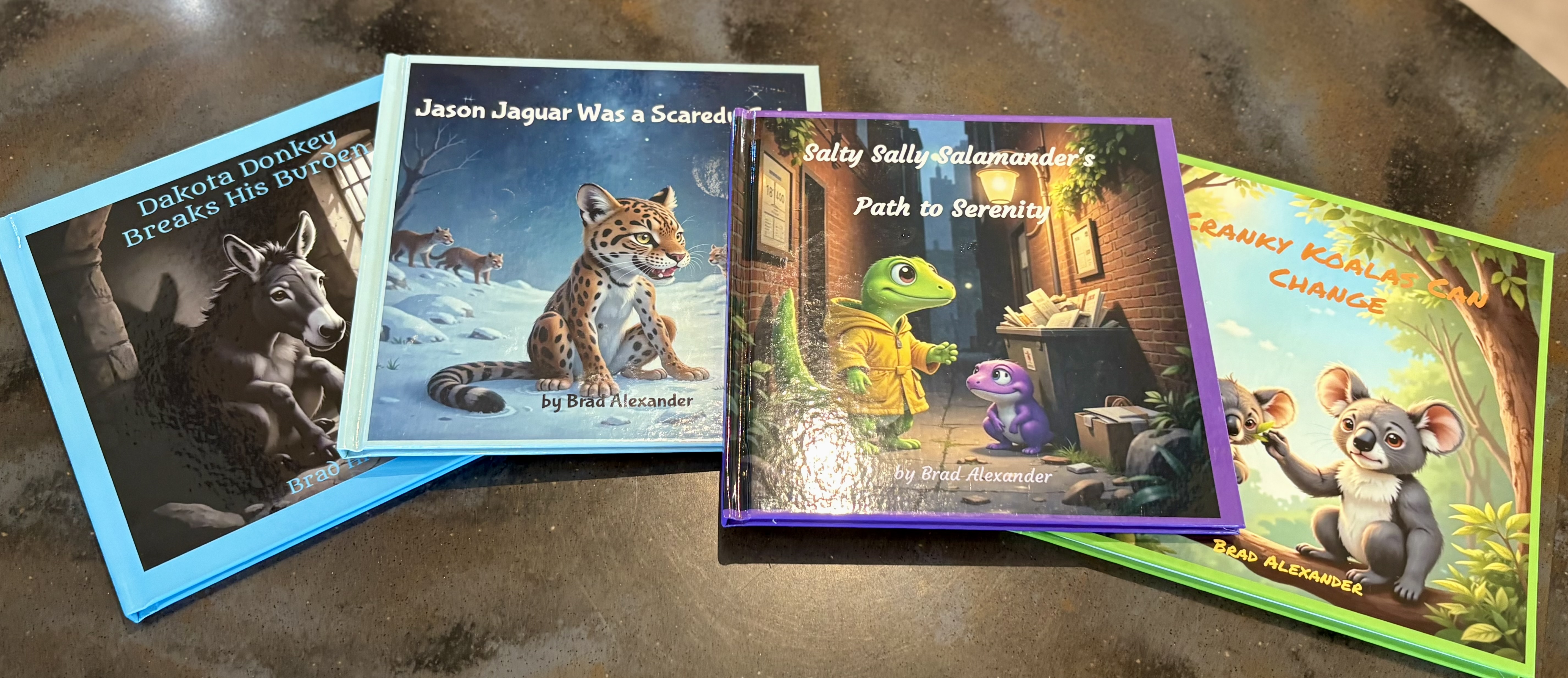
He now has four books that he has self-published. His titles include:
‘Salty Sally Salamander's Path To Serenity’, ‘Jason Jaguar Was a Scaredy Cat’, ‘Cranky Koalas Can Change’, and ‘Dakota Donkey Breaks His Burden.’
To learn more about Alexander’s books, which are currently only available online, please visit www.lulu.com/bookstore.

By Katie Stavick Frontiersman.com The atmosphere was electric at the Menard Center on Tuesday evening as the Wasilla High

By Barbara Hunt Palmer Buzz It was 6:43 on Friday morning and the Plant Owner was sound asleep when

By Kyle Wilkinson Frontiersman Memorial Day Weekend was filled with a variety of events in Willow. From live music to

By Kyle Wilkinson For the Frontiersman The Susitna Valley Emergency Preparedness Fair will be held at the Willow Community Center