Retiring teacher, coach urges Colony grads to ‘find their 68’
By Jeremiah Bartz Frontiersman.com A football coach using a hockey reference as the centerpiece for his keynote address may


BIG LAKE — Teens in Big Lake had the opportunity to take the role of an Alaska State Trooper (AST) investigator Friday evening at the Big Lake Library.
AST retired Captain Steven Arlow brought his Crime Scene Investigation (CSI) tools with him from Anchorage to give interested 11-16 year olds an opportunity to see the basics of how troopers respond to a basic crime scene. Prior to some hands-on work, Arlow explained to the group how officers set up, secure and gather evidence in the field.
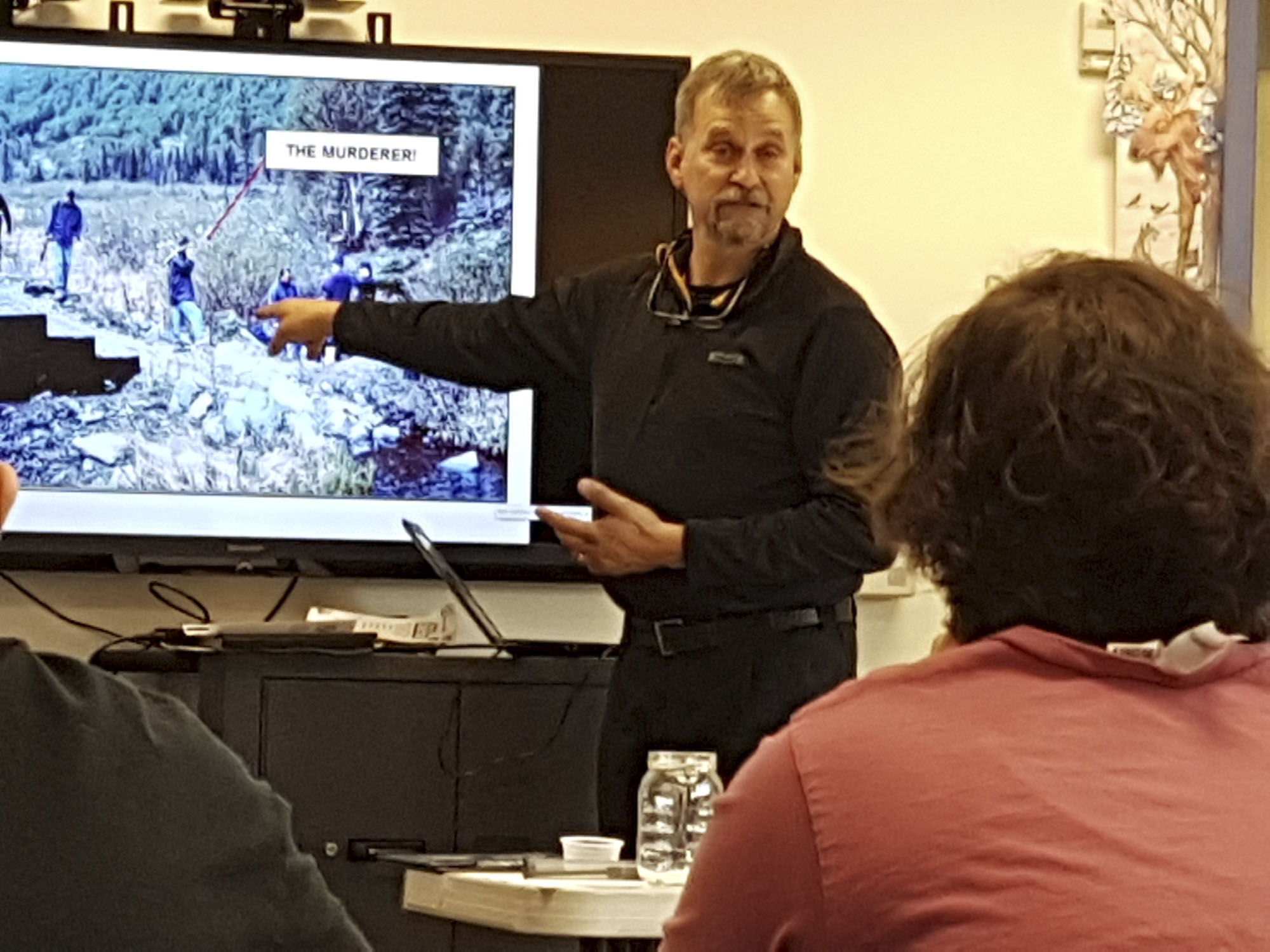
Arlow began with a "crash course" slide show of actual AST field work. He showed how troopers approach and document a scene, what kind of evidence they look for, and the importance of DNA evidence. He said technology has made it possible to do much more than when he started more than 30 years ago. Arlow explained to the youth that advancements have made it possible to reopen, and many times solve, decades-old crime cases.
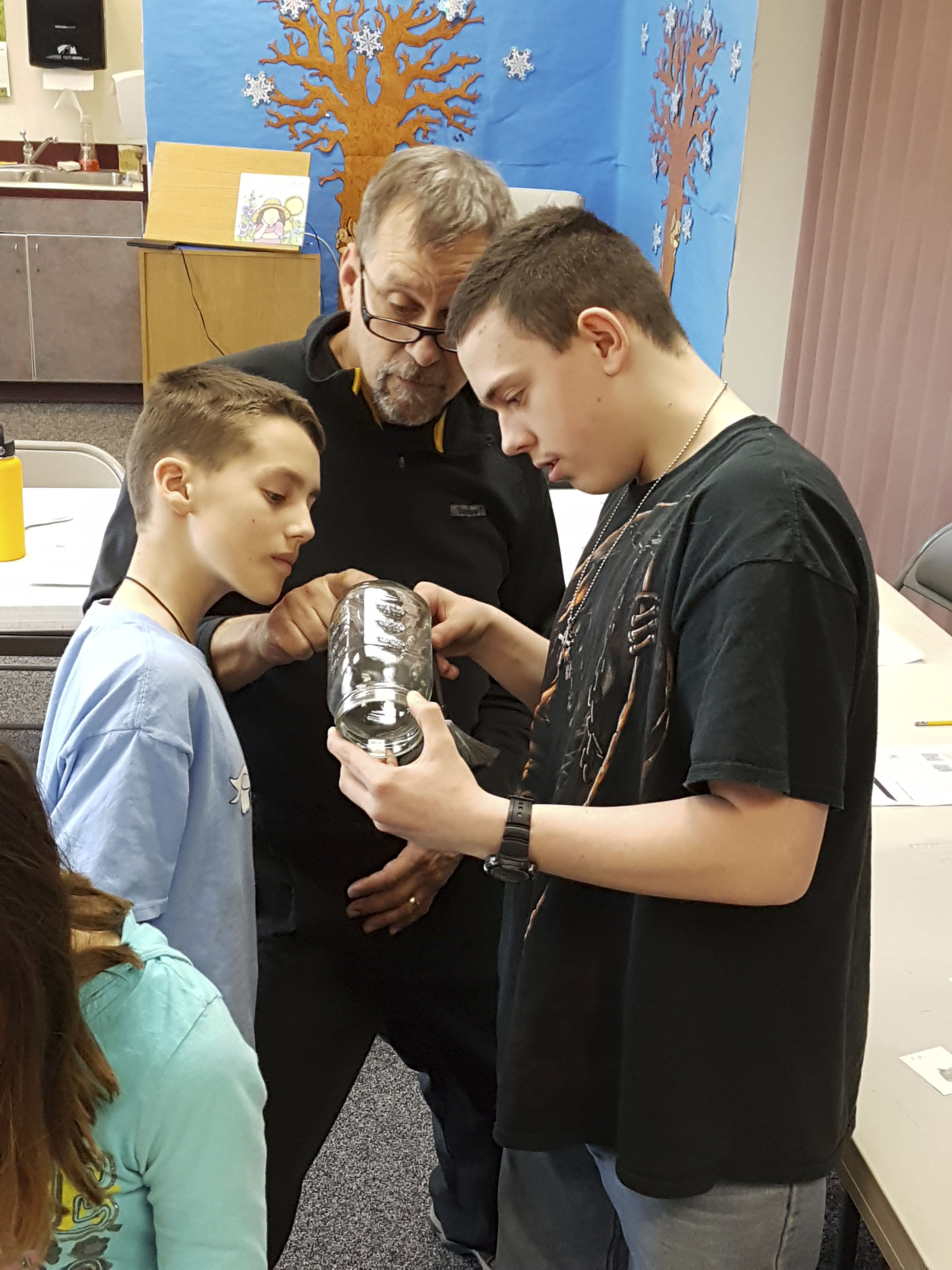
After his presentation, Arlow broke out his investigation kit. Paired up in teams, the youth learned how to take fingerprints, and "dust" for prints using both conventional and magnetic "dust". After that, participants had the chance to "lift" prints off commonly found crime scene items such as a glass or soda can.
Once the "junior sleuths" had mastered the technique, Arlow put them to work in solving a crime. The youth had to match a secured print with those of known suspects and through that process, identify a perpetrator.
Arlow, who served as both a state and wildlife trooper since 1985, brings with him a wealth of information related to the job. In addition to working on land, he flew planes an captained AST vessels over his career before retiring in 2014. The idea of exposing youth to police work came to him while working in Alaska's bush.
"We were trying to get Alaska's native more involved in the trooper program," Arlow explained. "We had very small native trooper numbers but a lot of (the recruits) were having a hard time getting through the process. Things like not being able to pass background checks. We looked at the adult population and realized it was too late. Many had some kind of record. So we decided to focus on youth and get them involved."
Arlow said the idea of the two-hour CSI mini-camp was an offspring of the week-long camps put on jointly with the US Marshal's office and AST.
"In many cases, the only time someone in the villages saw police was for something bad. We wanted to develop a positive relationship. Give them a chance to meet us. We had a couple of instructors and we flew in food. We'd sleep with them in the schools," Arlow said.
He said the first day or two, the youth were slow to warm up to officers. However, by mid-week, a two-way trusting relationship developed between everyone involved. He said the popularity of the camps has blossomed to the point that they have expanded outside of Alaska's rural communities. Once each summer, the group holds a camp at University of Alaska Fairbanks. Arlow said participants not only interact with law enforcement in a positive way, but get to stay on-campus in the dormitories.
"Most of these kids have a lot of personal things to overcome. By Wednesday, the barriers were down and the kids opened up," said Arlow.
The camps have been ongoing for about 10 years and at first, Arlow was putting on six camps a summer. He said that became too much to handle as it took him away from his family for the entire summer. Others have stepped in to help relieve some of the "caseload" which allows Arlow to put on the mini-camps when requested. The CSI mini-camp idea, Arlow said, was an idea to allow youth not necessarily interested in direct trooper or police officer positions to be exposed to law enforcement.
"Not everyone wants to be a trooper or policeman," Arlow said. "The CSI camps give them a chance to get involved in other kids of (police work). It's tough to get a lot into two hours and there's not a whole lot of time for connections. But it does give kids who are interested in attending the (week-long) camps a chance to sign up."
This year's Forensic Science Camp is broken down into two age groups. The 11-14 age group camp is scheduled for May 30-June 2. Camp for 15-18 year olds will take place June 5-9. More information on both camps is available at http://www.alaskatroopermuseum.com/http/events.html.
Arlow said he had youth interested in doing that following Friday evening's presentation and as far as he's concerned, that's what it's all about.

By Jeremiah Bartz Frontiersman.com A football coach using a hockey reference as the centerpiece for his keynote address may

Frontiersman.com With its headquarters in Wasilla, the Frontiersman has been a primary source of news for the Matanuska-Susitna

By Katie Stavick Frontiersman.com The next generation of leaders took flight this week as the Houston High School Class

By Kyle Wilkinson For the Frontiersman Keynote speaker and Carry the Cure President Bill Pagaran’s words boomed through the