Retiring teacher, coach urges Colony grads to ‘find their 68’
By Jeremiah Bartz Frontiersman.com A football coach using a hockey reference as the centerpiece for his keynote address may


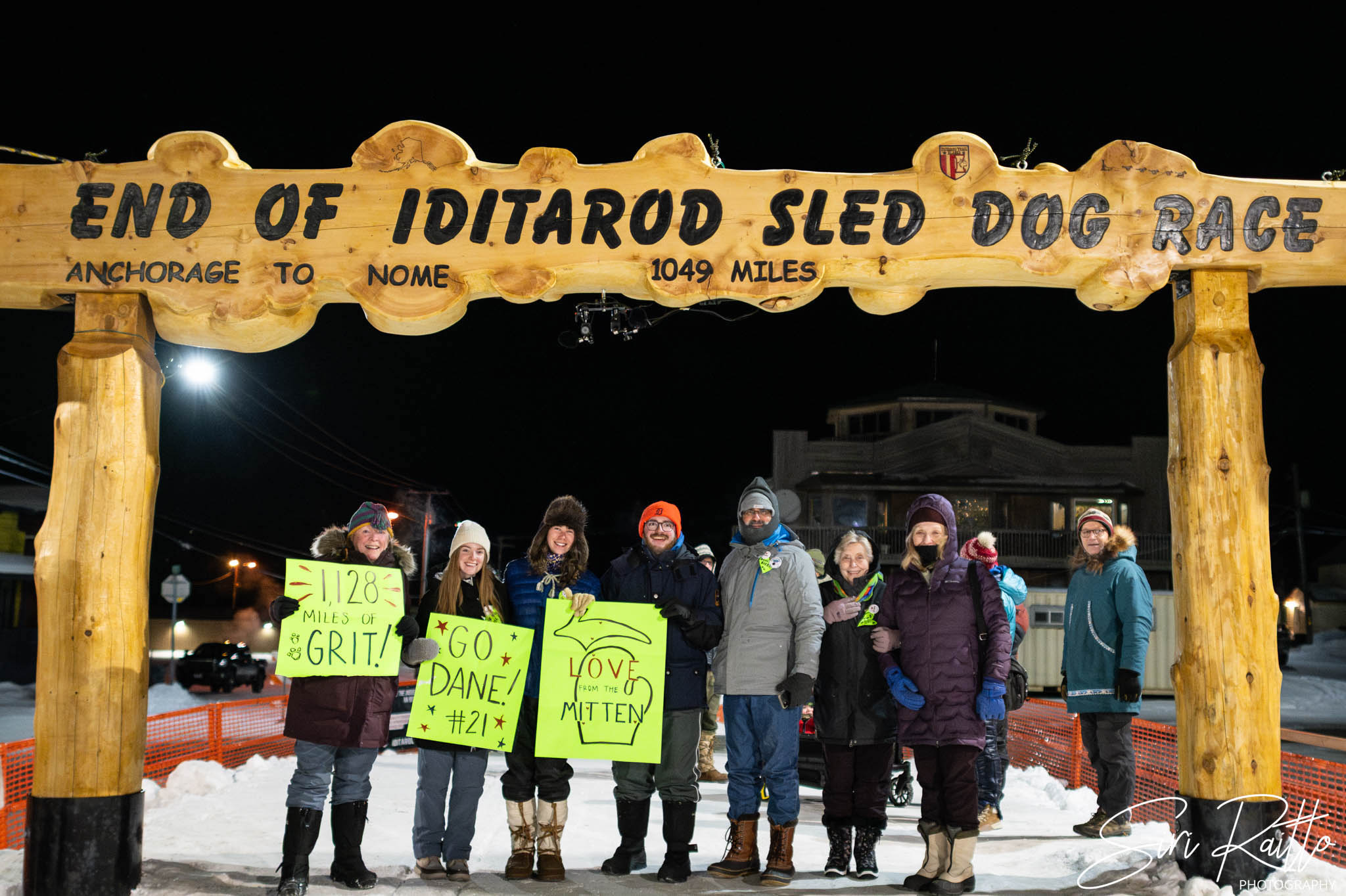
Dane Baker, one of the seven rookies to finish in the 2025 Iditarod, earned his veteran status after pulling into Nome on Monday March 17 at 1:35 a.m., after spending over 13 and a half days on the trail. Baker now joins “the club” of Iditarod finishers on the longest trail in Iditarod history. He said it’s an accomplishment not many can say they have and one he is proud to share.
“Finishing out Iditarod is high on the list of outdoor achievements,” Baker said. “To say I’ve done it, and to say I’ve done the longest one in the history of Iditarod, is pretty stinking cool.”
The race went well for Baker, who came into Nome with nine dogs on his team. He said his team of young dogs did great and while he did have to send seven home early, he said they made the most of a tough trail.
The first 120 miles of trail was slow, with soft, powdery, sugary snow. Baker said it was demoralizing to be going so slow for both him and the dogs. He said that once he got past Ruby the trail got better until Kaltag.
Once he left Kaltag heading south on the Yukon towards Grayling, Baker said the trail became even worse. His dogs zigzagged between a powdery, blown in trail and a crusty, partially frozen side of the trail as they tried to pick their best route. Other mushers reported similar issues on this portion of the race.
“I think some people would agree it was the worst trail you could ever mush on,” Baker said.
Other portions of the trail on the Yukon included running over jumble ice, making for fast but tough mushing with a potential for catastrophic disaster. Baker said this portion lasted less than 30 miles.
Once the trail left the Yukon after the return trip to Kaltag, Baker said the race went smoother. He said he enjoyed mushing across the coast, something he had been looking forward to before he even left for Fairbanks.
“The coast was awesome,” Baker said. “Probably the best part of the trip.”
The history that surrounds that portion of the race, travelling through the villages and the roll of the dice with the weather was what Baker enjoyed most about running along the coast. Varying terrains of hills and flats of ice made for a different type of mushing and provided views of great sunsets and the Northern Lights. He said he faced a brutal headwind running to Koyuk, but otherwise had great weather on the coast.
“The coast is just known for being brutal and tough,” Baker said. “It was cool to pull a lucky card and not have a bad year on the coast after a bad year on the Yukon.”
For his first time running on the sea ice, Baker said it was eerie and he was glad to have run it at night when he couldn’t see the expanse of frozen water he was racing on. He said it could have been a real head trip if he had run it during the daytime. Running straight, especially with a headwind and a tired team, was difficult to keep his dogs motivated.
With a third of the field scratching from the race or being withdrawn, and running towards the rear of the pack, Baker said his timing was something he kept in the back of his mind. He said he asked for confirmation from race officials to make sure he was keeping on a pace that would prevent him from being withdrawn.
“In the moment I was concerned, but I was just overcautious because I don’t want to get surprised,” Baker said.
Baker said he just needed to maintain his pace and run his routine of roughly six hour breaks to be on track to finish in time. He said that he knew if he dropped too far back he ran the risk of being pulled from the race.
”I tried to keep it at six hours because that was a real happy spot for the dogs and a happy spot for me, where I could get about a two hour nap in and they could get a good five hours of sleep and maybe two, full meals in their bellies,” Baker said.
Except for experiencing a major catastrophe with himself or his team, Baker said scratching was never an option for him this year.
“For me, that’s not an option,” Baker said. “This could be my one and only chance ever to run Iditarod.”
Baker said he had some low points during the race, including a couple of times when he left a checkpoint with a team of sore dogs. These were the only times he wondered if he needed to scratch in the best interest of his team. The dogs eventually warmed up after running for a few miles on the trail and completed the run to the next stop. There were also times when he was tired and had to learn to function with sleep deprivation. He said that sleep deprivation is something all mushers learn to deal with, and he was no exception. Baker said the key to staying in the race mentally was to keep a clear head and be in the moment with where he was and what he was doing.
“I was just like, this is just how it is,” Baker said. “The dogs are giving me the best effort they can give me right now and we’re having fun. We’re out here in the woods playing with dogs. Just because I’m only getting two, three, four hours of sleep a day, there’s no reason to be upset.”
Staring at the back of his team for over 1100 miles and managing his dogs at every checkpoint, Baker said he learned so much about mushing during the race. He said he learned about the dogs’ metabolism shift when eating during the race and was able to diagnose and address any muscle soreness issues before they became a big problem in his team.
“I felt like I learned more in two weeks of mushing than I have in two ears of mushing because you’re doing so much of it for an extended period of time,” Baker said.
And perhaps one of the greatest lessons Baker learned was to trust his team.
“I learned to keep my mouth shut, just let them figure it out,” Baker said. “Sometimes it’s easy to try and command them to do exactly what you want but they know what to do and sometimes it’s best to just shut my mouth and let them make a decision.”
Now that he’s back home and settling into a routine (Baker reported that after getting a full night’s rest, he travelled to Wasilla to eat two full-size breakfasts at IHOP), Baker said he will continue working for the Failors at Alaskan Husky Adventures in Willow. He plans to build a cabin with his girlfriend over the summer. He said he doesn’t know what the future has in store, but given the chance he hopes to race the Iditarod again on the traditional route to have a full Iditarod experience.
“I would like to race Iditarod again,” Baker said. “I had a lot of fun on a trail that wasn't very fun. I’m excited to see what a good trail would be like on a normal year going over the Alaska Range.”

By Kyle Wilkinson Kyle in the outside Our spring bear hunt was bittersweet this year. We’re heading home without

Frontiersman.com Valley athletes earned titles during the Region III Championships track and field meet last week at Colony High

Leila Petersen Palmer Moose Leila Petersen, a member of the Palmer track and field team, has been named a Frontiersman

By Katie Stavick Frontiersman.com In a direct response to public outrage over a horrific animal neglect case, the Matanuska-