Retiring teacher, coach urges Colony grads to ‘find their 68’
By Jeremiah Bartz Frontiersman.com A football coach using a hockey reference as the centerpiece for his keynote address may


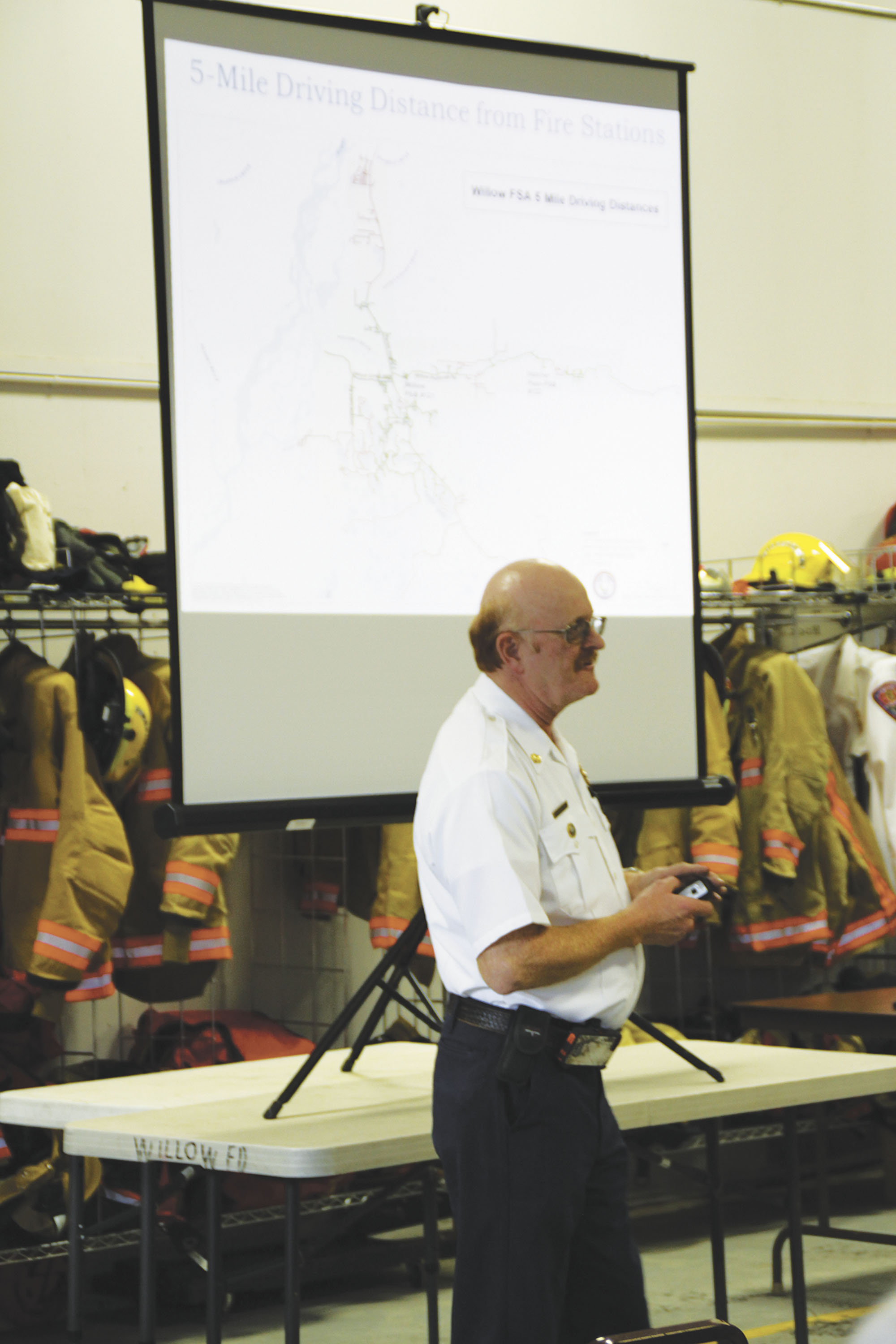
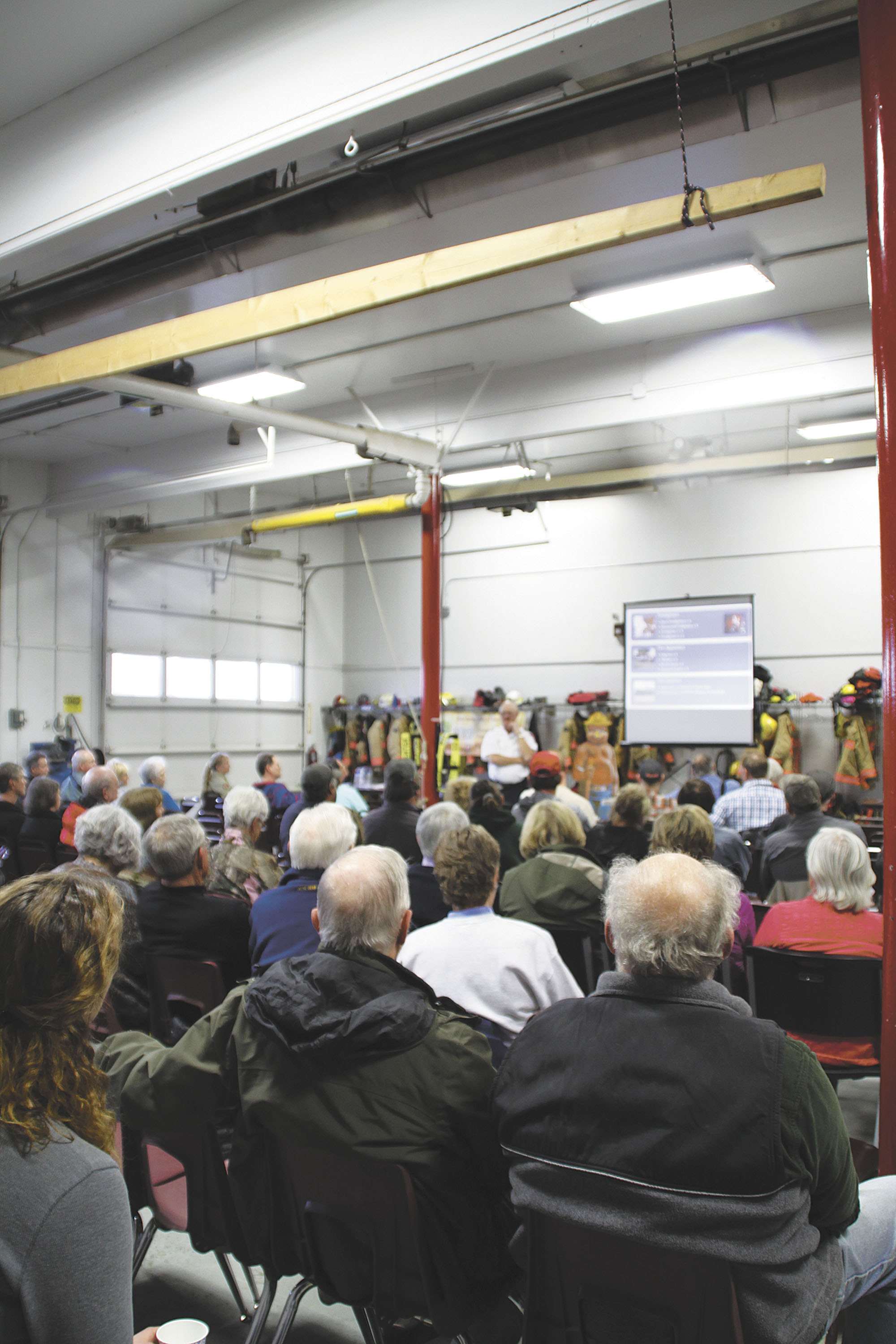
WILLOW — Some community members who attended a local meeting about a mill rate increasing the local fire service area appeared generally receptive to the idea.
Officials staged the community meeting even as the Mat-Su Borough Assembly was slated to add service areas to the list of potential exemptions to a property tax cap dating to 2005. Absent assembly intervention — the first public hearing for the budget is scheduled for 6 p.m., Monday evening — the mill rate for the fire service area will increase from 1.34 to 2.75 mills.
The most expensive proposed service area mill rate is the Point MacKenzie Service Area, at 9.12 mills. The service area with the lowest rate is the Greater Palmer Consolidated Fire Service Area, at 0.94 mills (that area benefits from the nearby Palmer service area, which has a mill rate of 3). Although the proposed Willow fire service mill rate is more than double the old rate, the increase is less than the average service area mill rate of 3.06 mills and the median service area rate of 2.92 mills.
The changes are needed to enhance the fire services in the area, fire officials said.
A mill is a tax rate unit equal to $1 per $1,000 of assessed value on a particular property. Under the proposal, an owner with property assessed at $200,000 would see the fire service portion of the bill increase from $268 to $550. Other portions of the property tax bill, including the 3.5 mill rate for the Greater Willow Road Service area, would remain unchanged.
Willow Fire Chief Mahlon Greene said that’s an increase of $23.50 a month on a $200,000 property. Consumers would likely see insurance rates decrease as a result of more fire stations in the area (including planned warm storage facilities at Nancy Lakes, Crystal Lakes, and elsewhere). Faster response times could improve the insurance rating for the fire department and reduce homeowners’ premiums, which would offset the mill rate increase, Greene said. Fire officials would also use the money to replace office space containing mold, and to replace aging equipment for firefighters.
“Basically, if someone were to cut out two packs of cigarettes a month, then that’s what it would cost,” he said. “It sounds like a lot. People tell you we’re doubling your taxes. But we’re trying to make your fire service more efficient, more proficient, save lives, and what I say to my people is: help save the lives of the people that are trying to save yours.”
The department faces challenges in recruiting and retention, Greene said.
“We can build this department up,” he said. “We can actually have more money to work them on duty shifts longer where maybe they’ll stay in the area.”
The department’s role extends beyond mere public safety, Greene said.
“Anything we can do in the community to help out, that’s what we’re here for,” he said. “We’re not just hanging out here waiting for your worst day to come see you, and we want you guys to know that.”
Of the seven fire service areas in the borough, the Willow department’s funding situation is the most underfunded, said Deputy Director Ken Barklay.
“We’re telling you where we’re at now, we’re telling you where we want to go, where we want to take the fire service,” he said. Willow “has the lowest mill rate. This is the most underfunded fire service area — and I have seven of ’em I’m responsible for — this one takes more of my time than any of ’em. Because you care.”
Outspoken opponent of the rate increase Doyle Holmes, a member of the Willow Fire Service Area Board of Supervisors, questioned whether the proposed mill rate increase was strictly legal, pointing to a section of borough code — 3.04.075 — enacted by the assembly in 2005.
That section of code says voters must approve any increase in the mill rate. In the case of service area mill rates, the rate increase must be “specifically approved by service area residents,” according to the code, at least for now. Willow voters overwhelmingly rejected a similar increase in 2012.
Holmes said an assembly vote without a corresponding call by voters would be illegal.
“It has to go before the people, according to that ordinance,” he said.
An agenda item for Tuesday’s borough assembly meeting would amend that section of the rules to exempt service area mill rates from the required vote. Willow area assembly member Vern Halter authored the proposal. The measure is in response to a request brought forward by Willow Road Services Board member Jim Norcross to allow service area boards to set their own mill rate, Halter said.
That, in turn, drew a written response from Alaska Rep. Wes Keller, R-Wasilla, whose district includes the service area.
“I have also reviewed this language with the attorney on my staff,” he said. “In our opinion, the proposed paragraph will allow the assembly to set tax rates for area expenses without being limited by” the cap.
“I agree with you that one effect is to remove the greater control that service area residents have over service area taxes …” Keller’s letter continued.
The debate about service areas, the tax cap and elections is hardly new. Former assembly member and present Alaska Rep. Jim Colver, R-Palmer, added verbiage to a motion approved by the assembly that became the revised property tax ordinance in 2005, according to the Frontiersman archives. Colver’s ordinance was designed to prevent a situation where a change in a service area mill rate would lead to a corresponding decrease for the school system or other borough taxes.
The assembly’s action on the issue effectively rendered dead a tax cap ballot measure that had been slated for an October 2005 ballot, which drew ire from anti-tax residents at the time.
Contact Brian O’Connor at 352-2269, brian.oconnor@frontiersman.com, or on Twitter @reporterbriano.


By Jeremiah Bartz Frontiersman.com A football coach using a hockey reference as the centerpiece for his keynote address may

Frontiersman.com With its headquarters in Wasilla, the Frontiersman has been a primary source of news for the Matanuska-Susitna

By Katie Stavick Frontiersman.com The next generation of leaders took flight this week as the Houston High School Class

By Kyle Wilkinson For the Frontiersman Keynote speaker and Carry the Cure President Bill Pagaran’s words boomed through the