Retiring teacher, coach urges Colony grads to ‘find their 68’
By Jeremiah Bartz Frontiersman.com A football coach using a hockey reference as the centerpiece for his keynote address may


One of the biggest draws to the Alaska State Fair is the giant pumpkin weigh-off, with pumpkins tipping the scales in at thousands of pounds and needing forklifts just to get them on the scales.
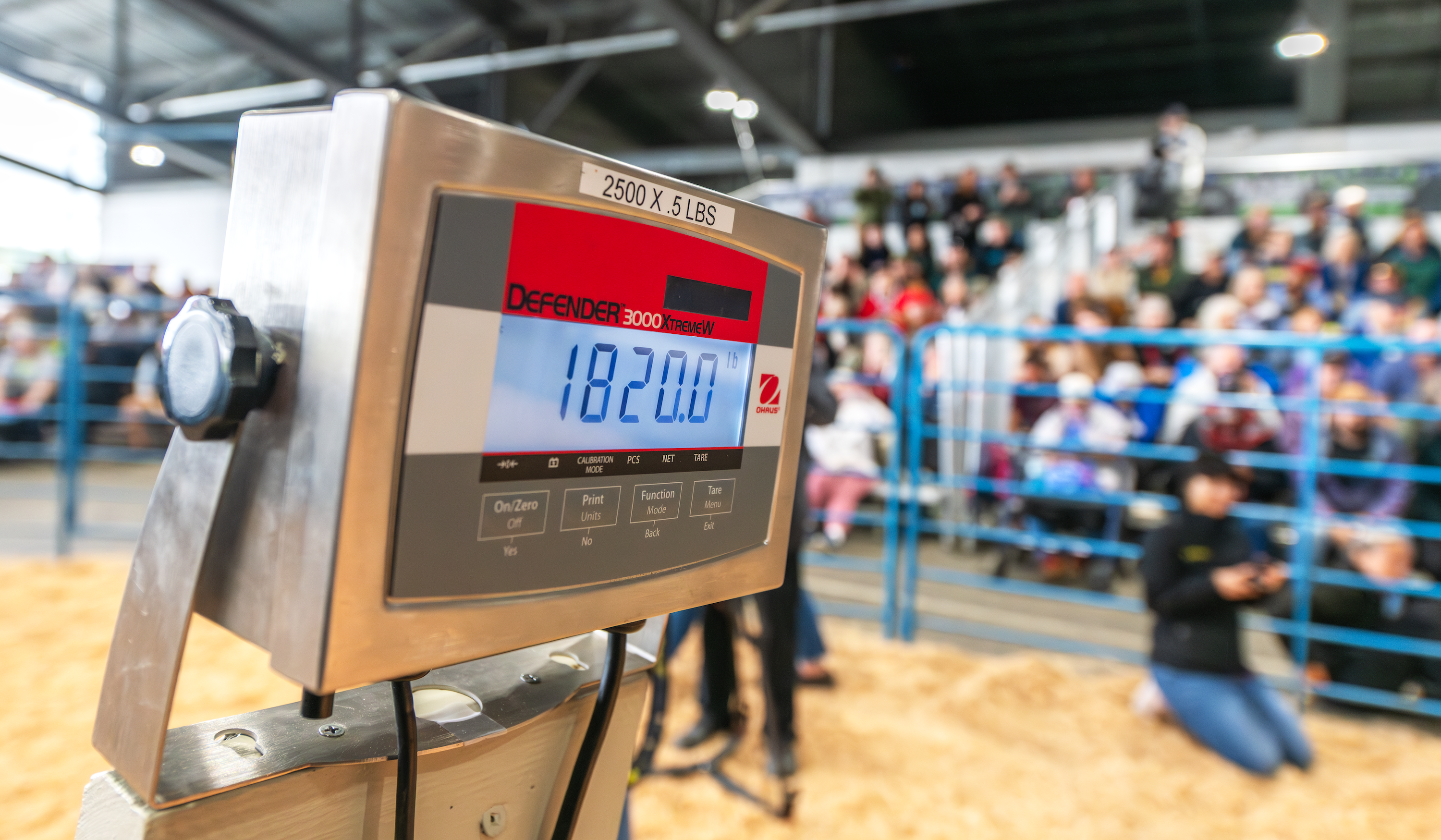
This year marked the 19th annual weigh-off, and was no exception as defending champion Dale Marshall walked away with top honors once again, with the pumpkin called “Bean Bag” coming in at 1,820 pounds.
This year, Marshall had two new challengers entering the pumpkin weigh-off, both rookies in the pumpkin game. Tress Whitfield, whose adorable pumpkin, named Polly Pumpkin, was disqualified for not making the minimum weight, which should be from 15-50 pounds for a field pumpkin.
“There were only two pumpkins entered last year, so I thought if entered, I might get third place,” said the first time pumpkin entrant.
Whitfield said that she started quite a few plants back in March, and her entry was the only one to make it through, having grown in the last two weeks. “Pumpkins were something I hadn’t grown before, and I try to do something different every year.”
She said her biggest challenge was fighting off slugs and mold since she didn’t grow her pumpkin in a greenhouse. Her advice to others thinking about giving pumpkin-growing a shot? “Get a greenhouse,” she says, adding, “Just have fun.”
Whitfield says she will try again next year, and will definitely use a greenhouse.
Meanwhile, friend and fellow entrant Ron Passarella came in second with his pumpkin, Galactus, weighing in at 71 pounds. As with Whitfield, he thought he might give it a shot and walk away with a ribbon.
“I’ve never planted a seed before, so this is my first effort,” Passarella said before the weigh-offs. He admits he got a bit of a late start compared to Marshall, and was winging it when it came to growing the pumpkin, but had help from his wife Grace. “It was a partnership. We dug out space for it, built a hoop house for it, but we were in it together. It was a challenge “Next year, we’re going to come ready to compete,” he promises. “Tell Dale we’re going to give him a run for his money next year.”
Marshall entered two pumpkins this year, though only one could be officially entered. His first pumpkin, Pretty Pumpkin, weighed in at 1,746 pounds. It was much prettier than his winning pumpkin, but as the emcees said, it isn’t about the look of the pumpkin, but the weight.
Over the years, the winning pumpkins with their massive weights are a far cry from the first year of the weigh-off, when the winning pumpkin came in at 340 pounds. So what is it about Alaska that produces such large pumpkins? One advantage that Alaska has is the long summer days, when the sun dips below the horizon for only a few hours each night, providing almost continuous daylight. This extended exposure to sunlight gives plants a significant "photosynthesis bonus," enabling them to convert more light into energy. The increased energy production allows plants to grow at an accelerated rate, leading to the massive size of fruits like pumpkins.
Along with the sun, Alaska has some of the best soil in the world, as farms often feature rich, moist soil that provides a good foundation for large crops. While the brief Alaskan summers offer many, many hours of sunshine, there are also periods of adequate rainfall that further supports plant growth, contributing to the development of substantial produce.
But many of the biggest pumpkins — the real monsters — aren't flukes; they're a product of careful planning. As in horse racing, it’s all about the breeding. Pumpkin growers look at the parent plants of the pumpkins, looking for the right set that yield mammoth pumpkins. The parents of the pumpkins are critical at their weight points, and for Marshall’s winning pumpkin this year, Bean Bag, the mother plant was 2,177 pounds, and the father plant was 2,551pounds. Bean Bag was only 97 days old when it was harvested, which in growing terms is not very old for a pumpkin.
Hopeful giant cultivators start their seeds in January, and wait as the seedlings grow under lights in greenhouses. For months, they transfer their plants into larger and larger pots until May when the ground is finally warm enough for them.
The fair holds two rounds of crop competitions along with separate competitions for pumpkins and, the main attraction, cabbages, which will see their own weigh-off on August 29. The winning specimens are donated to the animals at the Alaska Wildlife Conservation Center when the fair concludes.

By Jeremiah Bartz Frontiersman.com A football coach using a hockey reference as the centerpiece for his keynote address may

Frontiersman.com With its headquarters in Wasilla, the Frontiersman has been a primary source of news for the Matanuska-Susitna

By Katie Stavick Frontiersman.com The next generation of leaders took flight this week as the Houston High School Class

By Kyle Wilkinson For the Frontiersman Keynote speaker and Carry the Cure President Bill Pagaran’s words boomed through the