Retiring teacher, coach urges Colony grads to ‘find their 68’
By Jeremiah Bartz Frontiersman.com A football coach using a hockey reference as the centerpiece for his keynote address may


For centuries, the Dene prepared families for a hard life on the land, and one way to do that was through the games, which were used to develop agility, strength, endurance and resistance to pain. The Dene games were developed to gain hunting skills, used to build strength in adults and children to help around the camp, and to build endurance to traverse the sometimes rough terrain, as well to build resistance to pain.
The Finger pull is a Dene Game, and it was played to strengthen the fingers to prepare the Dene people for fishing season. It was very important to the Dene to be a good fisherman to provide for their families and dog teams. The ability to catch and provide fish to Dene families and their dogs was very important in Dene culture. Fish would be the main diet for many Dene families until the caribou hunts in the fall.
Often fish were very large and would have to be carried from the shore back to camp where the women would clean and prepare the fish. Fish would often be carried by inserting the middle finger into the gill area of the fish and carrying it. This required a lot of strength. In order to maintain their strength the Finger Pull game would be played.
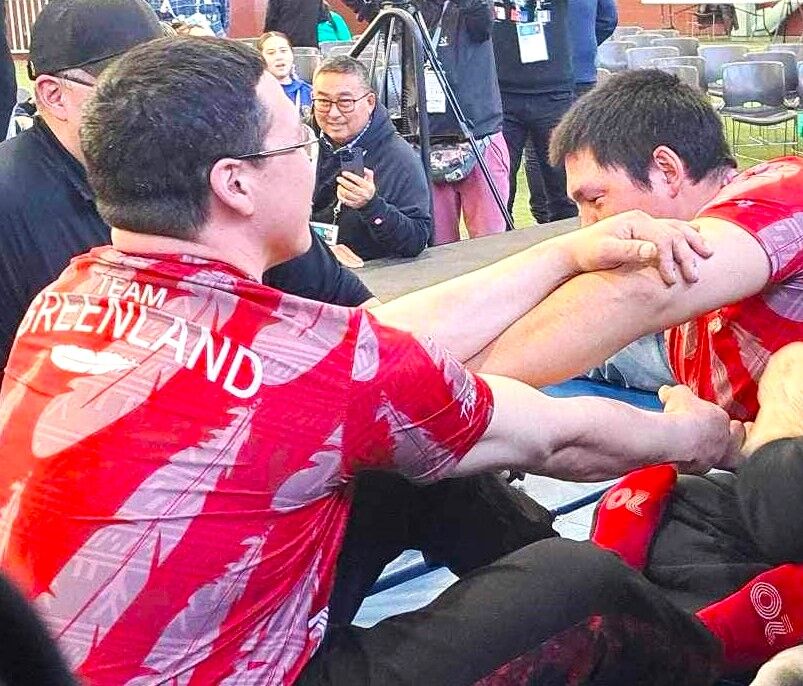
That display of strength was on display during the Arctic Winter Games on March 14 at the Menard Center as teams broke off for the individual sport.
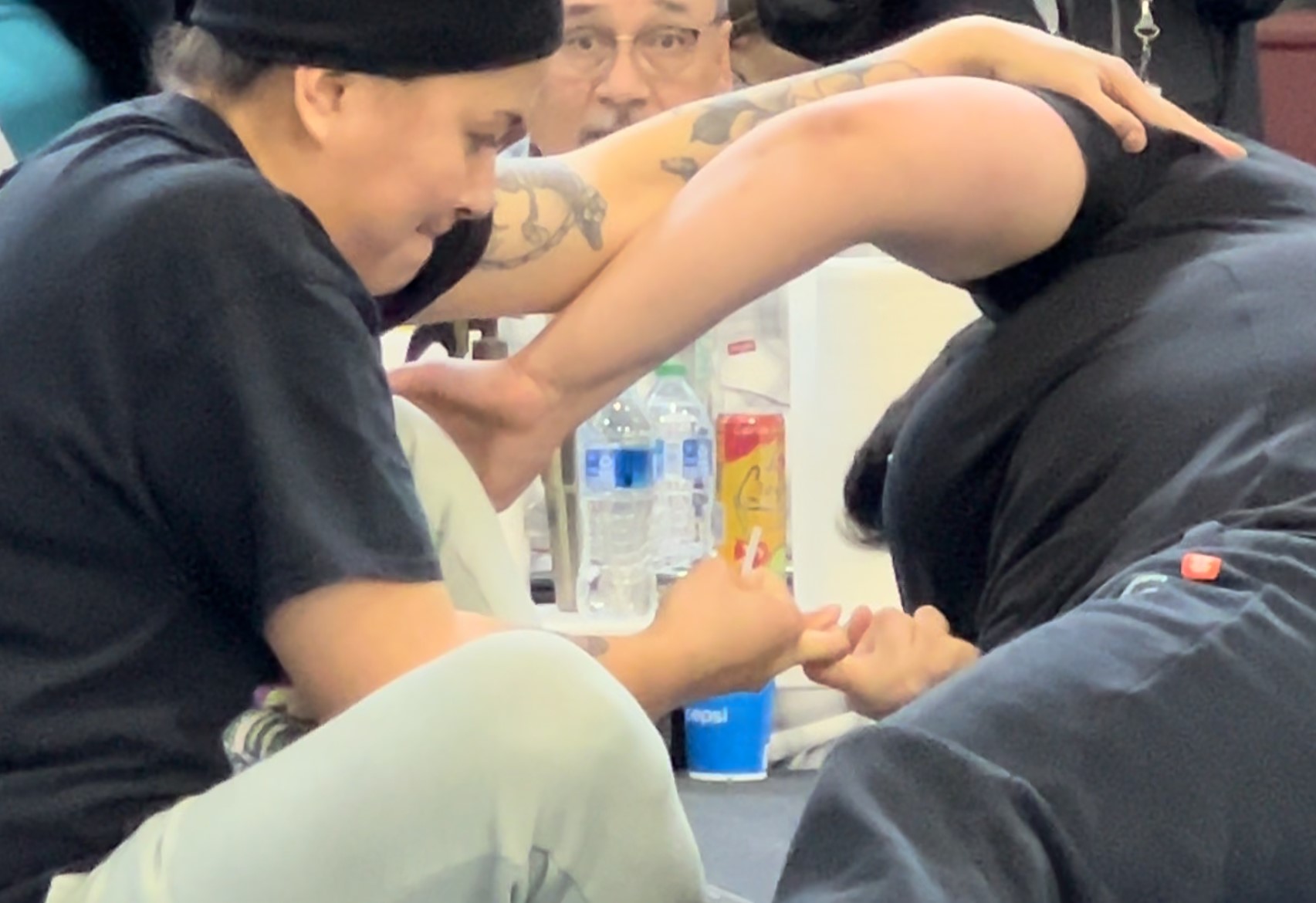
The Finger Pull is not as simple as hooking a finger and pulling. To start, a coin is flipped to determine who is offense and who is defense. The defensive player places his/her left leg straight out on the mat and bends the right leg at the knee and places his/her foot on the inside part of the thigh. Then they take their right arm and places it on their bent right leg and turns the hand so their palm faces up. He/she then proceeds to place the left hand on their opponents left knee.
The offensive positioning will see the offensive player place both of their feet against their opponent’s bent right leg, then place his/her left hand against their opponents left shoulder.
Once in position, the players will lock their middle fingers together. The defensive player must keep their palm facing up and the offensive player accommodates the grip by having their thumb facing up.
There is to be no twisting of the hands or jerking motion. The offensive player begins by pulling, slow, straight and even.
“You have 8 seconds to either straighten your opponent’s finger, or pull his elbow out of position,” explains Chris Martin, a former AWG athlete who served as Mission Staff for Team Nunavik Quebec during the 2024 AWG. Martin himself was a member of Greenland’s Dene Games team in 2002. He medaled in the Finger Pull in 2016, earning a Gold Ulu in the Open Male category.
“This (Finger Pull) requires a lot of upper body strength, hand strength, and a lot of tendon resiliency because we see tears all the time with this sport. It might even have on of the highest rates of injury,” he said.
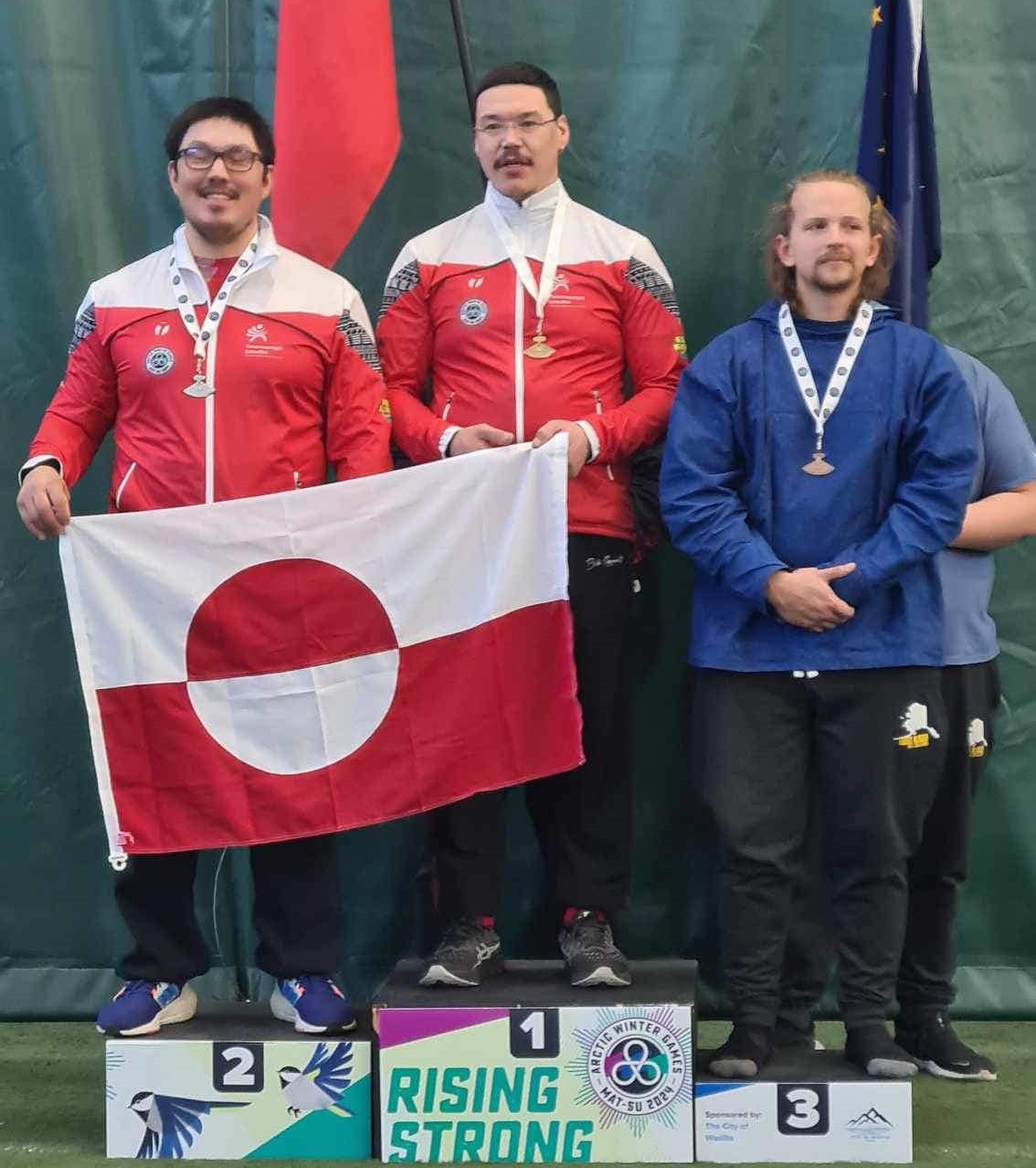
This year, the Gold and Silver Ulus in the Open Male Category went to Edvard Kruse and Julius Amossen of Team Kalaallit Nunaat, and the Bronze Ulu went to Judah Eason of Team Alaska.
This was the first year for the Open Female Finger Pull, and the Gold Ulu went to Louisa Berthe of Team Nunavik, the Silver went to Shawna McLeod of Team Northwest Territories, and rounding out the category with the Bronze Ulu was Roxanne Kigutaq, representing Team Nunavut.
Aqqalu Lukassen of Team Kalaallit Nunaat, Sefa Allen of Team Alaska, and Marlin Patrick Miersch-King of Team Northwest Territories took home the top medals in the Finger Pull Male 2006 or later.
Team Nunavik swept the top three slots for the Finger Pull Female 2006 or later. Samantha Rupert, Aiva Lingard, and Ambriel Rupert took home the Gold, Silver, and Bronze Ulus, respectively.

By Jeremiah Bartz Frontiersman.com A football coach using a hockey reference as the centerpiece for his keynote address may

Frontiersman.com With its headquarters in Wasilla, the Frontiersman has been a primary source of news for the Matanuska-Susitna

By Katie Stavick Frontiersman.com The next generation of leaders took flight this week as the Houston High School Class

By Kyle Wilkinson For the Frontiersman Keynote speaker and Carry the Cure President Bill Pagaran’s words boomed through the