Retiring teacher, coach urges Colony grads to ‘find their 68’
By Jeremiah Bartz Frontiersman.com A football coach using a hockey reference as the centerpiece for his keynote address may


PALMER — Alaska Dogs Gone Wild, an Anchorage flyball club, held their tenth-annual Summer Solstice tournaments June 17-21 at the fairgrounds.
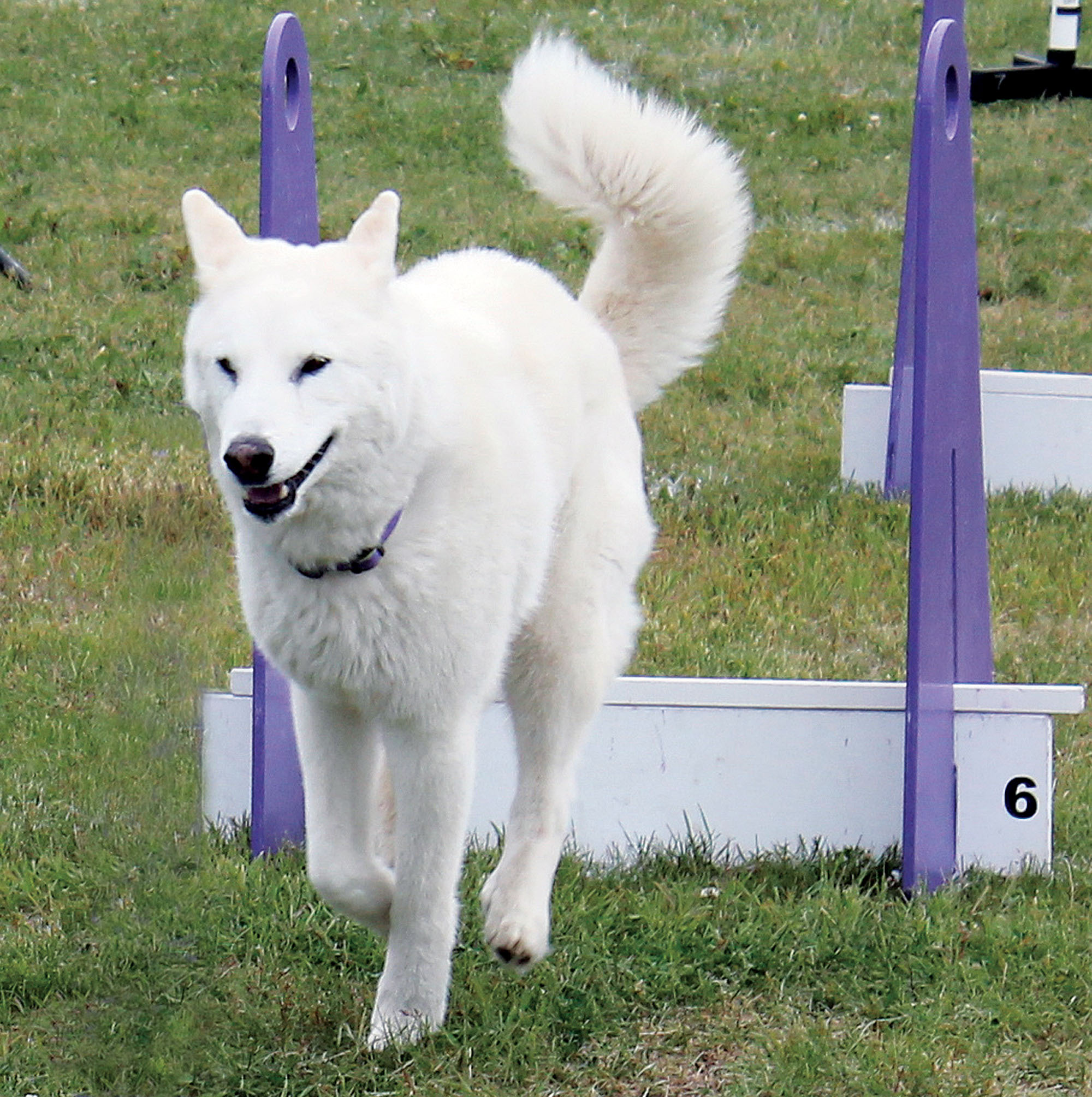
Flyball is a relay sport for dogs: teams of four negotiate a number of hurdles one at a time, retrieve a ball from a spring-loaded box, and return over the hurdles to the starting line. Two teams usually face off in head-to-head heats, and the first team to complete the relay without making an error wins the heat. Dogs are also scored individually based on the performance of their teams, where better times merit more points.
To train dogs in the sport, owners break down the contest into a number of smaller parts. They will have their dog focus on jumping hurdles or retrieving the ball separately, and then combine all of the steps together.
The sport is gaining popularity for a number of reasons. Not only is it a competition available to mixed-breed dogs, but it is also an excellent opportunity for high-energy canines. Owners also seem to enjoy the sport as a fun hobby and a good way to socialize.
Six flyball clubs were represented at the Summer Solstice event: Anchorage clubs “Alaska Dogs Gone Wild,” “Pawsitive Synergy,” and “Glacier Shakers,” Illinois club “BC Boomerangs,” Oregon club “Stumptown Racers,” and Colorado’s “Agents of Chaos.”
Event organizer Curtis Smith said he was excited that out-of-state competitors attended the tournament this year, as they haven’t for some time.
To welcome those non-Alaskan participants to the state, there was a barbecue organized for the first night of the competition. BC Boomerang competitor Joli Jurcak said that she was happy to return to the event — she last attended in 2010.
“It’s a once-in-a-lifetime opportunity to go play flyball in a state you’ve never been to,” she said, of the tournaments.
The Summer Solstice event was broken into two, two-day tournaments. Participants camped out on the fairgrounds around the flyball track, and when the competition started, members of different clubs combined to make heterogeneous teams. When dogs were done, they usually cooled off in small, plastic pools stationed around the campgrounds.
However, the tournament is not the only flyball competition that takes place in Alaska. Alaska Dogs Gone Wild organizes three other events during the year, and Pawsitive Synergy puts on two tournaments annually. Flyball competitions can be organized for both indoor and outdoor settings.
The sport also has a substantial national scene, according to Smith. All of Anchorage’s clubs are gearing up for the North American Flyball Association’s CanAm Classic, which will take place near Indianapolis in mid October.
For more information about flyball, visit flyballdogs.com/alaska.
Contact Kaden Weaver at 352-2270 or kaden.weaver@frontiersman.com.
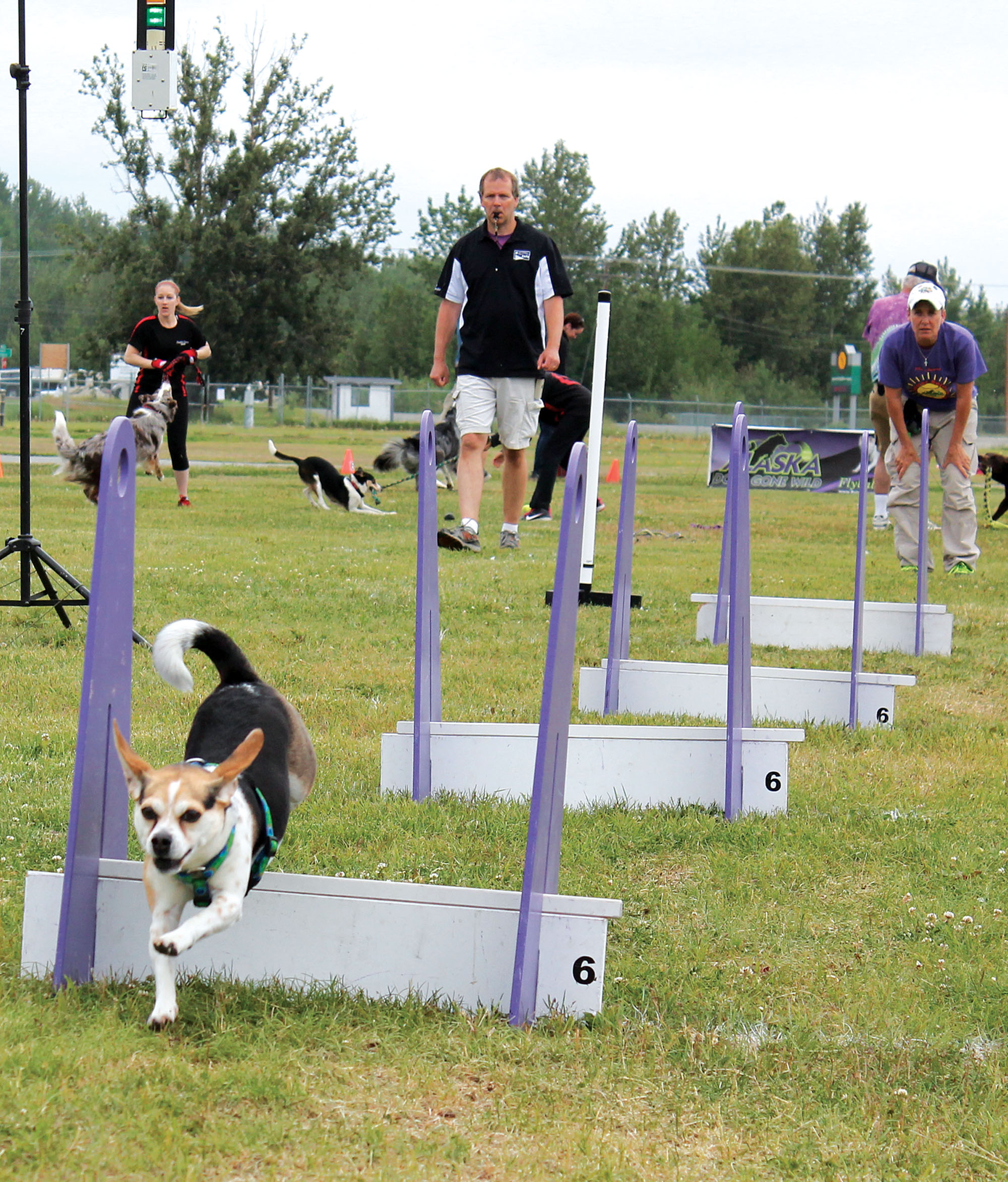
KADEN WEAVER/Frontiersman

By Kyle Wilkinson Kyle in the outside Our spring bear hunt was bittersweet this year. We’re heading home without

Frontiersman.com Valley athletes earned titles during the Region III Championships track and field meet last week at Colony High

Leila Petersen Palmer Moose Leila Petersen, a member of the Palmer track and field team, has been named a Frontiersman

By Jeremiah Bartz J’s World August would have been the start of my 25th year as an editor at