Retiring teacher, coach urges Colony grads to ‘find their 68’
By Jeremiah Bartz Frontiersman.com A football coach using a hockey reference as the centerpiece for his keynote address may


While most of the sports featured in the 2024 Arctic Winter Games including hockey, speed skating, basketball, table tennis-are familiar to even the most…there is one sport within the schedule that many are not familiar with-futsal.
Despite gaining worldwide popularity since it was conceived in 1930, there are many people who haven’t heard of the sport. Futsal. The sport is popular among the circumpolar regions because it is played indoors, often on a basketball court, and the smaller teams make it easy for teams to travel for play.
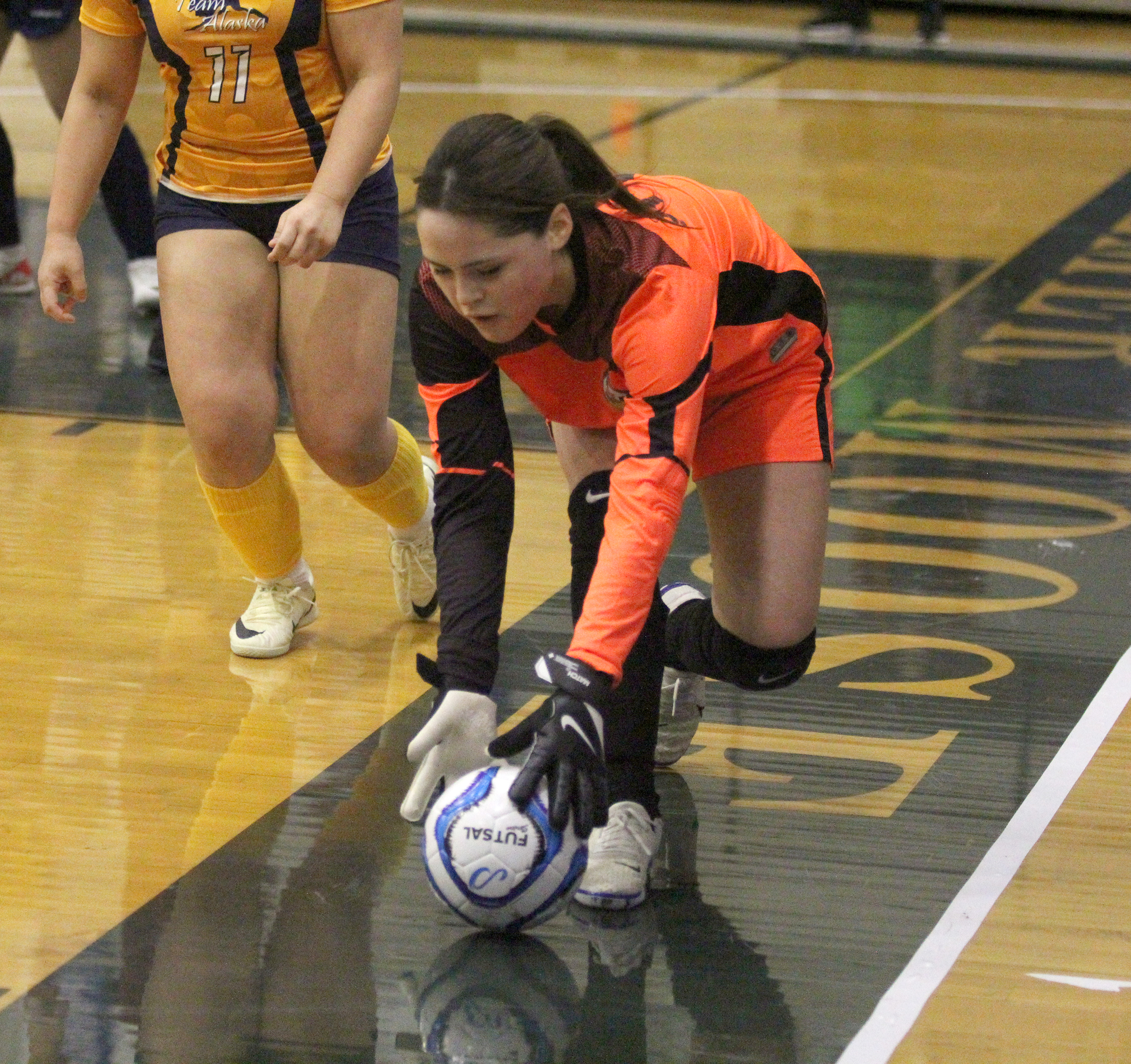
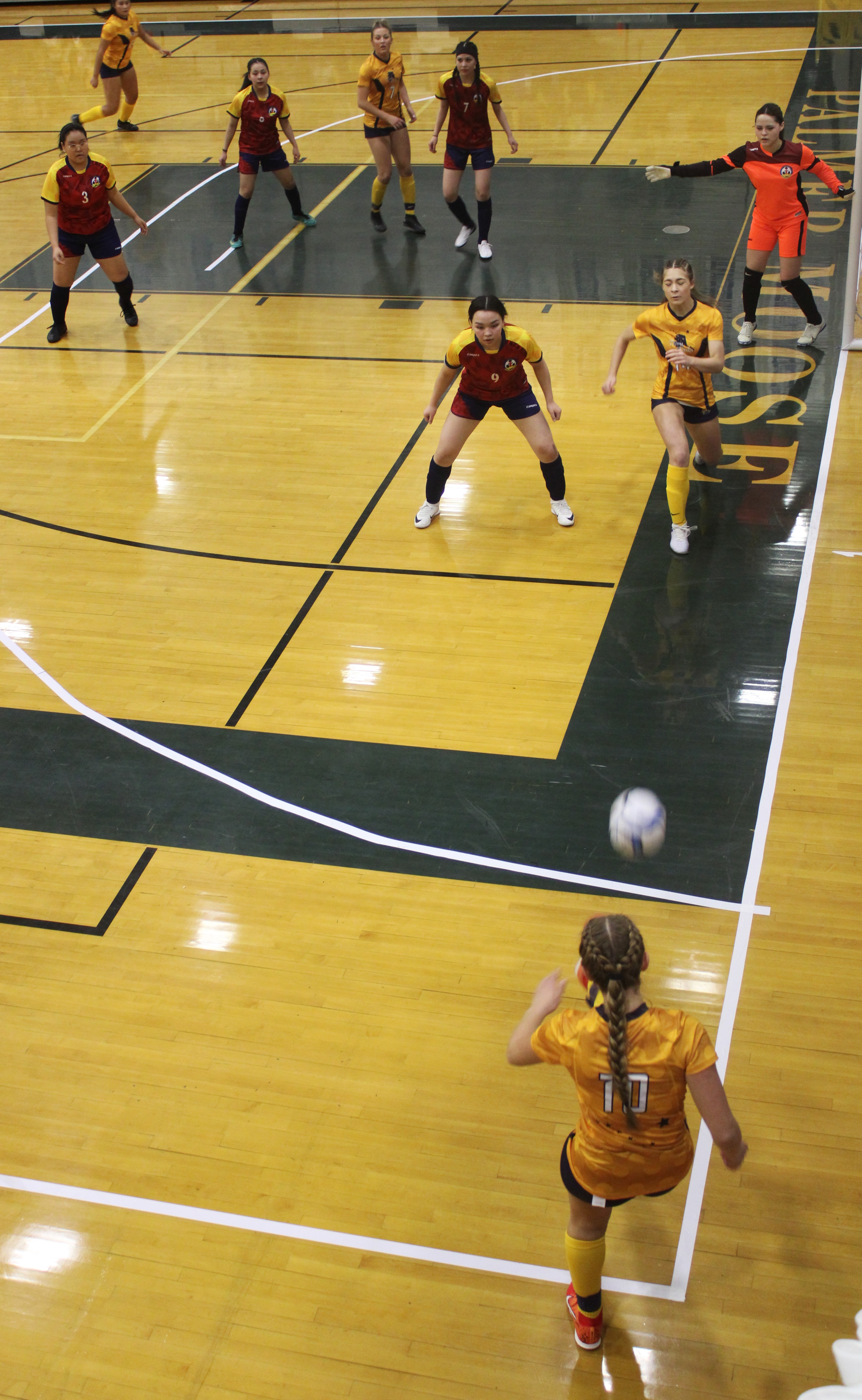
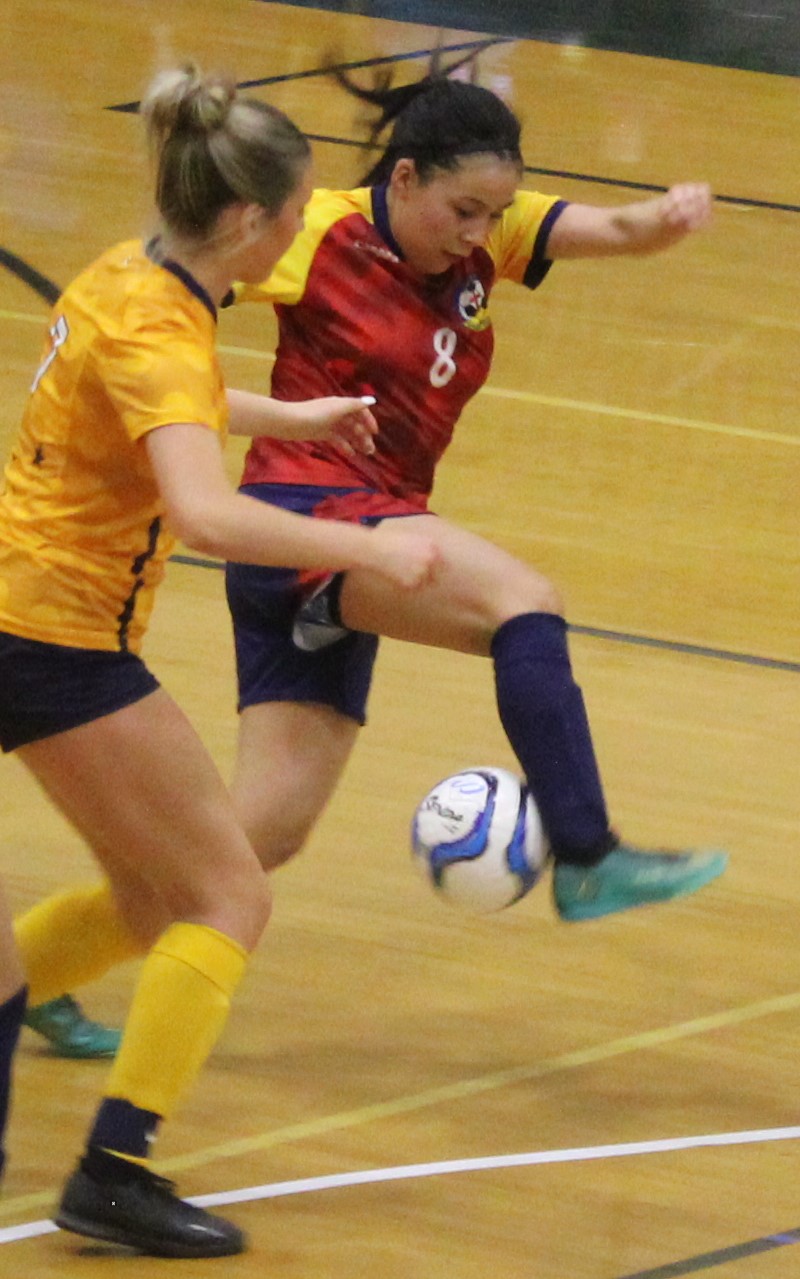
A quick peek into the Palmer High School gym during a futsal match between Team Alaska and Team Nunavut, and a passerby may think it is indoor soccer, but fans, staff, and players will quickly tell you it futsal is not indoor soccer.
Futsal and soccer share many similarities, and the skills learned are completely transferable to the full field game of soccer, and implementing a nationwide infrastructure program is very much feasible.
But there are also significant differences that make each sport unique. The immediate differences include a smaller number of players (five players, including the goalie while soccer has 11), a smaller field, and a smaller, heavier ball, while soccer is played on a larger field with a lighter, larger ball.
Soccer requires more physical endurance and speed, as players cover more ground and have to move quickly to intercept passes and score goals. The larger field and ball make soccer a more open game, where players have more time and space to make decisions.
In futsal, on the other hand, players have less time and space to make decisions, and the heavier ball moves faster and bounces less, requiring precise ball control and quick thinking. The smaller space also means players must have great technique and skill.
Unlike association football, there is no offside in futsal.
Futsal is the FIFA-recognized form of small-sided indoor football (the word is a contraction of the Spanish 'fútbol sala'). It is played between two teams who each have five players on the pitch at any one time, with rolling substitutes and a smaller ball than soccer that is harder and less bouncy.
The quick nature of futsal means players usually cover the whole field (or the pitch) but will generally have primary roles. Teams have squads of 14, of which five (including one goalkeeper) can be on the pitch at any one time, with rolling and unlimited substitutions. Teams can replace a regular goalkeeper with a 'flying goalkeeper'; an outfield player in a special shirt in goalkeeper's colors. The power play-style tactic helps coaches to change games and especially chase goals when losing.
The positions include the goalkeeper, who handles the ball in the penalty box, but is also more engaged in outfield play than in soccer. The small pitch size making throws important, and often goalkeepers will tape their fingers rather than wear gloves to aid throwing.
There is also a defender, who is often the last man ahead of the goalkeeper but also important in starting and joining attacks; a winger, who fills crucial roles in attack and defense, meaning they must possess skill and creativity on the pitch; a pivot, who is most often the most forward player on the pitch, whose job isn’t necessarily to score goals, but is the vertical reference of the team in attack, often is alone in the middle of opponents’ defense and most of the time is used to play positioned back to opponent's goal.
There is also a universal, who is a player able to fill in and perform various outfield roles.
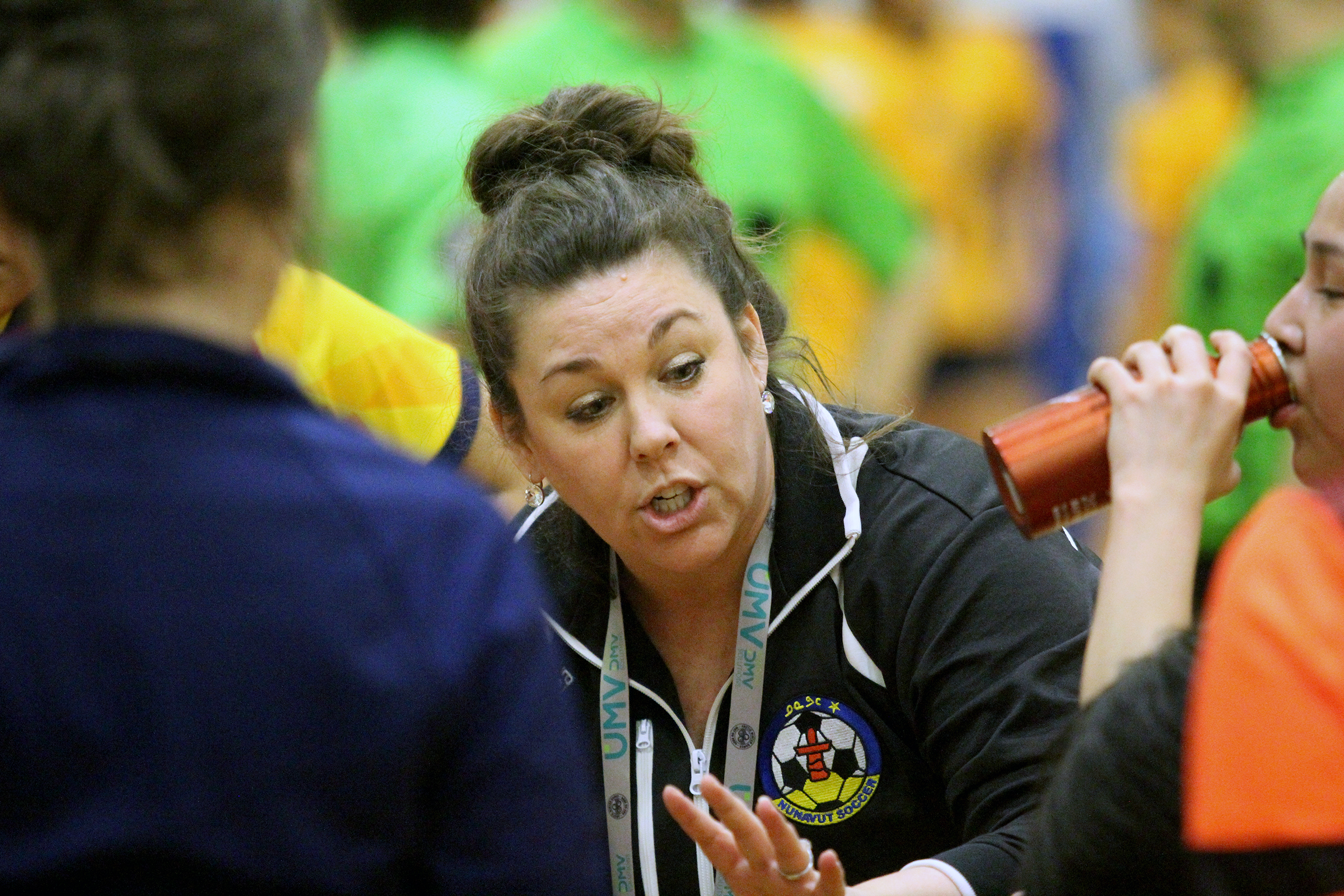
So there are the positions, but how about the game itself? Each half lasts 20 minutes, with a clock that stops whenever the ball is out of play; both coaches can also call a one-minute time-out each at any point in either half.
In soccer, when the ball goes out of bounds, the players throw the ball back into play; in futsal, the ball is kicked back into play. Once a team have committed 5 fouls in one half, for every subsequent foul the opponents get a free shot at goal from the second penalty mark, 10 meters out (often known as a double penalty). If the foul is closer to goal, the shot can be taken from where the penalty occurred. At half-time, foul counts are wiped clean, but they are not erased prior to either extra-time period, where second-half fouls still count.
Futsal is also a fluid, fast-moving game. Case in point, when play needs to restart, the player in possession of the ball has 4 seconds to restart play, which the referee will count with their fingers in the air. If play isn't restarted within 4 seconds, an indirect free-kick will be awarded to the opposing team. The goalkeeper is also not immune from the quick pace, as he or she is not allowed to control the ball for more than 4 seconds in their own half.
Players can go into the penalty area and goalkeepers are allowed out, but the latter cannot touch the ball again once they have cleared it (via as many touches as they like) until it has gone into the opposition half or been touched by an opponent. Clearing the goal is done by throwing the ball, not kicking.
If the ball goes over the touchline or hits the ceiling, play is resumed with a kick-in. Goals cannot be scored directly from a kick-in. If the ball crosses the by-line, it results in either a corner or a thrown goal clearance by the keeper.
A standard match consists of two equal periods of 20 minutes. The length of either half is extended to allow penalty kicks to be taken or a direct free kick to be taken against a team that has committed more than five fouls. The interval between the two halves cannot exceed 15 minutes.
During the AWG, futsal competition is held in five age/sex classes – three girls’ classes (intermediate, junior, juvenile) and two boys’ classes (junior, juvenile). Teams consist of nine athletes and one coach. Teams that regularly participate in indoor soccer include Alaska, Yukon, Alberta North, Northwest Territories, Nunavut, and Sapmi.
People can catch futsal all week. To view the schedule and purchase tickets, please visit www.awg2024.org

By Jeremiah Bartz Frontiersman.com A football coach using a hockey reference as the centerpiece for his keynote address may

Frontiersman.com With its headquarters in Wasilla, the Frontiersman has been a primary source of news for the Matanuska-Susitna

By Katie Stavick Frontiersman.com The next generation of leaders took flight this week as the Houston High School Class

By Kyle Wilkinson For the Frontiersman Keynote speaker and Carry the Cure President Bill Pagaran’s words boomed through the