Retiring teacher, coach urges Colony grads to ‘find their 68’
By Jeremiah Bartz Frontiersman.com A football coach using a hockey reference as the centerpiece for his keynote address may


WASILLA — Most places, the thought of a transportation fair might sound like a rather dry gathering for trade show folks. But in Alaska, and especially in the Mat-Su Valley, transportation is something few take for granted.
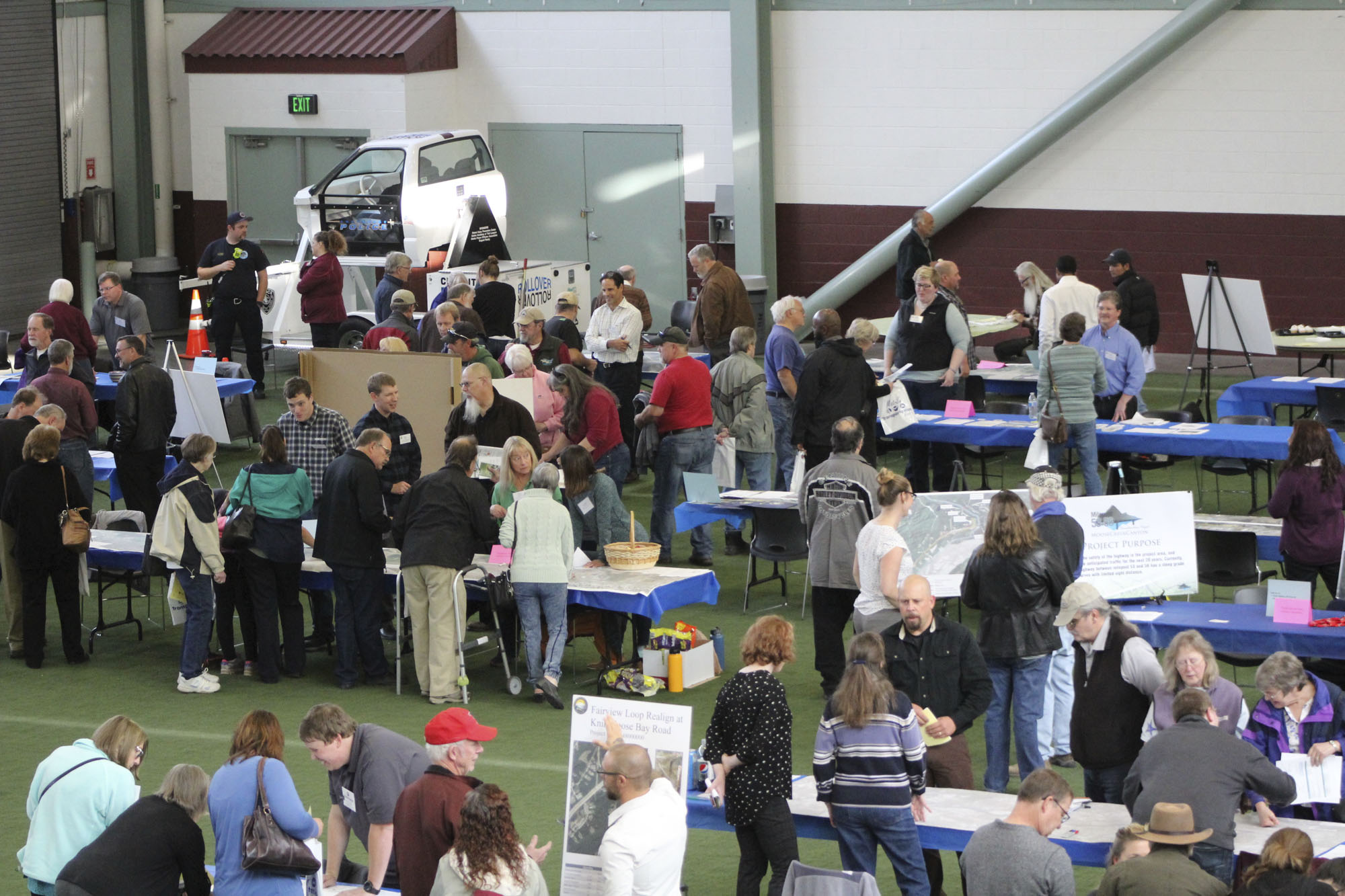
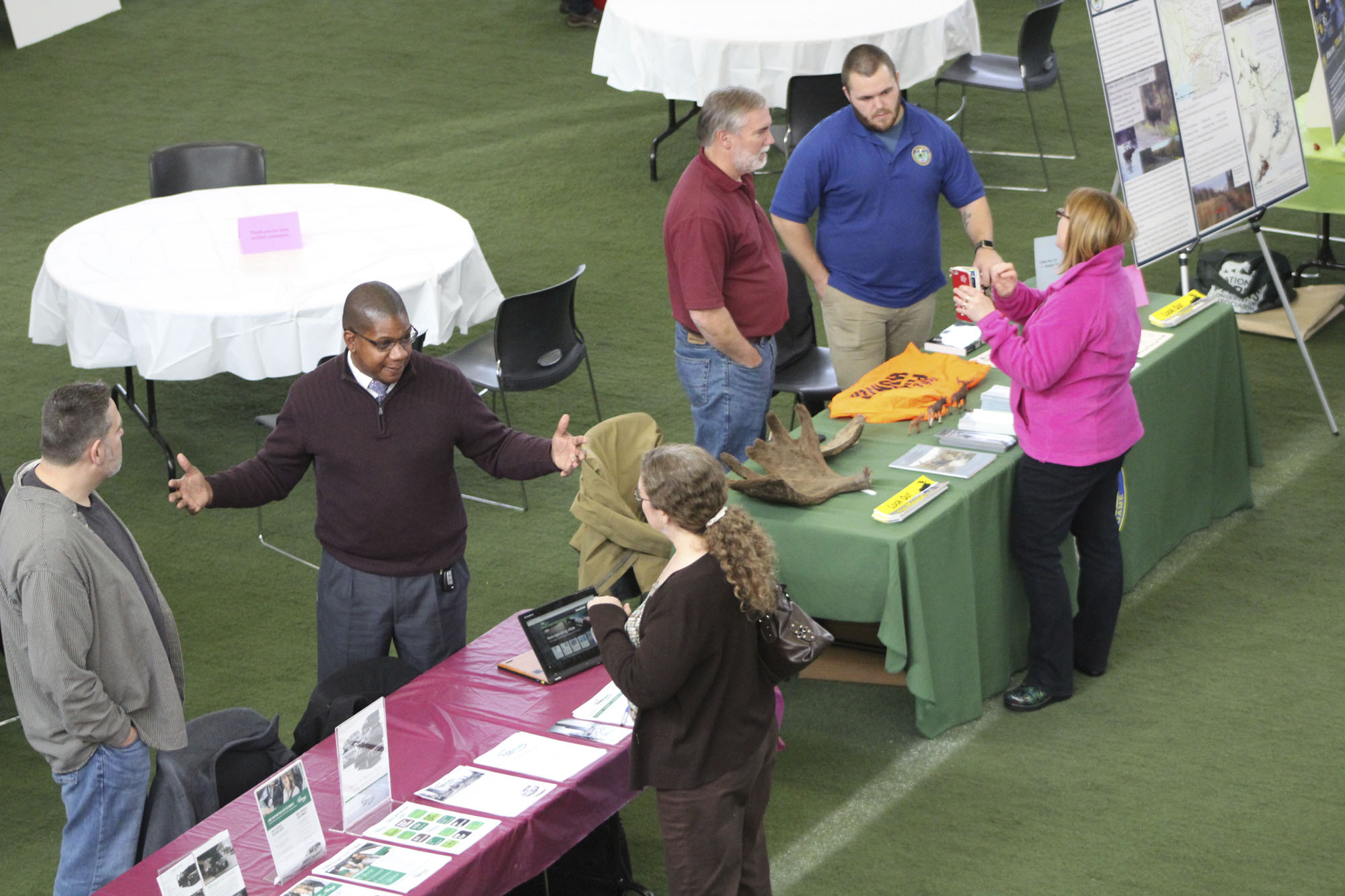
Hundreds passed through the doors at the Menard Sports Complex in Wasilla on Thursday to check out booths that featured details in graphic form, presented by informed representatives on topics spanning from the progress of particular neighborhood road construction to commuter trains and even ski lifts as part of the 10th annual Mat-Su Transportation Fair.
“I think this is absolutely spectacular,” said Mat-Su Borough Assembly Member Randall Kowalke, whose district in the Willow and Talkeetna areas covers more than 18,500 square miles, forcing him to travel 2,000 miles a month to visit constituents. “This brings all the pieces together. Alaska and the Mat-Su Borough both have issues with scale… This brings all these moving pieces in transportation together and puts it on the radar screen for people to see.”
Among the more than 100 booths was one staffed by the MSB’s Joe Quickel, which displayed a new feature to its website the borough hopes to have up by the end of the year, which will allow residents to click on particular pinpoints on a map and see timely updates on road projects.
“This is trying to put it all together and you also have a link to DOT projects, too,” Quickel said. “Right now you’ve got to kind of look in different places, but in the long-term we hope to put it all together in one location.”
Any number of those pinpoints on Quickel’s map were likely to be represented individually at one of the other booths with details on projects big and small. Technological marvels were on display, including a drone which allows borough officials and others to get readily updated aerial photographs.
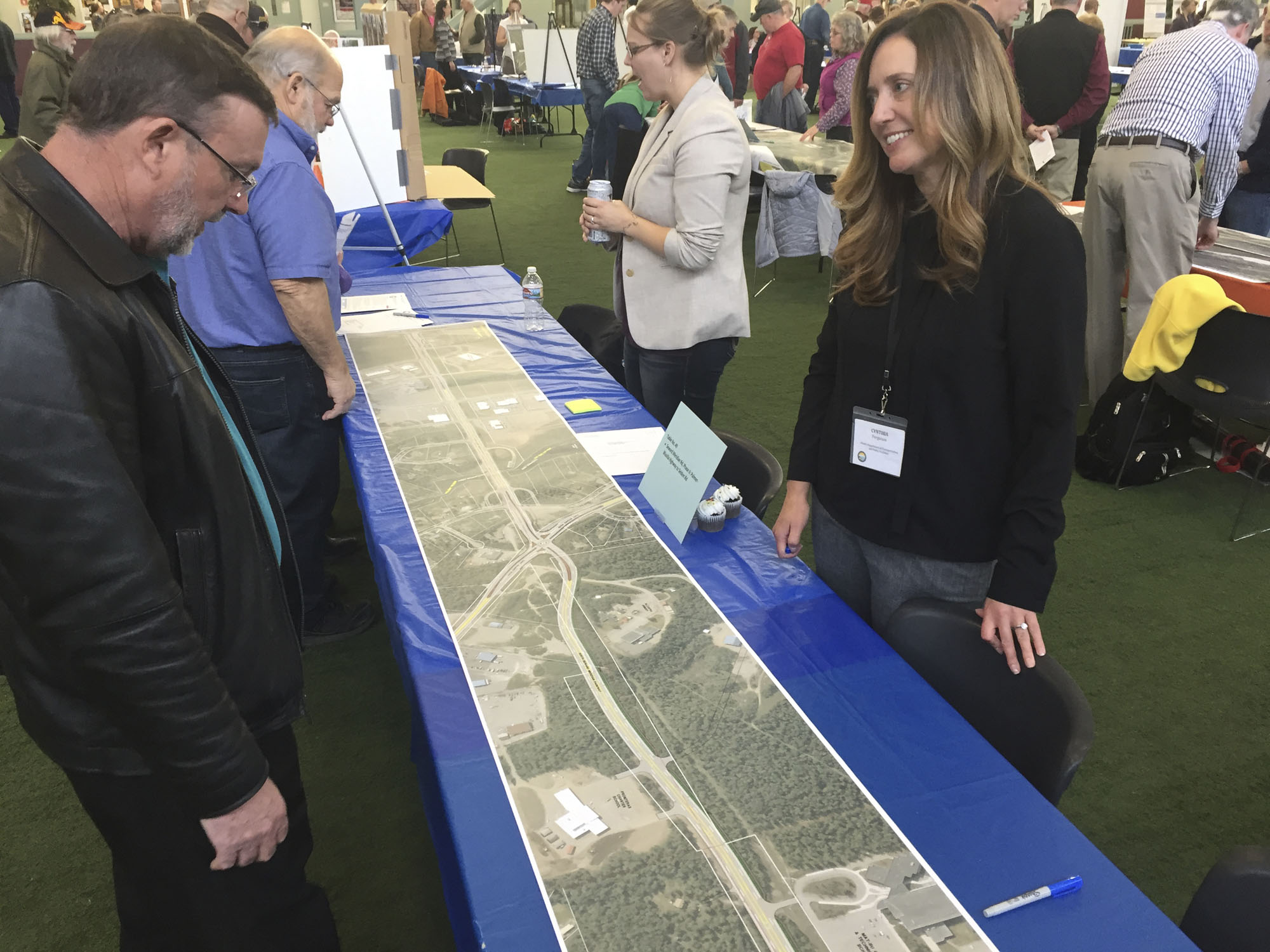
Other projects were bigger and dreamier in scope, including a booth manned by Cynthia Wentworth proposing the development of a commuter train between Anchorage and Wasilla.
It drew the attention of Sen. David Wilson (R-Wasilla).
“I think that with the couplet we’ll see in Wasilla, when that goes in, the train depot has to stop,” Wilson said. “If you wanted to have a combined commuter train dropoff in the future, that would be a good project.”
For Wentworth, it was a passion that began for her in 1980.
“The manager of the Alaska Railroad, on a reconnaissance trip to Wasilla in 1980, all the people said, when can we get commuter rail?” Wentworth recalled. “He said, ‘as soon as we get the money we can.’ And that was when Wasilla had about one-sixth the people (it does today).”
She’s never given up hope of the commuter train coming on line, lo the many years. She blames the Alaska Department of Transportation for the project never getting off the ground.
“We have a very stubborn DOT,” she said. “I’ve been trying to talk to the governor since May. We formed a committee two years ago and had two series of comments… but the state DOT just doesn’t incorporate those comments. They just keep doing highways and don’t do what they’re supposed to for rail.”
To that end, Wentworth is collecting signatures for a petition to send to the governor. Thursday’s expo served as a prime opportunity to gather plenty.
Renderings that show vans and buses on-site to pick passengers up in both Wasilla and Anchorage, which, she said, would become less necessary over time.
“You’d be getting on a train in Wasilla and be in downtown Anchorage. Eventually, it would take you to the airport or the Dimond Center,” Wentworth said, estimating implementation costs at $15 million. “We’d start out September through May when they’re not using the equipment for tourist railroad.”
Whatever happens with Wentworth’s group and her petition, it’s that kind of big vision that Wilson said is desperately needed in Alaska.
“Here, DOT focuses more on road maintenance, new construction, but transportation in Alaska is more than just the highway,” Wilson said. “You have the Marine Highway and public transportation, which in the Mat-Su is an issue in itself… I’d like to see more of a long-term transportation approach of where the borough is growing. We’re up to 100,000 folks and we have more cars on the road than most other municipalities.”
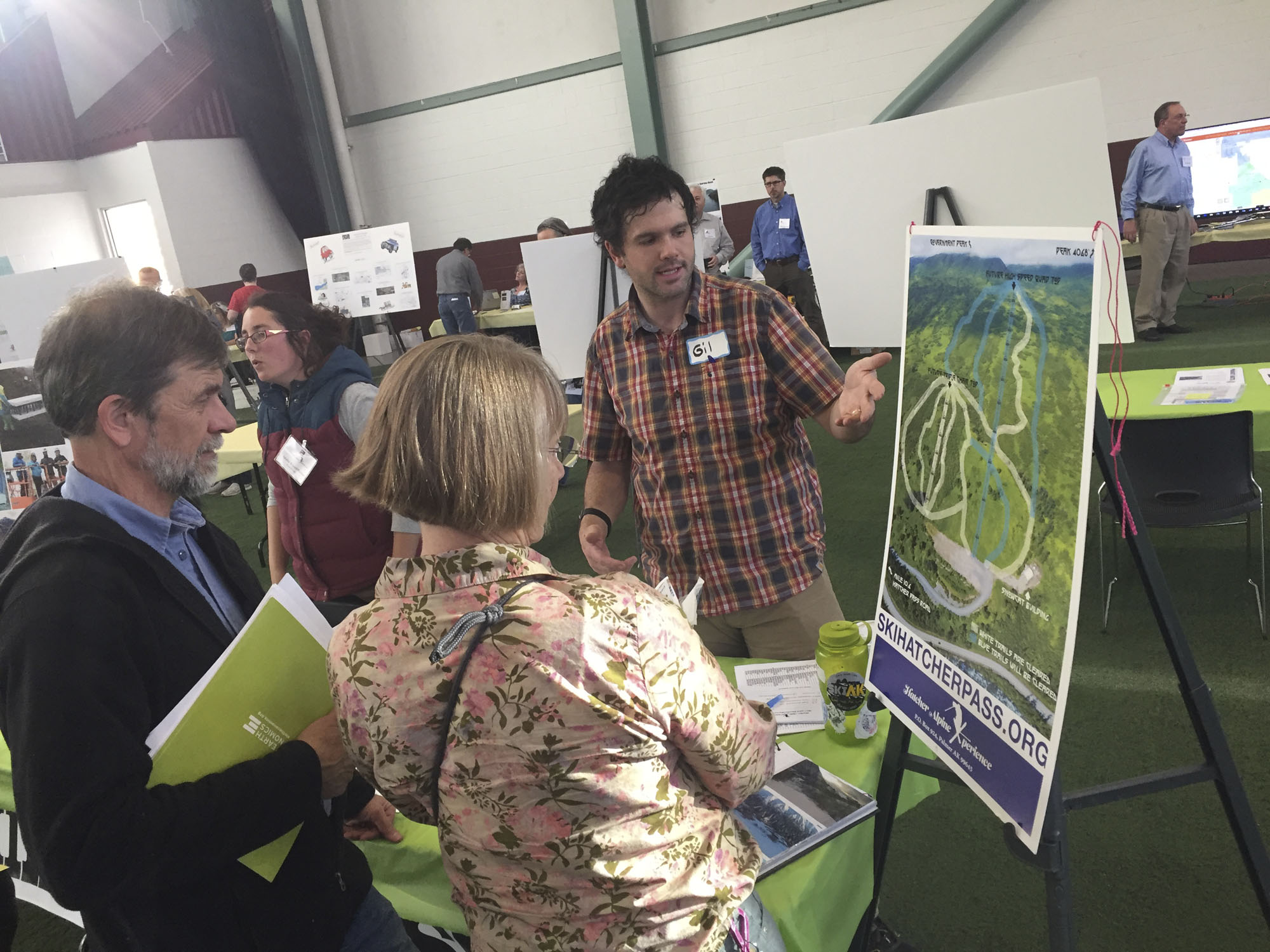
Not all travel presented at the fair was about cars and trains. Another booth featured the developing Hatcher Alpine Xperience, a nonprofit, which seeks to bring downhill skiing to the Mat-Su Valley.
Chairperson Louisa Branchflower said the group continues to groom and maintain trails in the hopes of having skiing with chair-lift available by the winter of 2018-19.
“At first we’ll have access to about 30 skiable acres, and once we get that going, we’ll start fundraising for the next one,” Branchflower said. “It’s great to have a ski lift. For people who don’t have ability or skills to hike up on their own, it opens the sport up to a lot more people.”
Branchflower said that it’s taken some convincing after people have seem similar attempts at the venture fail before, so the Transportation Fair affords that availability.
“A lot of people don’t think we exist, or they’ll say, ‘oh, they’ve been trying to do that for years, so it’s good to reach out to people to show, ‘hey, we’re doing something different. We’re doing it for our community — we’re not a big developer; we’re not trying to make money off this thing — this is something we want for our community.’”

By Jeremiah Bartz Frontiersman.com A football coach using a hockey reference as the centerpiece for his keynote address may

Frontiersman.com With its headquarters in Wasilla, the Frontiersman has been a primary source of news for the Matanuska-Susitna

By Katie Stavick Frontiersman.com The next generation of leaders took flight this week as the Houston High School Class

By Kyle Wilkinson For the Frontiersman Keynote speaker and Carry the Cure President Bill Pagaran’s words boomed through the