Retiring teacher, coach urges Colony grads to ‘find their 68’
By Jeremiah Bartz Frontiersman.com A football coach using a hockey reference as the centerpiece for his keynote address may


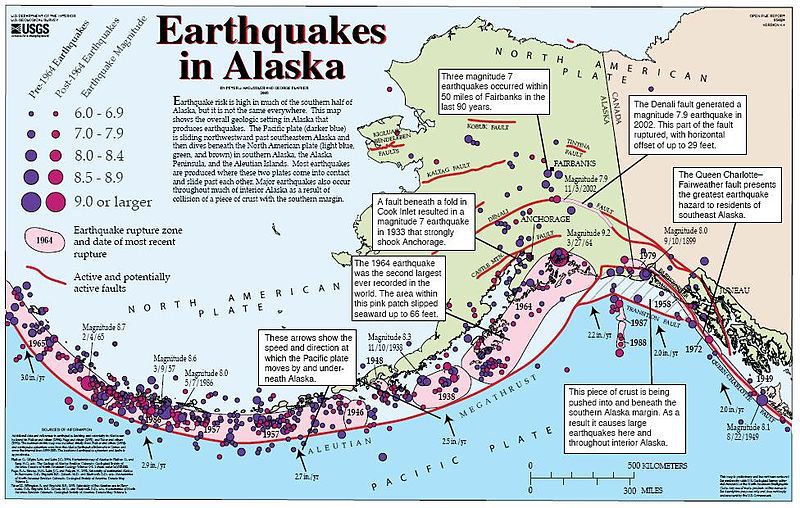
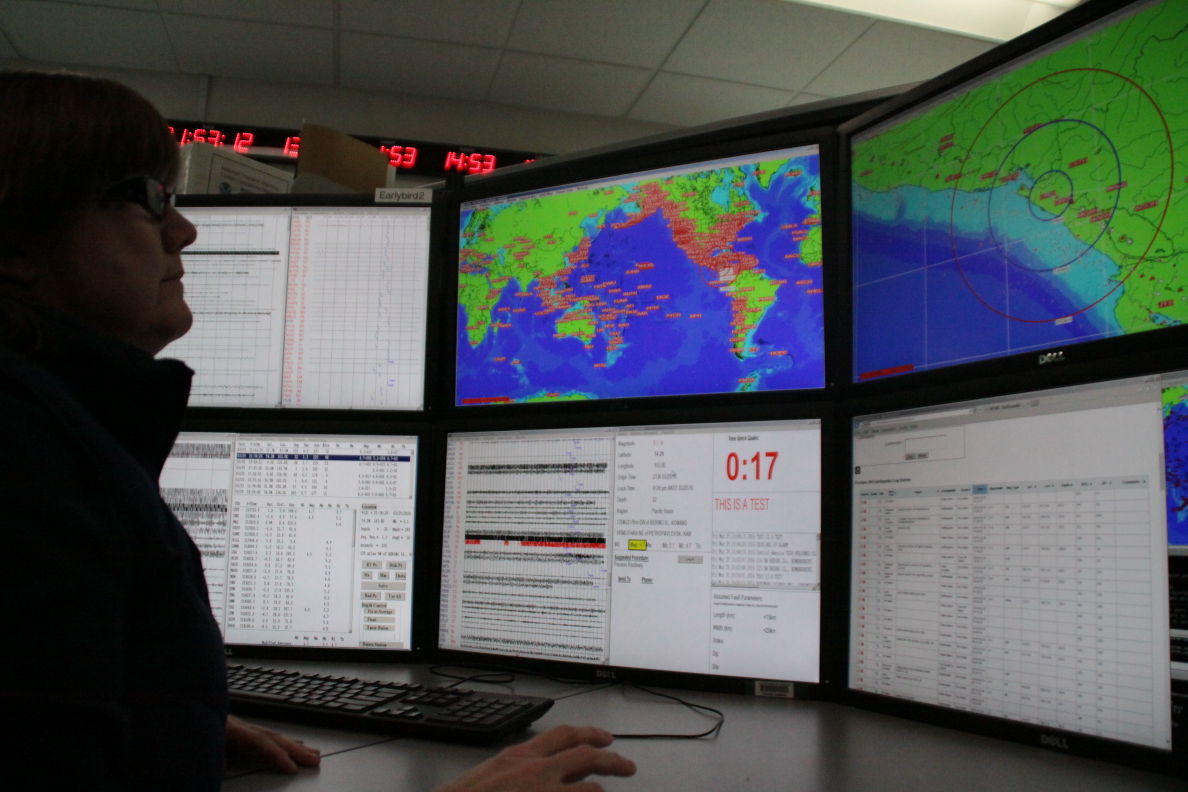
PALMER — At 12:32 A.M. on Tuesday Morning, Ken MacPherson was one of two scientists inside the National Tsunami Warning Center in Palmer. By 12:36, MacPherson, a junior watch stander, and David Hale, his senior watch stander, had sent information out to local emergency managers that a magnitude 7.9 earthquake had struck 12 miles deep 175 miles southeast of Kodiak City.
The following minutes reiterated to MacPherson the importance of the Tsunami Center.
"Lots of people in the potentially effected regions were calling with questions, so that definitely brings home the gravity of our mission. Lives are on the line. That was a humbling experience," said MacPherson.
The long, rolling tremors felt throughout south central Alaska forced those in coastal areas to seek higher ground. APD put out a post on Facebook to inform Anchorage residents that they were not in the danger zone. Kodiak Island's residents, in the most imminent danger should a tsunami occur, went to seek shelter at higher ground.
The Tsunami Warning Center was not affected by the federal government shutdown that lasted three days. MacPherson said they were fully operational throughout the shutdown in order to get warnings out in a timely fashion should an event like this occur.
Time is the name of the game at the Tsunami Center. In contrast to the Alaska Earthquake Center at the University of Alaska Fairbanks, whose mission is to accurately catalog seismic activity and may take up to 30 minutes for results, the Tsunami center has an emphasis on speed and getting reports out to emergency personnel in under five minutes.
"There were two people on duty. Within half an hour we had 12 people in the center who responded to the alarm. With a big earthquake like this it gets very busy at the center. Aftershocks need to be evaluated. It's very important to look at our ocean observations. It helps us refine our forecast to send out additional messages. The phone was ringing off the hook. Everyone is expected to come in if they're able," said MacPherson.
MacPherson initially feared a tsunami would be triggered by the size, length, and location of the earthquake. However, the tectonic shift that created the quake is not conducive to changing water levels.
"My initial fear was that it occurred on the subduction zone where Pacific plate subducts under the crust of Alaska. That typically generates large earthquake and tsunami, including the 1964 quake. It was actually south of the subduction zone in an intra-plate setting, which is probably good news for tsunami generation. In that geologic setting you don't get the thrust fault. When you get that, it disturbs the water column... By far the biggest that I've experience in our area of responsibility, and my first warning in my time as a sensor," said MacPherson.
The Tsunami Warning Center in Palmer has a great area of responsibility. While Hawaii's warning center has jurisdiction out into international waters concerning U.S. interests in the Pacific Ocean and other islands, the center in Palmer is staffed to provide service to the entire continent of North America, both east and west coasts as well as the Arctic Ocean.
MacPherson spent time at the Alaska Earthquake center after picking up his doctorate in Geophysics and researching for seven years in Singapore. Still the new kid on the block with only two years of experience, MacPherson said this was the biggest quake he'd ever experienced. MacPherson was also impressed with how swiftly the staff at the Tsunami Warning Center moved in disseminating accurate information to emergency managers.
The Kodiak Police department took to Facebook live to tell residents that this was not, in fact, a drill, and to seek higher ground at the high school or Pillar Mountain. At approximately 5 A.M. Kodiak City Manager Mike Tvenge also got on Facebook live to update Kodiak residents who were closest to the possible wave at an hour and a half of estimated tsunami travel time. The tsunami warning was downgraded to an advisory and lifted at 4:13 A.M. School was cancelled. This ultimately harmless event triggered the worst in memories and the best in emergency preparedness for Alaskans.
While a wave like the one coastal residents feared may be a once in a life time experience, being ready is an every day thing. The Red Cross reminds to drop, cover, and hold onto something sturdy in the event of an earthquake until shaking has stopped and it is safe to go outdoors. In the event of a tsunami, the Red Cross urges that you wait for the earthquake to finish rumbling and then move with those close to you away from the coast and to higher ground.
"Statistically, you get one magnitude eight earthquake per year on the globe," said McPherson. "Quite a rare event to get something that big."

By Jeremiah Bartz Frontiersman.com A football coach using a hockey reference as the centerpiece for his keynote address may

Frontiersman.com With its headquarters in Wasilla, the Frontiersman has been a primary source of news for the Matanuska-Susitna

By Katie Stavick Frontiersman.com The next generation of leaders took flight this week as the Houston High School Class

By Kyle Wilkinson For the Frontiersman Keynote speaker and Carry the Cure President Bill Pagaran’s words boomed through the