Retiring teacher, coach urges Colony grads to ‘find their 68’
By Jeremiah Bartz Frontiersman.com A football coach using a hockey reference as the centerpiece for his keynote address may


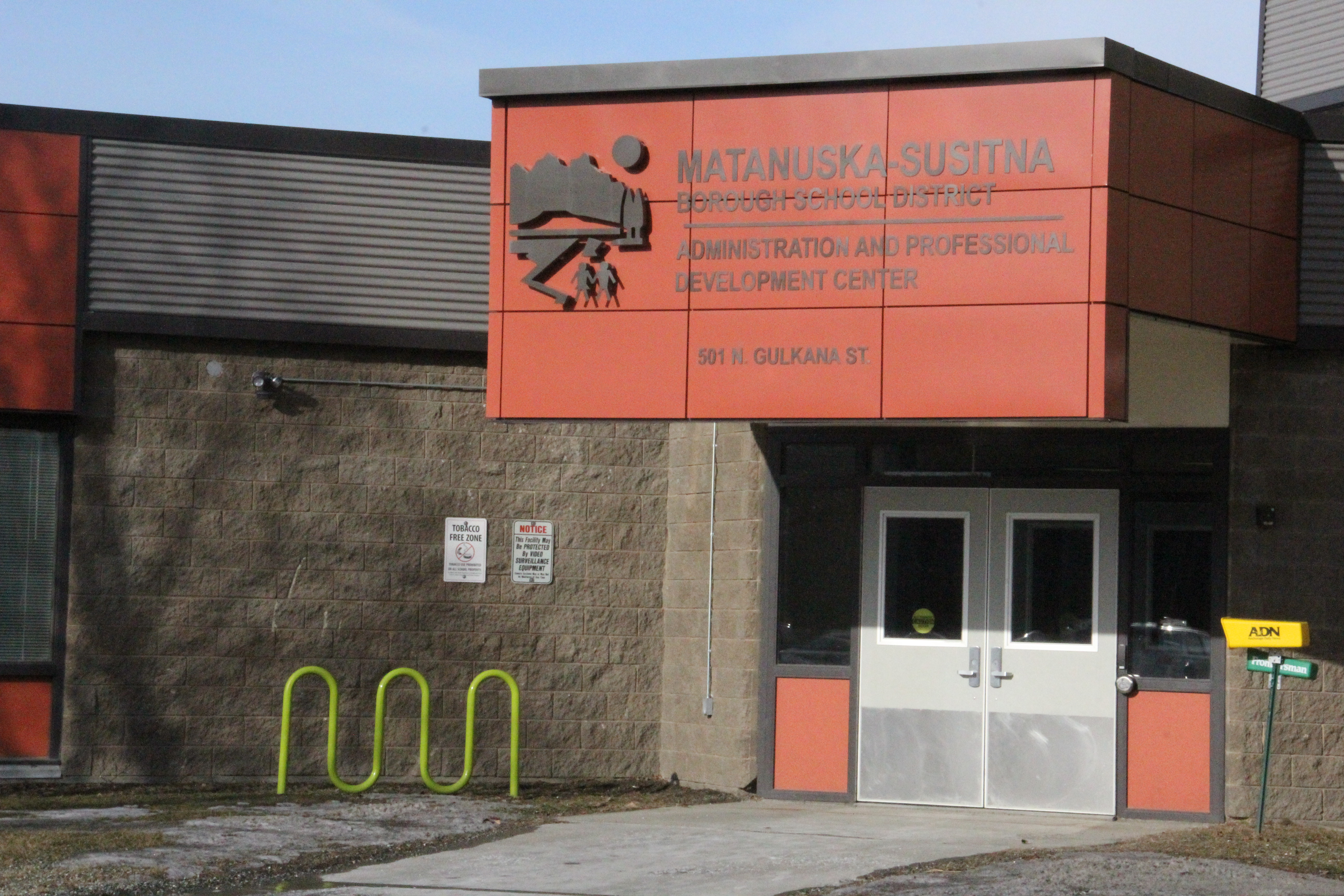
MAT-SU — If the state Department of Education's proposed budget cuts pass, it "will not directly impact the Mat-Su Borough School District’s operating budget,” according to the school district’s Assistant Superintendent of Business Services, Luke Fulp.
No staffing cuts were proposed in the school district’s preliminary budget released Feb. 4, he said.
But that doesn’t mean the proposed cuts wouldn't affect Mat-Su students and teachers at all. Within that preliminary budget is a deficit of $6.4 million, Fulp said.
Here’s some of the reason why:
Tuesday evening, the House Finance Budget Subcommittee for Alaska’s Department of Education and Early Development approved a proposed operating budget for fiscal year 2016 that would mean an 18.6 percent decrease in public education funding, according to a Wednesday press release issued by the Alaska Independent Democratic Coalition.
The proposal also included the elimination of funding for a statewide mentoring program, a statewide literacy program, the K-3 Literacy Project, Parents as Teachers, Best Beginnings, STEM expansion to middle schools, pre-kindergarten grants, Live Homework Help, and the Online with Libraries program, as well as the eventual phasing-out of WWAMI, the collaborative medical education program among universities in northwestern states (the name is an acronym for the states included: Washington, Wyoming, Alaska, Montana and Idaho).
“Everyone knows that the budget deficit demands cuts in spending but we must cut smartly,” said subcommittee member Rep. Dan Ortiz, I-Ketchikan, in the release. “Cutting education is not smart.”
But Rep. Lynn Gattis, R-Wasilla, who chairs the House Budget Finance Subcommittee, said she was just trying to take out the “extra things.”
“I think it was pretty straightforward that my goal was not to touch the classroom,” she said by phone Friday.
Also an aviator, Rep. Gattis compared the cuts, in two separate analogies, to a) all of Alaska being on a plane approaching a runway without enough fuel to land properly, and b) a local newspaper with 10,000 employees.
In the first case, Gattis said, if each person were to throw a suitcase out of the plane, “we would all make it.”
“There are no sacred suitcases,” she said.
In the second analogy, she said, while more employees might mean more news covered, all that content can’t fit in one newspaper, and paying a huge number of employees to cover the “small stuff” may not be worth the expenditure.
“The more money that we put into education, the more it has a value,” Gattis said, in comparison. “But there comes a point where the value stops becoming valuable for kids.”
A few community members weighed in, essentially disagreeing with the idea that the state has reached that point in public education.
In a voicemail message received by Frontiersman staff after deadline Saturday evening, Mat-Su special education teacher Kelly McBride said the district would lose “most of our funding for Mat-Su Imagination Library,” among other things, as a result of the cuts.
“If Best Beginnings is cut, then we would lose our Early Childhood Partnership of Mat-Su,” she said.
The elimination of state pre-K grants would also collapse the Widening the Net preschool project, which currently serves 100 students from Shaw, Butte, Goose Bay, Trapper Creek and Willow Elementary Schools, she added.
Southcentral Foundation employee Desiree Compton also disagreed that certain programs should be deemed “extra.”
“I am aware that the state needs to be mindful of the budget and make efforts to reduce spending; however, I fear that some of the items that were proposed by the House Finance Budget (Sub)Committee will have devastating and costly long term outcomes,” Compton wrote in an email to legislators, Frontiersman staff and various community organizations.
Compton said eliminating programs like WWAMI would be a serious detriment to Alaska, decreasing patient access to health care.
“Future generations will surely question this decision, if approved, as they likely won’t be able to access their primary care providers in a timely manner and the providers (we) have will likely burn out and go into private practice; thus, further reducing access,” she wrote.
But Gattis suggests that “burning out” is happening for a different reason. While the original intent of the program was to bring doctors and nurses back to Alaska after they graduated from college outside — 3 years in the Bush or 5 years on the road system — “things have changed,” she said.
“It didn’t keep people in the Bush,” Gattis said, of WWAMI.
After growing accustomed to conveniences like movie theaters, shopping malls and running water, she said, the program’s graduates are “essentially barely waiting to get out” of the Bush.
On the other hand, places on the road system like the Mat-Su Valley seem to be retaining more of those returning Alaska-grown doctors because “they’re great places to live” and medical professionals can make “darn good money,” she said.
“We charge almost three times as much for health care as the rest of the states in the Lower 48,” Gattis said.
With that being the case, Gattis said, doctors would have enough incentive to practice in Alaska without WWAMI.
As for general funding, Rep. Gattis said school districts are just going to have to get creative.
“It’s gonna make us think outside of the box in areas that we never thought we’d have to,” she said.
The Department of Education’s proposed FY16 budget cuts come on the heels of the lawsuit between the state of Alaska and the Ketchikan Gateway Borough that began more than a year ago. Last month, Superior Court Judge William Carey agreed with the borough that the state’s required local contribution for public education violates Alaska’s Constitution.
What happens if all the local contributions go away is up for debate, and it’s something Rep. Gattis said she’s trying to ignore right now.
“That’s gonna be such a game changer that I literally put blinders on,” she said. “I told myself I can’t focus on that ’cause it’ll get me off track.”
If state and local funding does continue to decrease, she said, well, tough.
“We can only have what we can afford to do, and we need to do what we can afford to do well,” she said.
“What can we afford” is also a good question. According to a fact sheet produced by neaalaska.org last year, Alaska ranks 50th in the country for “the percentage of state and local general expenditures spent on public education.”
There are still several more steps to go before the DEED budget is fully approved. Next, the proposal will head to the full House Finance Committee, then to the House floor, then to the subcommittee on the Senate side, then to the full Senate Finance Committee, then to the Senate floor, then back to the House floor.
In the meantime, Valley residents are encouraged to give public testimony at the next local school board meeting on Wednesday, March 4, beginning at 6 p.m.
Rep. Jim Colver, R-Palmer, and the Valley delegation also will hear questions, comments and concerns about the current legislative session at a Valley Constituent Town Hall Meeting Saturday, March 7, from 9:30 to 11:30 a.m. at the Wasilla Senior Center, 1301 S. Century Cir., off Knik-Goose Bay Road in Wasilla.
Contact Caitlin Skvorc at 352-2266 or caitlin.skvorc@frontiersman.com.

By Jeremiah Bartz Frontiersman.com A football coach using a hockey reference as the centerpiece for his keynote address may

Frontiersman.com With its headquarters in Wasilla, the Frontiersman has been a primary source of news for the Matanuska-Susitna

By Katie Stavick Frontiersman.com The next generation of leaders took flight this week as the Houston High School Class

By Kyle Wilkinson For the Frontiersman Keynote speaker and Carry the Cure President Bill Pagaran’s words boomed through the