Retiring teacher, coach urges Colony grads to ‘find their 68’
By Jeremiah Bartz Frontiersman.com A football coach using a hockey reference as the centerpiece for his keynote address may


EIELSON AIR FORCE BASE, Alaska — Airmen from Eielson Air Force Base completed Exercise Golden Raven (GR) 20-1 on Feb. 28, 2020.
Golden Raven 20-1 is designed to give the 354th Fighter Wing and the Alaska Air National Guard’s 168th Wing the opportunity to work together and execute core mission essential tasks (METs). The exercise was split into three phases designed to challenge and test Eielson Airmen.
“I think we did an amazing job integrating the two wings together,” said Col. Richard Adams, the 168th WG commander. “It’s critical that we work together to achieve our common mission and fight for Eielson Air Force Base.”
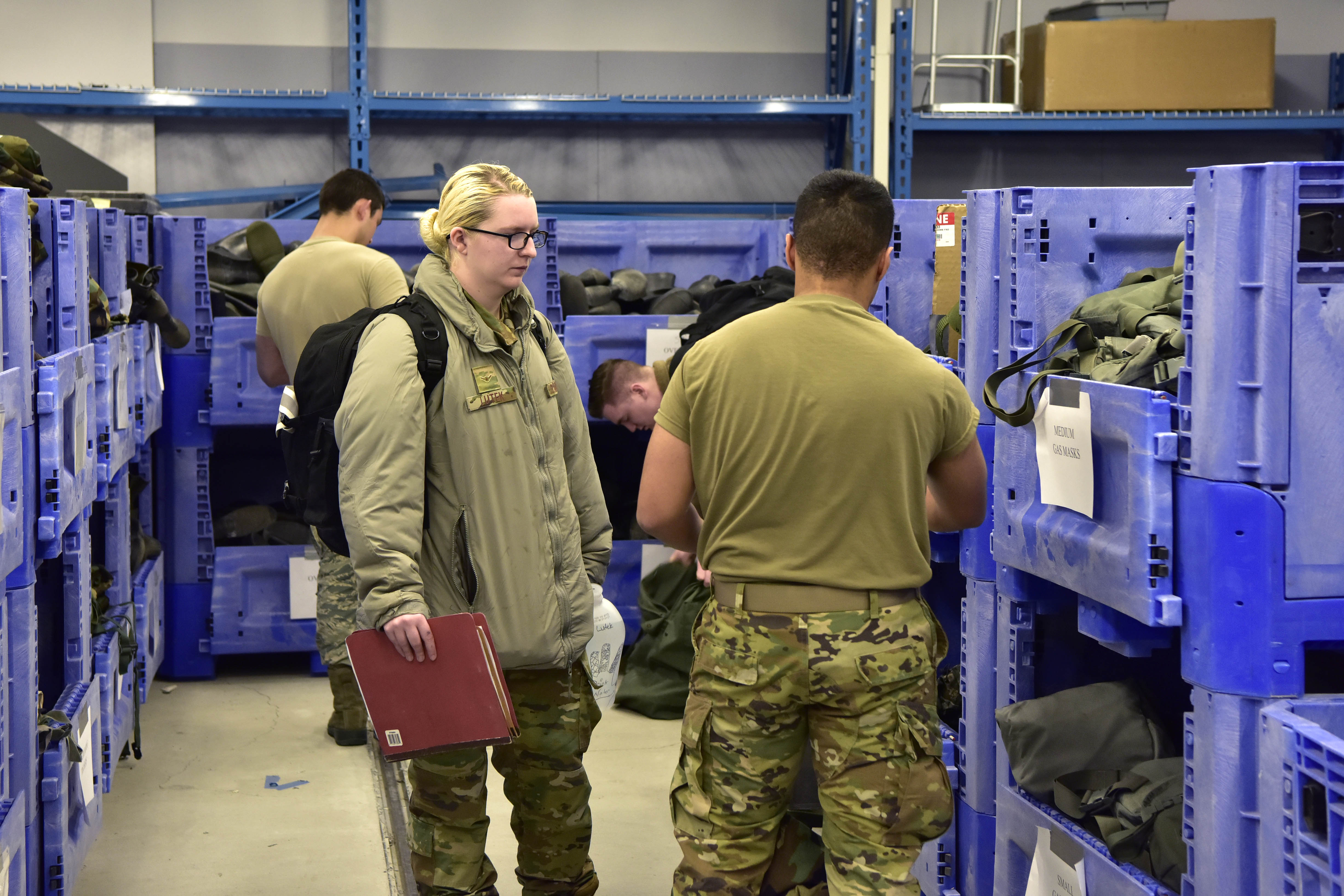
Phase I was focused on rapidly deploying Airmen at a moment’s notice. Airmen were evaluated on their ability to have up-to-date records and training in order to avoid complications during deployment. The 354th Logistics Readiness Squadron was a major player during this event, ensuring that all deploying Airmen had the correct gear to be able to execute their mission.
The Joint Mobility Complex was the central location for this phase and was recently renovated to increase efficiency in the processing line.
“The [renovation] turned the JMC into a one-stop-shop for deployers,” stated Holly Kinsey, 354th LRS Plans and Integration chief. “Now we are prepared for F-35 operations and the influx of personnel that will be deploying through [this] processing line.”
Phase II evaluated the deploying Airmen on their ability to survive and operate (ATSO) in their area of operation. The Airmen utilized mission-oriented protective posture (MOPP) gear to get accustomed to operating in chemical, biological, radioactive and nuclear (CBRN) environments. Phase II also practiced receiving follow-on forces and integrating them into their new work centers.
Phase III involved multiple scenarios designed to disrupt and challenge day-to-day operations. The purpose was to evaluate Eielson’s ability to support primary missions in a contested and degraded environment. Scenarios include an aircraft mishaps, a vehicle-borne improvised explosive device and communication outages.
Even in an undermanned and chaotic environment, the two wings managed to complete their METs and keep Eielson AFB operational.
“The Wing Inspection Team has worked closely with the inspector general team to build a robust readiness exercise to test the Eielson team,” said Lt Col. Randolph Kinsey, the 354th Fighter Wing IG. “Overall, Golden Raven 20-1 was better than the October exercise across the board. Communication, CBRN response, and the sense of urgency around the wing got better this time around, but there’s still room to improve. We’re capturing the lessons learned so we can build on those and continue moving the wing forward.”

By Airman 1st Class Theodore Gowdy Joint Base Elmendorf-Richardson Public Affairs In July 2025, the Secretary of War released
Frontiersman.com Alaskans aged 17 to 28 have a unique opportunity to earn a college degree with major financial support
By Katie Stavick Frontiersman.com The United States Marine Corps has launched a strategic initiative known as "Campaign - Alaska,
By Katie Stavick Frontiersman.com As the 'Guardian of the North,' Alaska has historically been on the front