Retiring teacher, coach urges Colony grads to ‘find their 68’
By Jeremiah Bartz Frontiersman.com A football coach using a hockey reference as the centerpiece for his keynote address may


WASILLA — Just the thought he may one day pull that cord is enough to make Ron Dudley as excited as a grade-schooler on Christmas morning.
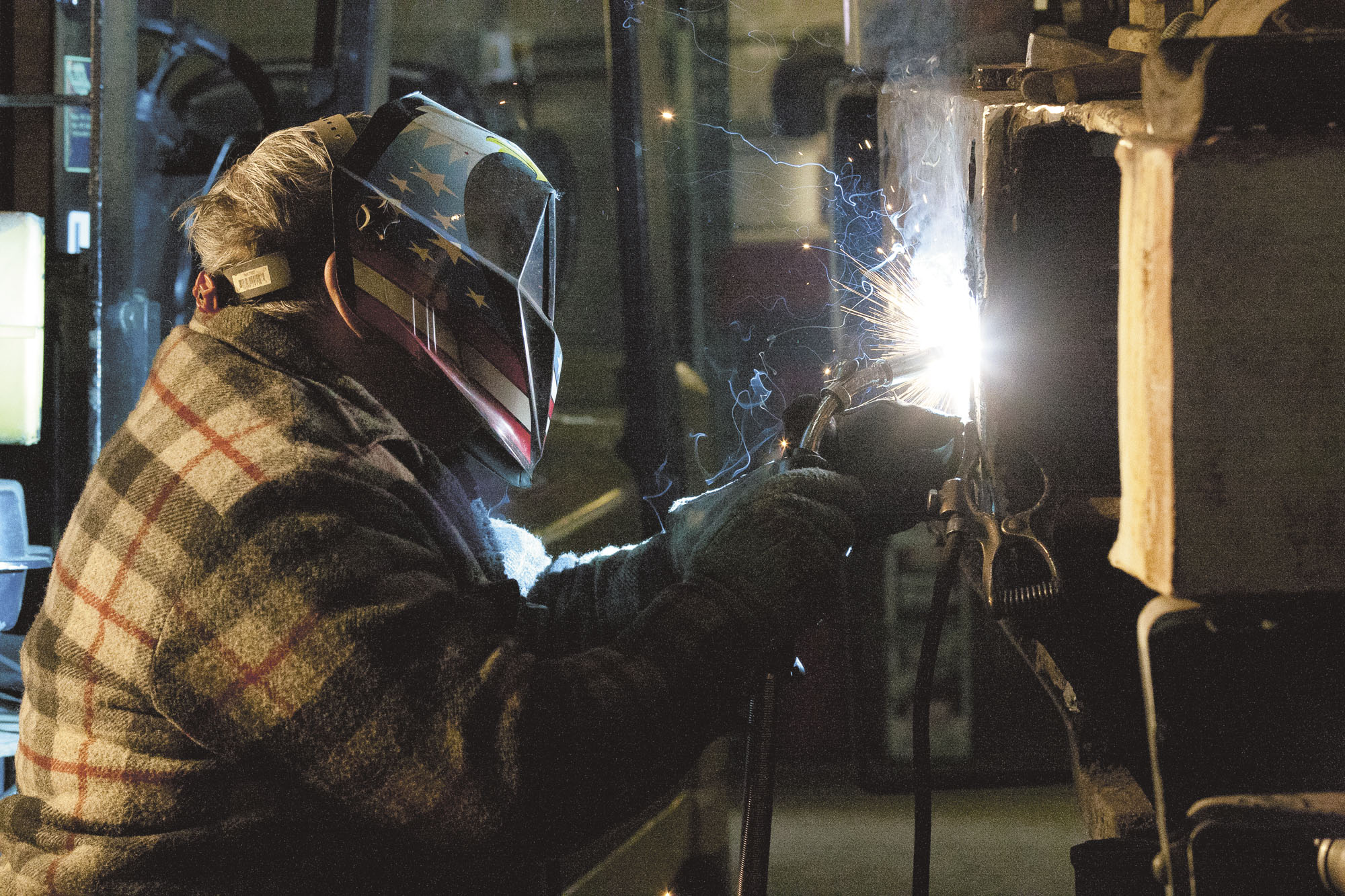
Covered in soot and grime from a morning spent working with cold steel, the retired airline pilot lights up Saturday when asked what he imagines locomotive Engine 557 will look like when it’s back in service.
“I can’t wait to see that steam hit that piston for the first time,” he said. “It’s going to be amazing and my heart’s going to roar.”
More than that, Dudley wants to fulfill what has been a wish of countless boys and girls over the decades — ride in the cab of a steam engine.
“Not drive it so much,” said the pilot, who has about 20,000 hours of flying time under his belt. “But I’d love to be in the cab a time or two. And once — just once — I’d love to reach up and pull the whistle cord. That would be worth it for me.”
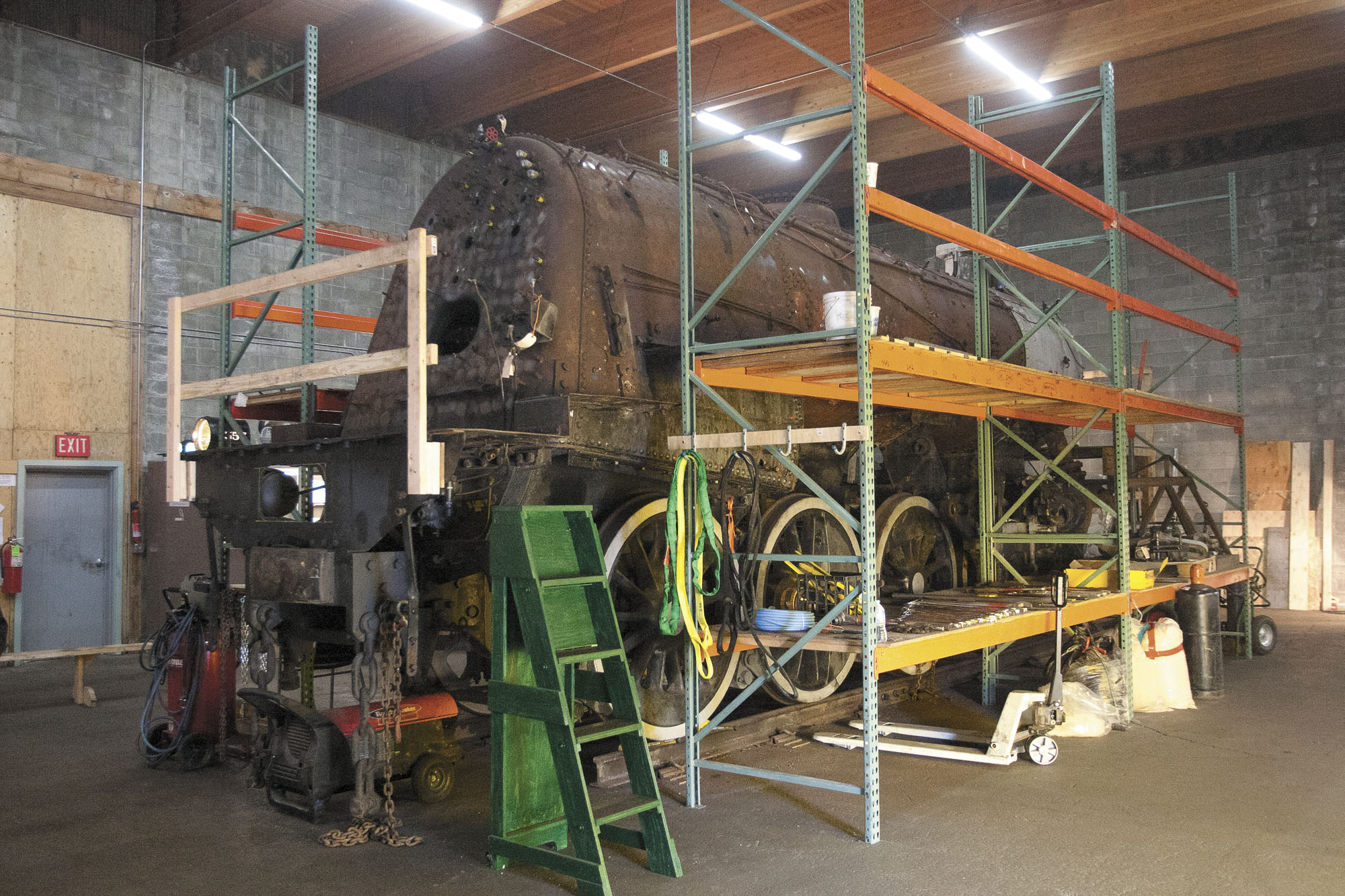
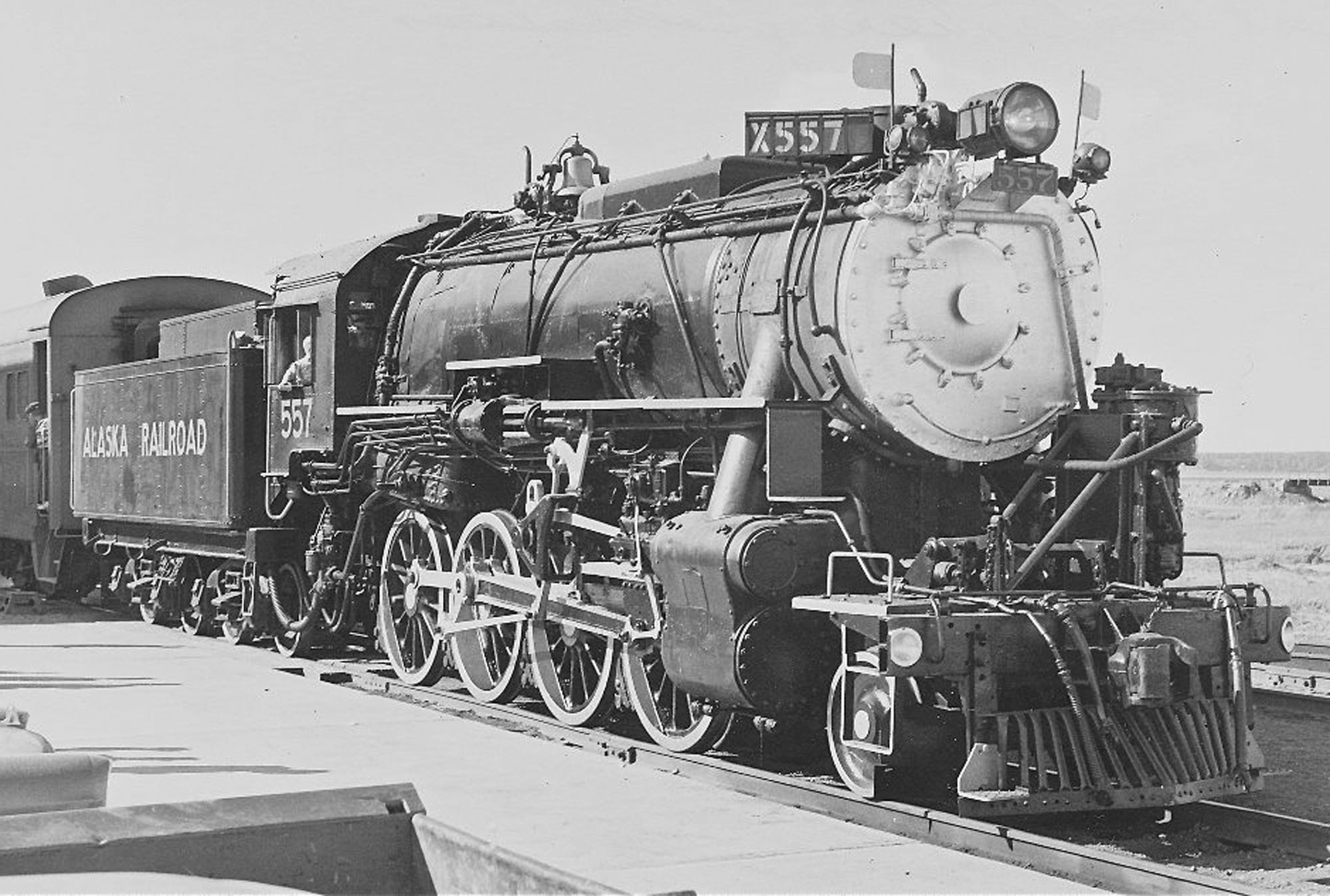
Dudley was among about a half dozen volunteers in a frigid Kenai Supply building working to restore Engine 557, a 70-year-old historic steam engine that’s being restored. Alaska Railroad has visions of running the old engine, which saw action along Alaska’s rails after World War II and was the last working steam engine in regular service in the state before it was retired and sold for scrap in 1964.
Alaska Railroad brought the engine back to the Last Frontier last August, and for the past seven months, volunteers have logged more than 2,000 hours working to restore it, said Pat Durand, president of the nonprofit Engine 557 Restoration Co.
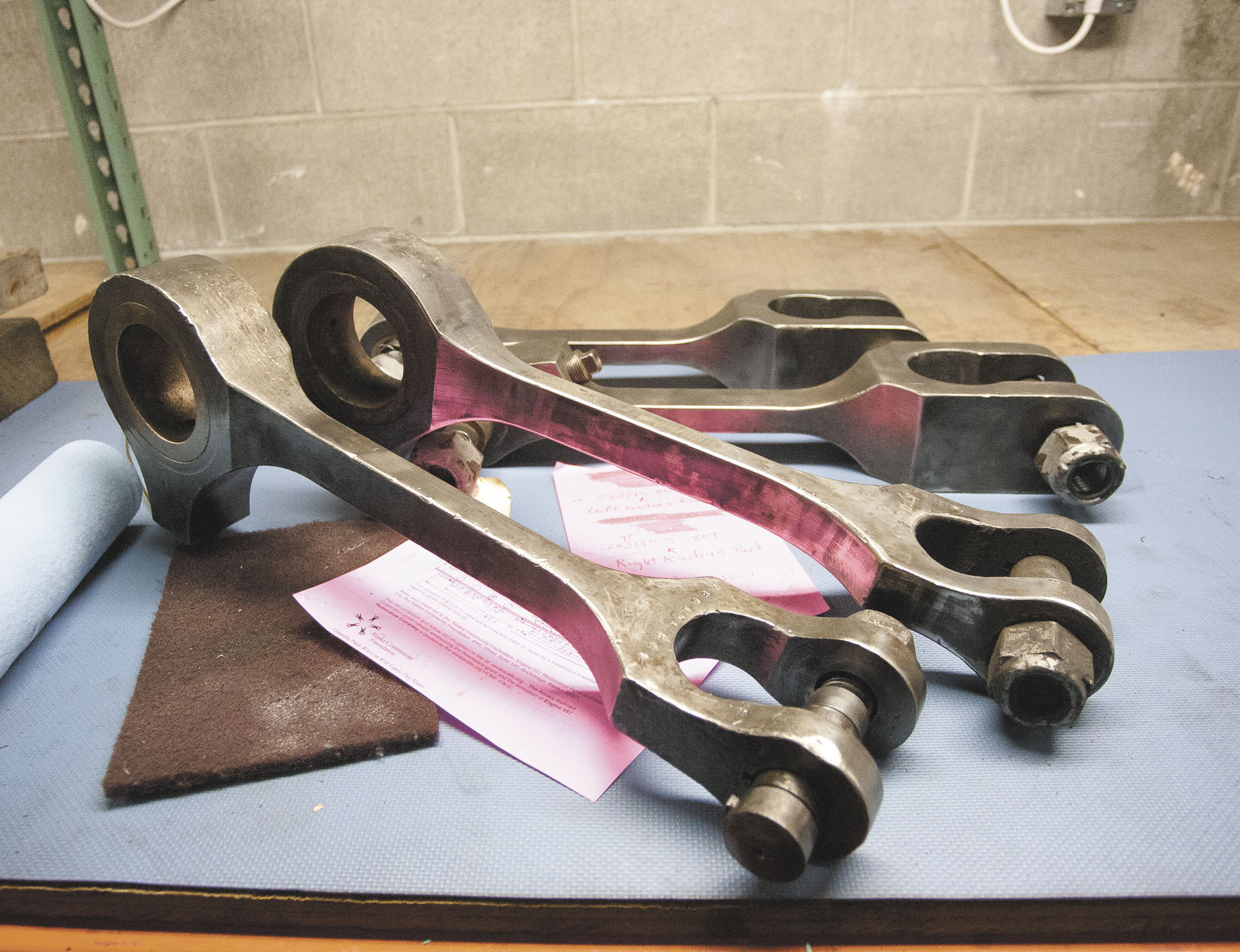
So far, the engine’s cab has been removed along with all of its appliances — like the compressor, generator, head lamp and bell, he said.
“Those little appliances are being rebuilt one at a time,” Durand said. The work so far this past winter has all been in preparation for the heart of the restoration — tackling Engine 557’s boiler.
“Our goal is to get the boiler down to the point where we can do the final inspection on it,” he said. “Then our contract engineer will come back and evaluate all the measurements we take and write a construction plan so we know what needs to be replaced or repaired.”
But don’t tell Durand that any work done on a 70-year-old engine is simply cosmetic.
“It’s our intent to bring this boiler back to like-new condition,” he said. “That way we can operate at the designed pressure of 225psi steam. Without that, you can’t really get the performance out of the locomotive that you want.”
Then there’s the challenge of making sure the locomotive can comply with current federal and state regulations for in-service engines.
No problem, Durand said, pointing out that he shares more than just a love of railroading with Engine 557. “This was built in 1943 — same year I was.”
Along with volunteers like Durand, Dudley and a host of others, the restoration has been undertaken and continues thanks to a $350,000 matching grant from the Rasmuson Foundation. Any in-kind or cash donations received for the project are matched dollar-for-dollar up to $350,000, Durand said.
That means the $46,500 in asbestos removal that was donated also resulted in an equal amount that can be applied to the effort.
“We’re always looking for funding, and the support so far has been great,” he said. “We have to go out and, amazingly, our most productive donors at events have been women and kids. Kids love trains, and this is just a big Thomas to them.”
As for a timetable, aside from wanting to have Engine 557 ready for service by summer 2015, Durand said he has it worked out in his head.
“We have a very aggressive timetable that puts us back on the tracks in 2015,” he said. “I’m not going to go out and sell tickets, but if we had a schedule all written out, we’d be ahead of it. I have the visualization in my head as to how the project is going to proceed.”
However it proceeds, count Big Lake helicopter mechanic Jerry Cunnington in. Like Dudley, Cunnington gets animated when talking about his work on Engine 557.
“This is therapy, man. It’s a kick,” he said. “I’m an aircraft mechanic normally, and this is just therapy to work and have fun. It’s interesting and way, way different from anything else I’ve ever done.”
A large part of what makes the project possible is what Durand calls the “forward vision” of people during the locomotive’s history. At the forefront is the late Monte Holm, a Moses Lake, Wash., scrap dealer. Holm purchased the engine from another scrap dealer who bought it from the state. A history buff, he put the engine on display instead of chopping it up.
That preservation means that Engine 557 comes into its restoration “fully intact,” Durand said. “It was in amazing shape, and the amazing thing is everything is here. Some of it may be in sorry shape and needs to be rebuilt, but that’s just the nature of maintenance. It hadn’t been subject to the cutter’s torch and people hadn’t been borrowing parts off of it.”
If men like Dudley, Cunnington and Durand seem like big kids around the historic steam engine, maybe that’s because working on it is a way of reclaiming some of their youth.
“I’ve never quit playing with trains,” Durand joked. “They’ve just gotten bigger over the years.”
Contact reporter Greg Johnson at greg.johnson@frontiersman.com or 352-2269.

By Barbara Hunt Palmer Buzz It was 6:43 on Friday morning and the Plant Owner was sound asleep when

By Kyle Wilkinson Frontiersman Memorial Day Weekend was filled with a variety of events in Willow. From live music to

By Kyle Wilkinson For the Frontiersman The Susitna Valley Emergency Preparedness Fair will be held at the Willow Community Center

By Barbara Hunt Palmer Buzz Green-Up happened at exactly 9:34 am on Saturday morning in Palmer. This was