Retiring teacher, coach urges Colony grads to ‘find their 68’
By Jeremiah Bartz Frontiersman.com A football coach using a hockey reference as the centerpiece for his keynote address may


PALMER — For local residents down on their luck but willing to work hard, Connect Palmer is there to lend a hand.
Director Sherry Carrington started Connect Palmer in May, 2014 with the goal of helping local youth, single-parent families and others struggling with unemployment. Now a 501(c)3 nonprofit, the Christian-based organization regularly offers back-to-work and life skills courses, as well as workshops tailored to clients’ needs. Participants are required to attend an hour-long devotional period at the start of every day, during which Biblical scriptures are read, but they aren’t required to make a statement of belief to benefit from the program.
“It’s not required that they be a particular faith, we just remind ‘em when they come in that our perspective is coming from a biblical work ethic,” Carrington said.
Clients enrolled in the nonprofit’s “God’s Work Design” program are required to “clock in” at the office at 8:30 every weekday morning and log 40 hours a week for three weeks. The primary reason for this is to get clients used to a set schedule, Carrington said. That time is primarily spent working on job-seeking or training programs.
Ultimately, the objective is for every client to find regular employment.
“We encourage them that any job is a good job,” Carrington said.
One thing every client participates in are the mock interviews. Alice Williams, Human Resource Specialist for the City of Palmer, volunteers her time to conduct the interviews.
“It’s a community service,” Williams said.
In her day job, Williams is a part of all interviews with potential city employees, which has given her a well-developed understanding of what makes for a good — or bad — interview.
At Connect Palmer, inexperienced interviewees often give answers that are too brief, she said, and sell themselves short by starting with their weaknesses.
“They don’t know how to tie the things that they’ve done to the skills that are in the job descriptions,” she said.
Williams recalled one client who had many hours of experience as a commercial cook — making food for 300 people a day — but failed to market all of his real skills, such as problem solving and project management.
“I try to give them the feeling that they’ve accomplished a lot, and show them … that they have,” she said.
That’s the kind of encouragement that’s helped Palmer resident Terri Davis in her journey with Connect Palmer.
Davis has held a job as a home health care assistant in Alaska for a couple years now, but has been looking to increase her value as an employee and as a person. When her own home became unsafe due to what she said was an abusive relationship, she turned to Connect Palmer.
“I’ve been done so many times, but this time I was done done,” she said of the abuse.
One of Davis’s clients learned of her plight and connected her with Carrington, whom the client knew from church. After talking with Carrington, Davis realized what she had been missing.
For the first time in years, “I felt good about myself,” she said.
Though she attended church regularly while growing up, as an adult her faith — in God and herself — had started to fade. In 2005, Davis said she tried to end her life by overdosing on pills she stole from her husband.
“I was on life support for three days. They had my funeral plot all picked out,” she said.
Somehow she pulled through and suicide, she later realized, was not the answer.
“That was the last time I ever did that,” Davis said.
However, life grew difficult again when her husband died a few years later. She stopped going to church altogether, and quit trying to go back to college, as she had twice before.
She moved to Alaska from Washington looking for a change three years ago, but her true second chance didn’t come until the end of 2015.
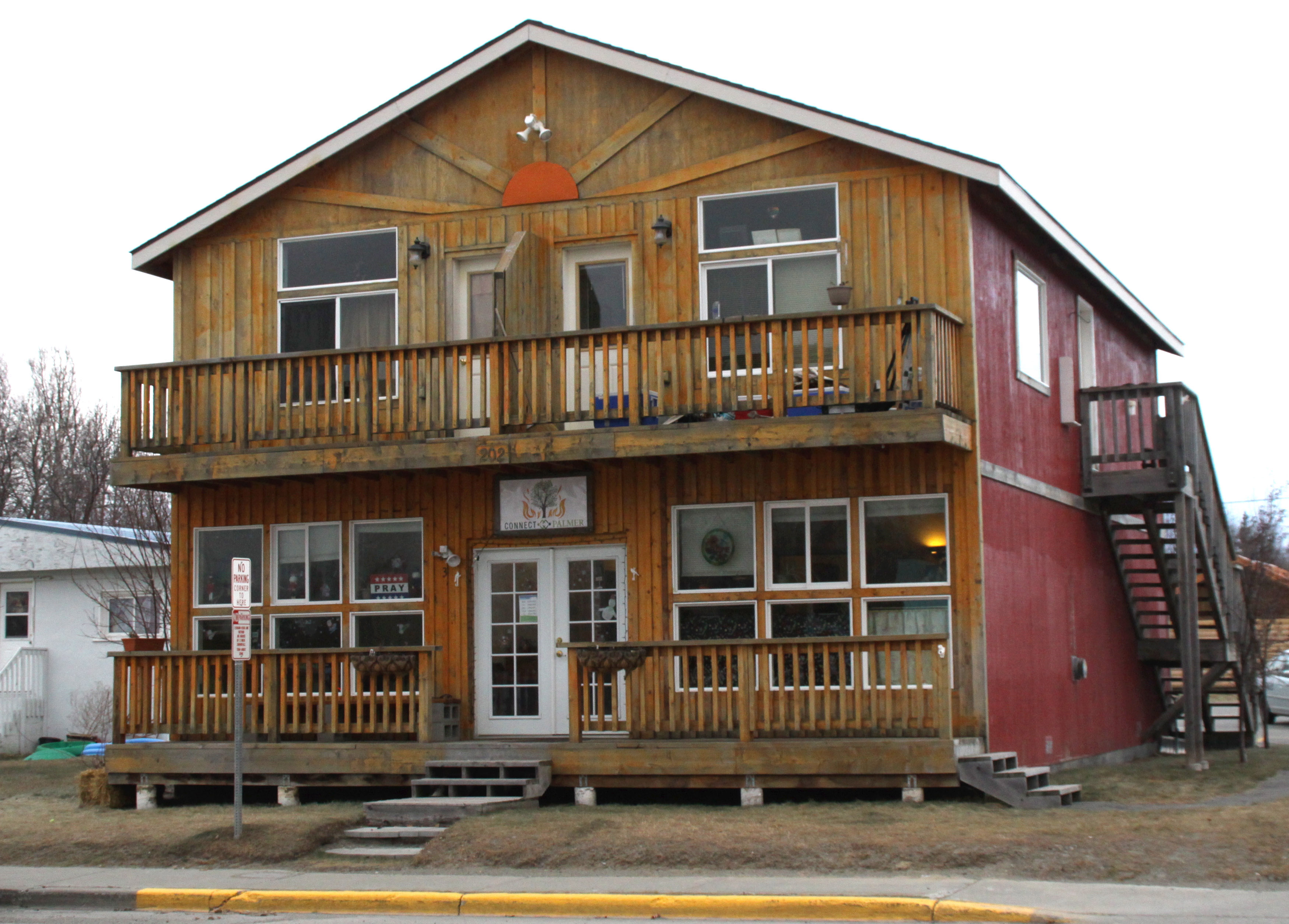
Last October, the apartment above the Connect Palmer office at 202 S. Alaska St. opened up, and board members decided to use some of the organization’s donations to rent the space to female clients enrolled in the nonprofit’s work program. Carrington named the apartment Sarah’s House, for a young woman who faced many hardships in life, and recently passed away.
The name also hearkens back to the Bible’s Old Testament story of Abraham’s wife, Sarah, who laughed when God promised her the impossible: a child in her old age.
“Sometimes we hear God’s promises and we think to ourselves, ‘That can’t be for me, not with what I’ve done, not with what I've been through’… But God wants His Daughters of Promise to know… He has Amazing, and Wonderful things for them,” Carrington wrote in a recent post on the Sarah’s House Facebook page.
Davis became the first resident of Sarah’s House just after Christmas. Though she had intended to enroll in the upcoming work program as part of the deal of living there, she was able to move back home a week later, when it became safe again. Still, she plans to continue working with Connect Palmer through its 12-week life skills program.
“I’m hoping that the program will help me be the best me that I can be, basically, and show me what God has planned for me,” Davis said.
Davis’s story, in many ways, is a familiar one at Connect Palmer, Carrington said. More than half of the organization’s clients have been women without homes, many of whom were involved in domestic violence. As much as 80 percent of all the organization’s clients have no means of transportation, she said.
As an agency entirely dependent on donations, Connect Palmer does not often have the means to provide clients with housing or a permanent mode of transportation directly, though a few bicycles have been purchased for clients in the past. Volunteers drive clients around while they are enrolled in a program — or offer gas vouchers for clients with cars — but once they “graduate,” they may be on their own, unless referred to another organization.
Carrington said she hopes to see more collaboration with assistance groups in the future.
For more information about the group or its programs, visit connectpalmer.org or call 746-9675.
Contact reporter Caitlin Skvorc at 352-2266 or caitlin.skvorc@frontiersman.com.

By Barbara Hunt Palmer Buzz It was 6:43 on Friday morning and the Plant Owner was sound asleep when

By Kyle Wilkinson Frontiersman Memorial Day Weekend was filled with a variety of events in Willow. From live music to

By Kyle Wilkinson For the Frontiersman The Susitna Valley Emergency Preparedness Fair will be held at the Willow Community Center

By Barbara Hunt Palmer Buzz Green-Up happened at exactly 9:34 am on Saturday morning in Palmer. This was