Retiring teacher, coach urges Colony grads to ‘find their 68’
By Jeremiah Bartz Frontiersman.com A football coach using a hockey reference as the centerpiece for his keynote address may


MAT-SU — What’s green, blue and yellow and showing up all over Alaska?
The Alaska Grown logo is more than just T-shirt design; it’s also the symbol of a new era of Alaska agriculture.
A new greenhouse along Hyer Road; roadside produce stands popping up like mushrooms around the Valley; new farmers markets around the state, the first Farm to Fork dinner event: Alaska agriculture has cast off its checkered past and is enjoying renewed prosperity.
Statistics bear out what Alaska Grown shoppers already know — Alaska’s agricultural industry is growing.
Local agricultural experts say the national “locavore” movement — buying food grown locally — is helping spur sales at farmers markets and demand for Alaska Grown at supermarkets and restaurants.
“We’re riding the wave — a national wave — of people interested in where their food comes from,” said Amy Pettit, marketing manager at the Alaska Division of Agriculture.
According to the National Agricultural Statistics Service, Alaska’s direct sales in agriculture — roadside stands, farmers market, U-Pick operations, on-farm sales and the like — grew 32 percent in the past five years.
“That growth is 13 times the national average,” Pettit said. “I think there’s a lot of momentum right now, and I’m optimistic about it.”
There are 41 state-sanctioned farmers markets in Alaska this summer, up from 13 in 2005.
Rose Potter, Wild Rose Alaska Natural Harvest, has been selling at farmers markets in Wasilla and Palmer since the modern markets began. She credits the Alaska Grown program with helping spur growth.
Potter said local farmers have the support of Mat-Su and Anchorage residents, who buy their products.
“It wasn’t that way less than 10 years ago,” said Potter, who grows herbs and perennials.
In response, Mat-Su agriculture has bloomed — literally and figuratively, Potter said.
“Farming in the Valley isn’t just vegetable plant starts,” Potter said. “I’ve watched it bloom, big time.”
Mat-Su Borough Mayor Larry DeVilbiss, a former commercial carrot farmer who now farms “a couple hundred acres with hay production for the cattle and pasture,” said the borough government is responding to the changes by rethinking how it sells borough-owned land for agriculture ventures. Traditionally, the sales would be in tracts of land of 160 acres or more, designed for big dairy or grain operations.
DeVilbiss said when land is offered in the Fish Creek development, it will likely be divided into blocks of 40 acres or so.
“You have got to have maximum flexibility to survive in the marketplace,” DeVilbiss said. “We’re in the process of transitioning into family level, long-term sustainable farming operations that are plugged into local markets that will work.
“I have a lot of hope,” DeVilbiss said. “It’s a farmers-market-oriented type of farming.”
But DeVilbiss, whose remaining acreage is used by his brother, nieces and nephews for their farmers-markets products, said there are strides among big producers, too. For example, Asian markets for beef and tomatoes are showing promise. “We’re going both directions.”
Carol Kenley, Kenleys’ Alaskan Vegetables and Flowers near Palmer, and secretary of the Mat-Su Chapter of the Alaska Farm Bureau, sees the two growth paths as related.
“The farmers markets will help spur more big growers,” Kenley predicted. “It’s a little different model, but I think agriculture can work here on a large scale.”
Large-scale agriculture operations in Alaska have had notable setbacks in the 1970s and ’80s. State-supported agriculture projects at Point MacKenzie in Mat-Su and near Delta Junction did not generate the agricultural boom some predicted, leading them to be dubbed failures. More recently, in 2012, Matanuska Creamery closed its doors under a cloud of financial scandal. Only two dairy farms remain in the state — Havemeister Dairy in Mat-Su and Northern Lights Dairy in Delta Junction. Agricultural operations in Point MacKenzie have virtually vanished. A few large-scale farms remain near Delta Junction.
Even with the success of local vegetable markets, Pettit said some of the Valley’s large-scale potato growers expect to dump large amounts of spuds that never sold last year to make room for the new crop.
“There are still some big issues,” Pettit warned.
While large farms have often struggled, small farming operations are springing up to bolster Alaska agriculture a few acres at a time.
According to National Agricultural Statistics Service, the number of farms in Alaska has grown from 512 in 1992 to 762 in 2012. Meanwhile, the average size of an Alaska farm dropped from just over 1,800 acres in 1992 to 1,094 acres in 2012. The 2012 Census of Agriculture showed 247 Alaska farms of one to nine acres, and another 181 that were 10 to 49 acres. In 2002, there were 127 farms under 10 acres and 129 covering 10 to 49 acres. That’s a 67-percent increase in small farms in that 10-year period.
Some of the growth has been spurred by the success of farmers markets. Other farms are jumping on “new” crops for Alaska — like peonies and rhodiola. Many have been bolstered by state or federal grants or cost-share programs. Until this year, the state offered funds through a Cooperative Marketing Program. USDA Natural Resources Conservation Service has helped pay the cost of greenhouses — hoop houses known as high tunnels.
“We’ve amped up the backyard gardener, allowing people to grow more and longer in Alaska,” said Molly Voeller, NRCS-Alaska’s state public affairs officer. “Having a garden is ‘in’ again.”
Dave and Yvonne Newcomb of Babbling Brook Farm in Wasilla use an NRCS high tunnel to grow a variety of vegetables uncommon to Alaska, including spaghetti squash and eggplant. Variety, freshness and naturally grown foods are drawing customers to their stand, Dave Newcomb said.
“People are getting more aware about what’s in food in stores these days,” Newcomb said. “We’re trying to stay organic.”
Whether it is organic or simply locally grown, people are choosing Alaska Grown more than ever, according to local experts.
Pettit said that interest in healthy foods and a concerted effort by the Division to educate the public on the logo’s original purpose are part of the growth equation.
Lee Hecimovich, Mat-Su/Copper River 4-H and youth development agent with University of Alaska Fairbanks Cooperative Extension, said the growth is exciting. Hecimovich, who raises sheep, chickens and vegetables, said some of the credit goes to social media. Easy access to information and new ways to generate interest in a product or market have made it easier for buyers and sellers to connect, and easier for new farmers to get the information they need.
“I think people feel empowered,” Hecimovich said.
The Alaska Farm and Food page on Facebook has more than 4,000 members, and covers a variety of topics, from pricing vegetables to selling rabbits to growing apples.
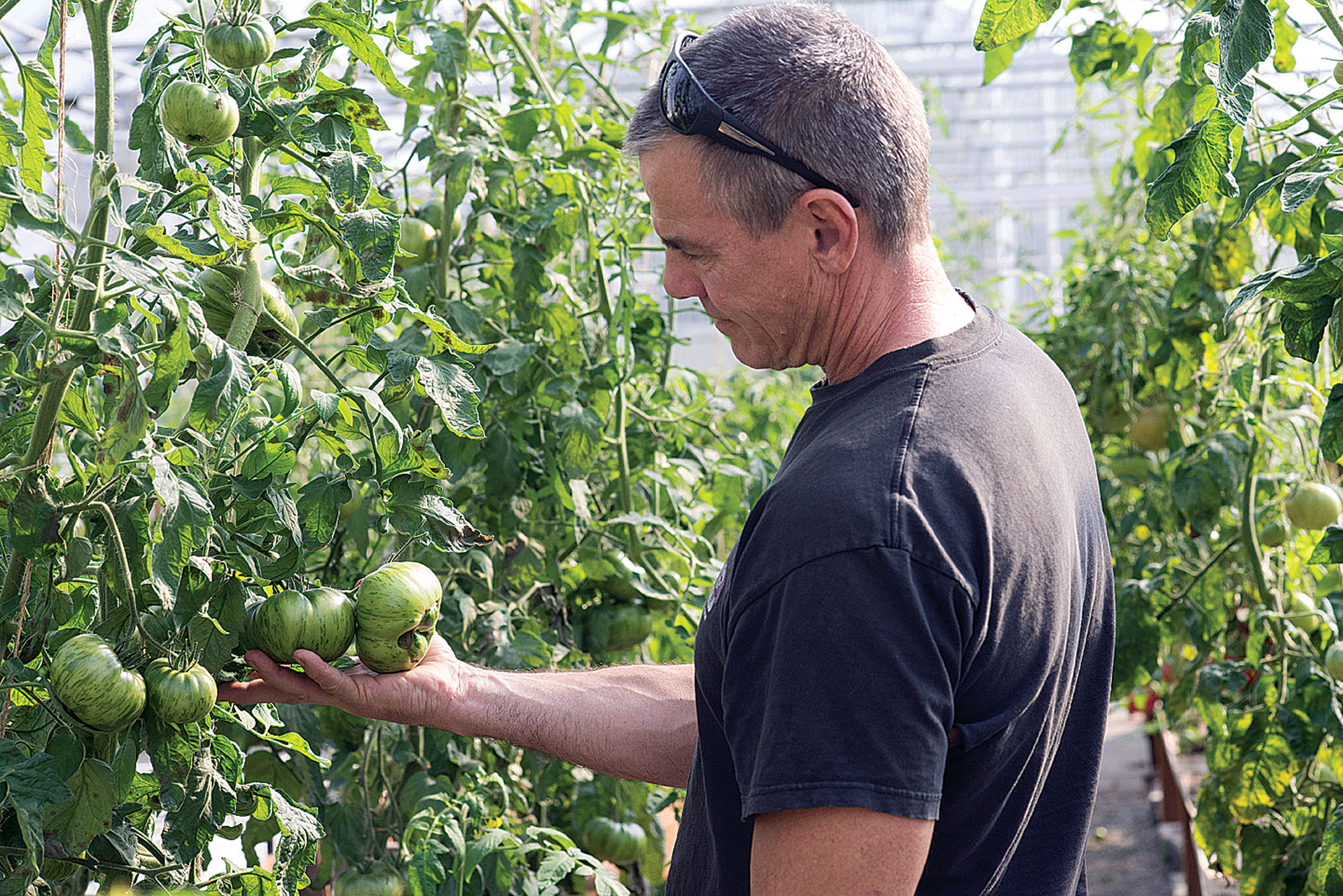
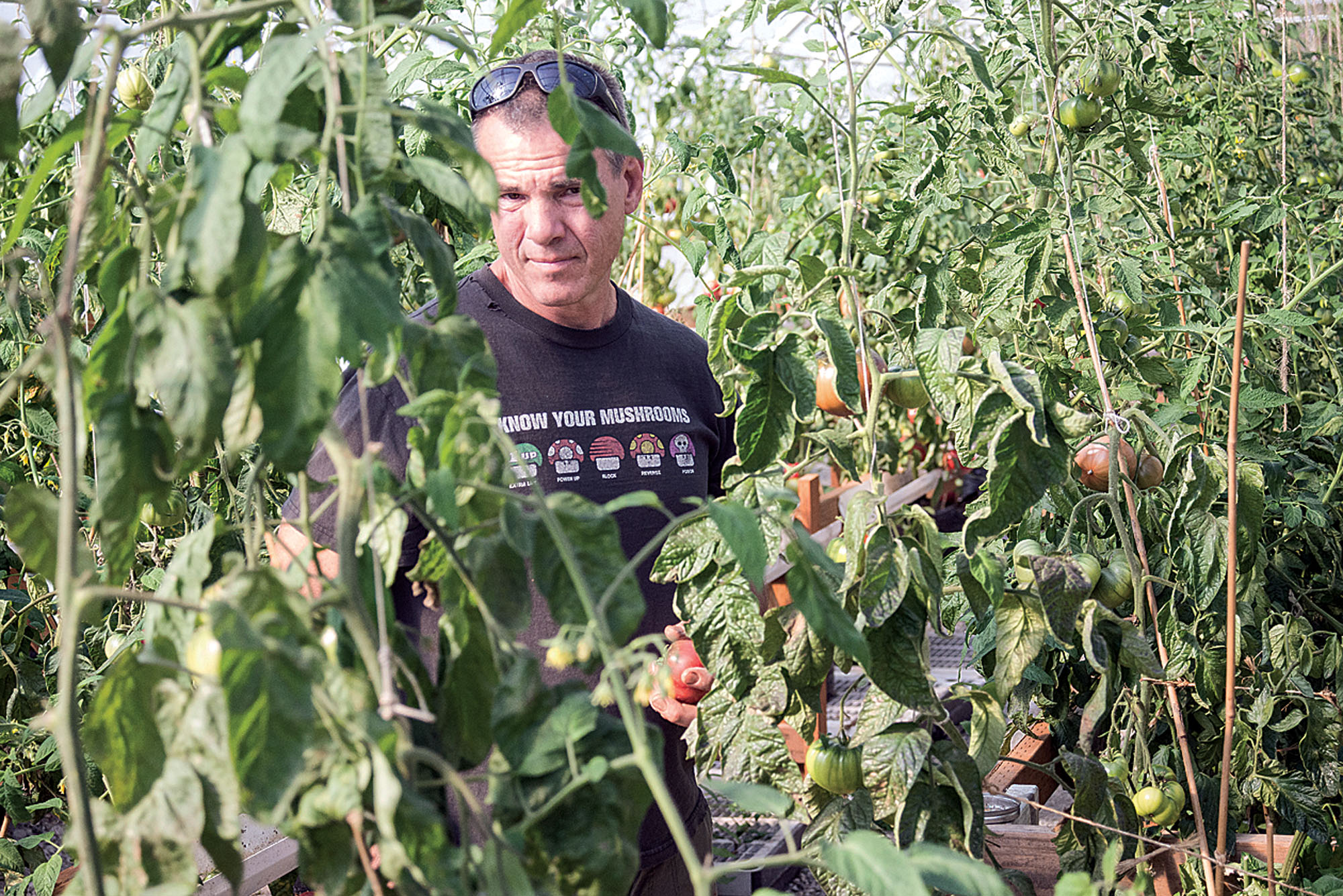
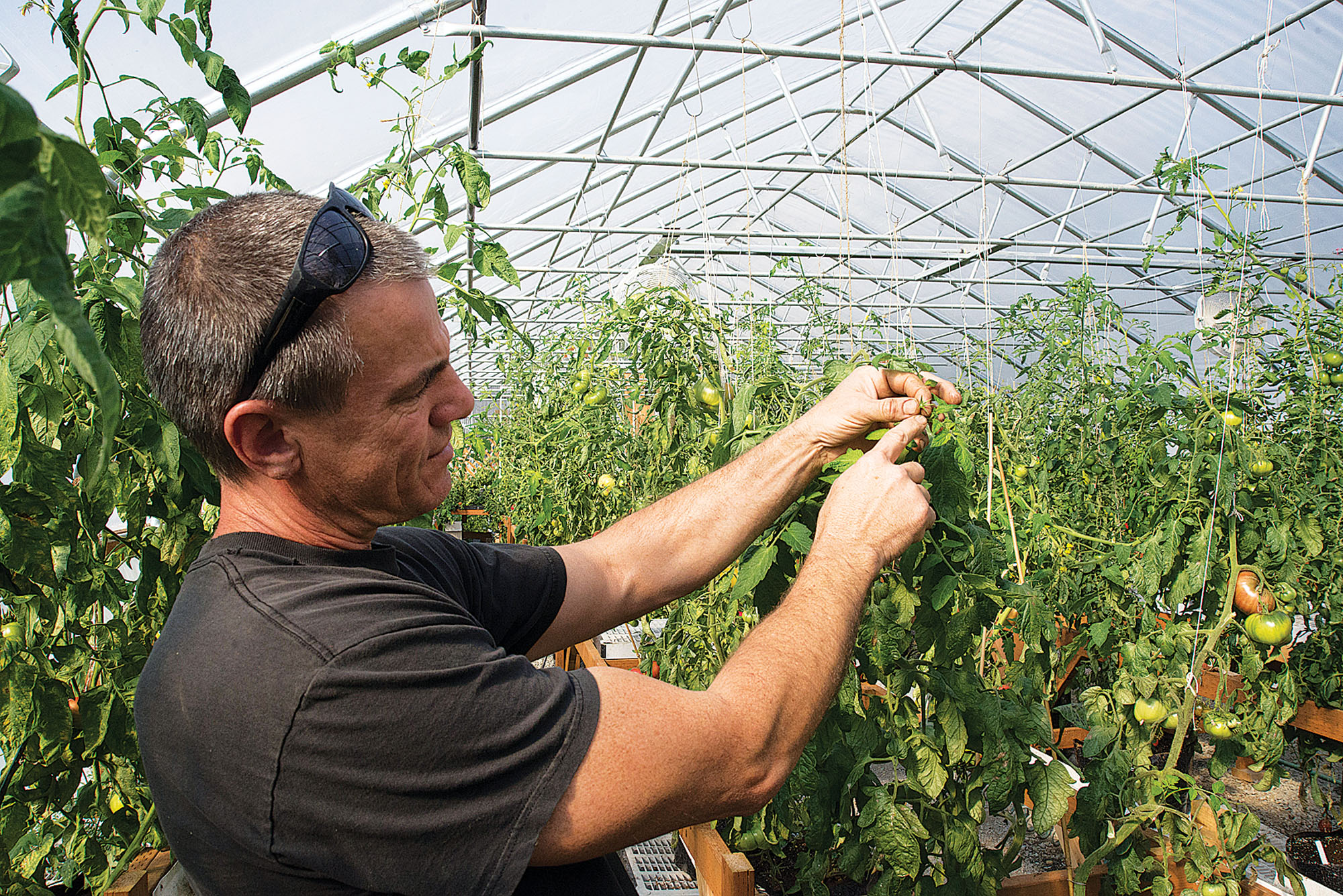
Tomato grower/breeder Mark Oathout at Mid Valley Garden and Greenhouse on Hyer Road said the Internet is also giving growers access to new varieties.
“There’s a huge seed exchange going on now,” Oathout said.
Kenley, who sells at Anchorage markets and to local restaurants, said all of the pieces are coming together for Alaska agriculture to reach a new level of success.
As more Alaskans and visitors demand local food at their supermarkets and restaurants, some of the mid-size farmers’ market operations will move into the wholesale markets, Kenley said. If the demand is high enough, Kenley said the markets will put themselves out of business. Or, at least, those people making a living selling at the markets today will be the wholesale growers of tomorrow, making way for a new crop of small-scale entrepreneurs.
She pointed to the Valley’s largest grower of vegetables, Ben VanderWeele of Palmer, noting how he uses farmers market sales to gauge consumer interest in new crops. As consumer demand grows, successful crops become his new wholesale crops. It’s all about getting better at niche marketing, said Kenley, who grows her bounty on just 1.5 acres.
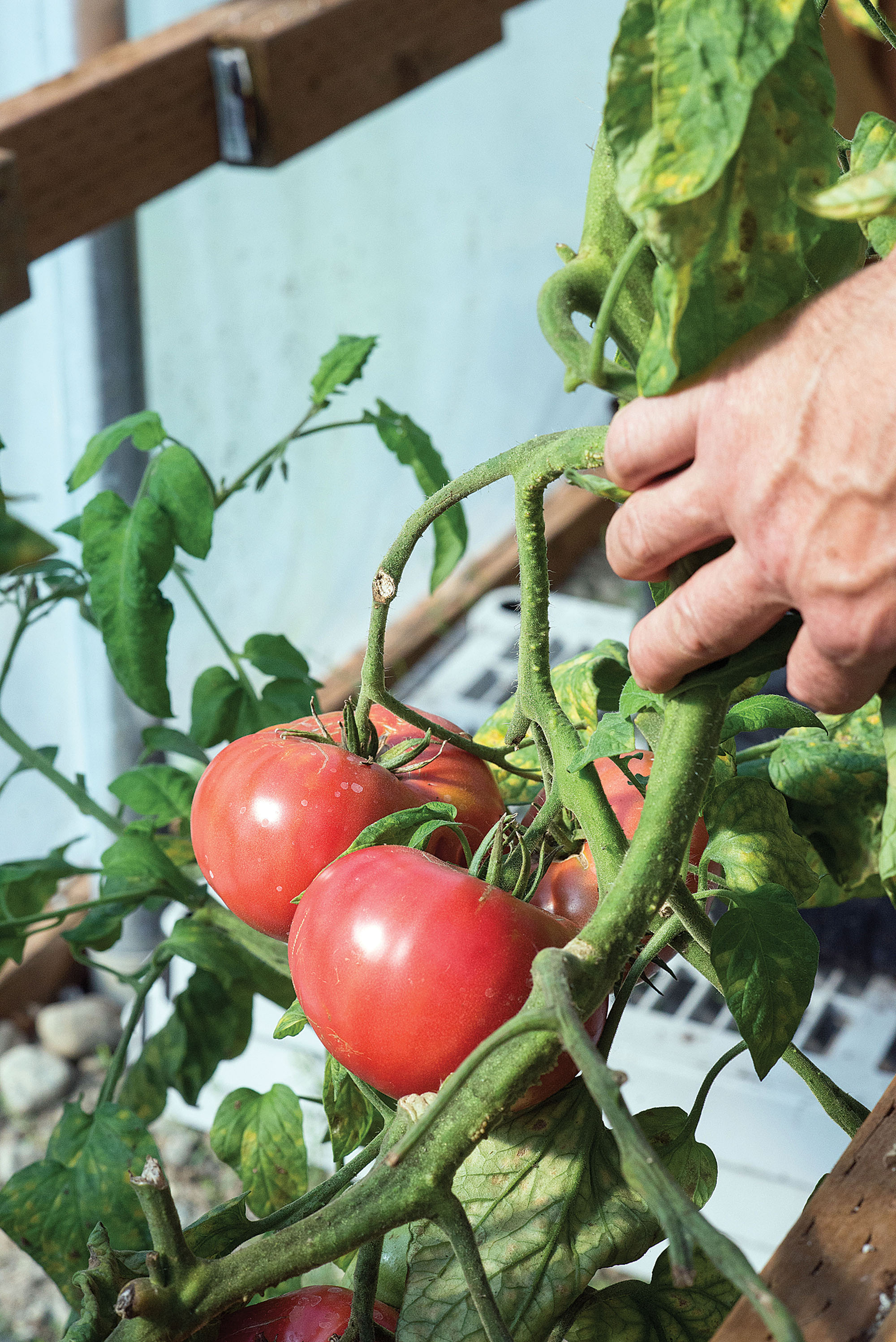
When it comes to finding a niche, Oathout is all about tomatoes. While the flowers he grows helps make the business, his passion is finding the best, most-flavorful tomatoes for Alaska consumers. While he still looks at his efforts as a “hobby that supports itself, and then some,” he sees the potential in his crop of choice.
“Everybody uses them and, in Alaska, everybody’s desperate to find a good one,” Oathout said. This year, he grew 83 varieties from seeds from 24 countries, including his own crosses. The tomatoes sell at farmers markets in Anchorage and Soldotna, and show up in local restaurants.
Pettit said the Division of Agriculture is working with those mid-size direct-market farms to get them to the next level — wholesaling. Some 50 farmers have taken on-farm safety classes in the past two years. As farmers move from direct market to supplying to restaurants and grocery stores, they need to complete federal Good Agriculture Practices training and the state’s On Farm Food Safety program, Pettit said.
Pettit said the state is pushing the training not only to allow sales to wholesalers who require the designations, but as a marketing tool for direct marketers. She quoted a national survey that said two-thirds of consumers surveyed found third-party verification of safety standards appealing.
“People want that,” Pettit said.
Even with all of the growth, Pettit said there remains room for more producers. One of the biggest untapped markets is for red meat, she said.
While the demand for Alaska agricultural products continue to rise, the Division of Agriculture’s funding to assist farmers has not kept pace. Pettit said the division relies on federal funds through the Specialty Crop Block Grant program to keep programs running.
“That’s been our lifeline for the last five years,” Pettit said. The funds pay for programs like Chef in the Market, which features an Alaska chef using Alaska Grown crops in season, and the Restaurant Rewards program, which reimburses restaurants up to 20 percent for choosing locally grown products.
Julia McNeal of Wasilla and her family are among those who are benefiting both from efforts to expand markets and funding for greenhouses. Their Sweetwater Farm grew and sold strawberries successfully from a roadside stand, and expanded into growing other cut flowers while they wait for their peony plants to mature. McNeal sells from a trailer she parks along the Palmer-Wasilla Highway.
“It’s surprising how many people are excited,” McNeal said, pointing to her crop of lilies, sweet peas, sunflowers, larkspur, bachelor buttons and zinnias. She said she has been pleased with the public support of the venture.
For Alaska Grown shoppers like Wasilla’s Ruth Johnson, it makes sense to get a fresh product from local growers. Johnson stopped at Ed Zegzdryn’s stand at the Palmer Fling recently.
“I like fresh beets and also I like to support our local folks,” Johnson said. Johnson bought beets and golden raspberries from Zegzdryn.

By Jeremiah Bartz Frontiersman.com A football coach using a hockey reference as the centerpiece for his keynote address may

Frontiersman.com With its headquarters in Wasilla, the Frontiersman has been a primary source of news for the Matanuska-Susitna

By Katie Stavick Frontiersman.com The next generation of leaders took flight this week as the Houston High School Class

By Kyle Wilkinson For the Frontiersman Keynote speaker and Carry the Cure President Bill Pagaran’s words boomed through the