Retiring teacher, coach urges Colony grads to ‘find their 68’
By Jeremiah Bartz Frontiersman.com A football coach using a hockey reference as the centerpiece for his keynote address may


WASILLA — Officials from the city of Palmer, the U.S. Environmental Protection Agency, and the U.S. Department of Justice are in talks over the city sewage treatment plant’s discharge into the Matanuska River.
The city council met in closed-door executive session Tuesday to discuss “possible litigation; matters the immediate knowledge of which would clearly have an adverse effect upon the finances of the City concerning the Wastewater Treatment facility,” as the meeting was described in the council’s agenda.
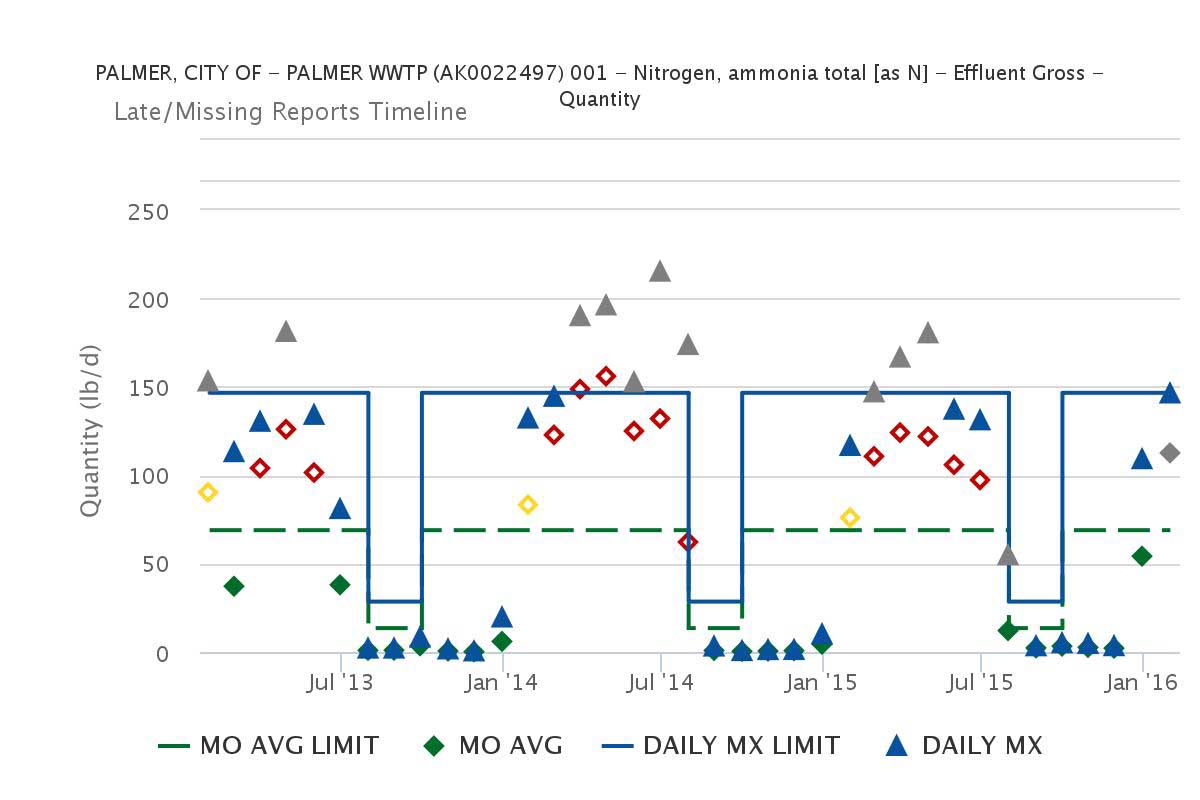
Mandatory federal filings show the treatment plant’s nitrogen effluents, which include ammonia, have repeatedly exceeded federal limits since at least 2013. Effluent discharges in environmentally sensitive areas, like the Columbia River, have sometimes resulted in millions of dollars in fines, though city officials said they don’t yet know whether fines will be part of any enforcement action in the Palmer case.
Federal reports — known as discharge monitoring reports — show the sewage treatment plant meets standards for nine of 10 categories routinely recorded. However, the reports also show wide seasonal swings in ammonia levels, some of which violate EPA limits.
According to the EPA, ammonia can pose a risk to aquatic life, even in small amounts.
“Ammonia is considered on of the most important pollutants in the aquatic environment not only because of its highly toxic nature and occurrence in surface water systems, but also because many effluents have to be treated in order to keep the concentrations of ammonia in surface waters from being unacceptable high,” reads one portion of the EPA’s most recent standards.
The EPA’s limits have seasonal variations and are measured two different ways: a concentration level at the discharge site given as milligrams per liter; and a quantity given as pounds per day. Within each measurement, the levels are determined by daily maximum limit and a monthly average.
Reports available online show the plant usually begins to exceed EPA limits in February, and peaks in April. The worst such recorded instances were in April 2014, when the plant’s nitrogen concentration was almost twice the EPA limit. EPA documents show the plant exceeded daily maximum limits seven times each in 2013 and 2014, six times in 2015, and once so far in 2016. The plant exceeded the monthly average limit six times in 2013, seven times in 2014, six times in 2015, and once so far in 2016.
The quantity category is more mixed. According to the discharge reports, plant discharges violated daily maximum EPA limits twice in 2013, five times in 2014, and four times in 2015.
Most of the times the excessive ammonia flowed during the period between Oct. 1 and July 31.
The issue involving the plant stems not from the plant itself, but from frequent regulatory changes enacted by the EPA, said Palmer mayor DeLena Johnson. City officials have known about the issue for some time, and have struggled to meet the new standard, Johnson said.
“We’ve had these kind of wastewater treatment plant issues because the EPA changes the rules,” she said.
The big question is what action the city will need to take to meet the EPA’s demands.
“It’s all out there,” she said. “It’s all part of the public record. What we don’t know at this point entirely is what kind of actions the EPA will say we need to take.”
City officials declined to discuss the particulars of the potential litigation. Johnson credited Wallace with working to resolve the situation.
“To me it’s just great that we finally got a manager that will take a look at this and make things happen,” she said.
The city intends to follow a wastewater treatment master plan that entails building a multi-bed bioreactor, which will allow for more effective treatment of ammonia, in the future, Wallace said. The city is not discharging raw sewage, but found itself on the wrong side of stricter regulations, Wallace said.
“Our procedures haven’t changed,” he said. “It’s a permitting piece.”
The costs of any potential construction would likely come out of the city’s sewer-water treatment enterprise fund, Wallace said. Water rates determine the income into that fund, Wallace said.
EPA compliance officer Tara Martich confirmed that the EPA and Justice Department were in talks with the city, but declined to comment publicly until she had coordinated with the government’s attorneys.
Contact reporter Brian O’Connor at 352-2270, brian.oconnor@frontiersman.com, or on Twitter @reporterbriano.

By Jeremiah Bartz Frontiersman.com A football coach using a hockey reference as the centerpiece for his keynote address may

Frontiersman.com With its headquarters in Wasilla, the Frontiersman has been a primary source of news for the Matanuska-Susitna

By Katie Stavick Frontiersman.com The next generation of leaders took flight this week as the Houston High School Class

By Kyle Wilkinson For the Frontiersman Keynote speaker and Carry the Cure President Bill Pagaran’s words boomed through the