Retiring teacher, coach urges Colony grads to ‘find their 68’
By Jeremiah Bartz Frontiersman.com A football coach using a hockey reference as the centerpiece for his keynote address may


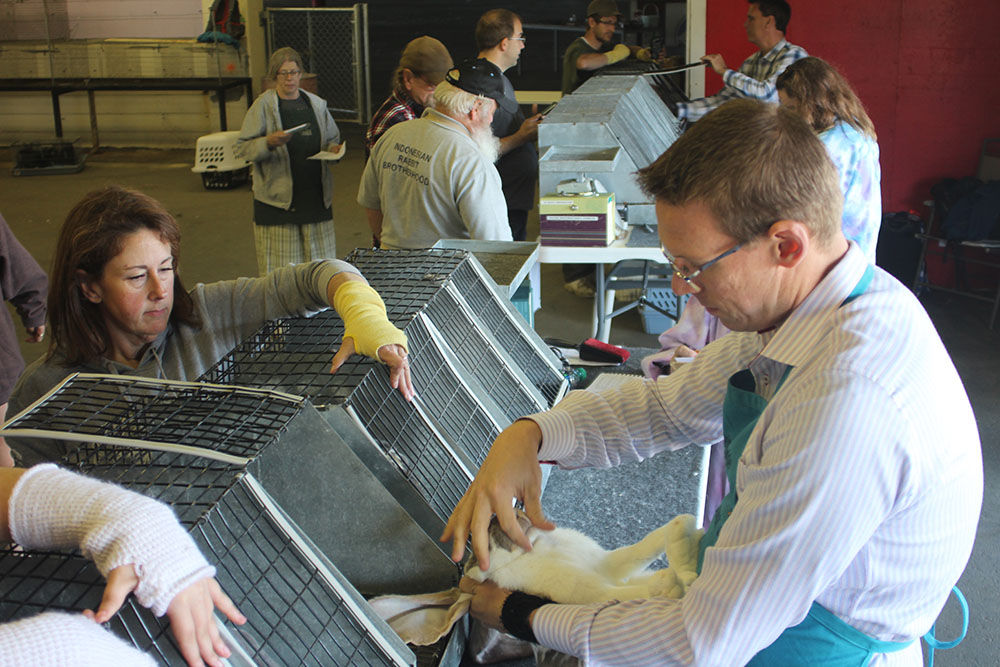
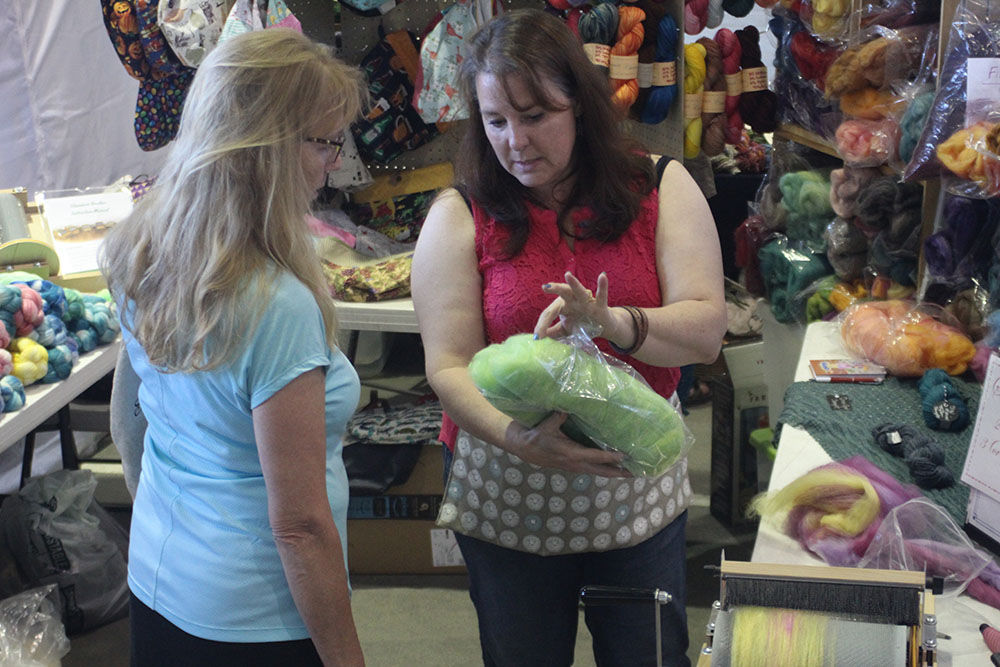
PALMER — Fiber artists and enthusiasts gathered from across the state for the second annual Mat-Su Valley Fiber Arts Festival at the Alaska State Fairgrounds, held within the livestock barn. The sheer amount of fiber variety was front and center as spinners, knitters, and other artists crafted colorful creations throughout the day. Dozens of vendors set up booths and most offered demonstrations and advice to on goers. From beginning to end, essentially all stages of fiber production were showcased at the festival. There were live animals in pens, real-time shearing demonstrations, evaluations, workshops and numerous wares to purchase.
The festival is only in its second year, but according to vendors and those coordinating the event, it has grown substantially and looks to evolve even further over time.
‘It’s really neat to see all the different aspects — the whole cycle. The whole shebang is here,” said Rebecca Marhanke from the Northern Lights Valley Knitters. “It’s an art form. Any kind of art form is relaxing and it’s meditative. It makes you kinda stop and think and just enjoy living in the moment.”
Sandra Cook, owner of SL Cook Pottery and Fiber Werks in Palmer, said it was great to see old friends again and see all the different ways of crafting with fiber. She noted on the simple pleasure it brings, going “back to the basics.” She went on to say in a fast paced “throwaway” society and its ever changing technology, it is nice to use “sophisticated” tools that requires no electricity and are sustainable. There were a variety of different tools and methods of fiber artistry on display. She said she learns something new every year.
“It’s dangerous for a spinner like myself because there’s so many delicious fibers to consume,” Cook said.
Michelle Olsen, a chair member for the festival said working with fiber is “addictive.” She raises animals like sheep and goats to sell their fleece.
“There’s a lot of stuff that comes out of sheep,” Olsen said. “Not to mention, lamb tastes really good.”
She had several goats and sheep on-site. Some are slaughtered once they reach their target weight. Those designated for harvest are usually selected at birth. She said that she treats them all the same. All the sheep are given names and looked after, having all their needs taken care of.
“I like to say, they have a really good life and one bad day,” Olsen laughed.
There were other animals including rabbits there was well who were all local Valley creatures except one group from Fairbanks. Like the fiber products, animals were also judged and assessed. There were also specific specialists that offered instruction and advice for proper maintenance.
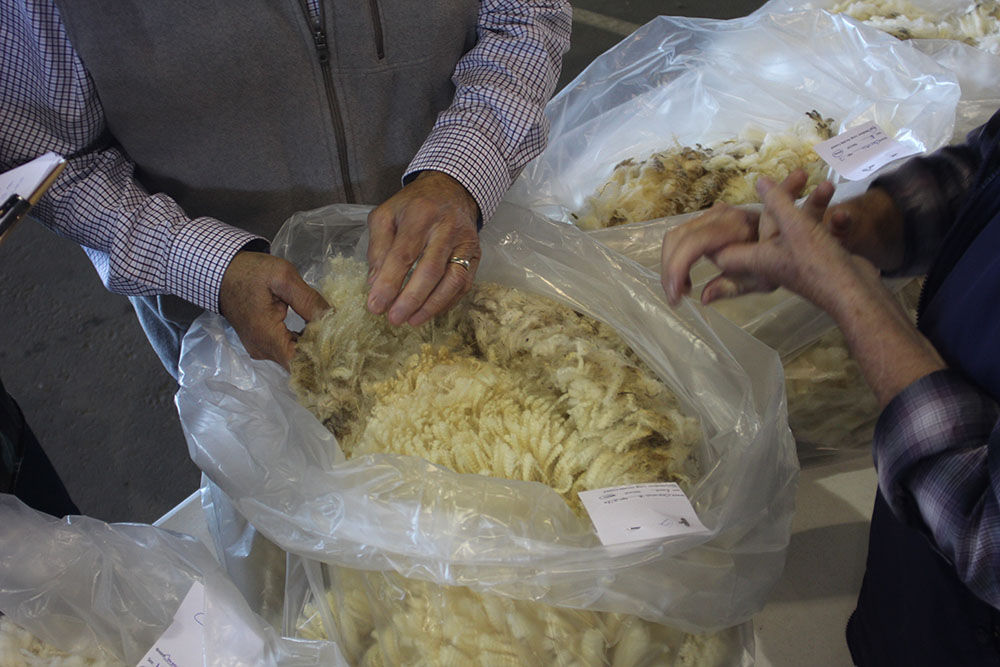
Two judges from the Lower 48 were present, assessing the animals and fiber products. They felt their way through various bags of fiber and evaluated them based on their class. With sheared wool, there are different classes for different purposes. Short wool is typically softer and used for clothing closer to the skin like shirts. Longer wool is more robust and is usually crafted to last longer and is used for outerwear like coats, and is also used to make long lasting items like carpets.
The judges look and feel for a number of defining factors like the length of fiber, the cleanliness, the crimp, how it was sheared, the luster and so on. A “bad spot” or “break” in the fiber can disqualify the entry quicker than any other factor. The break is often a result of an animal’s environment or “stress,” be it a storm, nutrition or illness. When there is a break in fiber, it’s rendered almost useless and the judges are basing their conclusion on the value of each finished product. Both judges said that their experience with Alaskan fiber had been “very comparable” other states’ fairs.
“Most of these are very well presented. Some are very valuable and that’s what it’s all about- the value of the fiber,” said Sam Wiford, one of the two judges.
The other judge, Carol Ronan said that for a second year, the festival was “fabulous” and a “great representation of Alaska.”

By Jeremiah Bartz Frontiersman.com A football coach using a hockey reference as the centerpiece for his keynote address may

Frontiersman.com With its headquarters in Wasilla, the Frontiersman has been a primary source of news for the Matanuska-Susitna

By Katie Stavick Frontiersman.com The next generation of leaders took flight this week as the Houston High School Class

By Kyle Wilkinson For the Frontiersman Keynote speaker and Carry the Cure President Bill Pagaran’s words boomed through the