Retiring teacher, coach urges Colony grads to ‘find their 68’
By Jeremiah Bartz Frontiersman.com A football coach using a hockey reference as the centerpiece for his keynote address may


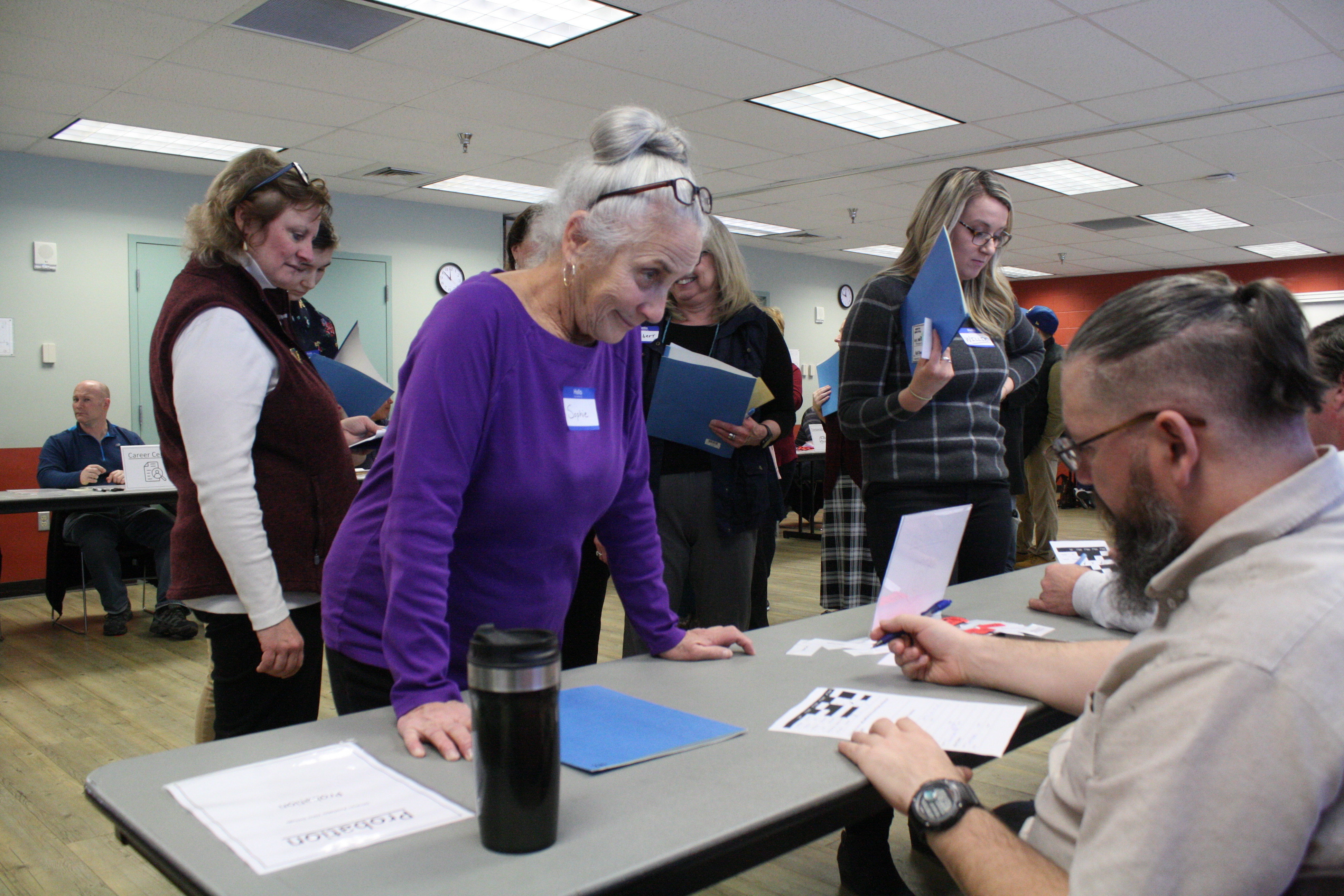
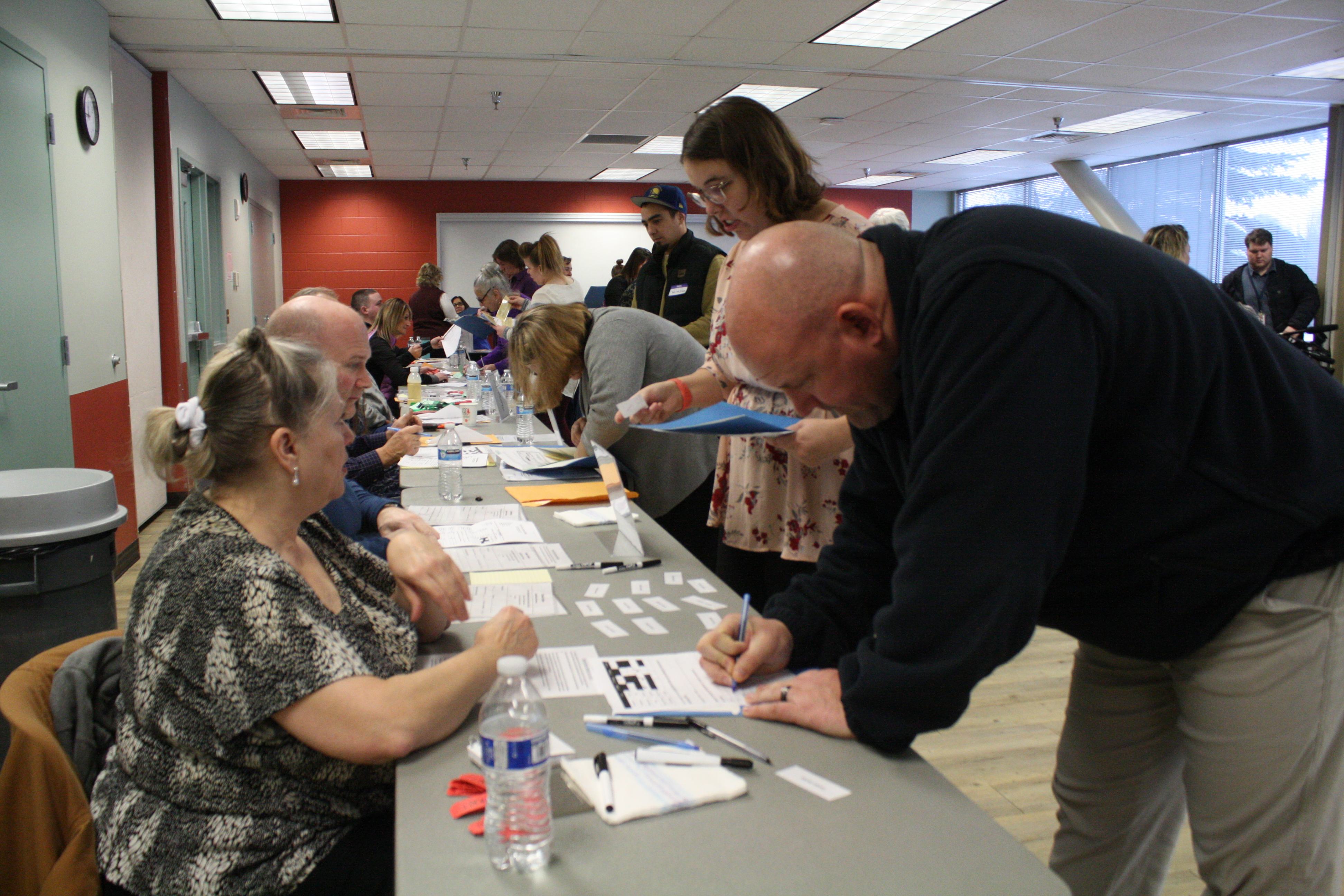
WASILLA — For about 90 minutes, dozens of locals cycled in and out of hypothetical jail during Mat-Su Reentry Coalition’s first Reentry Simulation.
“You have to do the right stuff or you’re in trouble and trouble means lack of freedom,” participant Linda Kabealo said.
Participants filled up a Menard Center meeting room Wednesday, Nov. 20 to walk a simulated mile in the shoes of prisoners attempting to reenter society without winding up back behind bars.
Facilitators from various groups and organizations sat at their designated stations set up on a gauntlet of tables that took up half the room in a horseshoe shape. Each participant was assigned a character with a certain set of circumstances.
From UA tests with parole officers to courthouse hearings, the stimulation was an attempt to give the participants an idea of how much goes into reentry and how many potential pitfalls and barriers one may face along the way.
“There’s always an ah-ha moment,” Yulonda Candelario, U.S. Attorney’s Office Reentry Coordinator Reentry Coordinator, said.
A majority of the participants came from various backgrounds that deal with local reentrants or their families.
Mat-Su Reentry partnered with the U.S. Attorney’s Office in conjunction with a national effort called Project Safe Neighborhoods to make this event happen.
There are seven nonprofit reentry coalitions in Alaska. Candelario has been to nine other simulations across the state. She said this was the first Valley reentry simulation and the group was fairly diverse and engaged.
“There has been a lot of interest,” Candelario said.
Candelario explained that Alaska first started hosting these simulations earlier this year. The simulation format comes from the Southern District of Florida Reentry Initiative, which is blanketed under Project Safe Neighborhoods.
Candelario said there were some obvious changes that needed to be made for simulations statewide. For example, there are no plasma donation centers in Alaska so that had to be tweaked. She noted that they modify the format to reflect each community they hold a simulation in.
“I think it’s extremely realistic,” Candelario said.
Some facilitators at the simulation stations were reentrants themselves. Candelario said that comes in handy when attempting to broaden people’s perspectives.
“They’ve had the real experiences,” Candelario said.
The biggest goal for this simulation and ones to come is to evoke lasting compassion amongst the participants, to help them realize how difficult it can be to avoid recidivating, Candelario explained.
Simple things like making it to an important appointment on time can be a huge hurdle for reentrants due to factors like lack of transportation or finances.
Lack of proper public transportation is one of the more prominent issues Valley reentrants face each day and that was reflected in the simulation.
Jonathon Pistotnik, Coalition Coordinator for the Anchorage Reentry Coalition, said the Valley simulation group had “great energy.” He said every simulation is a little different but the no matter where it’s held, the message is the same.
“The point is, it’s hard when you get back to the community,” Pistotnik said.
Pistotnik said the most important part of the simulation was to gauge how the participants felt in the midst of their simulated struggles. The emotional connection is key for feedback purposes for future simulations and its key for the participants to broaden their horizons.
Participant Kyla Pomrenke enjoyed the simulation. She participated with her colleagues and said it was a great team building experience and she’s confident they all will “return to the office with more compassion.”
“I thought it was great,” Pomrenke said.
At the end of the simulation, participants who ended up back in jail sat on the left side of the room and the ones who remained in society were on the right.
Pomrenke’s character went back to jail three times and she was in jail at the end of the simulation. Like many participants, Pomrenke got invested in the simulation and felt genuinely frustrated when she was hauled off to simulated jail for missing an appointment.
“I went to everything I was supposed to…” Pomrenke said.
There were plenty of laughs but a plenty more feedback at the end when it was time to reflect. Pomrenke said it was fun but she took it very seriously. She said it seemed like most participants felt the same.
Candelario said another major goal for this simulation is to provoke thought that spills into real life. She said that she hopes the lessons learned in the simulation can affect real life change in the various communities.
“It’s gonna’ take a community effort,” Candelario said. “Don’t let this dialogue die in this room.”
To learn more about the Mat-Su Reentry Coalition, call 907-414-4077 or email barbara.mongar@valleycharities.org
Contact Mat-Su Valley Frontiersman reporter Jacob Mann at jacob.mann@frontiersman.com

By Jeremiah Bartz Frontiersman.com A football coach using a hockey reference as the centerpiece for his keynote address may

Frontiersman.com With its headquarters in Wasilla, the Frontiersman has been a primary source of news for the Matanuska-Susitna

By Katie Stavick Frontiersman.com The next generation of leaders took flight this week as the Houston High School Class

By Kyle Wilkinson For the Frontiersman Keynote speaker and Carry the Cure President Bill Pagaran’s words boomed through the