Retiring teacher, coach urges Colony grads to ‘find their 68’
By Jeremiah Bartz Frontiersman.com A football coach using a hockey reference as the centerpiece for his keynote address may


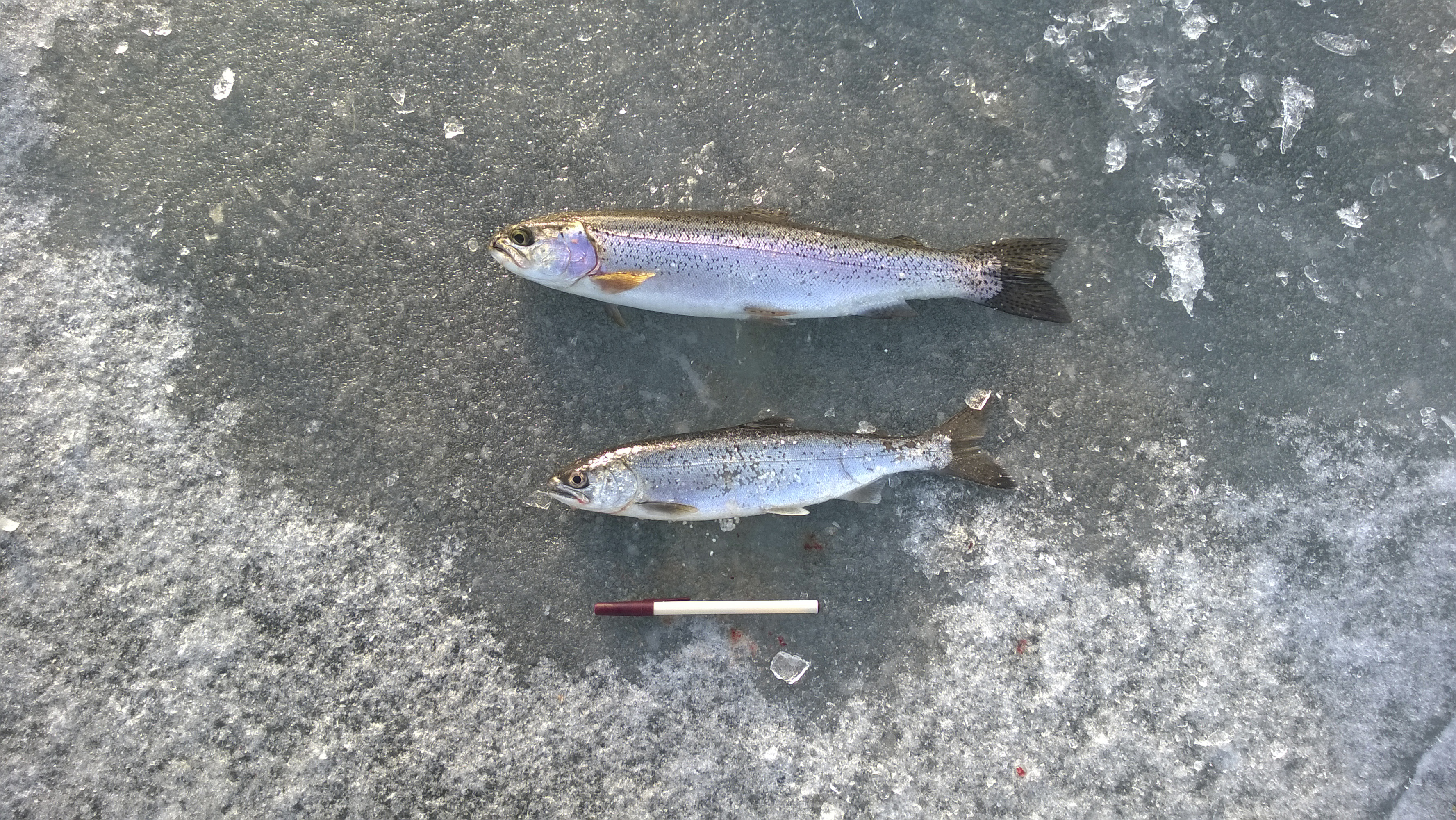
WASILLA — Valley anglers take note: that beautiful Arctic grayling caught on that perfect day last year may need to be cherished a little more, as the long arm of state spending cuts has reached into fish hatchery budgets as well, resulting in the suspension of grayling stocking along with a reduction in rainbow trout production.
The Alaska Department of Fish and Game released its 2016 through 2020 stocking plan last month, which details what species will be released at more than 200 sites around the state annually, usually in May and June. Despite the cuts, the 2016 stocking numbers haven’t changed much, according to Andrew Garry, the stocking coordinator for Fish and Game.
Additional budget constraints at the William Jack Hernandez Sport Fish Hatchery — the state’s largest — will result in a 20 percent reduction in the number of fingerling and catchable rainbow produced there, Garry said.
“We’re trying to reduce operating costs, and operationally speaking, suspending the grayling stocking program was the most effective,” Gary said, adding that the program could easily be restarted in the future. The broodstock fish used come from the Chena River in Fairbanks.
Grayling are voracious feeders known to hit almost any lure. They’re also notable for the large, colorful dorsal fin on their backs.
The suspended grayling program makes up around 10 percent of the fish the Ruth Burnett Sport Fish Hatchery in Fairbanks planned to stock in 2016. The Hernandez hatchery provides fish primarily for Southcentral Alaska, while the Burnett facility supplies the Interior.
“Statewide, it’s about 50,000 fish. For the Valley, it’s around 16,000,” Garry said of the grayling loss.
Some 6.5 million fish will be released around the state in 2016, Garry said — a fairly consistent number from previous years. Those numbers will stay consistent for the 2017-2020 projections as well, Garry added.
“Those numbers are pretty even across the board — there are no major changes,” Garry said. The reduction in rainbows — the statewide total for 2016 is 950,000 — is being absorbed throughout the management areas, he said.
Funding for fish stocking comes primarily from federal sources, including the Federal Aid in Sport Fisheries Restoration program and taxes on marine motor fuels and some specific sporting goods. State funds come from the Fish and Game sport fish account, which includes revenues from the sale of fishing licenses.
The 2016 stocking plan also provided results from Fish and Game’s annual harvest surveys. According to the 2014 numbers, anglers fished 2.3 million angler days, caught approximately 5.9 million fish — which included razor clams and smelt — and harvested some 2.4 million fish. Compared to the 2013 survey, the 2014 figures revealed a 4.7 percent increase in the number of days fished, a 5 percent decrease in the number of fish caught and a 6.5 percent decrease in the number of fish harvested.
In the Valley, the state plans to stock 557,000 Chinook salmon, 196,600 coho, 6,625 Arctic char and 385,724 rainbow trout in 2016. The suspended grayling stocking program will affect Finger Lake and Canoe Lake in the Kepler-Bradley lake system along with Ida, Goober, Ravine, Meirs, Reed, Lorraine, Knik and Florence lakes.
The popularity of the Eklutna Tailrace fishery remains a continued focus of the stocking program, Garry said, with 424,000 Chinook and 120,000 coho smolt expected to be released in 2016. At Deception Creek, a tributary of Willow Creek, the state plans to release 212,000 adipose-fin clipped Chinook smolt to complement the natural Willow run, Garry said.
“We usually expect a 1-2 percent survival rate for those fish returning,” Garry said of the hatchery fish.
Garry said Valley lakes that seem to be the most productive in “growing” fish once fingerlings are introduced are Finger, Seymore and Lucile. Finger Lake is the largest stocked lake in the Mat-Su, according to the state, and saw some 4,300 trout, 8,700 landlocked salmon and 1,500 Arctic char caught in 2014.
“We like to stock landlocked Chinook salmon there because we found them to be aggressive to the bite,” Garry said. “It is a popular fishery with the kids.”
Statewide, Garry said stocking has become a vital part of the sport fish program.
“I think folks see the value of the stocking program,” Garry said. “It takes the pressure off the wild stocks, spreads people out and gets them — especially kids — some special opportunities.”
The statewide plan is available online at www.adfg.alaska.gov/index.cfm?adfg=fishingSportStockingHatcheries.stockingPlan
Contact reporter Steven Merritt at 352-2269 or steven.merritt@frontiersman.com

By Kyle Wilkinson Kyle in the outside Our spring bear hunt was bittersweet this year. We’re heading home without

Frontiersman.com Valley athletes earned titles during the Region III Championships track and field meet last week at Colony High

Leila Petersen Palmer Moose Leila Petersen, a member of the Palmer track and field team, has been named a Frontiersman

By Jeremiah Bartz J’s World August would have been the start of my 25th year as an editor at