Retiring teacher, coach urges Colony grads to ‘find their 68’
By Jeremiah Bartz Frontiersman.com A football coach using a hockey reference as the centerpiece for his keynote address may


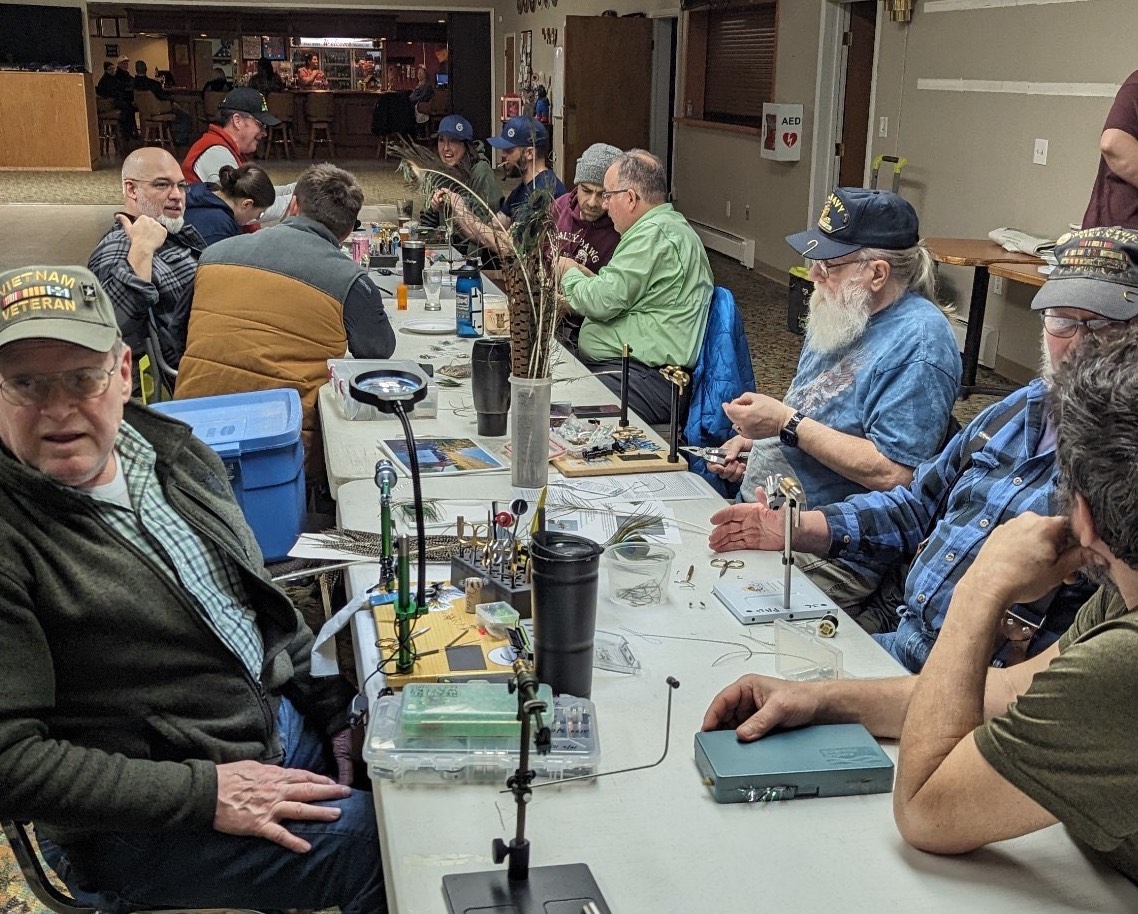
Project Healing Waters Fly Fishing (PHWFF) provides an outlet for military members and their families to heal and connect through fishing. PHWFF was started in 2005 at Walter Reed Army Medical Center in Washington D.C. to help rehabilitate wounded warriors as they returned from overseas. The program has now grown to involve veterans in nearly every state including Alaska, thanks to the initial fly fishing experience of Staff Sergeant Michael Henrie.
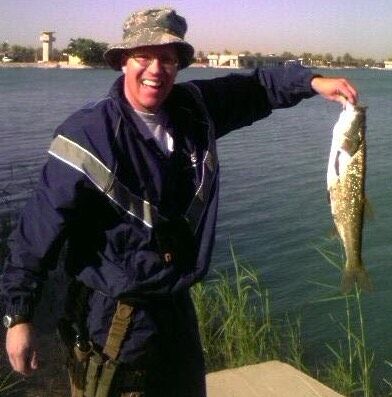
Henrie was deployed to Iraq in 2009 as a drummer in the Air Force Band of the Pacific. While serving in Baghdad, Henrie spent time at Saddam Hussein’s “oasis in the desert” after it had been taken under control by U.S. forces.
The oasis was home to pools and small lakes that held fish, called asps. These fish are similar to carp or chub. Members of the military stationed there were able to fish in these pools during their free time.
“The legend is that years ago,” Henrie said, “when [U.S. forces] first got there, one of the soldiers wrote back to his mom and said, ‘Hey can you send me my fly fishing gear, I think that there are people here that are fly fishing…I think there's fish in this oasis.’”
Henrie explained that the mother of this soldier visited her local fly shop and asked for assistance about what gear to send her son. The shop owner and his friends were excited to help and did everything they could to get equipment to the troops.
When Henrie arrived there in 2009, a Baghdad fly fishing club had already been established. He explained that soldiers could check out a fly rod and fishing gear from a storage locker by signing out on an 8.5 x 11 inch piece of paper for an afternoon. Henrie decided to try it out after being recommended by another soldier.
“I had never fly fished before,” Henrie said. “But the fact that you're standing there, got your nine millimeter strapped to your leg, you got your flak vest on, your helmet on and you can see the Apache helicopters taking off in the distance and barbed wire and bombed out buildings. The fact that there's this water and this is such a dichotomy of experiences from the monochromatic desert of nothingness, right? And then you're standing there in this oasis.”
Despite not knowing what he was doing, the experience of fly fishing had a lasting impact on Henrie.
“Whether you catch a fish or not, wasn't necessarily what it was about,” Henrie said. “It was just about that different kind of experience.”
A couple of weeks later, Henrie read about PHWFF in a copy of Reader’s Digest. He said that it was then that he truly understood the benefits of fly fishing and could relate with the story he was reading.
Henrie returned to Elmendorf Air Force Base after finishing his deployment. He called Ed Nicholson, the founder of PHWFF. Henrie wanted to get involved in the program in Alaska.
“I just got back from deployment, and I told him about this experience,” Henrie said. “I want to help with the program in Alaska. And he said, ‘Well, we don't have a program in Alaska.’”
Surprised, Henrie explained to Nicholson the vast fly fishing opportunities in Alaska and the amount of soldiers in the state.
“[Nicholson] said, ‘Well, we've never had anybody connect a local fly fishing community with the wounded soldiers and the hospital staff and the physical therapy,’” Henrie said. “I said, Well, I can make phone calls. And he said, ‘Okay, you're now the program director for the state of Alaska.’” I was like, oh, wow. What did I get myself into? And that consumed my life for the next two years.”
Henrie approached the Alaska Fly Fishers to help start the organization. He attended fly tying seminars trying to learn new skills to teach members of the program. He explained that Alaska Fly Fishers members were more than happy to volunteer their time to work with PHWFF.
PHWFF started meeting and tying flies in a conference room at Joint Base Elmendorf-Richardson Hospital. Physical therapists would bring their patients in to participate and PHWFF eventually got tied into the Wounded Warrior Project. One of the directors of the Wounded Warrior Project invited Henrie to host his fly tying and rod building classes in their new building. From there, PHWFF eventually moved operations to the Veterans Affairs hospital.
Henrie attended sportsman’s shows to spread word about the program. He would set up a booth with his vise and a few fliers. He approached guide booths from around the state and told them he wanted to host trips for members of his program.
“I told them what I wanted to do and that I wanted to take some soldiers fly fishing,” Henrie said. “And I never heard no.”
PHWFF began hosting trips with guides and outfitters across Alaska. Henrie remembered an integral conversation he had with the spouse of a member.
“I'm standing next to one of these wounded soldiers as he's casting his fly,” Henrie said. “And his wife was standing next to me and she said, ‘Look at my husband. I haven't seen him smile like that in three years.’ And I was like, Yes! This is it! It's working great!”
It was then that Henrie knew that the program that he had built in Alaska was truly working. He began involving spouses on these trips to help connect members not only with other soldiers, but their families.
Henrie received orders for a permanent change of station to Langley Air Force Base Virginia in 2013. When he left, Henrie created a 12 person board of directors out of his top 12 volunteers to take over the program in Alaska. PHWFF has now split into three different chapters, with one in Anchorage, one in Wasilla and one in Fairbanks.
Henrie shared a story about one of his early participants. The man came into the program upset and tense, quick to lose his temper. He described the man as “broken.”
“We understand,” Henrie said. “We've all been there. And then to see his progress week after week, his tension releasing and his shoulders dropping and his smile returning. He eventually became a fly fishing guide.”
This was one of the many success stories from the program, according to Henrie.
“He told me that [PHWFF] literally had saved his life,” Henrie said. “He had gotten to that point where there was nothing left for him.”
The Wasilla chapter now meets on Tuesday evenings at the Veterans of Foreign Wars building from 6-8 p.m. and Thursday afternoons starting at 2 p.m. at the Wasilla Veterans Center.
Henrie has returned to Alaska and now participates in the program as a volunteer. He encourages military service men and women to join PHWFF and experience the benefits of interacting with others.
“It's quiet and it's relaxing, and there's no stress,” Henrie said. “You're not thinking about anything else because you're wrapping thread around a fly. But then you take them out on the trip, they hang out together for a couple days, and they tell stories… when they have that camaraderie, they come back and now they're best friends.”
There is no cost to join the program. Tying materials, rod building kits, professional instruction and guided trips are donated to the program through volunteers. People interested in joining can attend one of the tying nights or check out their website at: https://projecthealingwaters.org/location/wasilla/
PHWFF continues to grow in Alaska. Henrie is still as excited to be a part of the program today as he was when he brought it to the state almost 15 years ago. He wants this program to be able to instill the feelings he originally had in Baghdad with new members every day.
“It's not so much about catching the fish as it is about the camaraderie and the rehabilitation that comes from hanging out together and fly fishing in this incredibly beautiful place that we get to live in,” Henrie said.

By Kyle Wilkinson Kyle in the outside Our spring bear hunt was bittersweet this year. We’re heading home without

Frontiersman.com Valley athletes earned titles during the Region III Championships track and field meet last week at Colony High

Leila Petersen Palmer Moose Leila Petersen, a member of the Palmer track and field team, has been named a Frontiersman

By Jeremiah Bartz J’s World August would have been the start of my 25th year as an editor at