Retiring teacher, coach urges Colony grads to ‘find their 68’
By Jeremiah Bartz Frontiersman.com A football coach using a hockey reference as the centerpiece for his keynote address may


PALMER — Retardant tankers, Canadian water scoopers, lead planes, helicopters, fire engines, hoses and the people behind them, all come together for one reason: to fight forest fires.
Saturday, aerial firefighters and Division of Forestry employees gathered at the Palmer Municipal Airport for interviews (at the request of Sockeye Fire Incident Command spokeswoman Celeste Prescott) to explain what they do, how they do it, and in some cases, why.
Tom Kurth, the Alaska Division of Forestry’s chief of fire and aviation, introduced the machines in order of their appearance on the scene of a fire.
“Oftentimes, we (first) send an air attack ship, which is one of our smaller turbo commanders, there to take a look for us and make a judgment. Then we’ll follow up with our most formidable assets,” he said.
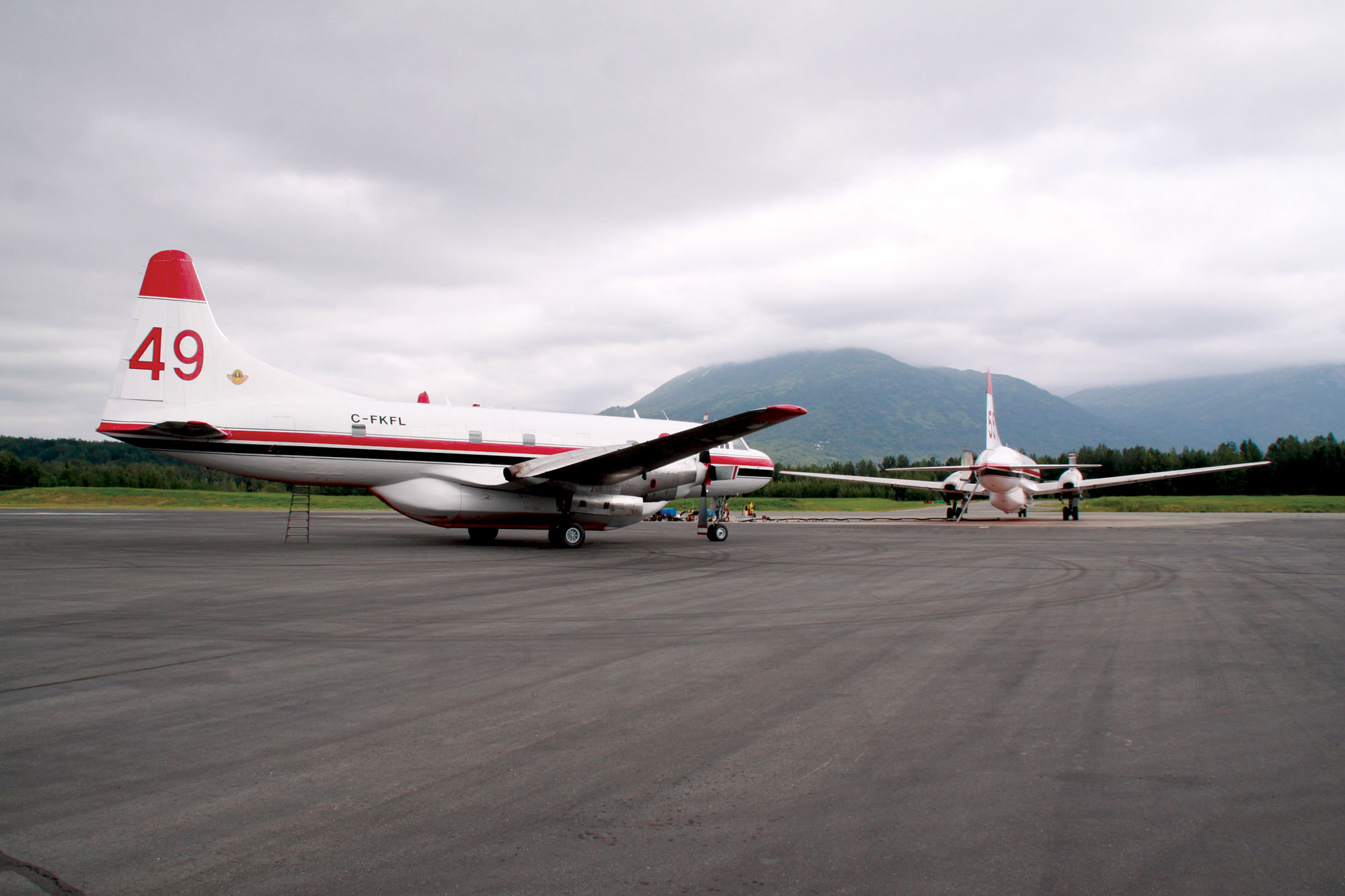
One of those assets is the Conair Tanker, which holds up to 3,000 gallons of fire retardant.
“When we have a running hot fire, this is what it takes to knock the fire down out of the trees or off the grass,” Kurth said.
The state has two of these tankers, one based in Fairbanks and the other in Palmer. Two air attack, or lead, planes and one or two helicopters are the only other assets — aside from fire engines and hoses — typically available during Alaska’s fire season.
With fires like the unruly Sockeye, it’s good to have friends across the border. Kurth said the local Division of Forestry can supplement its stock with additional aircraft on loan from the U.S. Forest Service in the Lower 48 when necessary, though our Canadian neighbors can usually be quicker to respond.
“Everybody knows each other, too,” Kurth said, after so many years of fighting forest fires together.
Canadian air attack officer Dan Purcell, who has been in town fighting numerous other Alaska wildfires other than Sockeye, has been on the job for 20 years, nine of them spent doing air attacks.
The formal partnership between the Canada and U.S. forestry services is called the Northwest Wildland Fire Protection Agreement, or the Northwest Compact, Purcell said, and revolves largely around sharing resources like airplanes, crews, equipment.
Although Purcell’s home territory of British Columbia and the whole country of Canada may have more “metal in the sky,” as Prescott put it, Purcell lamented their lack of citizens available to fight fires on foot.
“I’m amazed at the amount of people that you have on the ground,” Purcell said.
Once a pair of “boots on the ground” himself, Purcell’s current job is to direct or inform those men and women from the air.
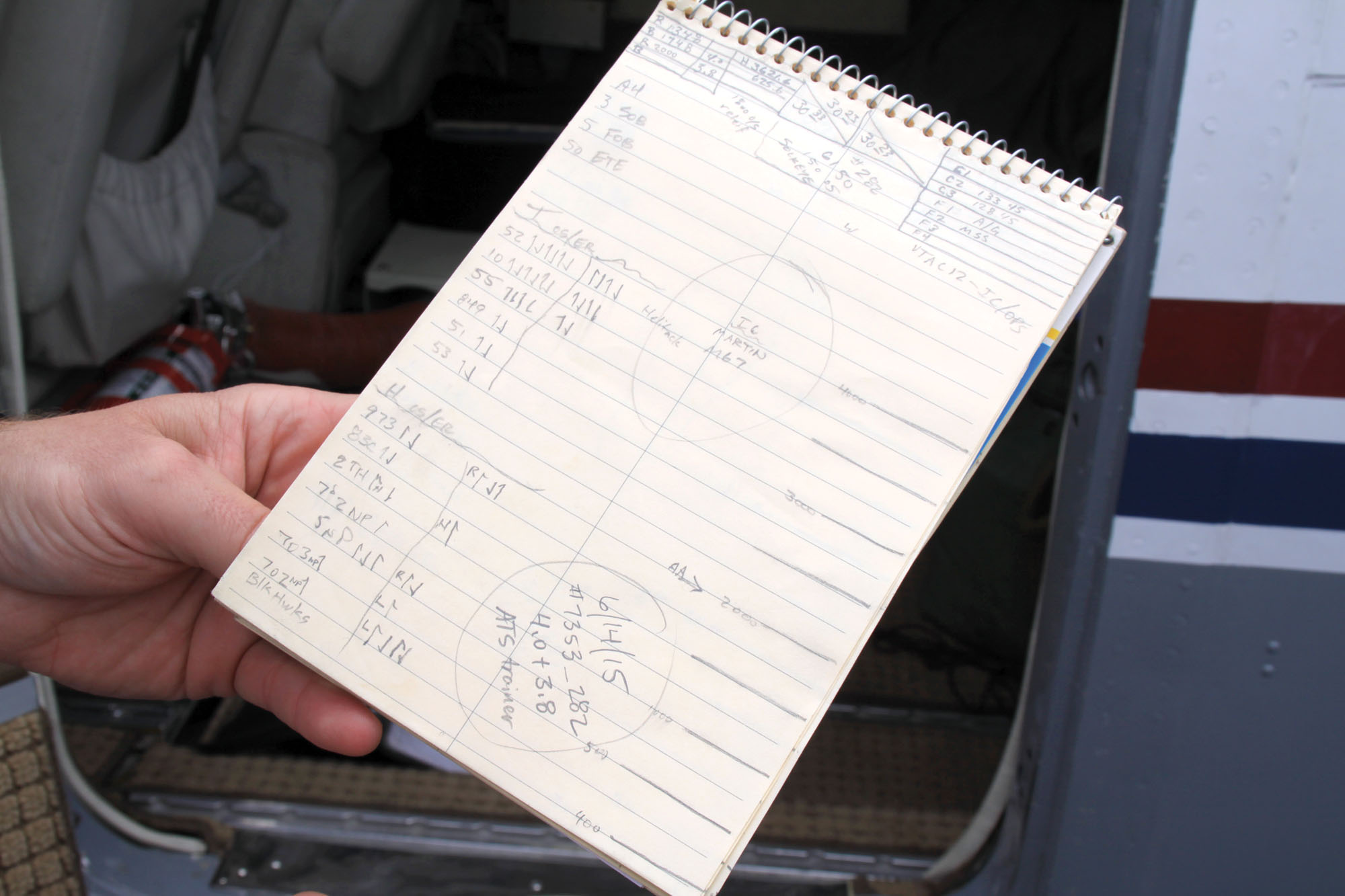
“We support the folks on the ground to reduce the intensity in order for them to, in the end, put the fire out,” he said. “(We) can take a fire that’s quite active and aggressive and get it to a point where the folks on the ground can do their job safely.”
The air attack officers also guide the tankers, and sometimes drop retardant as well.
“If we’re working retardant with the tankers, we’ll be overhead the fire basically the entire time,” Purcell said. “We’ll show them what we want them to do, they will enter our airspace, and then they will put the retardant where they want.”
However, since the lead planes are significantly smaller and more maneuverable, their pilots always need to first make sure the tankers can safely fly the same lines or pattern.
“We wanna make sure that if we’re asking them do something that … they’ll be able to do it within the limits of their (aircraft’s) performance (ability),” Purcell said.
Conair company check pilot Rich Tolson, who relieves the primary tanker pilots after they’ve been working six or 12 all-day shifts, said their job is fairly simple.
“We’re just told where to put the retardant or the water and we go with that,” Tolson said.
If for any reason a tanker pilot feels that their lives are being put at unnecessary risk, he said, he or she can always say “no.”
“Whenever we’re faced with a situation that we deem as being unsafe, then one ‘no’ is a no-go,” Tolson said. “We can opt out.”
With forest fires, “you never know what you’re gonna get until you see it,” said Tim Whitesell, recently named the state’s Northern Region Air Attack Coordinator.
Whitesell was born and raised in Anchorage, and now works out of Fairbanks. He was one of the first on scene at the Sockeye fire.
Like Purcell, he was once a “ground pounder,” but gravitated toward piloting after years of being comforted by the seemingly disembodied voice in his headset.
“As a ground guy, listening to the voice of this guy in the sky, and realizing what he could provide as a service … I wanted to be that person,” Whitesell said. “I wanted to be the person who could maybe help calm things down a little bit, give them really valuable intelligence and provide a tactical service that they might not be able to do their job without.”
Whitesell’s laid-back look, with his dark blonde ponytail, board shorts and sandals, matched his calm demeanor, no doubt comforting to firefighters 1,000s of feet below.
Some could blame that attitude on his favorite quote “With time, even the extraordinary becomes the ordinary.” However, even after a decade of facing great fires, he’s not exactly jaded.
“I’ve seen and worked a lot of fires where lots of homes have been lost, and it’s never an easy thing, no matter how often you do it,” he said.
That might be what makes people like Whitesell good at their jobs.
“You’re never supposed to put the emergency service provider at peril. But I’d be lying to you if I didn’t say that we work a little bit harder and we might push the boundaries a little bit more when people’s homes are burning,” he said.
Contact Caitlin Skvorc at 352-2266 or caitlin.skvorc@frontiersman.com.

By Jeremiah Bartz Frontiersman.com A football coach using a hockey reference as the centerpiece for his keynote address may

Frontiersman.com With its headquarters in Wasilla, the Frontiersman has been a primary source of news for the Matanuska-Susitna

By Katie Stavick Frontiersman.com The next generation of leaders took flight this week as the Houston High School Class

By Kyle Wilkinson For the Frontiersman Keynote speaker and Carry the Cure President Bill Pagaran’s words boomed through the