Retiring teacher, coach urges Colony grads to ‘find their 68’
By Jeremiah Bartz Frontiersman.com A football coach using a hockey reference as the centerpiece for his keynote address may


HATCHER PASS – Tom Sexton knows a thing or two about the poetry of place.
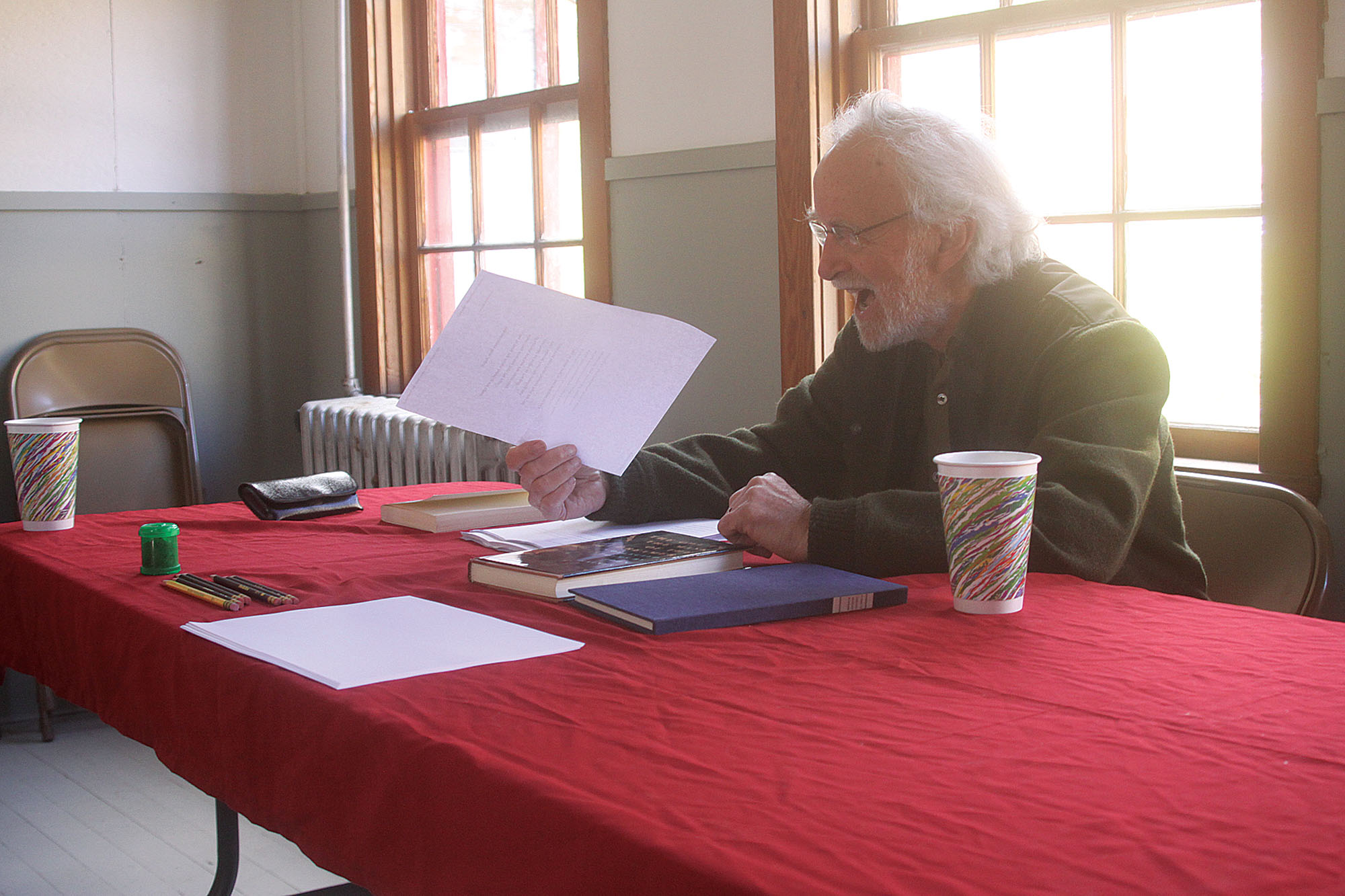
For the three-year Poems in Place project, Sexton’s poem “Independence Mine, August” was selected and recently installed on the path above the bunkhouses in the Independence Mine area with the help of Alaska State Parks rangers. To honor the poet and celebrate the placement of the poem, Alaska Center for the Book members invited Sexton to give a lecture and publicly unveil the plaque on which his poem is written.
“It’s difficult to really know a place,” Sexton said in the lecture, huddled in a cold bunkhouse with a handful of dedicated writing enthusiasts on Saturday.
Sexton said he was “terrified” that there weren’t any berries up by the mine when he wrote the poem, so concerned was he about knowing his subject. The poet once wrote about the town of Whitehorse, he said, without realizing that it was named after the Whitehorse rapids – where the foam looks like a white horse’s tail – not an actual white horse.
“I shouldn’t have written a poem about it,” Sexton said. “I didn’t know enough.”
Gerard Manley Hopkins, one of Sexton’s favorite poets, invented something called “in-scape,” Sexton said, which is essentially the part of a poem that engages the reader with the poet’s inner thoughts or self.
“If you really love a place, you have a sense of its in-scape and that draws you to it,” Sexton explained.
Although he has lived and taught at the university level in Alaska for over 40 years, Sexton had not been to Hatcher Pass until recently. A native of Lowell, Massachusetts, Sexton very much appreciates the nature he has here for inspiration, even living in Anchorage.
“Mountains, cranes, you can’t lose,” Sexton said. “Alaska is a really fertile place for poets.”
One thing lecture attendees learned about the so-called “place poetry” akin to nature poetry is that the “in” of Poems in Place could be substituted with “of,” "and," “about,” “for,” or “inspired by,” and still be classified as place poetry.
That is to say, while the goal of writing place poems is to describe a particular place, the feelings and thoughts of the poet are important too, Sexton said.
“If you just describe a place and don’t unlock something, you have nothing,” he said.
Not adding those personal perspectives could be impossible for some writers, too. Unless one is a landscape painter, Sexton said, to “do away with the ego and just observe” is a difficult task, and may not be necessary.
There may come a point, however, when a writer is required to step outside of his own mind and paint that picture of the place he is writing about.
“In an age so fixed on the selfie, it’s difficult for people to just look at something,” Sexton said. “Perhaps poetry that says ‘look at this’ is more important than we think.”
“I couldn’t shut my eyes and write a poem,” he continued. “I’m far more attached to the world. My poems come from my experience, something I’ve walked through.”
Sexton encouraged others to have such experiences, but poetry will not be everyone’s way of keeping records, he said.
“You can’t make somebody into a writer,” Sexton said. “What you can do is, if there’s something there, you can nurture it.”
Even so, initially “poor” writers have a shot at becoming better, Sexton said.
“I’ve never ever said to someone, ‘you just can’t write,’” he said.
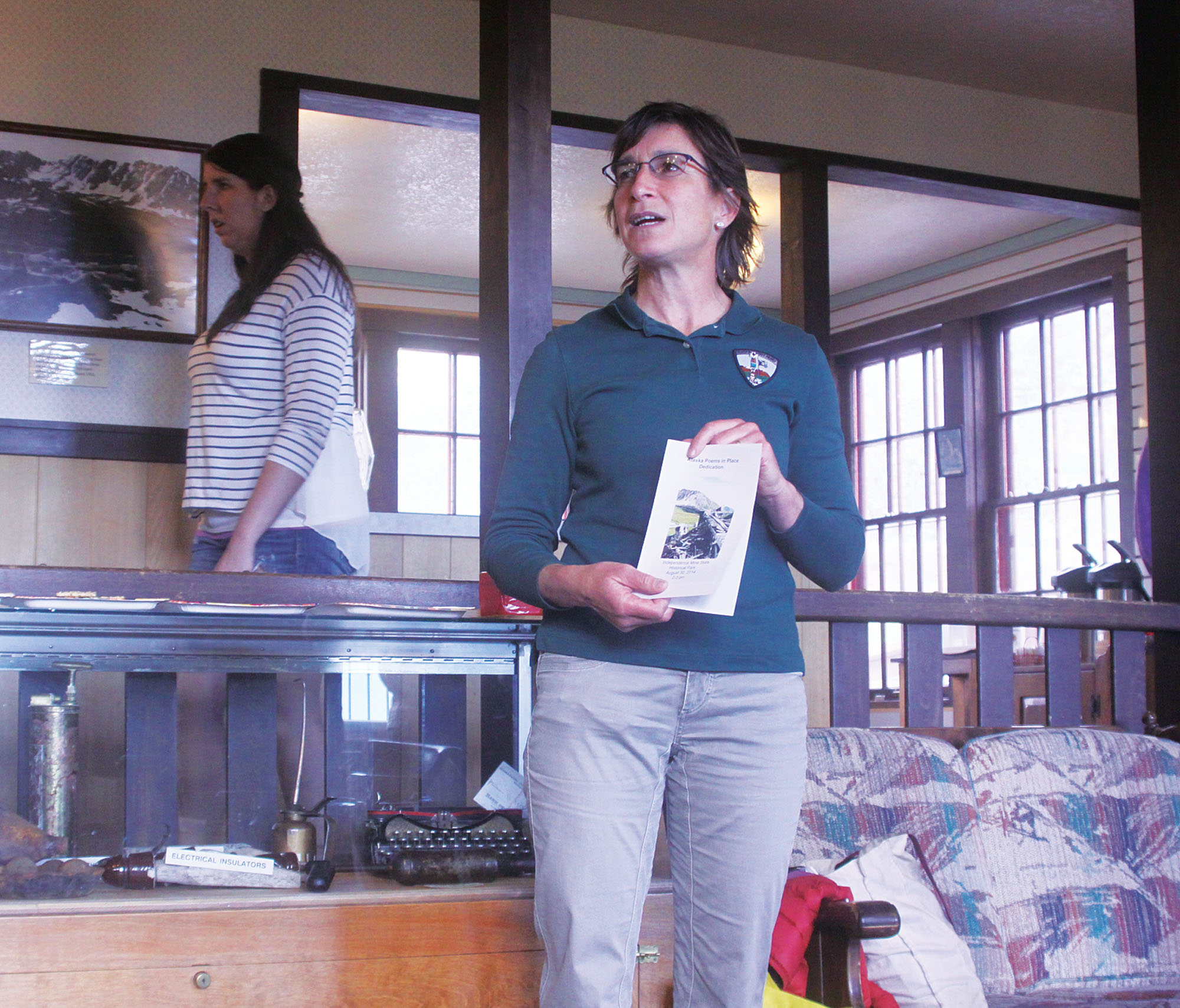
With that in mind, the group broke for lunch and conversation, followed by a few brief remarks delivered by Division of Parks and Outdoor Recreation Deputy Directory Claire LeClair, Park Ranger Amy O’Connor, and Poems in Place Coordinator Wendy Erd.
Ranger O’Connor had a unique, short story to tell about a boy she met at the Alaska State Fair the other day named after the Pass, which shows just how important the place is, and how perfect a place for Sexton’s poem.
“This place means so much to this community that someone named their son Hatcher,” O’Connor said, newly intrigued by the significance of her own “office”: the great outdoors.
After Tim Troll’s poem is placed near Dillingham next weekend, Erd said, Fort Abercrombie in Kodiak and Caine’s Head in Seward are next on the list as sites for poem placement next year.
For more information, visit alaskacenterforthebook.org.
Contact Caitlin Skvorc at 352-2266 or caitlin.skvorc@frontiersman.com.

By Barbara Hunt Palmer Buzz It was 6:43 on Friday morning and the Plant Owner was sound asleep when

By Kyle Wilkinson Frontiersman Memorial Day Weekend was filled with a variety of events in Willow. From live music to

By Kyle Wilkinson For the Frontiersman The Susitna Valley Emergency Preparedness Fair will be held at the Willow Community Center

By Barbara Hunt Palmer Buzz Green-Up happened at exactly 9:34 am on Saturday morning in Palmer. This was