Retiring teacher, coach urges Colony grads to ‘find their 68’
By Jeremiah Bartz Frontiersman.com A football coach using a hockey reference as the centerpiece for his keynote address may


Alaska’s November general election delivered some surprises in legislative elections, and once again there is an almost evenly split state House and a state Senate grappling with deep divisions in a Republican majority.
It’s possible that Democrat-moderate Republican coalitions could emerge in both the state House and Senate.
Regardless of that, the Mat-Su region still has the Legislature’s biggest and most influential delegation in the state capital, with three state senators and six representatives, all conservative Republican.
The conservative “caucus” is even bigger when a senator from Eagle River is included, Republican Sen Lora Reinbold.
There are also two Republican House members from Eagle River, Rep. Kelly Merrick and Ken McCarty, who defeated incumbent Rep. Sharon Jackson in the August primary election and went on to win the seat in the general election in November.
Two surprises in November election result for the House was the knife-edge defeat of Rep. Lance Pruitt, R-Anch. by Democrat Liz Synder in Anchorage’s House District 27, and the defeat of Republican Rep. Mel Gillis by Democrat Calvin Schrage in House District 25, also in Anchorage.
After all the counts are done the House may be divided 20-20, although that depends on decisions by two incoming lawmakers, Rep. Louise Stutes, Republican in Kodiak’s House District 32, who was reelected, and Josiah, Patkotak, an independent newly elected in House District 40, in Northwest Alaska and the North Slope.
For House Democrats is assumed that two independents, Reps. Bryce Edgmon, I-Dillingham, and Dan Ortiz, I-Ketchikan, join with 16 Democrats who were elected. Edgmon, currently the House Speaker, and Ortiz joined the Democrat-led House coalition after the last election in 2018.
Patkotak could join either side but has said he will side with fellow “bush” legislators, such as Reps. Neal Foster of Nome, a Democrat, and independent Edgmon, of Dillingham, to protect rural priorities like Power Cost Equalization, or PCE.
Kodiak’s Stutes, a Republican, is part of the current coalition with Democrats. Like Patkotak, Stutes could join either faction but her commercial fisheries constituents in Kodiak and Cordova differ sharply with priorities of the GOP conservative wing led mostly by MatSu Republicans, who are pro-sports fishing among other things.
A 20-20 split is untenable for the House because a majority of one side or the other, Republican or Democrat, is necessary to do business and even elect a presiding officer, much less pass legislation.
A Republican margin of one or even two votes may not be enough to control the House, either, and the same may be true for a Democrat-led coalition with a similar margin.
Reps. Steve Thompson and Bart LeBon, two Fairbanks Republicans, are part of the present House coalition with Democrats (Thompson is Majority Leader).
Both issued statements that they will organize with Republicans this time but the two also appear to be hedging their bets.
Thompson was targeted by conservative Republican Party activists for defeat in the August primary, an effort that took down several veteran moderates in Anchorage like Senate President Cathy Giessel and Reps. Jennifer Johnston and Chuck Kopp.
Thompson survived the conservatives’ attempt to defeat him, though narrowly. That hasn’t created friendly feelings with his conservative colleagues.
Moderate Republicans may have been afraid of cooperating with Democrats, fearing attacks in a closed Republican primary as happened in August. However, the passage of Ballot Measure 2, the so-called “election reform” measure does away with the closed Republican primary, assuming it survives a likely legal challenge.
A lot will depend on how Thompson and LeBon, another moderate, are treated by the conservatives, meaning what agreements might be made on legislative priorities and what committee assignments they are offered by a GOP majority likely to be led by conservatives.
Seats on the Finance committee, which controls the budget, are always important but even more so this year because of conservative Republicans’ emphasis on a large Permanent Fund Dividend and heavy budget pressures the state will be under next year.
Thompson is a former House Finance cochair, and former Fairbanks mayor, while LeBon, who works in banking professionally, serves on the House Finance committee in the current Legislature, which ends in January when new lawmakers are sworn in.
Meanwhile MatSu’s Rep. David Eastman, R-Wasilla, will again play a key role, in a kind of negative way, in the House organization.
Eastman has a long traditional of voting “no” on almost every bill including the budget. In the new Legislature he may be joined by one other, or more, newly-elected representatives who are hard to the right like Eastman.
While these votes reflect deeply felt views in Eastman’s case it creates a serious practical problem when the House is split 21-19. That’s because it takes 21 “yes” votes to pass a bill, even the budget.
Unless a budget is passed by both House and Senate, and signed by Gov. Mike Dunleavy, by June 30, the end of the state fiscal year, the state government shuts down because it cannot legally operate without an approved budget.
If the Republican majority’s margin is 21-19, it is really 20-20 because Eastman is assumed a “no” vote. A split 20-20 vote means the bill, the budget being most important, does not pass the House. The same arithmetic holds for Democrats if they have a 21-19 margin, too.
Eastman’s practice of voting no led to a handful of moderate Republicans crossing party lines to form a coalition in 2018 when the House was similarly split almost equally.
If Stutes, Thompson or LeBon decide to join with Democrats, and Patkotak joins that camp, it could create a margin of 21 or 22.
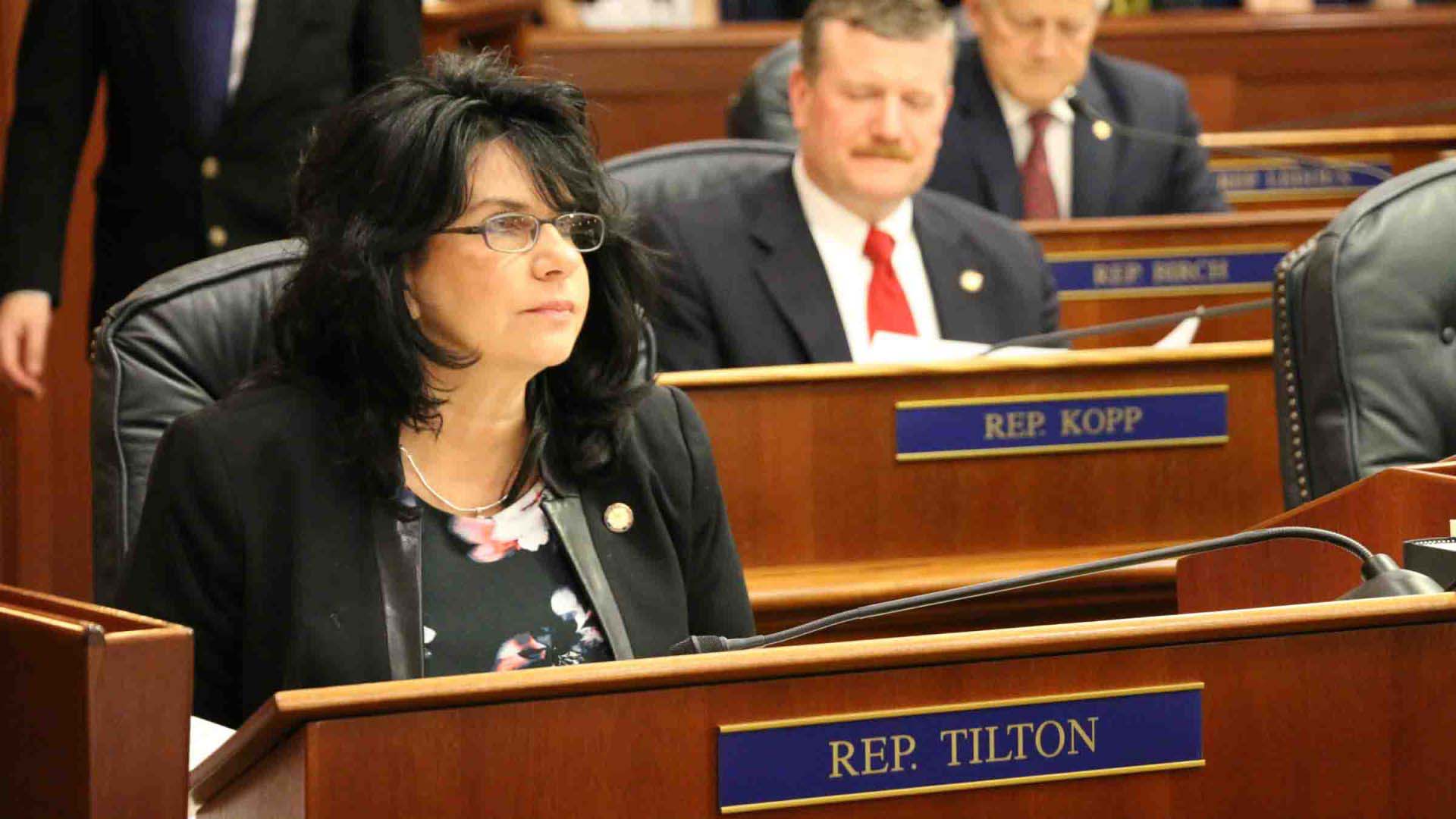
With the apparent defeat of Pruitt, now the Republican House Minority Leader, many look to Rep. Cathy Tilton, R-Palmer, as a Republican with the capability of forging an agreement on the Republican side.
But under almost any scenario it will be an interesting 2021 legislative session for state House members.
Meanwhile, the state Senate has its own problems.
There are now 13 Republicans and seven Democrats in the 20-member Senate but the appearance of solid GOP control is an illusion.
Three of the GOP senators, Bert Stedman of Sitka; Gary Stevens of Kodiak and Click Bishop of Fairbanks are considered political moderates who have been part of prior Democrat-Republican coalitions. Stevens has twice been President of the Senate.
Anchorage GOP Sen. Natasha von Imhof as well as Stevens, of Kodiak were targeted by Republican conservatives in the August primary, but narrowly survived.
Senate conservative Republicans will have to persuade these four to join them, and the biggest obstacle to that will be the conservatives’ priority for a large PFD check. Stedman and von Imhof are cochairs of the Senate Finance Committee in the current Legislature and, being familiar with the state’s precarious finances, are on record opposing a large PFD.
Given that, it’s possible that these two might split off over the PFD issue, and possibly all four of these senators may split with the conservatives.
If that happens, a Democrat-moderate Republican coalition could control the senate 11-9.

By Jeremiah Bartz Frontiersman.com A football coach using a hockey reference as the centerpiece for his keynote address may

Frontiersman.com With its headquarters in Wasilla, the Frontiersman has been a primary source of news for the Matanuska-Susitna

By Katie Stavick Frontiersman.com The next generation of leaders took flight this week as the Houston High School Class

By Kyle Wilkinson For the Frontiersman Keynote speaker and Carry the Cure President Bill Pagaran’s words boomed through the