Retiring teacher, coach urges Colony grads to ‘find their 68’
By Jeremiah Bartz Frontiersman.com A football coach using a hockey reference as the centerpiece for his keynote address may


WASILLA — Frontline Mission staff have fed a good number of the hungry, and put shirts on numerous backs, but say they’d like to expand their services to cleaning the unkempt and employing the jobless.
The mission, long associated with the Wasilla Lake Church of the Nazarene, which is adjacent to the shelter, serves about a quarter of the estimated population of the Wasilla area. Within the last year, they’ve handed out 160,000 pounds of food to 23,000 people, served 10,681 meals, and provided 12,810 hours of volunteer time. The mission has also made 1,270 spiritual connections. They’ve done this on a budget of $136,132.59, of which 83 percent comes from direct public support, according to figures provided by mission staff.
The mission established its own identity separate from the Church of the Nazarene in 2012, after eight years of service as a soup kitchen by church staff, according to Frontiersman articles.
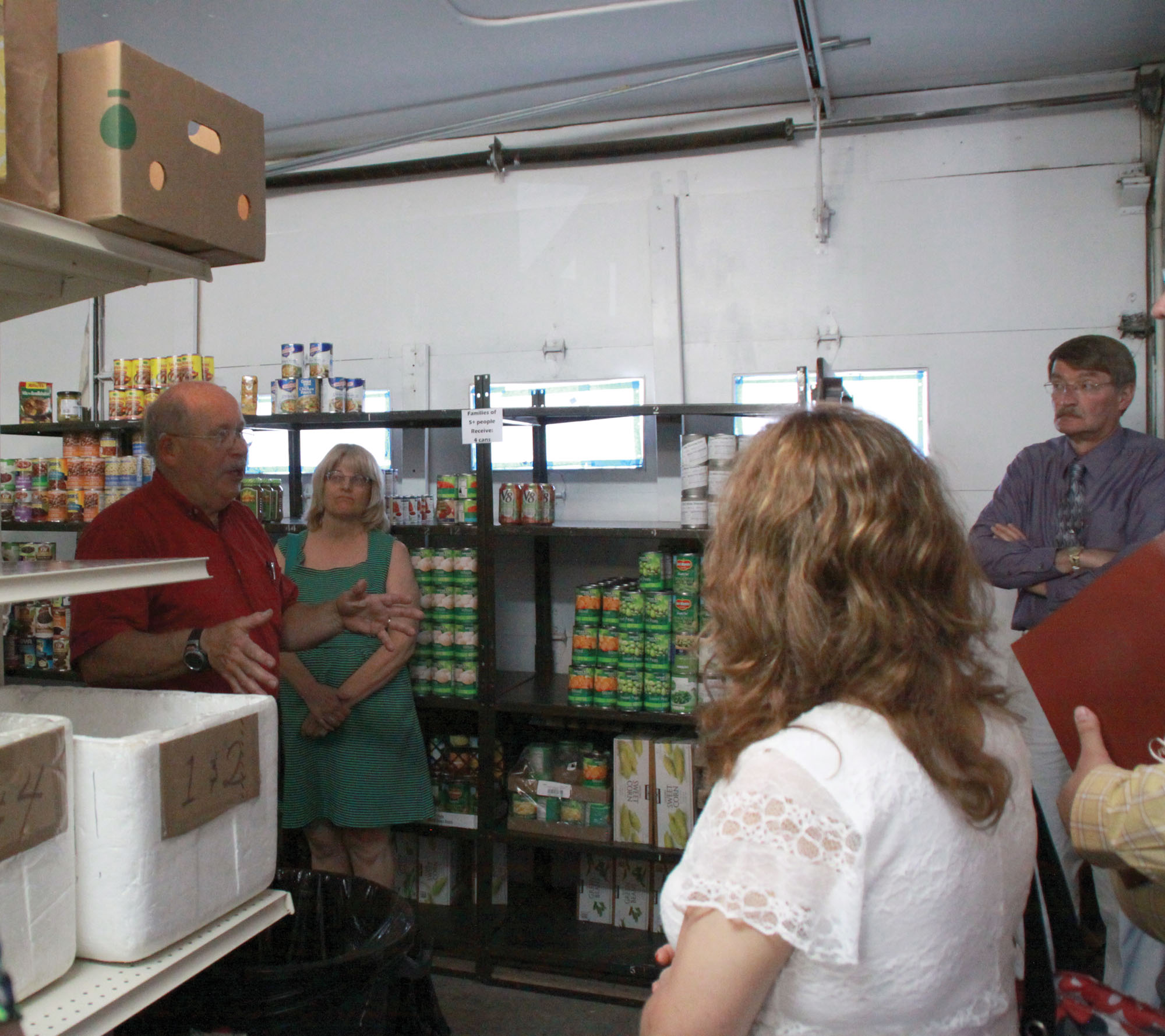
The place is so busy that during an open house Wednesday afternoon, staff wanted to showcase their services for local and state officials who came, but said they were limited by the amount of available space, said Director of Development and Communications Vandana Ingle.
“The reason why we decided to have this open house was really for the community partners such as you,” she said. “We really wanted to do this on a day that we are in operation — that’s mainly Thursdays and Fridays and Wednesdays as well — but there would not have been any room here.”
The mission also focuses on providing food via a food bank, and clothing via a community clothing giveaway in July. They’re also eyeing the long-term picture for the Valley’s needs, said the Rev. Manoj Ingle
“There’s a big problem of shelter type of housing in our community, where under one roof we can provide them,” he said. “That is a big need we see.”
The kitchen also takes in food prepared in a commercial kitchen. For example, salmon prepared at home, even under sanitary conditions, can’t be accepted, but salmon prepared at nearby meat-packing facilities can be accepted.
“There is always a need,” said mission board member and tour guide Don Houk. “You say, ‘Well, that’s my junk’ … another man’s treasure.”
The shelter takes all types of volunteers, though not all volunteers can perform all of the tasks, said volunteer coordinator Rebekah Meneses. For example, teenagers are sometimes better for physical labor inside the shelter.
“We try our hardest to accommodate whatever group of volunteers we have,” she said.
The mission also tracks figures for the number of people who use their services repetitively. Among
“Say for example we served 100 people last year,” he said. “Out of that, 50 people stopped using our services, which is an excellent thing. We would like to go higher, 60, 70 percent.”
One of the ways that mission can be accomplished is to break what he labels the cycle of poverty. Homeless people don’t have regular access to, for example, laundry facilities or shower facilities. That makes it virtually impossible for them to get a job in order to end their homelessness, and why staff members at Frontline are hoping to install showers, and a lounge and business center soon. The shower could help with physical needs, and the lounge and business center to help them prepare resumes and other accoutrements of professional life, staff said during a brief tour Wednesday. Manoj Ingle used some pop psychology — the infamous pyramid depicting Maslow’s Hierarchy of Needs, which assigns basic needs, like shelter and food to the bottom of a pyramid — to make his point.
“We’re at the bottom,” he said. “Our philosophy is if your hunger needs aren’t met, you can’t get to those higher needs. Unless we break that cycle, they won’t make it to those higher needs.”
Contact Brian O’Connor at 352-2269, brian.oconnor@frontiersman.com, or on Twitter @reporterbriano.


By Jeremiah Bartz Frontiersman.com A football coach using a hockey reference as the centerpiece for his keynote address may

Frontiersman.com With its headquarters in Wasilla, the Frontiersman has been a primary source of news for the Matanuska-Susitna

By Katie Stavick Frontiersman.com The next generation of leaders took flight this week as the Houston High School Class

By Kyle Wilkinson For the Frontiersman Keynote speaker and Carry the Cure President Bill Pagaran’s words boomed through the