Retiring teacher, coach urges Colony grads to ‘find their 68’
By Jeremiah Bartz Frontiersman.com A football coach using a hockey reference as the centerpiece for his keynote address may


BUTTE — It’s probably true that no two communities flood the same way.
In a lot of ways, this summer Butte flooded in slow motion.
Last week, as every major river and stream in the borough went through some degree of flooding, some of the hardest hit areas of the Butte were areas that had been eroding for months.
Indeed, a house had already fallen into the voracious Matanuska River. Another one fell in that had been standing abandoned since half of it fell in during a previous summer.
Casey Cook, Emergency Manager for the Mat-Su Borough, said that he’s been working all summer on a way to fix the problem, to help affected homeowners, and to make sure it doesn’t happen to other people.
“It’s a process that we started back in June and we were in the process of doing when this happened,” he said.
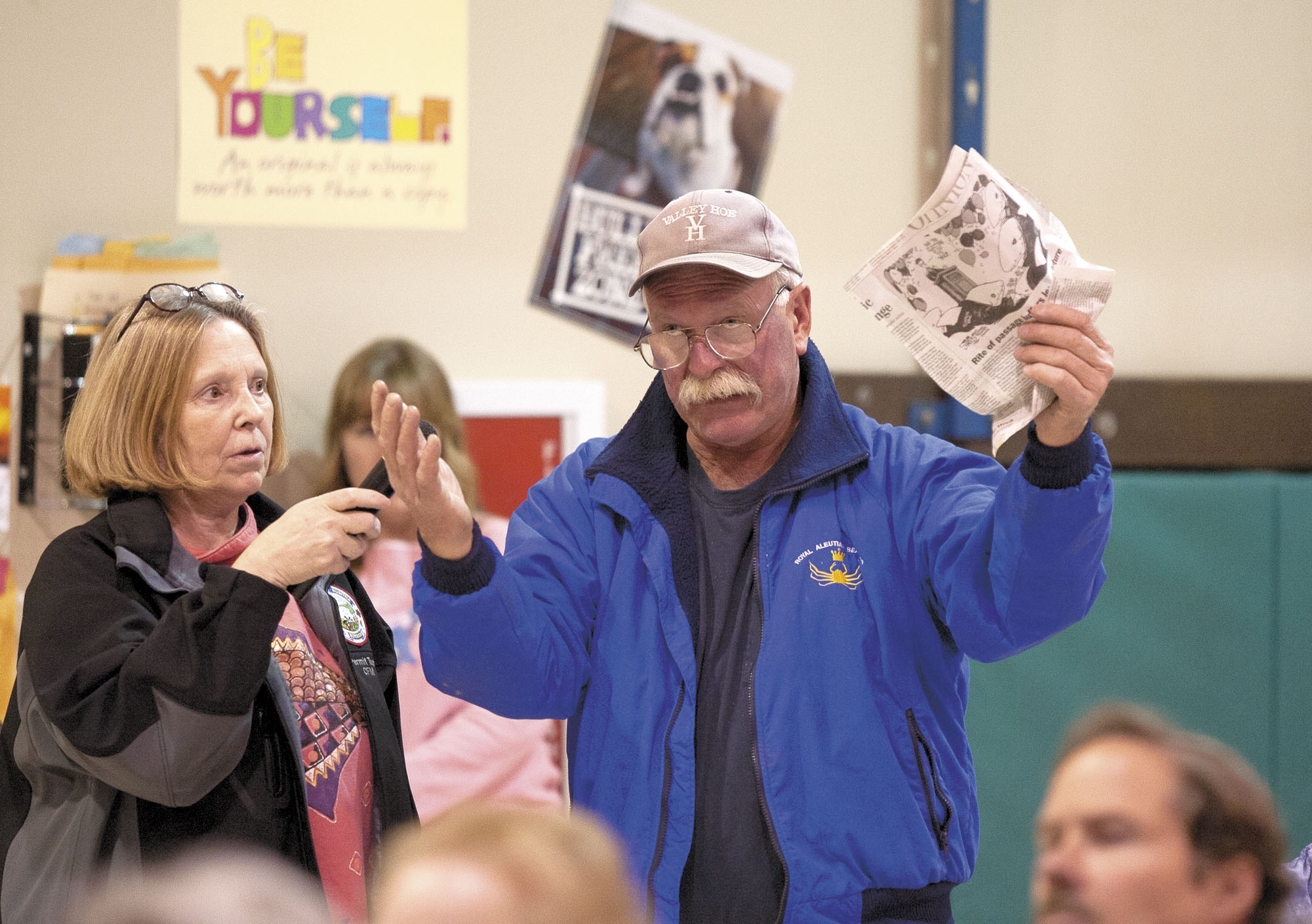
And that can probably explain why at a meeting Thursday evening at Butte Elementary to discuss what homeowners need to do to clean their wells and rebuild their homes, a lot of people wanted to talk about the past.
Why hasn’t the borough been dredging that river? Why hasn’t the state bought properties that were undergoing erosion when they were up for sale? Why aren’t there culverts under driveways between Miles 13 through 15 of the Old Glenn Highway?
The state and the borough didn’t have a lot of answers to those questions. But they did have a lot to say about what they’re planning moving forward.
In a lot of ways, Cook said, having the situation turn from a slow-motion bank erosion into a fast-paced flooding event opened up a lot more options. There are disaster funds available now to clean up, to help homeowners rebuild.
But what about the long-term?
Warren Keogh, who represents the area on the Matanuska-Susitna Borough, said that there are at least four ways to address a river like the Matanuska.
You can dredge out the gravel and make a channel for it to flow in. You can put down some big “armor rocks” along the banks. You can buy up that property and let it erode. Or you can build dikes.
All four have been tried to varying degrees of success. He said it’s up to the assembly to find a solution that meets a pair of criteria.
“One that it will work and, two, that it is affordable,” he said.
But he said like a lot of people who have examined the problem, he quickly ran up against a thicket of regulations. By some accounts you need eight permits to work in the river.
“I’m kind of stymied and amazed by the number of jurisdictions we have just to deal with this problem,” he said.
In the short-term, he said that he and his colleague Vern Halter are going to find a way to waive borough permit fees for people who need to rebuild their homes. Usually there wouldn’t be a permit, but homes in the floodplain need one.
Amir Lena, whose property is currently underwater, said that he didn’t feel he’d been well served during the flooding.
“Nobody cared, nobody showed up,” he said.
“I cared, I showed up,” Cook reminded him.
Contact reporter Andrew Wellner at andrew.wellner@frontiersman.com or 352-2270.

By Jeremiah Bartz Frontiersman.com A football coach using a hockey reference as the centerpiece for his keynote address may

Frontiersman.com With its headquarters in Wasilla, the Frontiersman has been a primary source of news for the Matanuska-Susitna

By Katie Stavick Frontiersman.com The next generation of leaders took flight this week as the Houston High School Class

By Kyle Wilkinson For the Frontiersman Keynote speaker and Carry the Cure President Bill Pagaran’s words boomed through the