Retiring teacher, coach urges Colony grads to ‘find their 68’
By Jeremiah Bartz Frontiersman.com A football coach using a hockey reference as the centerpiece for his keynote address may


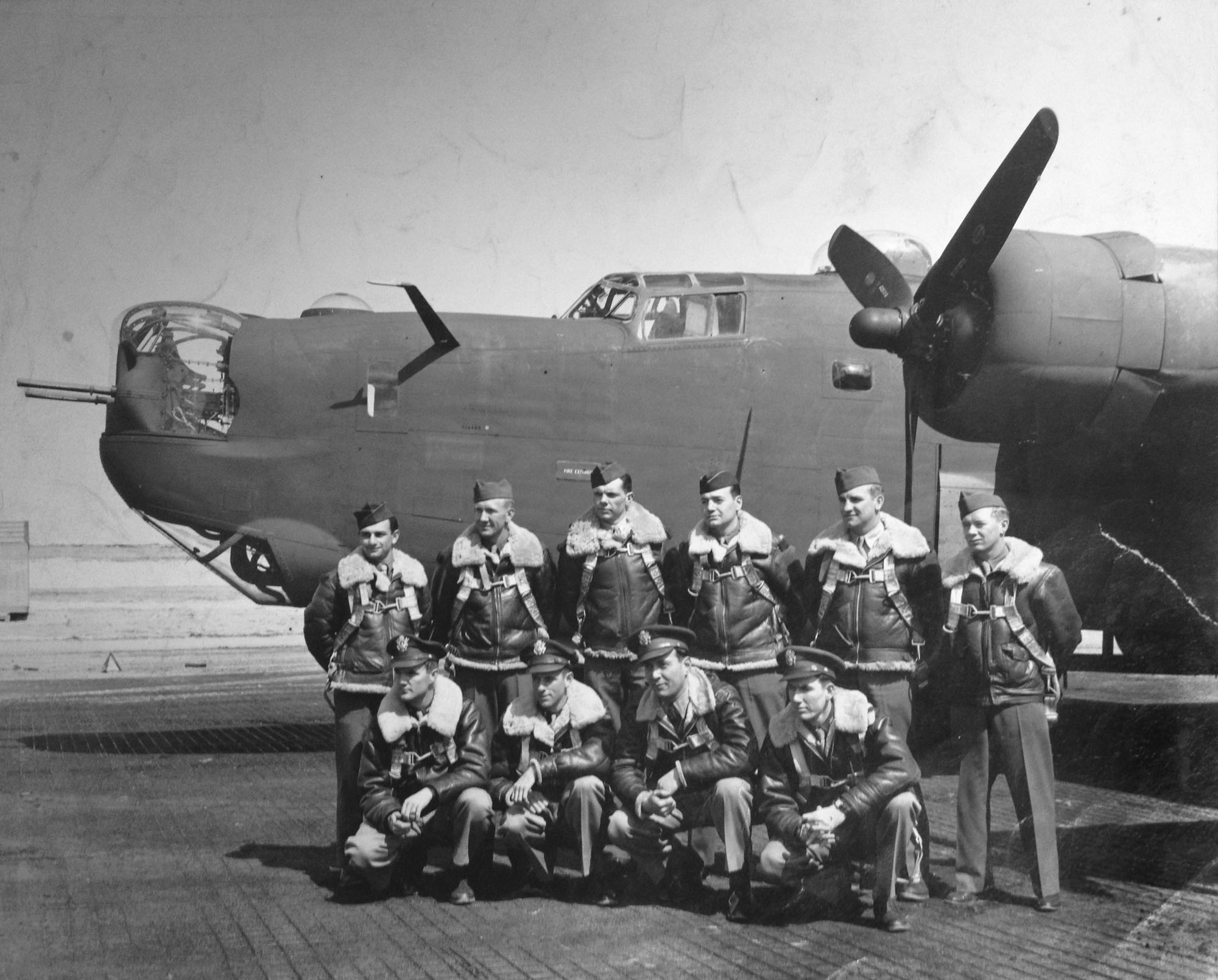
On June 9, 1944, S/Sgt. Lloyd T. Smith Sr., the top turret gunner, awoke early to get ready for his 12th bombing mission in a B-24 Liberator. The mission that day was Munich, Germany. Munich was an industrial site that was one of the most heavily defended.
After a hurried breakfast and briefing, the bombers of the 450th Group departed Manduria, Italy, and headed north. The 450th consisted of four squadrons. Each squadron contained 18 bombers with a crew of 10 men per plane.
“The raid from Manduria to Munich was considered the utmost distance for a B-24,” Lloyd Sr. wrote in his accounts of the mission. “That morning we flew out over the Adriatic Sea and made landfall at the extreme northern end of the body of water.”
Over the Austrian Alps, the group encountered moderate flak but did not hear or see any hits. The Germans had managed to place a few anti-aircraft guns on the tops of some of the mountain peaks.
“Thirty minutes later, two of the Liberator’s engines were running out of control. The plane lost all four generators and the pilot lost control of the superchargers and could not hold at 28,000 feet and therefore could not stay in formation,” he wrote.
The group was 15 minutes from their target.
Lloyd was seated in the top gun turret of the bomber when he spotted four German fighters. The ME 109s were at a “considerable distance.”
“Messerschmitts at two-o’clock,” Lloyd said as he pressed the intercom button to alert the crew.
When he released the switch he realized the intercom was dead. He looked again at the German fighters and then at the rest of the B-24 squadron and realized his ship had dropped out of formation and was angling downward and away from the group.
Smith immediately dropped down out of the top turret onto the flight deck. He was surprised to find it deserted. The bomb bay doors were open and the bombs were salvoed. The door to the waist compartment was open. The waist and tail gunners were gone. He turned around and looked forward. The cockpit was empty. The pilot and co-pilot had passed within inches of his legs and did not tell him they were jumping.
Smith assumed that a bailout order had been given and he had been overlooked. He was the last crewman on the plane. He immediately picked up and attached the chest pack parachute. At that moment, Lt. Flannery, the bombardier, appeared from the crawl space below the cockpit. Smith was startled to see him.
“I realized that he and the nose gunner had also not received the order to jump,” he wrote.
“Is the rest of the crew out?” Smith shouted above the roar of the engines.
Somehow the bombardier understood what he yelled and motioned “no” by shaking his head sideways as he pointed to the front of the plane. Smith knew that the nose gunner was still forward and needed to be released from the nose turret by a crewmember. Smith gave him a “thumbs up” and pointed to the cockpit. Lt. Flannery nodded as he ducked down to crawl forward.
Smith hurried forward and seated himself in the pilot’s seat. The large plane was beginning to spiral toward the ground when Smith grabbed the yoke and “leveled the bomber with some difficulty.” It took all his strength to level the B-24 and then he could not keep the plane from losing altitude. They were going down.
A minute or so passed and Smith heard noise behind him. Lt. Flannery motioned with his hand for him to come aft and jump by pointing at the bomb bays.
“Is (Sgt.) Wojeck released from the nose?” Smith yelled.
The bombardier nodded “yes” as he turned to jump.
Smith then knew the crew was out of the bomber and he needed to jump. As he climbed out of the left seat and started for the bomb bays, the plane went into a steep descent. He hurriedly seated himself on the front of the bay opening with his legs hanging down in the open air.
He pushed himself out of the bomb bay and hit the slipstream. It felt as though he had hit a brick wall as the air caught him.
Smith knew he was supposed to count to 10 before pulling the ripcord. He didn’t remember counting, but the “terrific shock” told him his chute was operational. He looked up to see the huge white canopy overhead. He then “became aware of the awesome quietness.”
“It is a long way down there,” he thought.
Smith felt extremely tired and everything went black.
He was still floating down in the parachute when he awakened.
“The thought went through my mind that I must prepare for landing, but it seemed that the next instant I was lying on my back in a high meadow,” he recalled. “I was lying in the tall grass with my parachute off to the side. The sun was warm and felt good. I could hear birds singing in the nearby woods.”
Smith propped himself up on his elbows and looked down the mountainside at the peaceful setting. He then laid back to rest. He lay there thinking that he must get out of there, but could not get himself to move.
Lloyd T. Smith lives in the Mat-Su Borough. Contact him at news@frontiersman.com.

By Jeremiah Bartz Frontiersman.com A football coach using a hockey reference as the centerpiece for his keynote address may

Frontiersman.com With its headquarters in Wasilla, the Frontiersman has been a primary source of news for the Matanuska-Susitna

By Katie Stavick Frontiersman.com The next generation of leaders took flight this week as the Houston High School Class

By Kyle Wilkinson For the Frontiersman Keynote speaker and Carry the Cure President Bill Pagaran’s words boomed through the