Retiring teacher, coach urges Colony grads to ‘find their 68’
By Jeremiah Bartz Frontiersman.com A football coach using a hockey reference as the centerpiece for his keynote address may


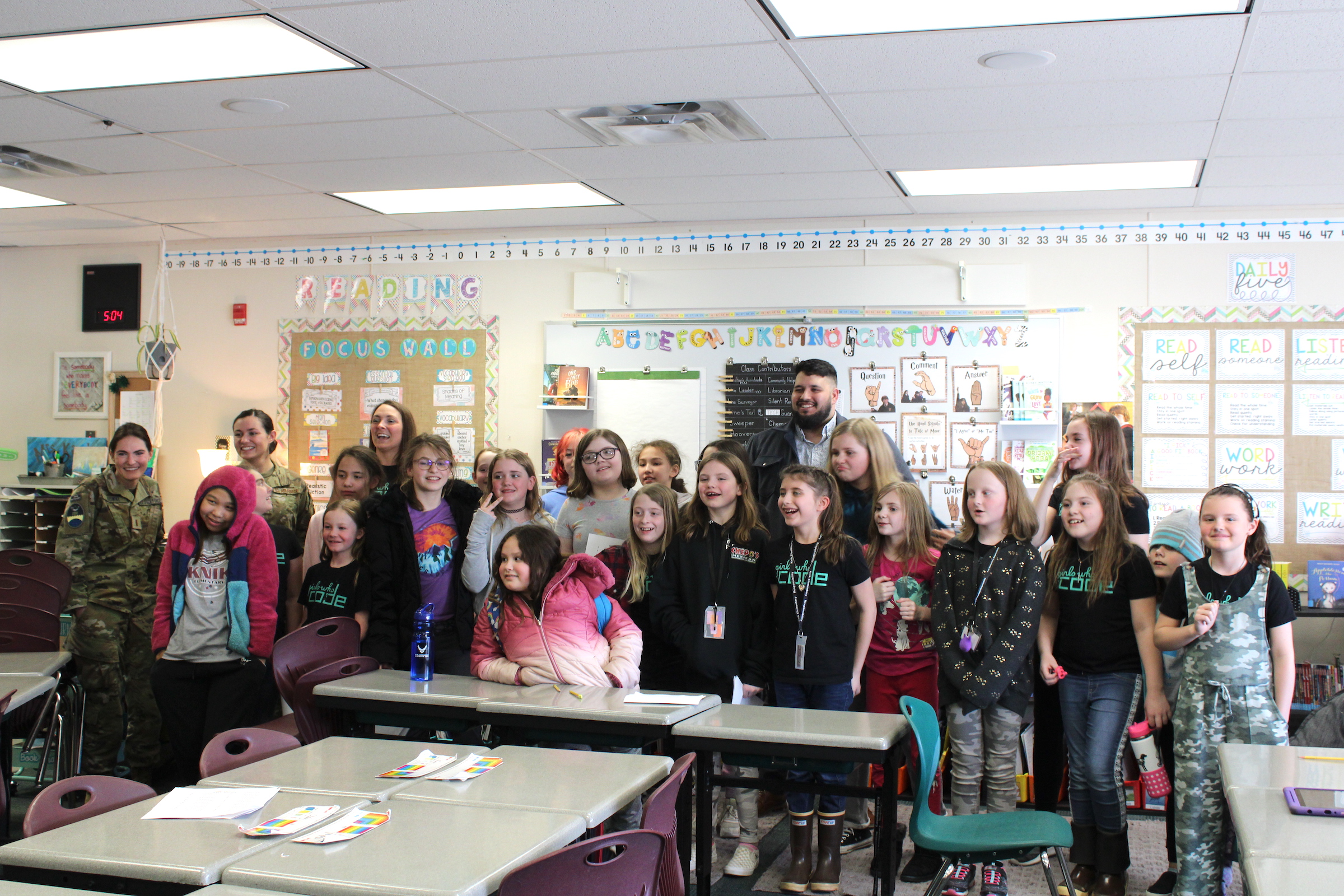
Tucked back from the hustle and bustle of Wasilla, in an elementary classroom sits a gaggle of girls, excitedly (and loudly) gathered to watch a video screen. But they’re not watching the latest movie or pop star. This group is whooping it up for a special program aimed at getting girls excited about coding: “Girls Who Code.”
Coding, sometimes called computer programming, is the language of computers and technology. It tells the computer or device what action to take, and writing code is like creating a set of instructions.
There has been a recent push across the United States aimed at getting girls and women involved in technology and coding. Knik Elementary School is one of a handful of schools that has created and hosts a “Girls who Code” afterschool program as a way to get girls excited about learning and working with coding and technology.
Overseen by teacher Jacqueline Kane, the girls meet and learn all the different ways coding is used and how it affects their everyday lives.
“I think coding is awesome as far as the skills it’s teaching them, I want to help encourage and empower these girls. So when the district was presenting this opportunity for a “Girls who Code” club, I was completely on board,” Kane said.
Kane says the club has been exceeding expectations, but that the real fun has been helping the girls learn important technology practices.
“They’ve been using MIT programs, learning SCRATCH, creating their own games. It’s been great watching them be creative in their own ways and using this in so many different ways,” Kane said about the club.
Principal John Gardner simply raves about the program.
“This was a great opportunity for the girls to show what kinds of technology opportunities are out there. The response has been great. This has to be among the biggest turnout of all the schools,” Gardner said.
Indeed, there have been 25-30 girls consistently attending the afterschool program, with many eagerly planning to continue to the summer “Girls Who Code” program.
One parent with a unique connection to working with technology is Bryce Wolffe. After serving in the Army, he now works as the Project Manager for Enhanced Polar System, a Space Force program.
“I originally heard about it through my daughter, who asked to join. Then after a few weeks of her loving it, I asked if I could contribute with my expertise,” said Wolffe.
He recently talked to the girls about “The Amazing Girls and Boys Who Took Their Ideas,” and the many contributions women have made to technology but didn’t always get the recognition they deserved.
“It was a hit.” Wolffe said of the experience.
Wolffe brought a few guests along to highlight getting the girls excited about working in different fields of technology in the military on Wednesday. Only 19% of the military is made up of women, and far fewer work in any technology fields.
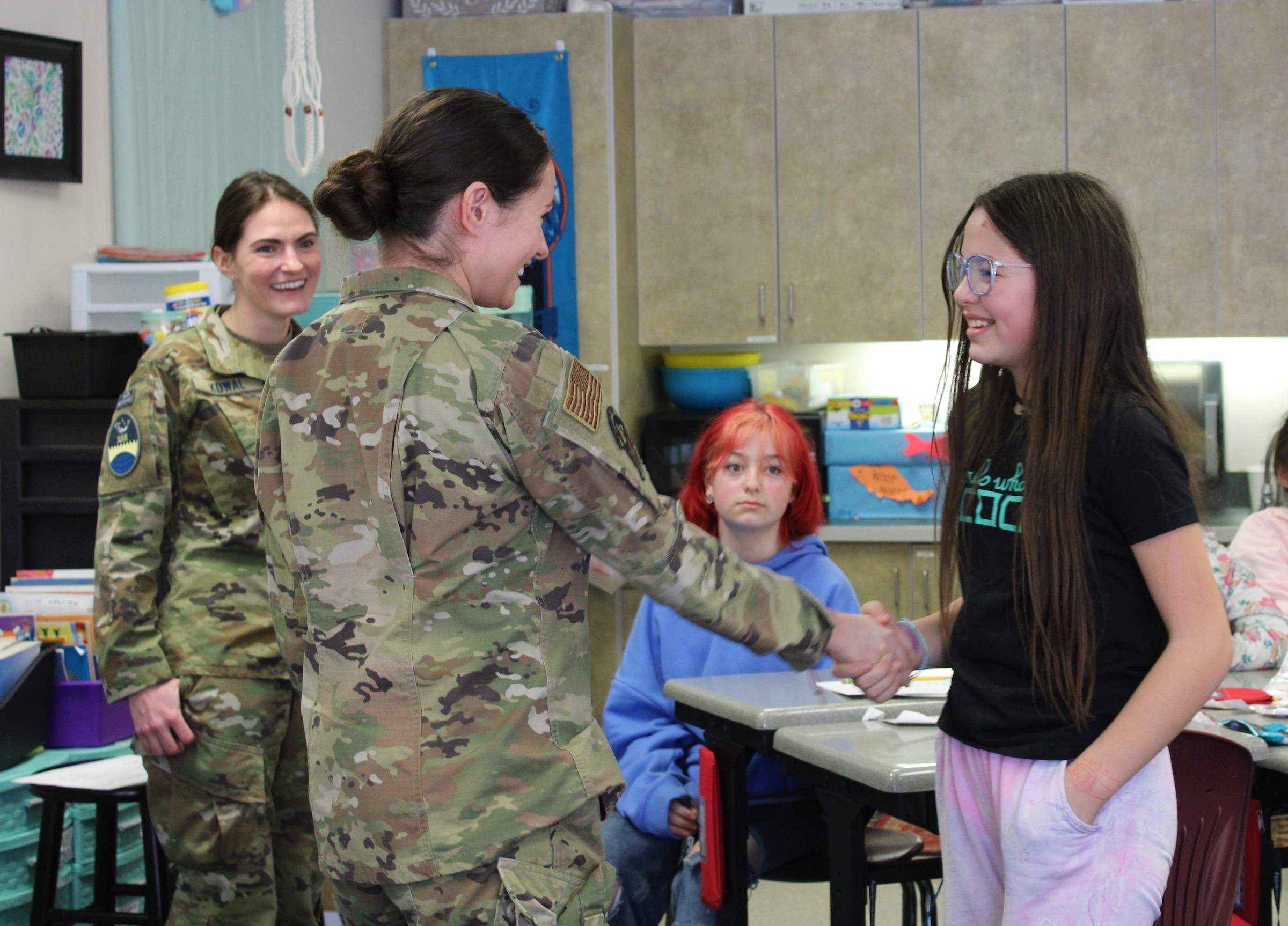
2LT Elizabeth Kowal from the US Space Force (USSF) and Senior Airman (SrA) Hunter Butler from the US Air Force (USAF) came to talk to the club and get them excited about what it is they do in the military. Kowal is a Space Battle Manager and works closely with Butler, who herself is a Space Systems Operator. They were able to make the appearance in-person. They were later joined via satellite by CPT Sonya Hood, an USAF Operations Flight Commander, and TSGT Larissa May who works in Space Intelligence for the USSF.
After briefly discussing what each woman does for the two branches of the military, the “Girls Who Code” club then broke into two teams, pitting the Space Force against the Air Force to see who could decode a special message quickly and accurately.
First, teams had to translate coded message of symbols into binary language, then take the binary and translate that into letters to decode a message. The girls wasted no time getting down to business, quickly cracking the message.
The event was the culmination of the work the girls have done so far this school year, learning about binary coding, technology, encryption, and breaking codes. The girls also had the opportunity to ask questions of their guests ranging from what their daily jobs entail to what they do for fun and if they like what they do.
At the end of the visit, there was a special Challenge Coin presentation for several girls, as well as to Gardner and Kane for all their support.
One student, Cadence, with her fiery red hair, received one of the coins. When asked if she liked “Girls Who Code,” she said,
“No. I love it! I am going to work for NASA one day doing this!”

By Jeremiah Bartz Frontiersman.com A football coach using a hockey reference as the centerpiece for his keynote address may

Frontiersman.com With its headquarters in Wasilla, the Frontiersman has been a primary source of news for the Matanuska-Susitna

By Katie Stavick Frontiersman.com The next generation of leaders took flight this week as the Houston High School Class

By Kyle Wilkinson For the Frontiersman Keynote speaker and Carry the Cure President Bill Pagaran’s words boomed through the