Retiring teacher, coach urges Colony grads to ‘find their 68’
By Jeremiah Bartz Frontiersman.com A football coach using a hockey reference as the centerpiece for his keynote address may


Arctic Thunder 2024 at Joint Base Elmendorf-Richardson (JBER) roared and ripped across the skies over the weekend, a showcase of military might as aircraft were on display both on the tarmac and in the skies over Anchorage.
Ahead of the weekend, JBER hosted an open house that served as a rehearsal day for air show participants as way to get comfortable with the Alaskan skies above, and give a preview to the hundreds in attendance. Among the shows gearing up for the weekend were a demonstration team of F-16s, German Air Force Toronados, U.S. Air Force F-22 Demonstration Team, and the U.S. Air Force Demonstration Team, the Thunderbirds.
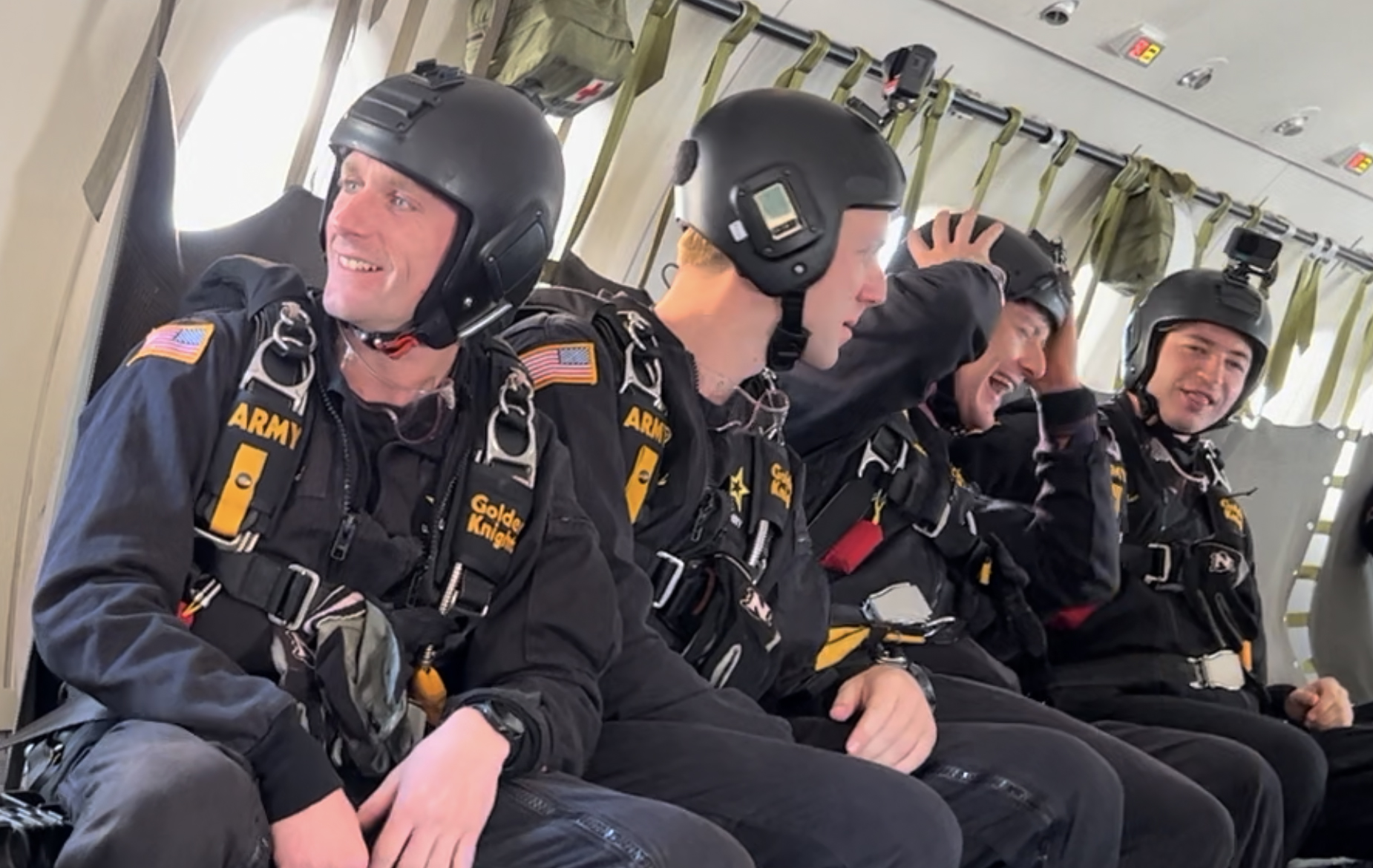
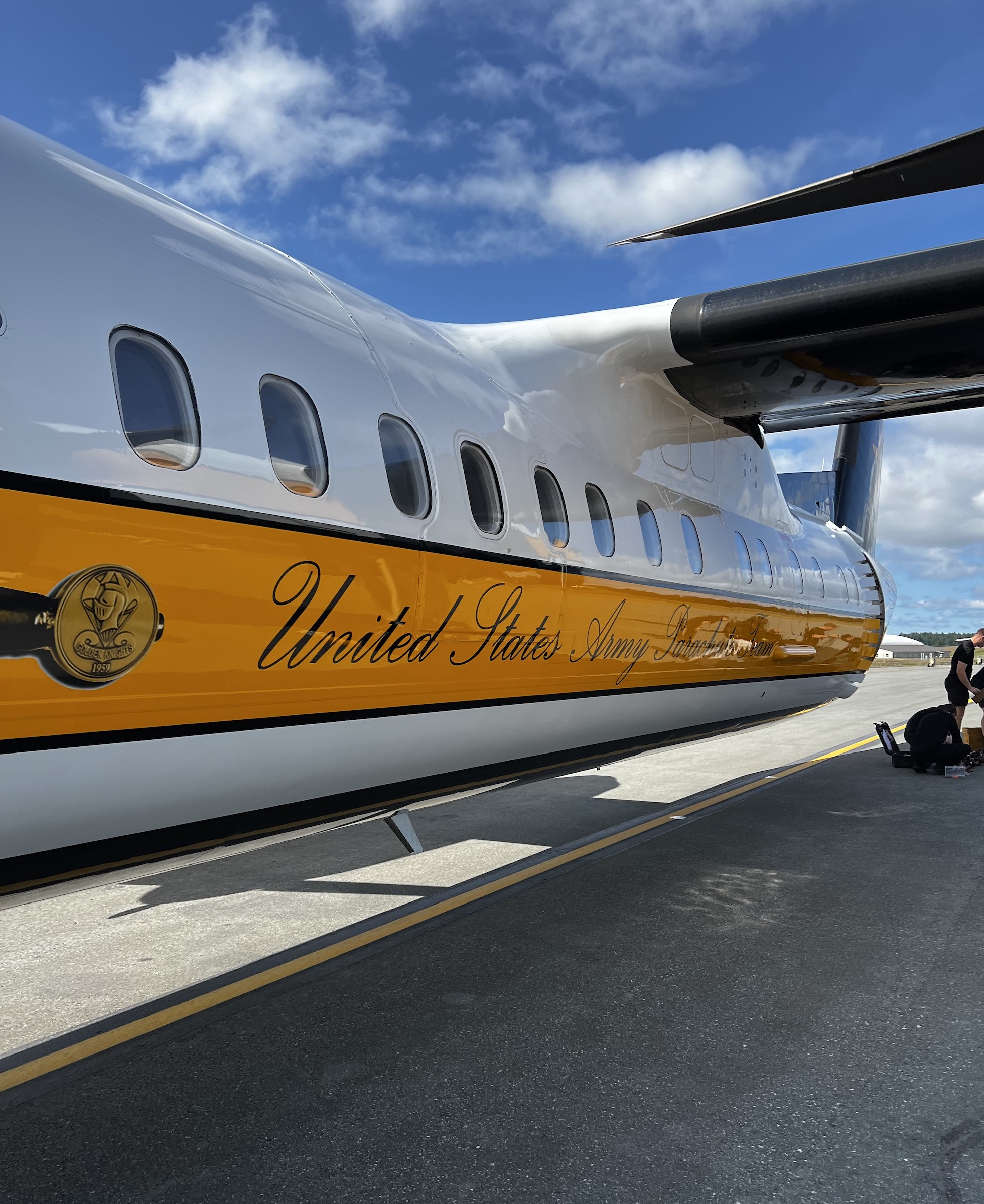
And while there were many highlights, one thrilling highlight was the opportunity to sneak a peek at the Golden Knights, the U.S Army’s elite parachute team. And when I say sneak peek, I mean getting to fly in the plane as the men in the unit got a feel for the skies and conducting a practice run before the main event.
First, a little history about the Golden Knights. The United States Army Parachute Team (USAPT) was originally formed in 1959 by 19 “Airborne” soldiers from different units, and was late officially activated on April 7, 1961. A year later, they adopted the nickname “Golden Knights” as a nod to the team’s reputation for bringing home gold medals from skydiving competitions; and knights for portraying that members of the team are champions of a set of ideals and principals that embody soldiers-never accept defeat, never quit, and never leave a fallen comrade behind.
I should really preface this with two pieces of information about myself: First, I am a Navy veteran and served multiple air stations throughout my 20-year career, so some things I was prepare for, like noise; and second-I hate flying. I don’t mean that it’s an inconvenience. I really don’t enjoy any part of it. And I’ve flown a lot in the course of my life.
When the opportunity was presented, I signed on, not really realizing what I was getting into. I thought we would all be loaded up into a C-17, there would be room to move around, and it would be smooth sailing, especially after the team jumped out of the plane. As a sailor, the only military aircraft I spent any time on were C-130s and C-17s when I had to coordinate MEDEVAC flights. Otherwise, I was on a ship or in a hospital setting.
After arriving at the flight line and getting a briefing in which words like “sickness,” “hypoxia,” and “liability” were thrown around, I along with several other local reporters who were also getting in on the action, were then told to prepare for some frosty temperatures. We’d been told ahead of time to “dress warmly,” however, the altitudes the plane had to climb and the parachutists were going to jump were around 17 degrees. Hoodies and jeans weren’t going to cut it. Luckily, the crew was prepared and had items to spare to help out.
Before taking off, we watched the parachutists run through their routine on the ground. If someone did not know otherwise, it would have seemed as if the men were twirling and spinning. Silly on the ground; amazing in the sky.
We were seated at the back of the plane, strapped into our seats with cameras tethered, while the team donned the layers they would need, along with their own cameras and other equipment. The soundtrack to all of this? “Unwritten,” by Natasha Bedingfield. And not for the first time since some of the guys were singing along.
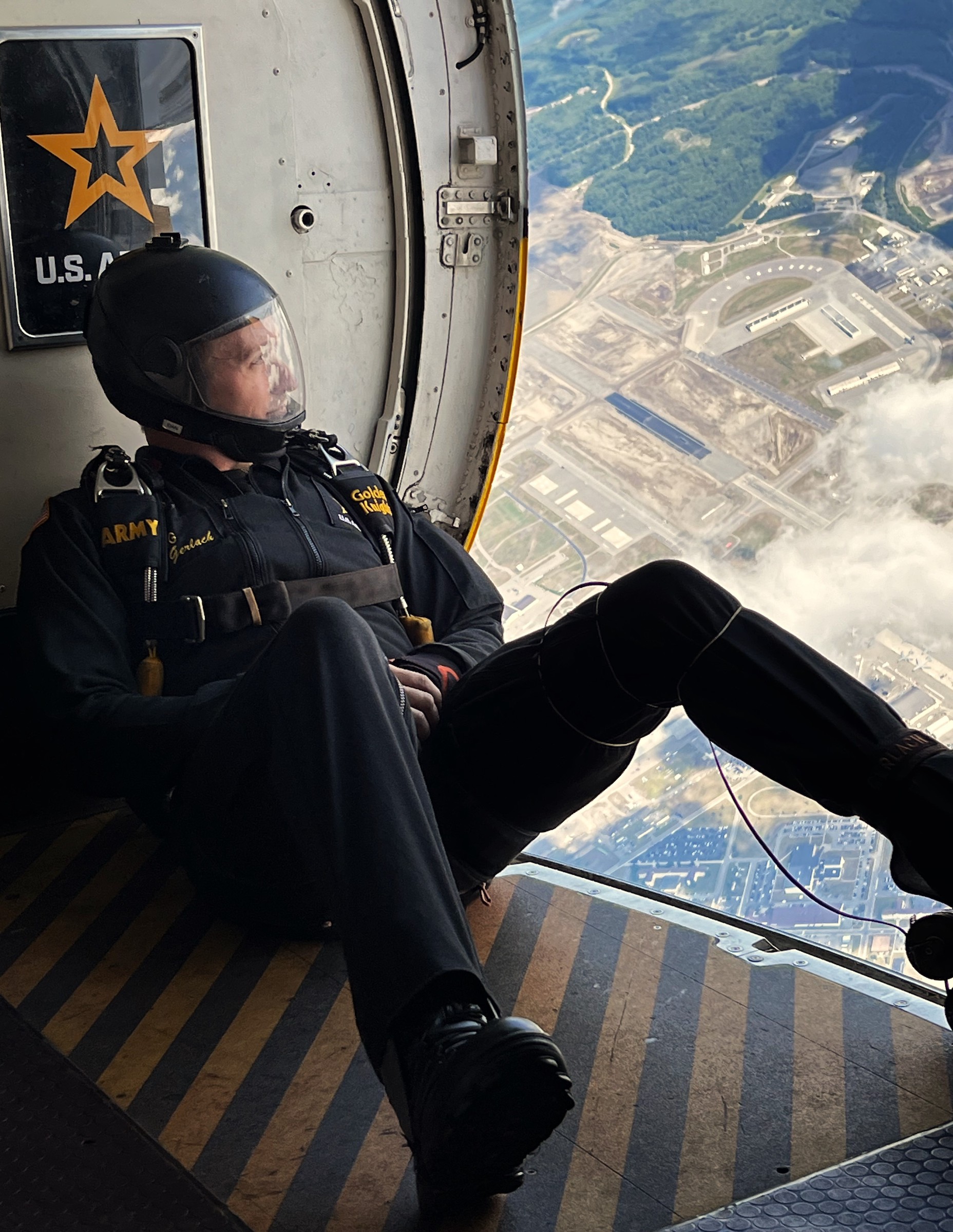
From our vantage point, we could see the open door and watch the changing landscapes below as we ascended. It was an aggressive climb, meaning swift and hard turns as the aircraft climbed, which gave the team an opportunity to check the wind speed and direction in real time.
“What we do is go directly overtop to see what the winds do from 2000 feet down because that is ideally where we’re going to parachute,” explained SSG Daniel Gerlach during the flight, as a fellow jumper dropped paper streamers below. “As the wind pushes the paper, we can see where it’s traveling and how far, and it gives us a good idea of where we need to jump out.”
The crew and parachutists frequently communicated with their own language as they got closer to the desired altitude. It was crazy watching as members of the team would peek out the open door to look for their marks, or even take a seat next to the door with nothing tethering them in case they fall. Yes, they have a parachute, and are highly trained in case of an emergency. But it was also easy to forget up there. Then in the blink of an eye, the first jumper stood, saluted, and stepped out into the air. He would soon reach speeds of 120 miles per hour before pulling the cord to touch his feet back on Earth.
A few minutes later, two more made their departure, and finally, reaching 12,500 feet, the remaining Golden Knights leapt out to put on a dazzling show for the spectators below.
While this is nothing new for the Golden Knights, who perform more than 20,000 jumps in front of millions of people in all 50 states, as well as countries around the world, being up in the plane, watching the years of dedication and training seamlessly come together was nothing short of amazing. Seeing the cityscape below through a wide open door at strange angles with only nylon belts holding you back was scary awesome.
As we descended back to the tarmac literally through the clouds at a speed faster than commercial planes? Well, that was a little nauseating. Remember when I said I don’t like to fly? Luckily the crew was prepared for that as my stomach made it known that it had reached its limit for speeds and aggressive turns and turbulence. (And again, I apologize to the crew for that.) It solidified my decision keep my feet on the ground, and leave that for the U.S. Army Golden Knights to wow and thrill people.

By Jeremiah Bartz Frontiersman.com A football coach using a hockey reference as the centerpiece for his keynote address may

Frontiersman.com With its headquarters in Wasilla, the Frontiersman has been a primary source of news for the Matanuska-Susitna

By Katie Stavick Frontiersman.com The next generation of leaders took flight this week as the Houston High School Class

By Kyle Wilkinson For the Frontiersman Keynote speaker and Carry the Cure President Bill Pagaran’s words boomed through the