Retiring teacher, coach urges Colony grads to ‘find their 68’
By Jeremiah Bartz Frontiersman.com A football coach using a hockey reference as the centerpiece for his keynote address may


PALMER — Spring has arrived for Grow Palmer, and the community-based, urban agriculture project once again has big plans for another productive growing season along with marked changes for a popular park.
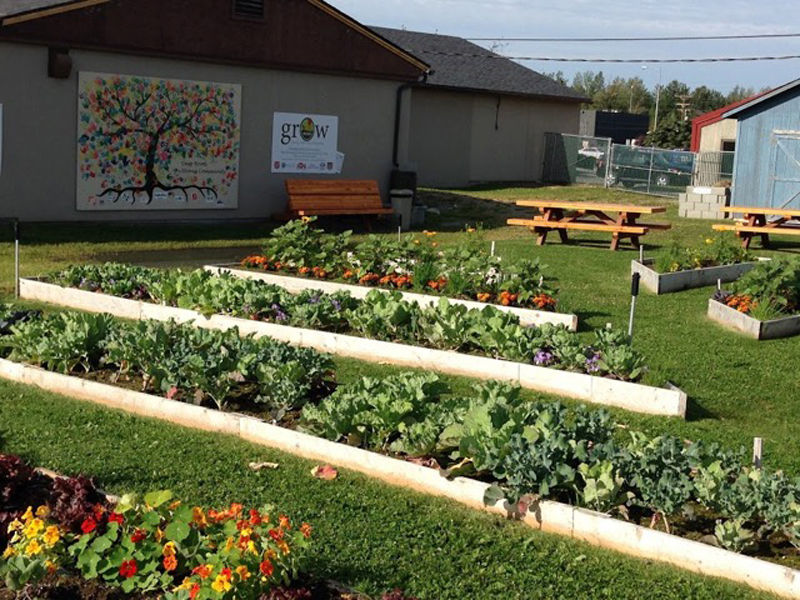
Known for the barrels and other garden plots scattered around downtown Palmer that hold vegetables free for the picking, the group’s “edible park” adjacent the Salvation Army building has been a focal point of the group’s local food mission for the last two years.
“We feel it builds healthy communities by getting involved in the gardens, eating healthy and encouraging people to grow their own food,” Grow Palmer director Jan Newman said, “which can be done even if they don’t have that much room.”
The Salvation Army donated the 5,000-square-foot edible park plot in 2014 but sold the property last year, which meant finding a new home, Newman said.
Enter the City of Palmer, which in February approved designating property along the bike path north of the Palmer Depot as a new location for what Grow Palmer is calling an “edible rail trail.”
Newman said Wednesday the move marks another chapter in the growth and popularity of the volunteer, grassroots organization.
“The Salvation Army was a nice partnership — (ending) hunger is part of their mission,” Newman said. “But we have always have wanted to do this on public property.”
She said the group also was in talks with the Alaska Railroad to secure permits for the site, which will involve the installation of nonpermanent garden beds and other related structures.
“It’s a beautifully established trail that we would like to broaden the use of and enhance the ability for people of all ages to utilize,” Newman said.
Grow Palmer has received funding from the Mat-Su Health Foundation and the Mat-Su Master Gardeners, Newman said, adding that the group was seeking other sources as well.
But for now, it’s time to get dirty.
“In April we will probably move soil, cinder blocks, boxes, composting areas, whatever we can salvage at the edible park,” Newman said. “We also plan to move the apple trees, rhubarb and strawberry plants.
“It is going to be a complete ‘food forest’ ecosystem,” Newman said of the rail trail.
By this time every year the group typically has planting areas in mind and a design of what will go in each planting bed, Newman said. Just this week the group announced that Fred Meyer had donated 10 of the round planters from the old Pioneer Square Mall property.
“We usually order plants, starts and seeds in March,” Newman said. “And we will also solicit from individuals, farmers and other growers who might have a few extra plants and will donate those after they have planted their own.
“We don’t always know what types of donation plants we will receive, so we’ll always leave room them,” she added.
Newman said the rail trail as well as the other Grow Palmer sites around downtown will feature a range of vegetables, including cabbage, broccoli, Brussels sprouts, cauliflower, lettuce, herbs, edible flowers, green onions, celery, carrots, kale, collards, spinach, squash and artichokes.
“We grew a good crop of artichokes last year,” she said, adding that as in past years, prospective harvesters should look for the Grow Palmer logo at each location.
“The public is encouraged to harvest as frequently as they like, but we do ask that they harvest responsibly,” Newman said. “All the harvesting areas will be marked.”
Newman said Grow Palmer will again have edible harvest walking maps available this year as well as the market board in the parking lot of the Palmer Museum of History and Art.
“The map shows where all the Grow Palmer sites are around town,” Newman said. “And the market board is for anyone interested in finding eggs, fresh milk, jams and jellies or honey — doesn’t have to be crops.”
Since its inception in 2013, Newman said, the program has come a long way from a couple dozen volunteers, adding that the local food movement has seen a similar path of grassroots growth.
“In the Palmer area, people are looking at ways to develop the town in a way that caters to people of all ages,” she said. “So that the elderly can age in place here, children have access to healthy local foods and we can retain our farmland and that historical identity.”
She added that food security continues to be an issue on many Alaskans’ minds.
“The barge that was delayed back in January pointed out what can happen,” Newman said. “Local food is so important to a healthy community.
“We encourage people to stop by a Grow Palmer garden, pull a few weeds, help themselves to something and spread the word.”
To find out more about the program, visit www.facebook.com/GrowPalmer
Contact reporter Steven Merritt at 352-2269 or steven.merritt@frontiersman.com

By Barbara Hunt Palmer Buzz It was 6:43 on Friday morning and the Plant Owner was sound asleep when

By Kyle Wilkinson Frontiersman Memorial Day Weekend was filled with a variety of events in Willow. From live music to

By Kyle Wilkinson For the Frontiersman The Susitna Valley Emergency Preparedness Fair will be held at the Willow Community Center

By Barbara Hunt Palmer Buzz Green-Up happened at exactly 9:34 am on Saturday morning in Palmer. This was