Retiring teacher, coach urges Colony grads to ‘find their 68’
By Jeremiah Bartz Frontiersman.com A football coach using a hockey reference as the centerpiece for his keynote address may


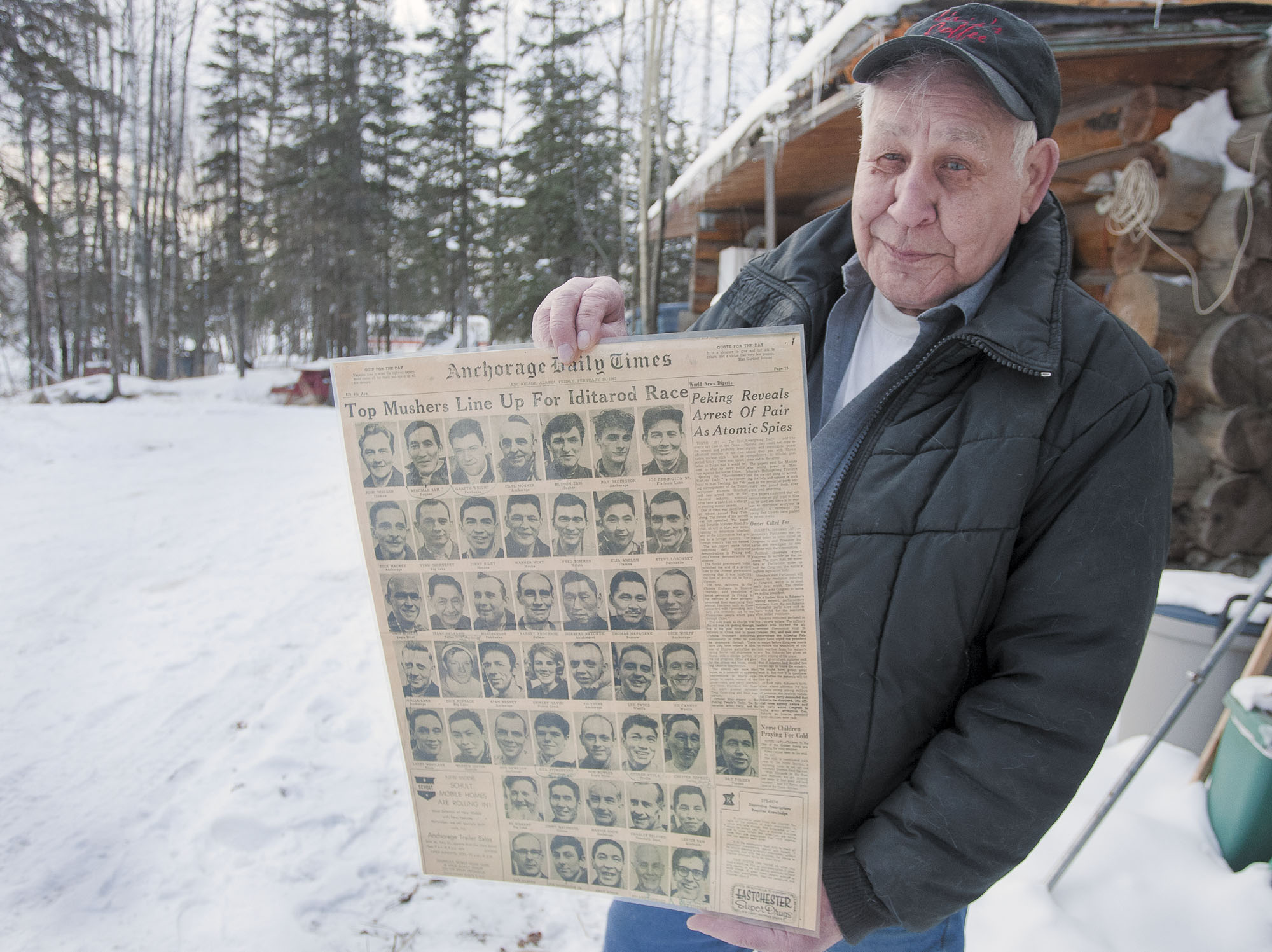
WASILLA — For generations, Ed Gurtler’s family lived along the Iditarod Trail about halfway between Anchorage and Nome. But for most of that time, it wasn’t called the Iditarod Trail.
It was the Seward Chamber of Commerce that recruited Japanese adventurer Jujiro Wada in December 1909 to lead a small expedition of men who would travel by sled dog teams and chart a trail north from Seward to the gold mine at Iditarod.
The small group — which included Albert Lowell, Dick Butler, Frank Cotter and Wada — telegraphed the chamber on Jan. 11, 1910, to say they’d found such a route, according to the March 5, 1910, issue of the Seward Weekly Gateway.
Today that route is the Iditarod Trail and one of only 19 trail systems in the nation designated as a National Historic Trail. This year’s Iditarod Trail Sled Dog Race officially starts in Willow March 3.
But long before gold was discovered in Iditarod, Alaska Native men and women had a well-established network of trails that spanned the state, Gurtler said. In the winter, travel was by sled dog team or on snowshoes. In the summer, waterways offered more options for transporting people and cargo.
When he was a boy, every family had their own sled dog team for transportation, Gurtler said. His family had a dozen or so dogs, each claimed as part of a sled dog team. They also used the team to run trap lines in the winter for beaver and martin.
“We all had dogs. My dad had seven dogs, I had three,” he said.
It’s been decades since Gurtler, 80, issued orders of gee and haw standing on the runners while guiding his sled dog team down the trail. He was a young man of 17 or so the last time, he said. That was before he was drafted into the Army to serve in the Korean War.
“I like the airplane myself,” Gurtler joked, remembering the days of sled dog teams for transportation. “It doesn’t bark or mess up the yard.”
After serving in the Army, Gurtler returned to Alaska around 1959 and headed back to Cripple Landing to run his trap line, eventually claiming Cripple Landing as his Native allotment.
The early days
Gurtler’s father, Alfred Gurtler Sr., was born on the Nowitna (Novie) River and his mother, Mary Ann Dementieff, was born at Holy Cross. He was a dragline operator in the gold fields at Bear Creek and Colorado Creek and also carried the mail along the Iditarod Trail from Holy Cross to Ophir by riverboat in the summer and a sled dog team in the winter, his son recalled.
Ed Gurtler was born in 1933 on the North Fork of the Innoko River, 20 miles below Cripple Landing, and moved to the town site with his parents when he was 5. He said he grew up there hunting, fishing and trapping with his family of 12 siblings.
As a boy, Gurtler said travelers were a welcome sight.
“We were always glad to see travelers when I was a kid. If you show up in the middle of the night with a dog team, you are more than welcome,” he said.
The checkpoints that dot the Iditarod Trail today hearken back to the trail’s heyday when roadhouses sprinkled along the trail provided safe shelter for travelers making their way by sled dog team through the unforgiving wilderness, Gurtler said.
Another checkpoint along the Iditarod Trail, Gurtler said, was where his birth certificate was signed in Ophir in 1933. Now a ghost town, he said in 1949 the village was where he had his first job away from home.
“Back then, you had to make enough money to pay your own way to school in Sitka or Mount Edgecumbe,” he said.
Commemorating
the Serum Run
It was Dorothy G. Page who dreamed up the idea in 1964 of a sled dog race to commemorate the life-saving 1925 Serum Run from Nenana to Nome. She presented the idea to Joe Redington Sr., a well-known Knik musher, and the rest — as they say — is history.
The Gurtler family has ties to that slice of Alaska history, too. Their cousin Edgar Nollner was 20 when he took part in the life-saving delivery. At the time, there were only two airplanes in Alaska, both of which had open cockpits and had been crated for the winter. So Territorial Gov. Scot C. Bone ordered the serum sent by rail from Anchorage to Nenana, and then teams of men and their dogs carried the serum on to Nome.
So perhaps it’s only fitting that the Gurtler family would be swept up among the group of hardy volunteers who donated their cabins, airplanes, food, cash and time to make real Page’s dream of a 1,049-mile dog sled race across the Alaska wilderness.
Though Gurtler returned to Cripple nearly every summer, restoration on the place began in earnest in 1972 with a little help from his parents and Von Page, Dorothy’s husband. That summer the group loaded three riverboats with several months’ supplies and made their way from Nenana down to Tanana to the junction of the Yukon and down the Yukon to the junction of the Innoko and up the Innoko to Cripple Landing.
“Dorothy and Von Page were friends of ours,” Gurtler said over breakfast at Mat-Su Family Restaurant Thursday.
He said it was the Page family that convinced he and his wife Bev to volunteer to host a checkpoint along the trail for many years. Gurtler said the checkpoint moved 5 miles up river to the site of the old town of Cripple after his hunting lodge burned down one year.
For the first several years, veteran race volunteers Jules and Leslie Mead did the cooking. The Mead family donated the second story of their store — now known as the Herning-Teeland-Mead building — to serve as the Iditarod race headquarters for many years.
“It’s a big thing just to get ready,” Gurtler recalled of his years organizing supplies and flying them out in his own plane to operate the Cripple checkpoint during the race’s early years.
Back then, there was a gravel airstrip behind the strip mall where Mat-Su Family Restaurant is and the D&A ShopRite grocery store was in the spot where Value Village is now.
“I used to park the plane out back, do the shopping, and then taxi around front to load up,” Gurtler said. “It was easy.”
Everything changes
He said much changed about the Iditarod in the past 41 years, and many of those changes relate to technology.
In the early days, HAM radio operators up and down the trail kept Alaskans updated on racers’ progress. Now GPS units deliver updates online that include up-to-the-minute locations, temperatures and travel speeds.
“It’s nice to show people what it used to be like,” Gurtler said of the HAMs who will provide communication support for this weekend’s Junior Iditarod race. “So it’s not completely erased from people’s minds.”
Gurtler said he’s witnessed as airplanes and snowmachines slowly pushed sled dog teams aside as the Alaska’s primary means of transportation. But that’s life, he said, everything changes.
“Life is a growing thing,” Gurtler said. “Keep learning until the day you die.”
Contact managing editor Heather A. Resz at 352-2268 or heather.resz@frontiersman.com.
See Sunday’s Mat-Su Valley Frontiersman for a special section about the 2013 Iditarod Trail Sled Dog Race.

By Jeremiah Bartz Frontiersman.com A football coach using a hockey reference as the centerpiece for his keynote address may

Frontiersman.com With its headquarters in Wasilla, the Frontiersman has been a primary source of news for the Matanuska-Susitna

By Katie Stavick Frontiersman.com The next generation of leaders took flight this week as the Houston High School Class

By Kyle Wilkinson For the Frontiersman Keynote speaker and Carry the Cure President Bill Pagaran’s words boomed through the