Retiring teacher, coach urges Colony grads to ‘find their 68’
By Jeremiah Bartz Frontiersman.com A football coach using a hockey reference as the centerpiece for his keynote address may


PALMER — Alaska must increase the number of inmates on ankle monitoring and in halfway houses in coming years, corrections officials said during a legislative field hearing held Tuesday.
That shouldn’t be confused with early release, commissioner Ronald Taylor told some members of the Mat-Su delegation, nor are officials singling out Palmer Correctional facility for extra scrutiny. Instead, officials are examining the possibility of moving large numbers of minimum-security inmates to alternative sentences.
“The Palmer ramp-down, as it’s being referred to, is not necessarily a ramp-down of Palmer minimum, nor is it the closure of Palmer medium,” he said. “It’s actually looking at all of our minimums across the state to determine who can we put on — not early release, that’s not what we’re doing here — but allowing them to serve their sentence on electronic monitoring or in a halfway house, or through some other fashion. I want to make sure that that’s clear, because it seems as if the department is opening the doors and just letting people out. We haven’t said that and we’re not saying that now.”
The proposed changes are part of a search to reduce costs in the face of declining state oil revenues. Studies have shown that electronic monitoring of prisoners in their homes and communities is drastically cheaper than housing them in prison beds, which costs an average of roughly $142 per person per day (that amount varies by institution: Palmer correction costs about $139 per day). By contrast, electronic monitoring costs less than $30 per day.
The state currently maintains electronic monitoring on 446 convicts, 649 residents in halfway houses, and about 4,300 inmates in prison beds. In all, 2,395 people have been on electronic monitoring at some point this year, Taylor said. Of that number, he said at most five intentionally came off of monitoring at some point, and most turned themselves in to corrections officials immediately afterward, Taylor said.
That number does not include accused murderer Joshua Beebe, who authorities said fled the custody of a private electronic monitoring agency after being arrested on a theft offense. Beebe was charged with murder and attempted murder only after being rearrested a short time after his escape. He has not been charged with any crimes during the period of his flight from justice.
Legislators want to avoid building new prisons despite projections showing 1,400 new inmates will enter prisons in the next decade. They’ve also asked DOC officials to reduce inmate populations by up to 25 percent (1,300 inmates) in the same period.
“It’s pretty clear that given our budget crisis that we’re in right now, that we’ve been given some very specific direction,” Taylor said. “We need to reduce our population.”
Inmates put on electronic monitoring must be less than three years away from release, must not be sex offenders, must not be domestic violence offenders and must have landline telephone in their house, Taylor said. Beyond that, officials must examine each potential candidate for electronic monitoring on a case-by-case basis.
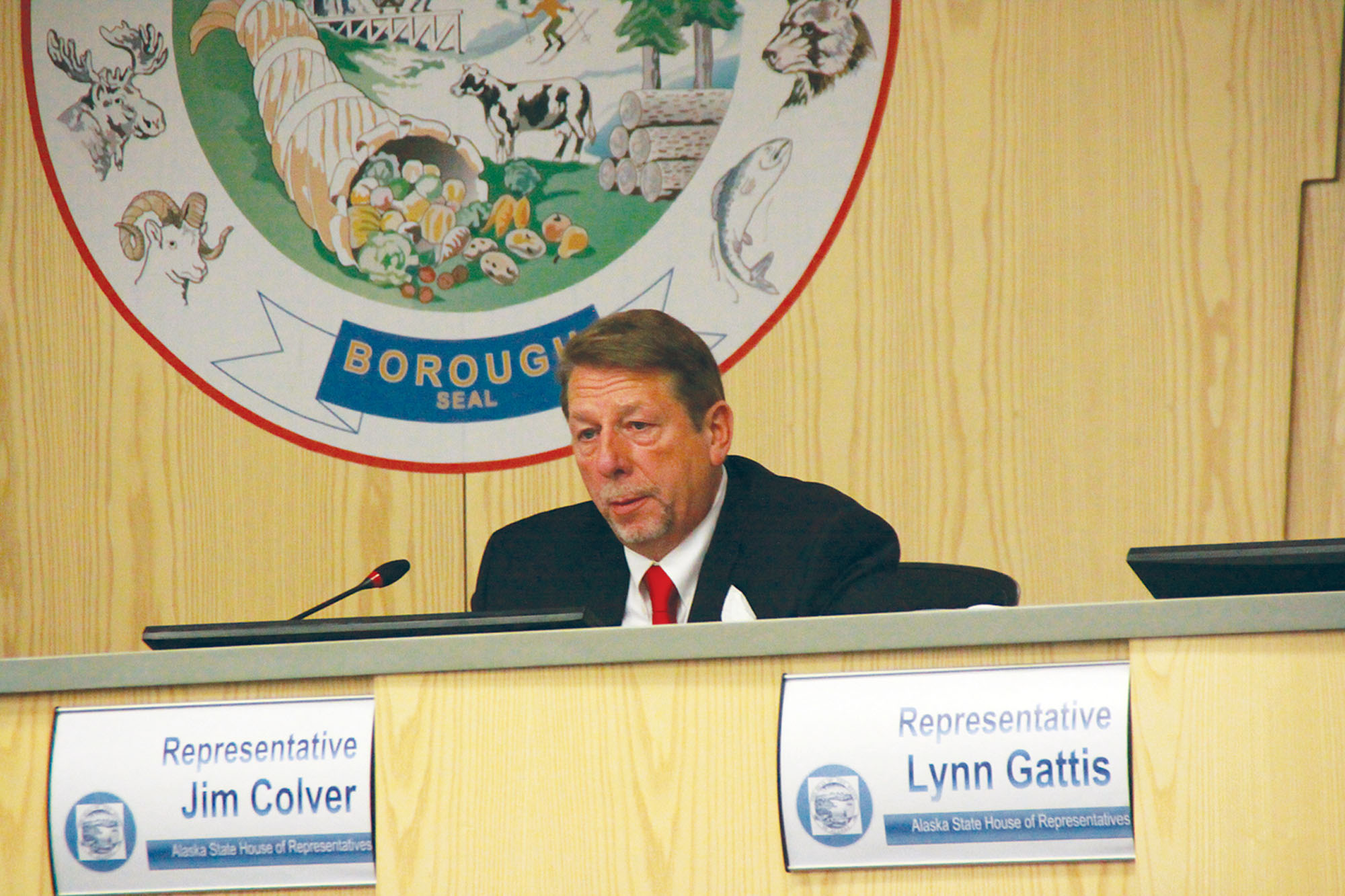
Alaska Rep. Jim Colver (R-Palmer) called the hearing, and said the criteria for release were vague.
“That seems to be a very broad brush without any general specifics,” he said. “The concern that I think a lot of us that are here today have for public safety. We need something more than that before we roll that out.”
Department of Public Safety Commissioner Gary Folger said additional concerns would need to be addressed.
“I think the devil’s in the details,” he said. “Is this a corporate release versus corrections going through them? Is this an administration violation of their release?”
Folger testified that more definite criteria for who can be released would help his department ensure public safety, and pledged to work with DOC to help construct those criteria.
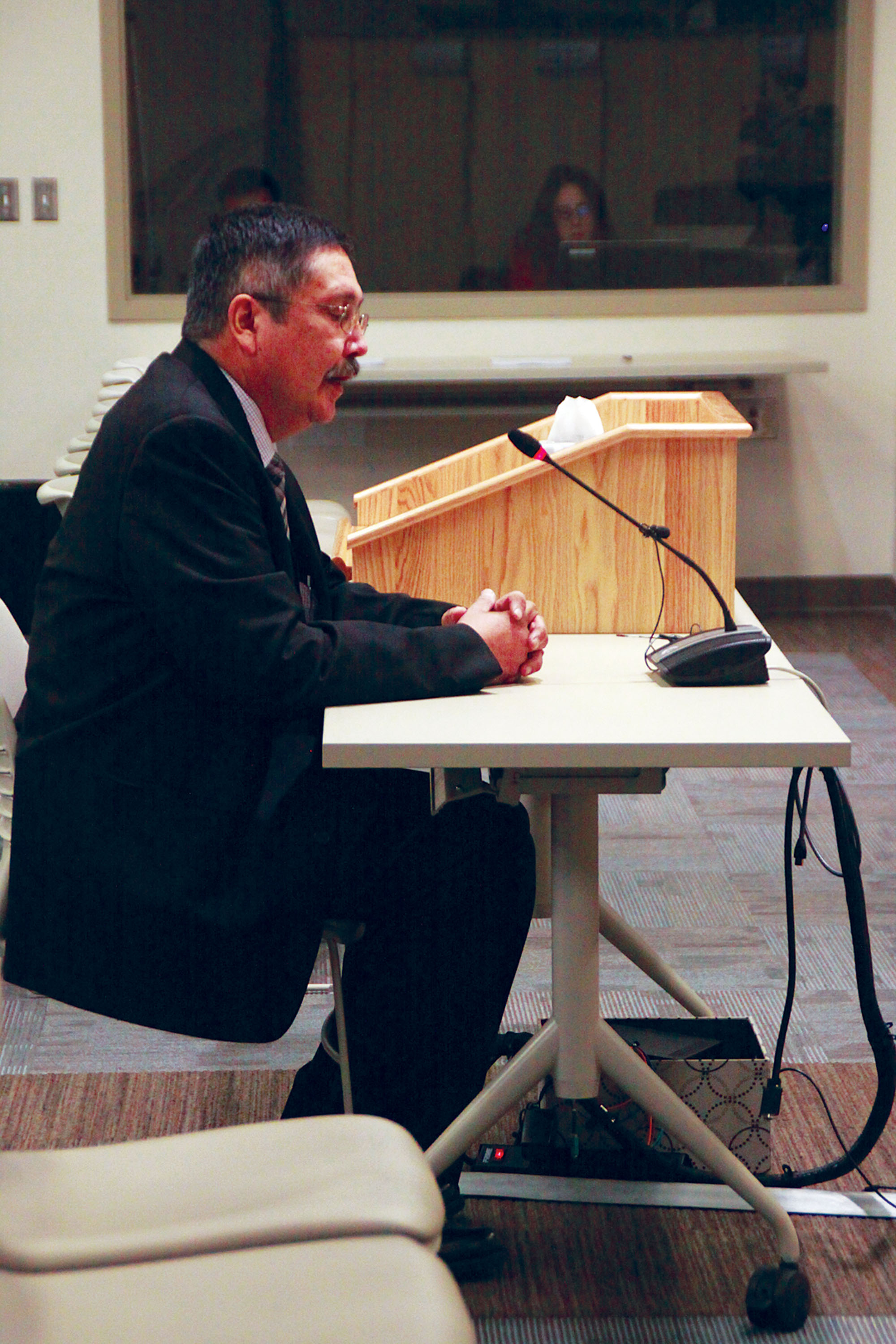
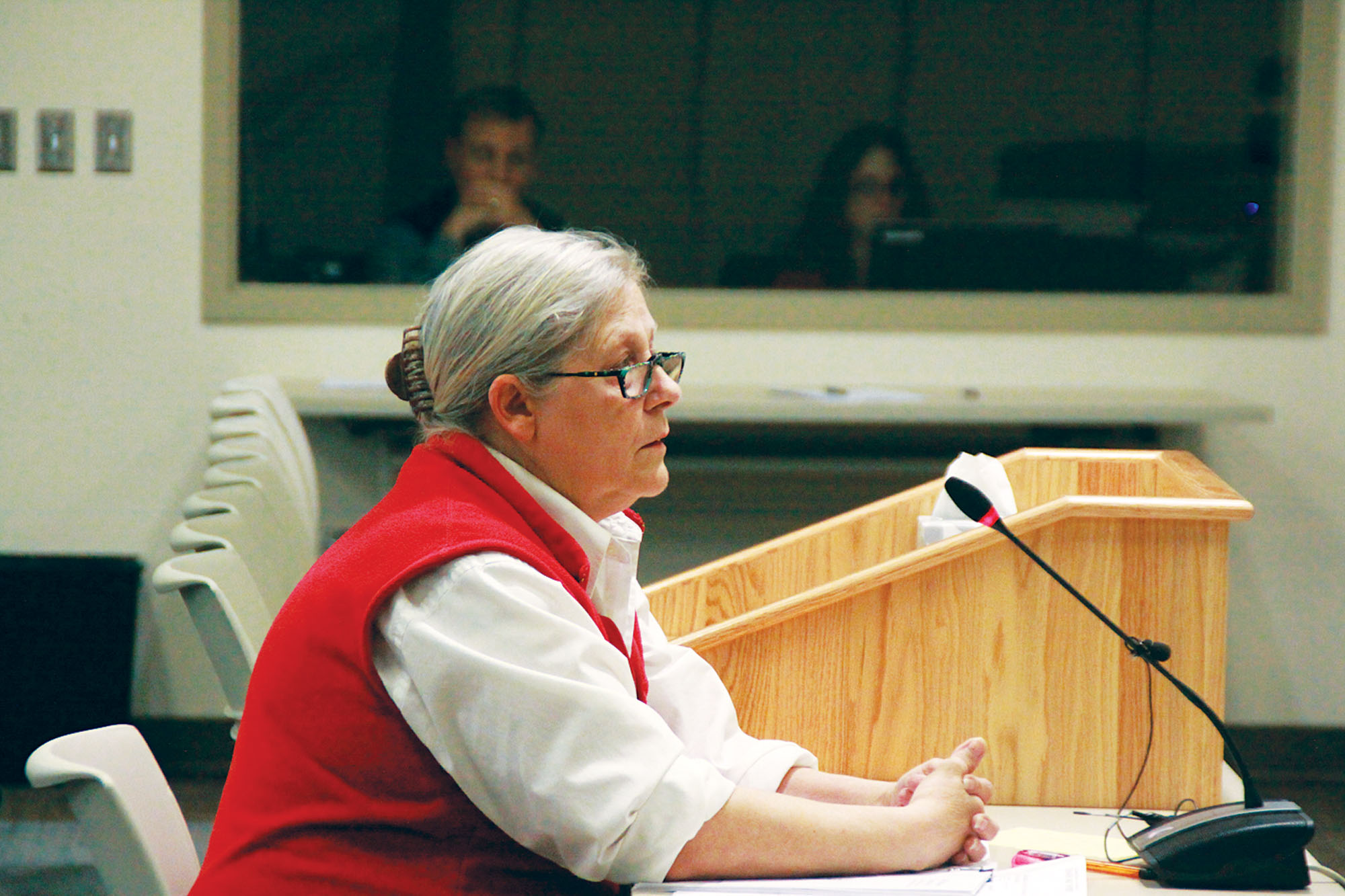
Vicki Wallner, who runs a Facebook-based neighborhood watch group called “Stop Valley Thieves,” testified that the public is fed up with the criminal justice system, though it wasn’t immediately clear which agency Wallner was directly criticizing.
“Right now, what I see that people want the most is they want justice,” she said. “That’s almost a bad word to say by itself anymore. People have to use restorative justice or smart justice. When you say justice people think about dungeons or something, and that’s not what people want.”
Wallner also criticized an administrative rule change earlier this year that removed sentencing information from the CourtView Justice Solutions website, and said that the planned movement of inmates to alternatives for jail time was ill timed. The number of people presently being considered for electronic release exactly matches the number of inmates at Palmer Correctional, Wallner said.
“We’re going to release more inmates at the same point we’re closing trooper detachments?” she said.
Teria Walters, the mother of Christopher Seaman (Josh Beebe’s alleged murder victim), and who was incarcerated herself for past drug offenses, said the options for convicts focused on self-improvement difficult.
“I had many obstacles that I faced when I walked out those doors,” she said. “My sentence didn’t end. I cannot get food stamps. I cannot get housing. I cannot get any form of federal education services.”
Landlords refused to rent to her, and employers refused to hire her, Walters said. Eventually, she obtained a part-time job, and ate macaroni and cheese and Ramen noodles and sandwiches to get back on her feet.
The sentencing information might make it more difficult for some convicts to reclaim their lives, said MYHouse director Michelle Overstreet. For example, employers are reluctant to hire convicts with suspended sentences, because of the possibility they could be recommitted, Overstreet said. Her program has had success helping people avoid recidivism, including twice-convicted felons, addicts, and others. People who manage to avoid returning to prison have access to housing, employment, and recovery choices, Overstreet said.
“I think there’s been an us-and-them separation in hearing some of the questions, and I think we need to keep in mind that no one wants to grow up to be a criminal, nobody sets that goal,” she said. “They want to grow up and be firemen and policemen. Nobody wants to be a criminal.”
Contact reporter Brian O’Connor at 352-2270, brian.oconnor @frontiersman.com, or on Twitter @reporterbriano.


By Jeremiah Bartz Frontiersman.com A football coach using a hockey reference as the centerpiece for his keynote address may

Frontiersman.com With its headquarters in Wasilla, the Frontiersman has been a primary source of news for the Matanuska-Susitna

By Katie Stavick Frontiersman.com The next generation of leaders took flight this week as the Houston High School Class

By Kyle Wilkinson For the Frontiersman Keynote speaker and Carry the Cure President Bill Pagaran’s words boomed through the