Retiring teacher, coach urges Colony grads to ‘find their 68’
By Jeremiah Bartz Frontiersman.com A football coach using a hockey reference as the centerpiece for his keynote address may


GOVERNMENT PEAK — It took some horsepower of a different kind, but the end result would have made a gold miner proud.
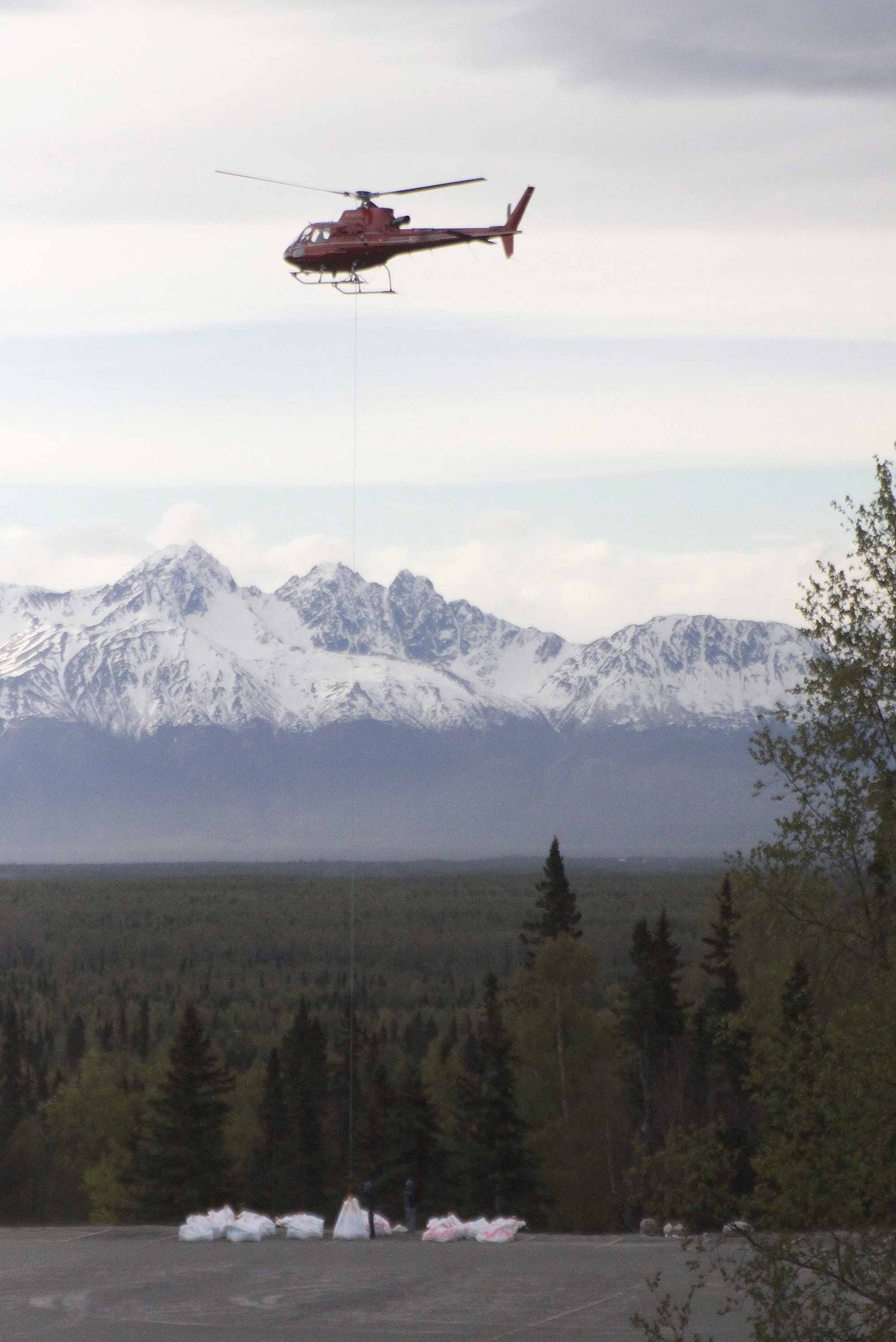
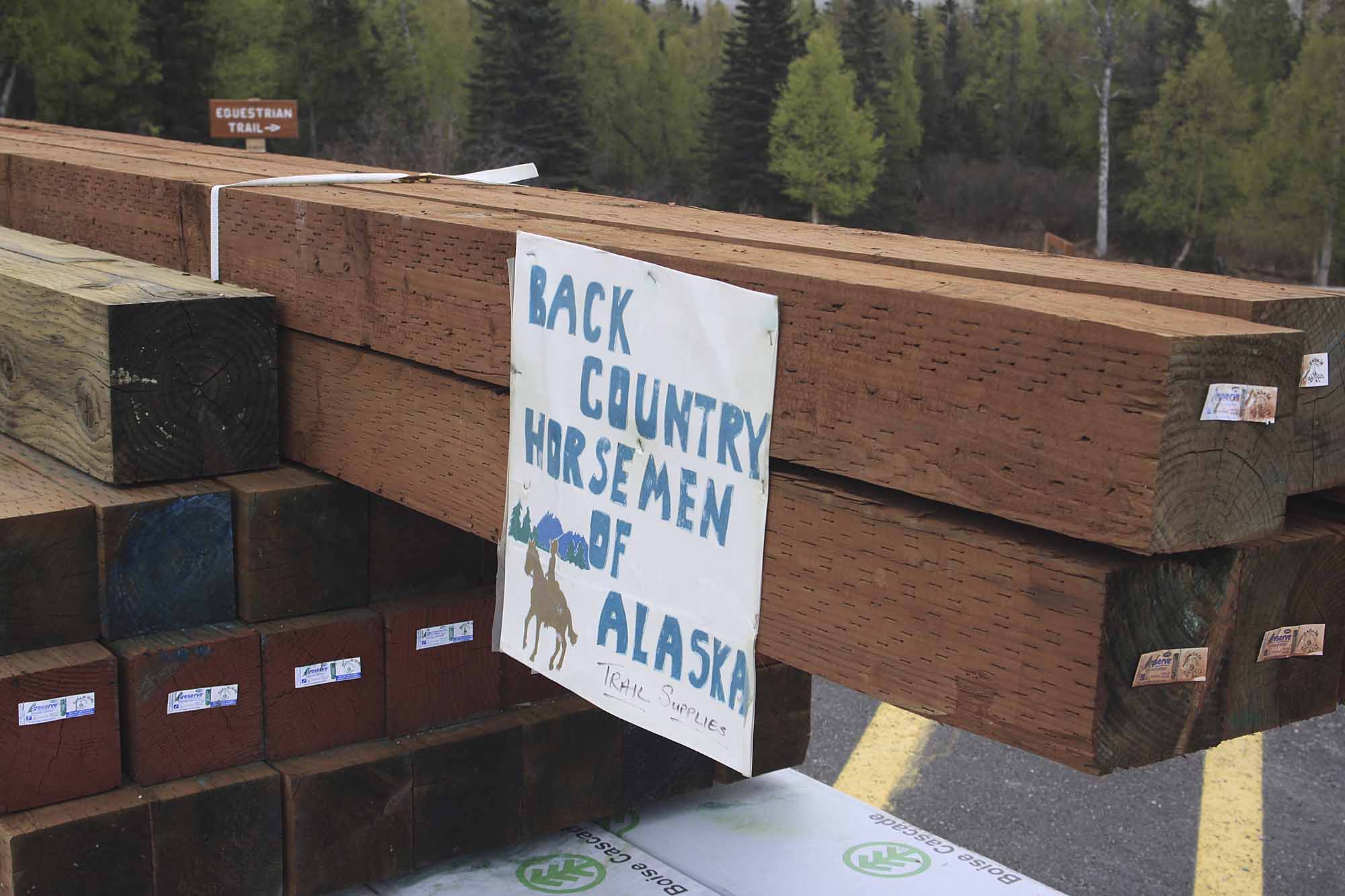
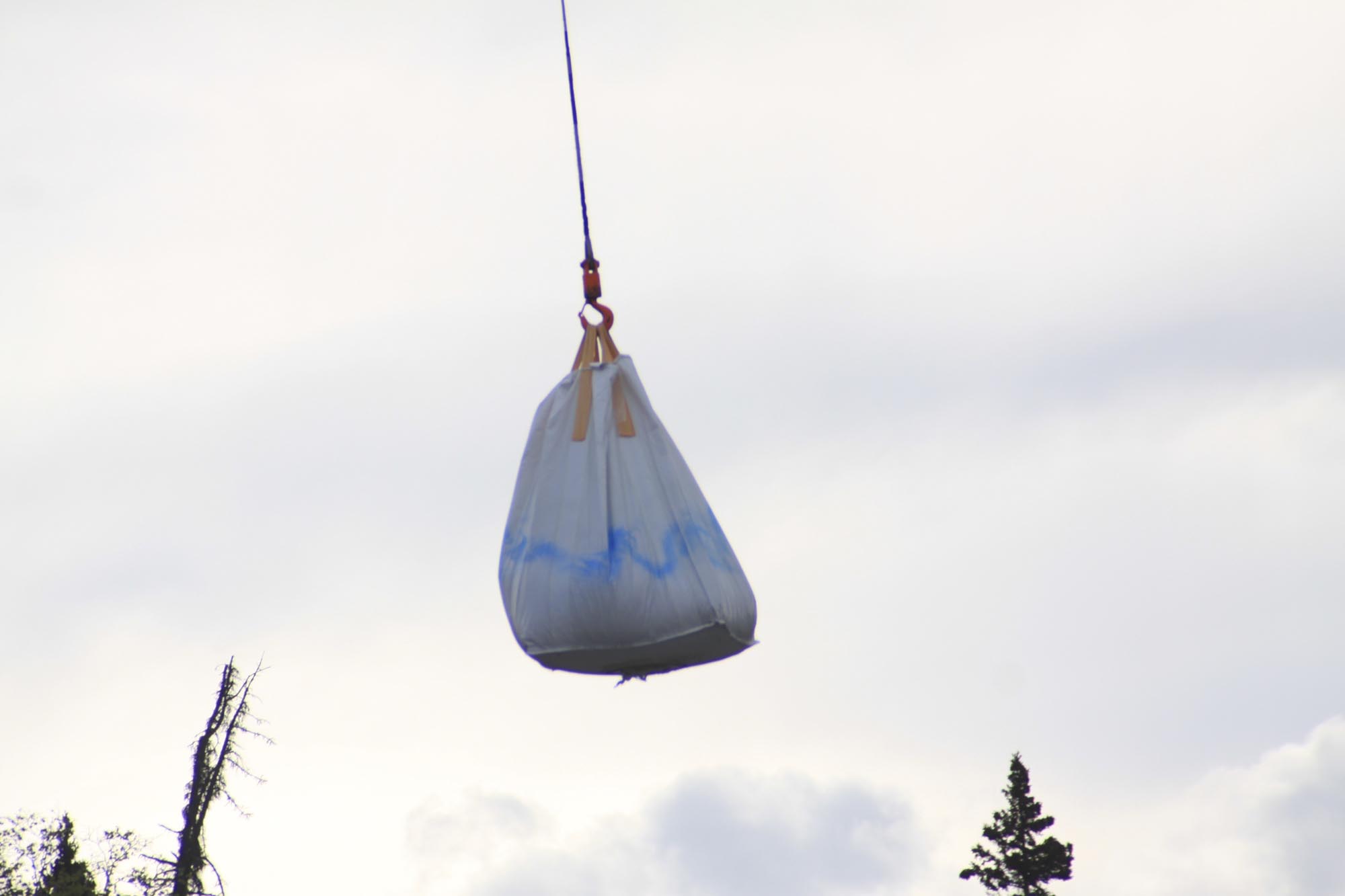
A collaborative community effort got some help with the heavy lifting Friday morning at the Government Peak Recreation Area, as the Mat-Su Back Country Horsemen of Alaska had tons of gravel airlifted to two bridge sites along the historic Carle Wagon Road.
The group’s efforts to turn the historic trail into a horse riding and hiking destination have dovetailed into the Hatcher Pass Management Plan for the area, which calls for nonmotorized use.
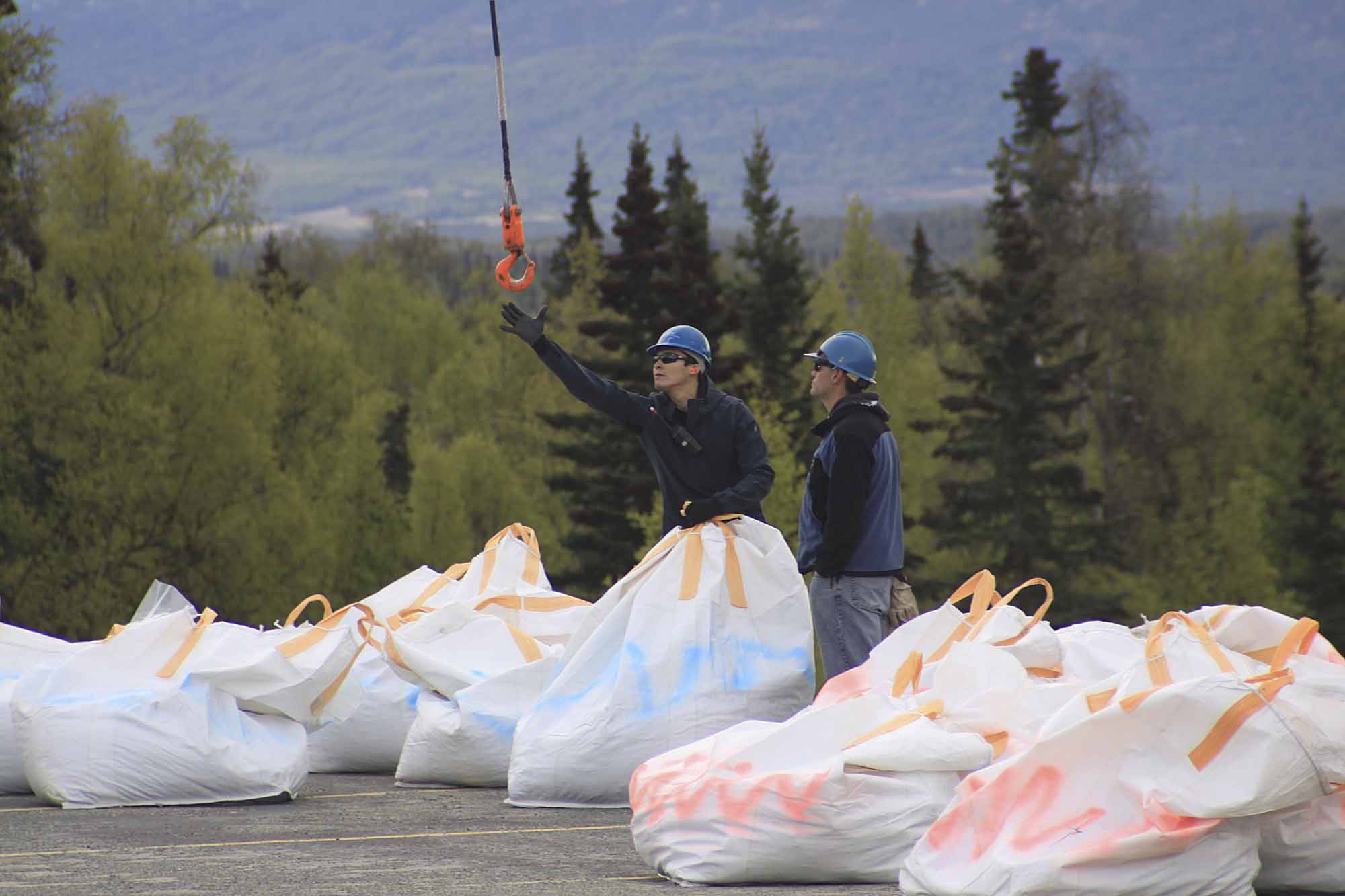
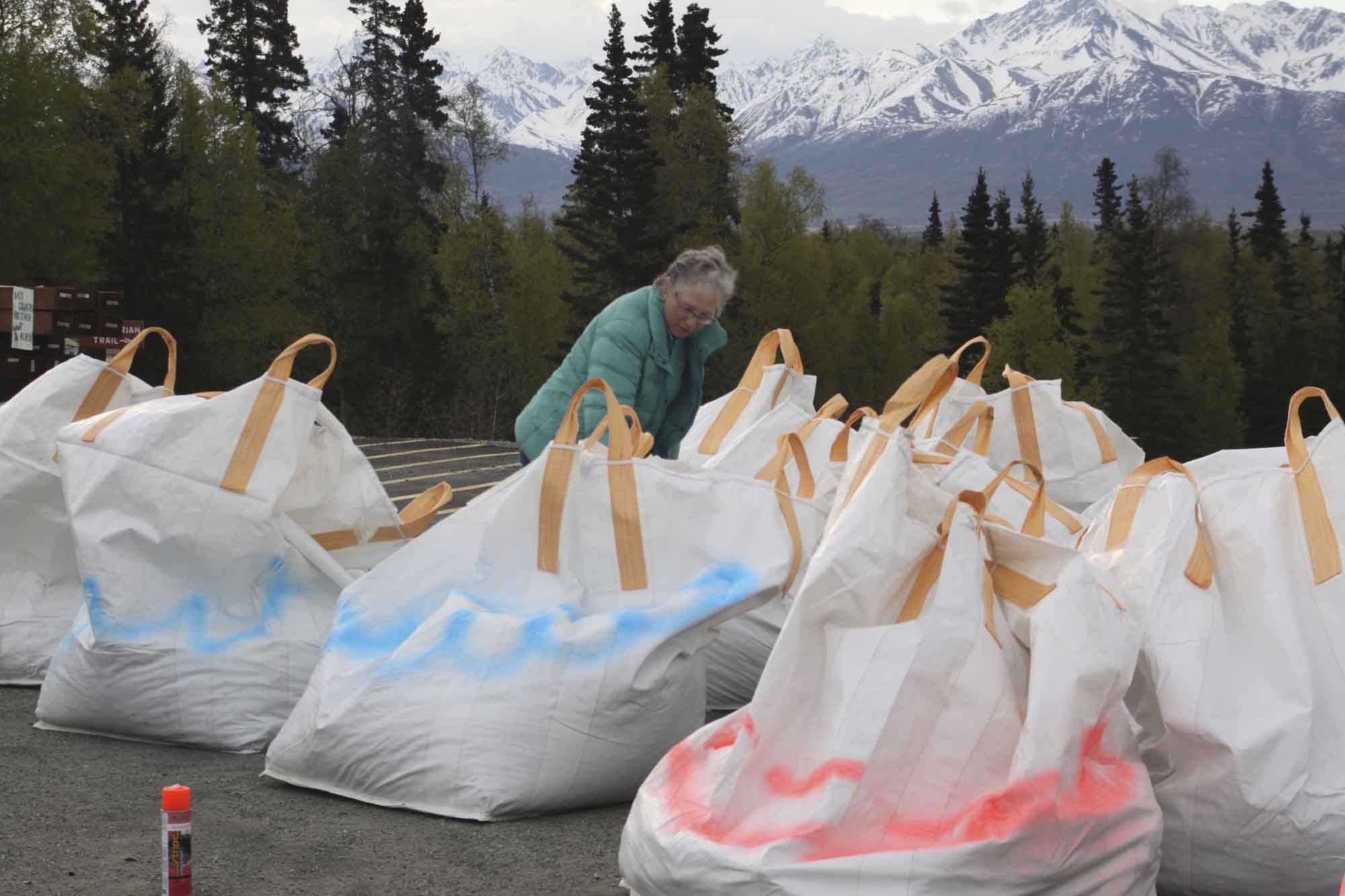
A red Soloy Helicopters A-Star chopper took around two hours to sling 20 bags of gravel — some 28,000 pounds worth — to two sites a couple of miles east of the recreation area parking lot. The gravel is slated for approaches and other construction uses for two bridges that will span creeks on the Carle trail. According to Mat-Su Back Country Horsemen president Kathy Foxley, the bridges are 48 and 25 feet, respectively, and will be a quarter-mile apart. Members Bernie Willis and Frank Sihler manned the remote sites as the loads were delivered Friday.
Foxley added that the group would build the bridges under the supervision of award-winning trail designer Mike Shields, who designed the bridges as well as the improvements to the Carle trail.
Foxley said the group received a $10,000 grant from the Mat-Su Trails and Parks Foundation that paid for the bridge materials. Central Gravel Products donated the gravel and Soloy furnished the helicopter and crew. Other donations came from Spenard Builders Supply, Doug Glenn of Glenn Air and Alaska Mill and Feed, Foxley said.
“It just proves that there is a lot of community goodwill,” she said. “Our organization only has 30 members, and we don’t have the funds. I have been humbled by the generosity of everyone involved.”
The Horsemen built an access trail from the GPRA parking lot that connects to the Carle, which was considered a road when it opened for travel in 1909.
Built by Jim Carle, superintendent of the Alaska Gold Mining Co., it was the main artery of travel to the Hatcher Pass mines from Knik between 1917 and 1935. It is known today as Wasilla-Fishhook Road, although the current roadway deviates a little from the original trail.
Foxley said the roughly five-mile trail ends at the “wagon drop,” a place where supply drivers and miners would lower wagons down an incline, usually with some kind of pulley system. The horse team would be unhitched and walked down a trail that paralleled the wagon drop until they reached a flat area, where the team was re-hitched.
“There is so much history there, and we hope to put signage up where the original wagon drop was — you can still see it, ” Foxley said.

By Jeremiah Bartz Frontiersman.com A football coach using a hockey reference as the centerpiece for his keynote address may

Frontiersman.com With its headquarters in Wasilla, the Frontiersman has been a primary source of news for the Matanuska-Susitna

By Katie Stavick Frontiersman.com The next generation of leaders took flight this week as the Houston High School Class

By Kyle Wilkinson For the Frontiersman Keynote speaker and Carry the Cure President Bill Pagaran’s words boomed through the