Retiring teacher, coach urges Colony grads to ‘find their 68’
By Jeremiah Bartz Frontiersman.com A football coach using a hockey reference as the centerpiece for his keynote address may


Residents in various parts of the Mat-Su Borough heard, and in some cases felt what appears to have been noises from training on August 26 as multiple exercises have been taking place at Joint Base Elmendorf-Richardson (JBER). RED FLAG-Alaska 25-3, Arctic Edge and Northern Edge have been underway throughout the summer and with that, have created more noise for surrounding communities.
While there was no official statement specifying artillery usage, or any other specific training exercises for August 26, the ongoing nature of the exercises means it is possible that the noise was due to military training. JBER issued a noise advisory in July stating that increased aircraft noise and training would occur throughout August due to ongoing exercises.
Red Flag-Alaska 26-3, which kicked off August 17, is a realistic, multi-service, multi-platform coordinated, 10-day air combat training exercise that corresponds to the designed operational capability of participating units. In other words, exercises often involve several units whose military mission may differ significantly from that of other participating units. It runs through August 28, 2026.
Meanwhile, Arctic Edge hosts soldiers, Marines, sailors, airmen, National Guardsmen and Coast Guardsmen, along with U.K., Denmark and interagency partners, traveled to Alaska to complete training in some of the world's harshest conditions from August 1-31.
Exercise Arctic Edge, led by North American Aerospace Defense Command and U.S. Northern Command, demonstrates the U.S. military's capabilities in extreme cold weather, joint force readiness and commitment to mutual strategic security interests in the Arctic region.
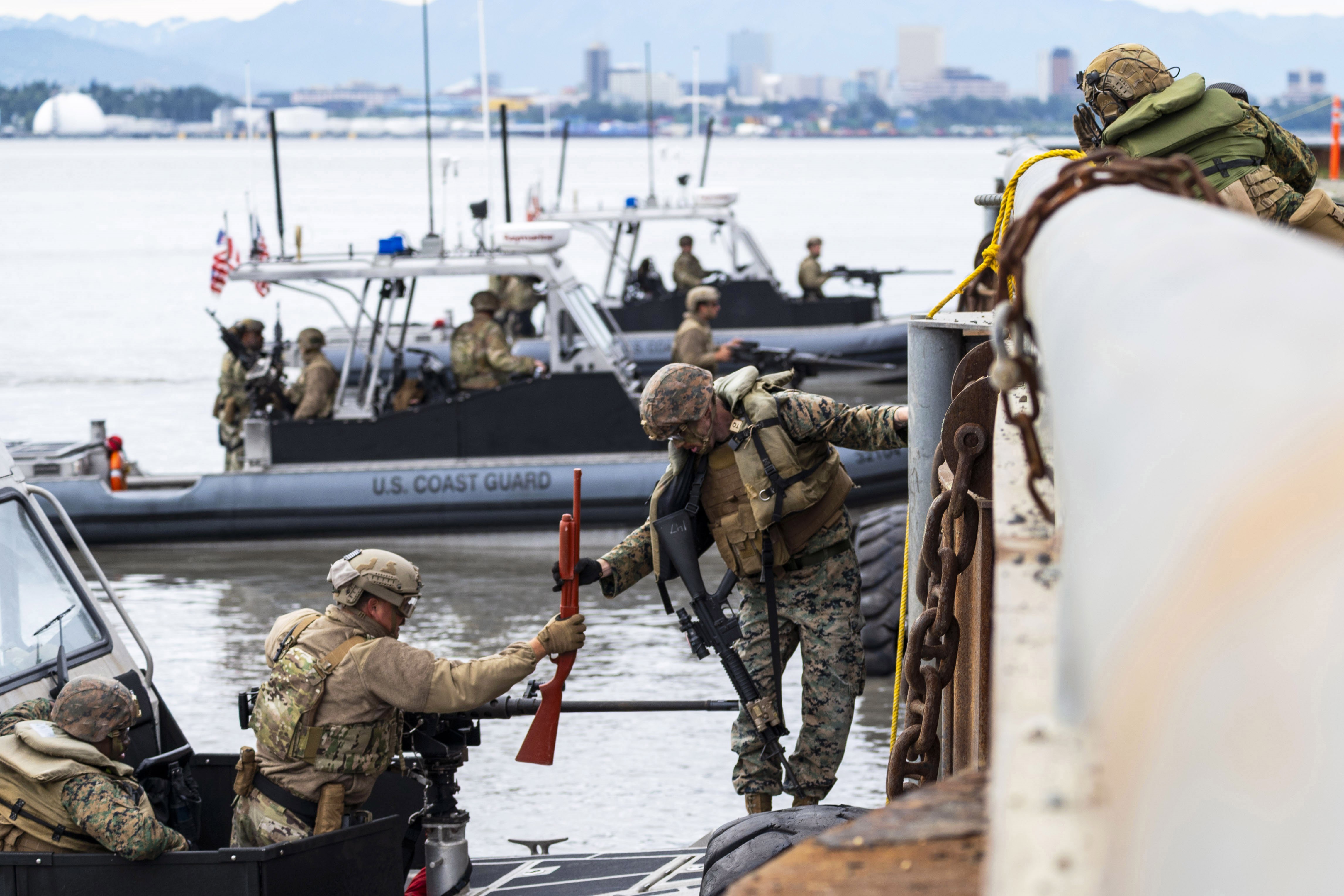
Scenarios included utilizing USCG and USMC units to conduct a simulated port seizure during Port MacKenzie. The U.S. Northern Command-led exercise demonstrates joint force readiness in extremely cold weather as well as the military's commitment to strategic security interests in the Arctic region.
Northern Edge 2025, a multi-domain, joint field-training exercise, concluded this week after showcasing the U.S. military’s expanded capabilities in the Arctic and north-western Pacific theater. The exercise, led by U.S. Indo-Pacific Command and held throughout Alaska—including the Joint Pacific Alaska Range Complex and the Aleutians—the exercise involved more than 6,500 service members, approximately 125 aircraft, and seven U.S. and Canadian naval vessels.
In the past, the exercise used to focus on high-end air combat training. This year, however, Northern Edge in 2025 marked a strategic shift, emphasizing Alaska not only as a training ground but as a defensive position and power projection center.
Operations featured a mix of aircraft, including F-35 variants, command and control, intelligence, surveillance, and recon platforms, as well as refueling aircraft and mobility transports. There were also naval assets that included the USS Abraham Lincoln Carrier Strike Group in the Gulf of Alaska.
Northern Edge ran concurrently with Arctic Edge 2025, conducted by U.S. Northern Command, enhancing coordination between the two commands. U.S. Marines with Marine Fighter Attack Squadron 533, supported multiple Northern Edge missions flying F-35B Lightning IIs, which enhanced joint branch cooperation and increased combat readiness.
The Air Force invests in its readiness and training to meet national security challenges by producing a force that can effectively work alongside allies and partners, rapidly deploy, and ensure sustained logistics in contested operational environments.

By Jeremiah Bartz Frontiersman.com A football coach using a hockey reference as the centerpiece for his keynote address may

Frontiersman.com With its headquarters in Wasilla, the Frontiersman has been a primary source of news for the Matanuska-Susitna

By Katie Stavick Frontiersman.com The next generation of leaders took flight this week as the Houston High School Class

By Kyle Wilkinson For the Frontiersman Keynote speaker and Carry the Cure President Bill Pagaran’s words boomed through the