Retiring teacher, coach urges Colony grads to ‘find their 68’
By Jeremiah Bartz Frontiersman.com A football coach using a hockey reference as the centerpiece for his keynote address may


WASILLA — More than one volunteer called this year’s Project Homeless Connect event “a wonderful day” — and beneficiaries tended to agree.
Encouragement and positivity were palpable Wednesday inside the Curtis D. Menard Memorial Sports Center, where hundreds of people came together to celebrate collaboration between agencies and empower Valley residents experiencing homelessness.
About an hour after the event started, Burchell High School student Triston Beach had already begun to see the fruits of his and his community’s labors. While on a break from class, he said he filled out an application for housing and received assistance in his search for a job that fits with his class schedule. He said he hadn’t known how many resources were available in the Mat-Su.
“A lot of these are new to me,” he said, looking around the expansive sports complex, where dozens of agencies set up booths to help people like Beach.
Beach said he’s had a few jobs on and off in the last couple years, but often felt like he had to quit to keep his grades up, even though he needed the money. Even when he quit, though, it was difficult to catch up in school, until he made a commitment to graduating.
Thanks to his counselor, Deb Price (who suggested Beach go to Homeless Connect) and organizations like MY House — who have helped “more than I can say,” Beach said — he’s gotten motivated to move forward and encourage other students experiencing homelessness.
“It’s only a bump in the road, and once you make it past that, (life) only gets better,” Beach said. “If you reach out, people will help you. You just gotta do your part.”
Beach’s schoolmate, Jacob Arnold, was volunteering at the event for his leadership class, but had also benefited from some of the “vendors” at Homeless Connect in the past.
“I’ve been homeless before and I know how it feels,” Arnold said.
At the beginning of last year, he said, his mother and her fiancé were so injured that they couldn’t work, and it was difficult for the family to pay their rent. The building in which they lived then went up for sale, and the family resorted to staying with relatives in the Lower 48. But the situation was tense, Arnold said, and he wanted to come home to Alaska to finish school.
Now he’s preparing to graduate high school, and though he’s still on public assistance, it’s a step in the right direction, Arnold said. He credited his school for getting him on his current path.
“I wouldn't be graduating if it wasn’t for Burchell,” he said.
Now in its 6th year in the Mat-Su, Project Homeless Connect is a “one-stop shop” that aims to bring homeless and at-risk people together with service providers in the community.
Katie Rose, who replaced Amy Dorsey as director of the Mat-Su Borough School District’s Families in Transition (FIT) program, is also the newest of four Homeless Connect “quad chairs.” She said keeping students like Arnold and Beach in school and in conversation with officials at their school about their living situations is important for the success of the FIT program.
Rose said Homeless Connect, with its 60-plus service organizations and agencies, is a great resource for her to use and be able to refer students to the right places.
“It makes us more powerful as a community … (and) it helps me do my job better,” she said.
Last year, Dorsey said 650 students in the Mat-Su Borough School District were homeless, and Rose said that number is “ever growing.”
“Pretty much every day I get 10 new students referred to the (FIT) program,” she said.
For non-students, though, help can seem harder to find.
United Way of Mat-Su Community Impact Director Staci Manier (another quad chair) said it’s difficult for many people who are homeless, or about to become homeless, to admit they need help.
“There’s still quite a stigma attached,” to homelessness, Manier said.
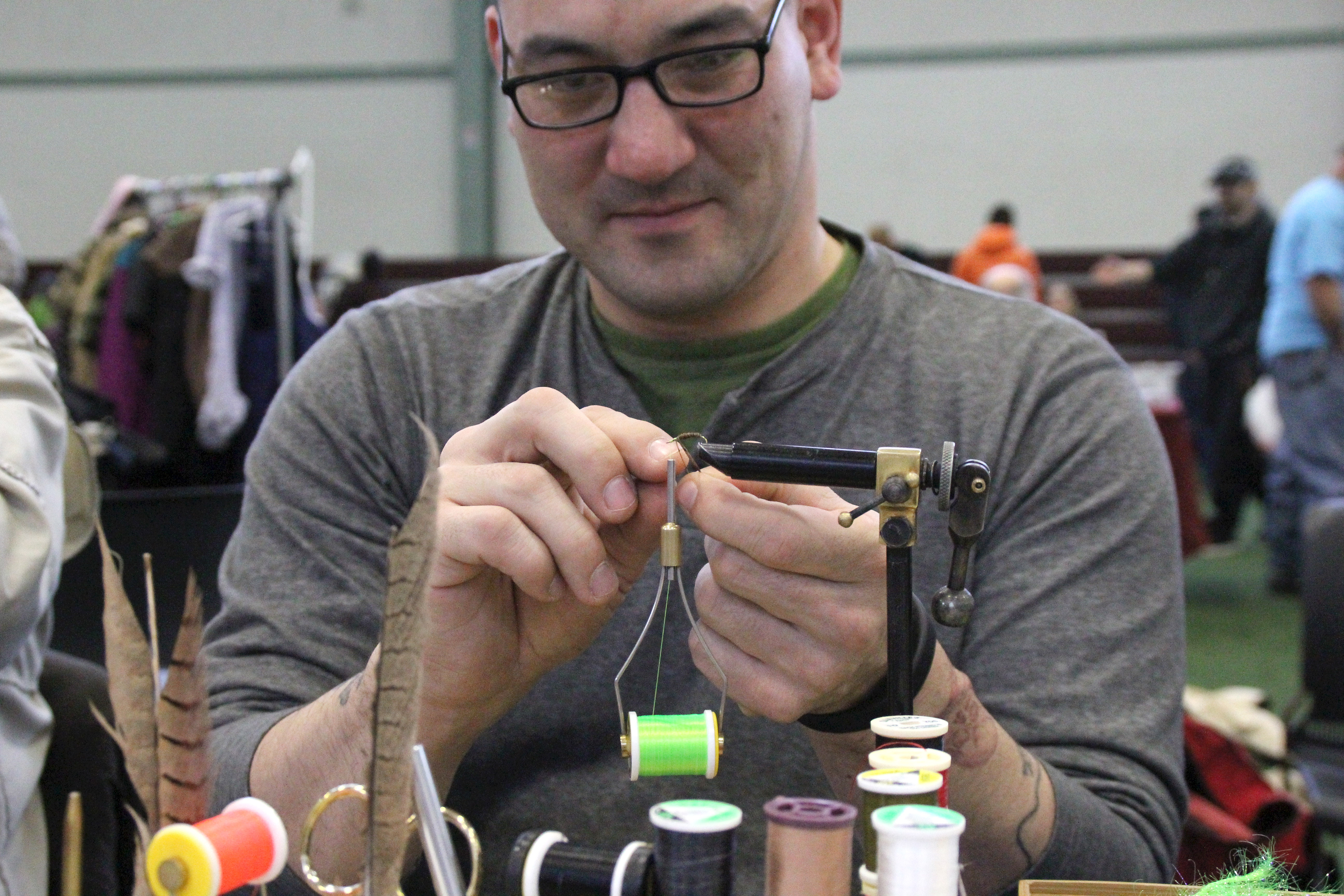
Such issues include depression and anxiety, which are not uncommon among those experiencing homelessness or poverty. These can especially take a toll on veterans, who are also welcome to attend Homeless Connect, whatever their living situation may be. Project Healing Waters Fly Fishing was one organization present at Wednesday’s event with the express purpose of reaching out to struggling veterans.
Though based in Anchorage, Healing Waters now comes out to the Wasilla Vet Center twice a month to teach fly tying to wounded or disabled veterans and their families, mainly as a therapeutic (and functional) activity.
Volunteer and participant Katie Puterbaugh called it a focused distraction, which can be a good thing.
“Distraction is the best thing when you’re in pain or suffering,” she said.
The organization also hosts fishing trips, picnics and other activities free of cost to wounded or injured military personnel referred by medical staff at military hospitals and veterans with VA designated disabilities.
“It really makes you appreciate the people who donate,” Puterbaugh said, as someone who was able to participate in what would have been a $5,000 fishing trip for free.
Donations are a big part of Homeless Connect as well. Many of the knitted blankets, hats, gloves and stuffed animals distributed at the event have come from Palmer Correctional Facility inmates in the Community Care Program.
Correctional facility superintendent Tomi Anderson said the inmates in the program spend about six months out of the year on such projects.
“It helps with their rehabilitation,” Anderson said.
Acting assistant superintendent Sheri Olsen agreed, adding that the giving continues after the prisoners have been released.
“Once they give back, when they get out, they continue that, especially when people say taking is what got them in (prison),” Olsen said.
Contact reporter Caitlin Skvorc at 352-2266 or caitlin.skvorc@frontiersman.com.





By Jeremiah Bartz Frontiersman.com A football coach using a hockey reference as the centerpiece for his keynote address may

Frontiersman.com With its headquarters in Wasilla, the Frontiersman has been a primary source of news for the Matanuska-Susitna

By Katie Stavick Frontiersman.com The next generation of leaders took flight this week as the Houston High School Class

By Kyle Wilkinson For the Frontiersman Keynote speaker and Carry the Cure President Bill Pagaran’s words boomed through the