Retiring teacher, coach urges Colony grads to ‘find their 68’
By Jeremiah Bartz Frontiersman.com A football coach using a hockey reference as the centerpiece for his keynote address may


During a recent council meeting in the city of Houston, an ordinance was proposed that would set a limit to the number of licenses for marijuana establishments within the city.
In 2015, voters approved a measure legalizing recreational use and the retail sale of marijuana in Alaska. With that, voters also approved the rights of local governments to ban commercial marijuana grow operations or pot sales within city limits.
Houston led the charge within the Mat-Su Borough when it came to cannabis, being the first city to pass an ordinance allowing the commercial growth and retail sales of marijuana. As of October, 2022 there were 13 limited and standard marijuana cultivation facilities and 1 marijuana concentrate manufacturing facility in Houston, which is only 22 square miles.
The ordinance cites the city’s population as a reason behind the limiting of marijuana licensing and supporting the idea to allow a reasonable but not overcrowded marijuana market in the city. The use of Houston’s population to determine the number of marijuana licenses aligns with the state’s Alcohol Control Board policy for determining the number of alcohol licenses.
“My concern with this piece of legislation is that you keep comparing it to Alcohol licensing. However, Jim Beam does not live in Houston, Alaska and does not have to stop his competition from being sold in multiple liquor stores,” said Councilman David Duren, who said that he tends to lean towards federal law when it comes to impeding commerce, specifically that federal government shall not impede commerce.
He also expressed concerns that the legislation could have an economic impact on the city, since Houston relies on property and sales taxes for most of their revenue, as well as funding from the state.
Meanwhile, Councilman David Childs had similar concerns about restrictions on the number of retail stores and
“The intent of a free market system is that it provides diversity and competition, innovation, and superior products and pricing. Competition can and will suffer greatly, as we’ve seen in other areas, if this passes.”
Councilman Jeff Brasel added the free market always has a way of righting itself if a market becomes too saturated with similar businesses. He then said that there are always those who want to limit access to what many see as vices, whether it is alcohol, tobacco, or in this instance, cannabis.
“No one’s bringing forward the number of cabins we have or the number of similar businesses. This is specifically targeted because of the business they conduct.” He later said that while he would like to see other industries attract tourism to the city, he believed that stifling one industry would not bolster another, and that the idea of another industry making a home in Houston only to face regulations a few years later would be self-defeating financially.
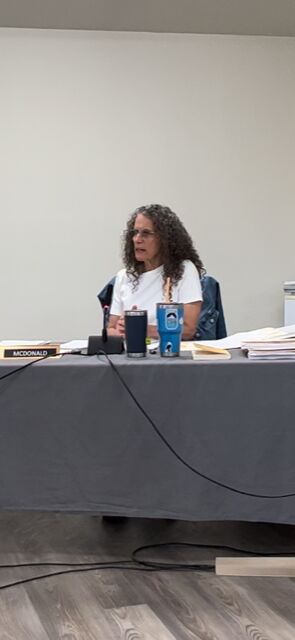
“We have the right as a city to be able to limit pot, and we do that already. We have zoning, which limits people and where they can go and what they can build and how they can build. We have limits to alcohol licenses, which goes through us. We do have a limit on fireworks stands,” said Council member Sandy McDonald.
The city now has the ability to weigh in on marijuana licenses, whether for cultivation or retail, as well as renewal of those licenses. City Clerk Rebecca Rein reminded the council that when it is necessary to deny a license application, the reason must not be arbitrary, capricious, or unreasonable, and that the zoning regulations allow for cultivations only in specific zones, likewise for retail and manufacturing. Rein also said that the council can use the number of cultivations in a concentrated area as a reason to deny a license.
Over the years, some residents have expressed concerns over the years about the odor linked to the many marijuana growers in the city, as well as a perceived image that cannabis is all there is to do in Houston, something that Council member McDonald, who brought the issue forward, addressed during the meeting.
“We need to be wise stewards of legislating the way the city grows and being responsible for that. We have an image in the city of being not quite the best, and I think we need to work on the perception of what we want the city to look like and how we’d like the city to grow,” said Council member McDonald.
She went on to add: “We have the ability now to be able to set before the council the opportunity to say that we’d like to grow and is perceived outside of city limits.”
“I’m not in the business of governing morality, and if we pass this, that will become Houston’s perception, and that could be detrimental,” argued Councilman Duren.
At this time, Alaska does not limit the number of marijuana licenses in the same way that it does so for alcohol licenses. The current regulations for marijuana growth and retailers for Alaska, later adopted by the City of Houston, allows by ordinance or resolution for local control of marijuana establishments “within the broadest range of municipal control contemplated by state law.”
Houston City Code also, by that same token, may also regulate marijuana establishments, placing more restrictions than the current Alaska laws, including regulating the number of marijuana establishments within the city.
The ordinance failed to pass by a 4-3 vote. Council member MacDonald stated she would like to form a plan to introduce this as a ballot measure to allow the residents to decide the matter.
The next regularly scheduled City of Houston Council meeting is set for July 14 at 6:00 pm at Houston City Hall.

By Jeremiah Bartz Frontiersman.com A football coach using a hockey reference as the centerpiece for his keynote address may

Frontiersman.com With its headquarters in Wasilla, the Frontiersman has been a primary source of news for the Matanuska-Susitna

By Katie Stavick Frontiersman.com The next generation of leaders took flight this week as the Houston High School Class

By Kyle Wilkinson For the Frontiersman Keynote speaker and Carry the Cure President Bill Pagaran’s words boomed through the