Retiring teacher, coach urges Colony grads to ‘find their 68’
By Jeremiah Bartz Frontiersman.com A football coach using a hockey reference as the centerpiece for his keynote address may


WASILLA — The ability to catch a woodpecker might not be something they teach in high school.
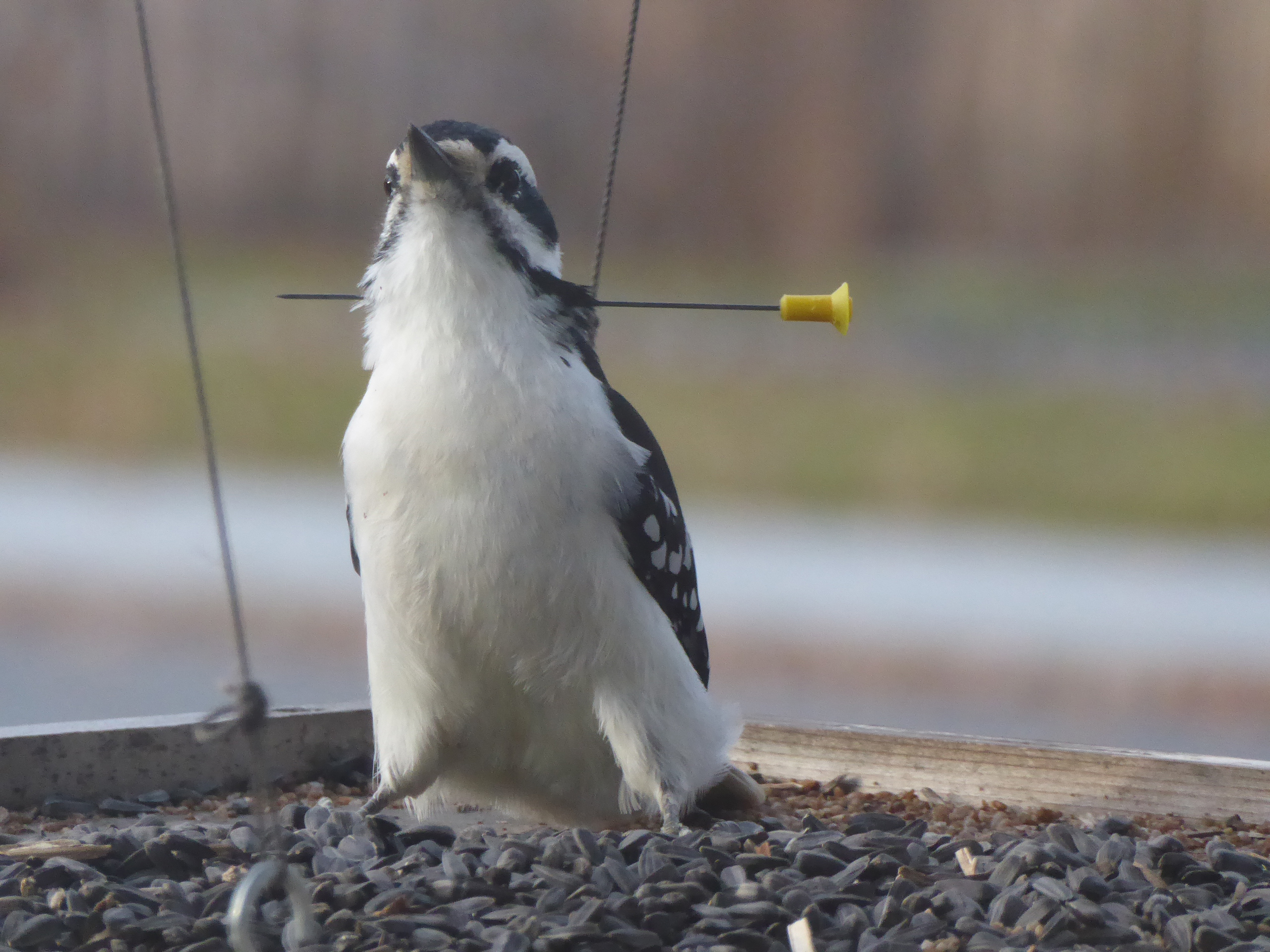
However, if you spot a female hairy woodpecker at a local feeder or clinging to a local tree with a dart through its neck, it might be something you have to learn quickly. The injured bird in question was spotted on Sunday by Palmer's Doug Hill, who took photos of the bird with a dart from a blowgun through its neck with a bright yellow plastic stopper clearly visible on one side.
Local bird experts say the bird’s wound constitutes a violation of the federal Migratory Bird Treaty Act of 1918, meaning if caught, someone could face up to six months in prison and $15,000 in fines.
Hill spotted the bird eating suet at his feeder about 11:30 a.m. on Sunday, and he had time to snap a pair of photos, which he then distributed to several media outlets.
Hill, who works as a wildlife biologist with the Alaska Department of Fish and Game, immediately recognized the dart from his training, and then tried to raise the alarm. He said his ultimate goal was to raise awareness, not necessarily assign blame.
He suggested an inexperienced hunter may have shot the bird without being aware of the law.
“Maybe, if nothing else, I’m getting people to pay attention,” he said. “Maybe if it’s a kid that did something, they think twice before doing it again.”
Cabin owners sometimes view woodpeckers as pests because they can damage houses, Hill said. That was the other likely scenario.
The bird hasn’t returned since, Hill said on Monday afternoon.
“It wasn’t flying well,” he said. “It was flying kind of heavy."
Joel Holyoak, a program assistant with the Palmer office of Fish and Game, said the law is clear about shooting woodpeckers.
“It is a migratory bird that’s not allowed to be shot,” he said. “It’s not a game animal. It’s a songbird.”
Some species of introduced birds are available to hunt virtually without regulation, Holyoak said. They include European starlings and rock doves, and are included among species labeled “deleterious and exotic wildlife” because of the impact they could potentially have on native ecosystems.
Woodpeckers are not among them, Holyoak said. He suggested that the case be referred to Alaska State Troopers for investigation.
In the meantime, if the bird (or one like it) shows up, Nancy Wade, a volunteer with the Alaska WildBird Rehabilitation Center in Big Lake, suggested using a net or towel to carefully capture it. The bird should then be placed in a box a little bit bigger than it’s body. The next step is to call either the WildBird Rehabilitation Center or Bird TLC, in Anchorage. Wade cautioned anybody who captures the bird against removing the dart themselves, because veterinarians may want to x-ray the woodpecker, Wade said.
The bird’s chance of survival might be slim, but rescuers shouldn’t underestimate its ability to flee, Wade said.
“As long as it can fly, it’s going to be very hard to catch,” she said. “But it needs to be caught.”
The phone number for the Alaska WildBird Rehabilitation center is 892-2927. The phone number for Bird TLC is 562-4852.
Contact reporter Brian O’Connor at 352-2270, brian.oconnor@frontiersman.com, or on Twitter @reporterbriano.

By Jeremiah Bartz Frontiersman.com A football coach using a hockey reference as the centerpiece for his keynote address may

Frontiersman.com With its headquarters in Wasilla, the Frontiersman has been a primary source of news for the Matanuska-Susitna

By Katie Stavick Frontiersman.com The next generation of leaders took flight this week as the Houston High School Class

By Kyle Wilkinson For the Frontiersman Keynote speaker and Carry the Cure President Bill Pagaran’s words boomed through the