Retiring teacher, coach urges Colony grads to ‘find their 68’
By Jeremiah Bartz Frontiersman.com A football coach using a hockey reference as the centerpiece for his keynote address may


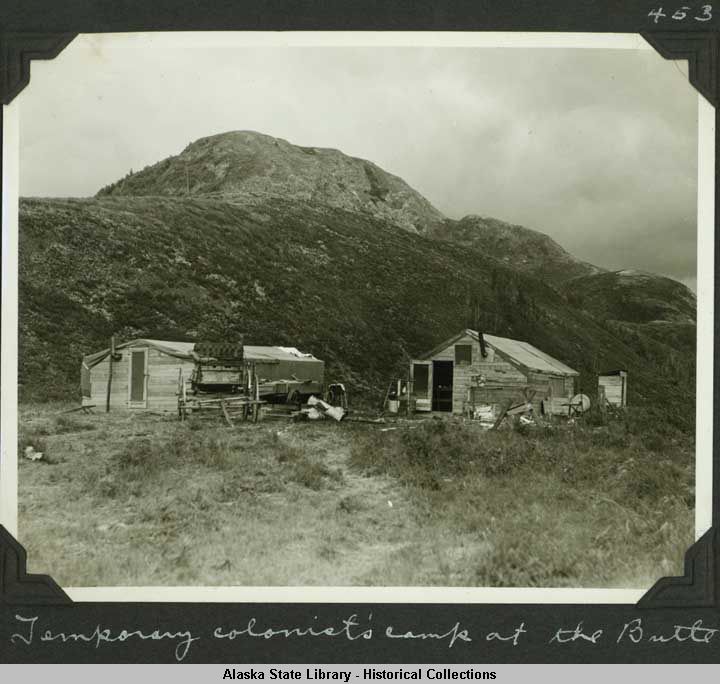
BUTTE— On the other side of the Matanuska River, simultaneously looking out at Palmer and Anchorage, is the community of Butte. It spans from milepost 9 to 16 on the Old Glenn Highway. The history of the area tells a unique and integral history that affects not just the Mat-Su, but the entire state.
From the early days of pre-colonial, indigenous natives cutting through the river and making fish camps all the way up to colony kids that grew up on Bodenburg Loop. The history of this area has many of its own milestones, connected with the overarching action that made modern Alaska.
“Butte has an interesting history,” Alaska Raceway Park owner, Earl Lackey said. “There’s a lot of things happening.”
Until the new Glenn Highway was built, anyone in the Valley who wanted to get to Anchorage would have to drive through the Butte on the Old Glenn Highway. Suzanne Black has a photograph from the 1950’s, when Lake George flooded the road, preventing her from crossing the bridge and travelling to Anchorage for her piano lessons. Her father took a quick photograph of the teenager with big glasses and a green sweater, the old bridge behind her and water flowing over the road before it. According to locals, Lake George was known to fill up the river, people had to keep an eye on it.
The Butte residents were affected like the rest of the Valley during the major flood of 1971. According to a U.S. Department of Interior Geological Survey in 1971 titled, “Floods of the Summer of 1971 in South-Central Alaska,” the floods caused an estimated 8 to 10 million dollars of damage, even derailing an Alaskan Railroad train.
“I am not an expert of the Butte, after all I have only lived here for a little over decade, but still had a few stories about the Butte, the teenage boys and their hot cars drag racing on the straight stretch, Maud's greenhouse and the place the boys would get flowers for prom dates, the Knik River gobbling up the only highway south, Doc Sims, The McKinley family, and the boys of my youth, all smart, resourceful and full of mischief,” Black said.
The Butte is often regarded as the Valley’s playground because of the access to countless outdoor activities. One of the most prominent symbols of recreation in the Valley is the Alaska Raceway Park. According to Lackey, the track itself is older than the Borough. Lee Nelson leased out the land from the state in 1963 and the Brought was incorporated in 1964. Prior to the first drag strip’s construction, Lackey said that it was very common for people in downtown Palmer to hold drag races, making special events out of it.
Before Earl Lackey and five other racers bought the track from Lee Nelson in 1994, it was most frequently referred to as the “Polar Raceway.” In 1995, it was rebranded as the Alaska Raceway Park. The Lackey family eventually bought out the five racers, taking the helm and have been the sole owners ever since.
In the early years, before white settlement and colonization, the Dena'ina and Athabaskan Natives roamed through the Butte area. There was a large Dena’ina village named Hutnaynut’l, or “burnt over” in the Bodenburg area.
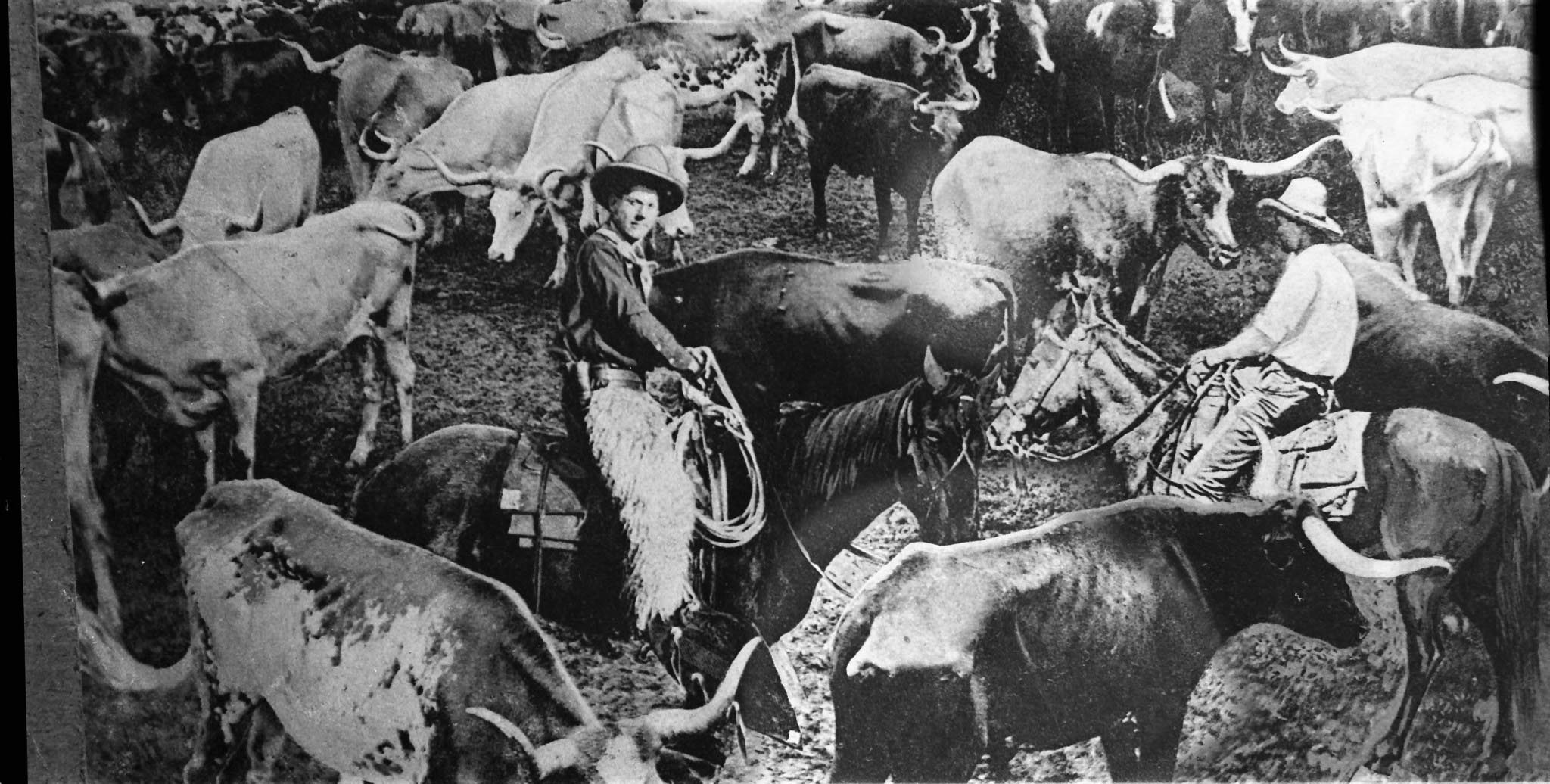
John Bodenburg was the first settler to develop land in that area, forming the first farm in 1917. He brought 19 cows, fording through the river just below where the George Palmer Memorial Bridge stands now. This is where the iconic Bodenburg Butte hill got its name, a combination of the first settler’s name and the very definition of that type of land that’s bigger than a hill but not quite a mountain.
Bodenburg quit faming sometime after the old wooden bridge that connected Palmer and the Butte and spanned across the Matanuska River was torn out. He apparently lost interest since there was no practical access to the Palmer railroad. He died in 1934 and Victor Falk Sr. purchased the land.
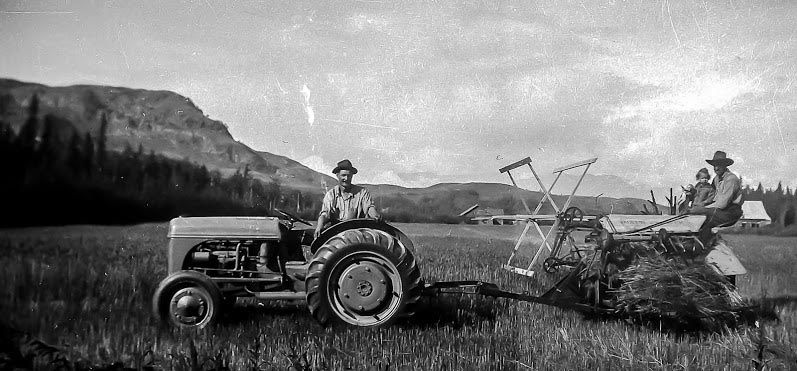
Then came the Colonists in 1935, looking for a new start under Franklin D. Roosevelt’s New Deal. During the original plotting of the land, each colony family picked lots out of a hat. Several families including the Sandvik family, swapped their tickets with other farmers until they got the lot they wanted. Kent Sandvik said that his father swapped 6 times before he got the lot within Camp 10, wrapping around Bodenburg loop, the same road that locals and tourists alike go down to summit the famous hill. Each time a hiker goes up that almost-mountain, they are walking past generations of history.
“My sort of ‘claim to fame’ is that I must’ve ran the Butte more than anyone in the world,” Sandvik chuckled.
Sandvik grew up at the base of the Butte as a colony kid. He said that he would frequently train his body by running up and down that mountain, almost every day.
A total of 25 tracts were settled in Camp 10. Others followed their lead after World War II (WWII), getting jobs at the saw mills between 1940 and 1970.
“The military changed everything in Alaska,” Black said.
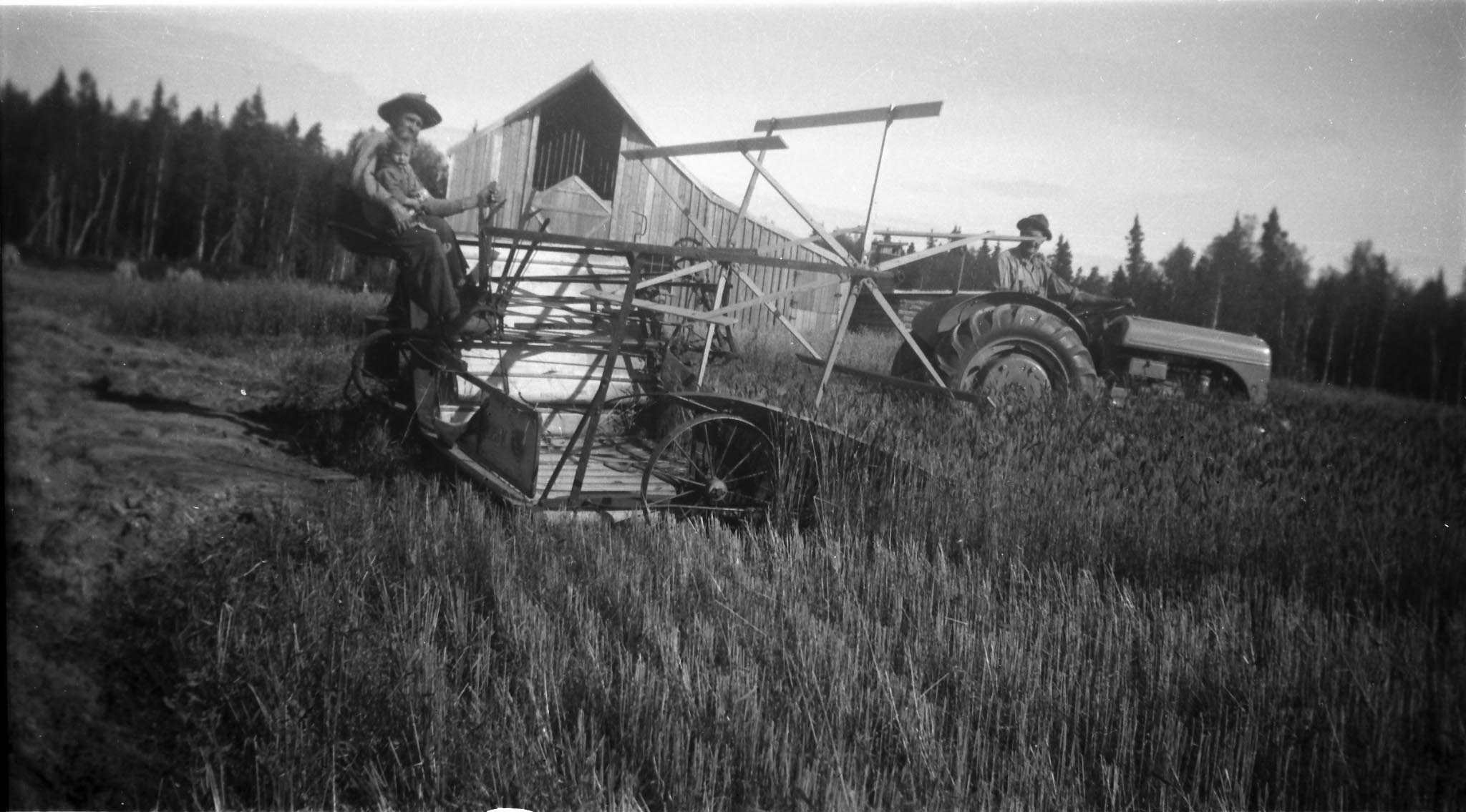
Thanks to the war effort, most, if not all of the farming families were prompted with the rest of the country to support the troops with produce. Many families produced countless mounds of potatoes that according to Black, were strictly regulated.
Sandvik remembered a time where the Butte area had community centers, around the 1950’s or so. That’s where everyone used to gather for dances, meetings and clubs.
“All in all there are very nice folks here in my neck of the woods, farms still prosper, horses, cows, goats, and down my lane is a family of rabbits who greet me often… So all in all life is pretty good on the ‘wrong side’ of the river,” Black said.
Robert Rieth said is a member of the Palmer Historical Society. He’s sorted through countless piles of old photographs and other historic documents to chronicle his family story.
“It took me years to figure out who was who,” Rieth said.
His grandparents met as two colony kids from two different families, the Churches and Nelsons. He said that almost every Nelson girl married almost every Church boy. His grandfather, Alfred Church, married his grandmother, Florence and the two tried out potato farming after the colony was already in full swing but ultimately stopped farming commercially and started keeping potatoes, strawberries and other crops for their family and friends.
Rieth said efforts like those of the Historical Society, Pioneers of Alaska and other groups show that the Butte’s history, alongside the Valley, is still living and breathing just waiting to tell you their story. One can find most of their names on the street signs around town.

By Jeremiah Bartz Frontiersman.com A football coach using a hockey reference as the centerpiece for his keynote address may

Frontiersman.com With its headquarters in Wasilla, the Frontiersman has been a primary source of news for the Matanuska-Susitna

By Katie Stavick Frontiersman.com The next generation of leaders took flight this week as the Houston High School Class

By Kyle Wilkinson For the Frontiersman Keynote speaker and Carry the Cure President Bill Pagaran’s words boomed through the