Retiring teacher, coach urges Colony grads to ‘find their 68’
By Jeremiah Bartz Frontiersman.com A football coach using a hockey reference as the centerpiece for his keynote address may


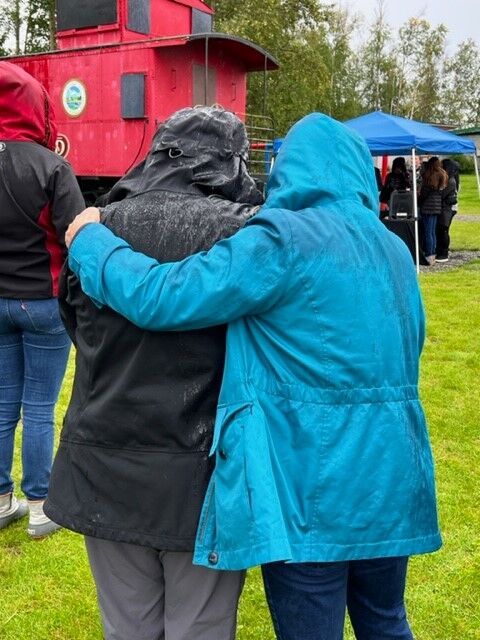
With rain falling and a slight chill in the air, family, friends, and community members came out to mark a somber event as the Mat-Su Opioid Task Force, True North Recovery, My House, and other partners held a vigil in honor of “International Overdose Awareness Day” on Wednesday.
Proclamations from Gov. Mike Dunleavy, and Senators Lisa Murkowski and Dan Sullivan were read.
“It is important that we take this time to observe International Overdose Awareness Day to remember all who have lost their lives to deadly drugs,” said Gerrie Sumpter, assistant to Sen. Murkowski.
In a statement from Senator Sullivan wrote, “Addiction is not a moral failure. People who are suffering from addiction are sick and need our help.”
He went on to thank the many people in attendance for the continued hard work and efforts to reduce and remove the stigma of addiction, substance abuse disorder, and mental health.
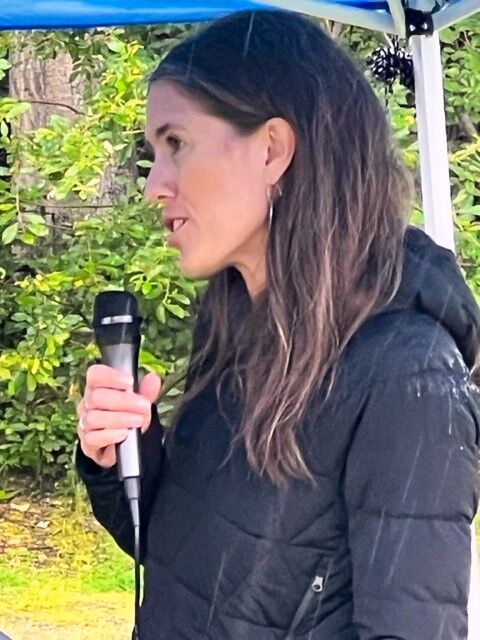
One of the speakers in attendance was Dr. Anne Zink, Chief Medical Officer for the State of Alaska, and an emergency physician.
“I think that overdose, addiction, and mental health touches each and every one of us in different ways,” said Dr. Zink.
Acknowledging the losses suffered by many in attendance, she said, “It blasts a hole in your soul that will never be filled.”
She went to say that people who’ve lost someone to addiction have a choice: let the void eat you up inside, or choose to expand and grow and find ways to make the system better.
“I don’t tell a patient that comes into the ER with a heart attack that I’m not sure I can care for you right now because you ate a cheeseburger last week. I don’t tell someone that broke their leg and I’ve splinted that it’s just a crutch,” she said, explaining that it’s what patients need at that time to heal, much like people suffering substance use disorder may need Narcan or medically-assisted treatment, and going through recovery.
Dr. Zink also called upon everyone to end the stigmatization that many people associate with mental health and addiction, sharing a personal story of how stigma often attached to mental health affected her own family.
“Sixteen years ago, my sister overdosed,” shared Dr. Zink. “She did so because she was struggling with depression, and there was stigma, and continues to be stigma associated with mental illness.”
Dr. Zink went on to share with the group that her sister, who has “feisty in so many ways,” had sought help, experiencing hospitalization and daily therapy care, but felt she could not shake the stigma or the depths of her mental health crisis.
“I don’t think she felt she had a choice, and even though she’d never used substances before, she chose to overdose that day,” Zink said.
While the rain fell, family members and friends who lost loved ones to overdose stood side by side with others who have experienced addiction and are in recovery, and faced the difficult task of reading 300 names of Alaskans who succumbed to addiction.
“The first year we did this, we had maybe 50 or 60 names. We’re up over 300 names now, and those are just names submitted to the list,” John Green told the crowd.
Green lost his daughter Kellsie to complications from heroin withdrawal in 2016.
“Each year this list gets longer, and unless somebody asks to remove a name, all of these names will remain on this list for as long as we’re doing this,” he said before he and others read the names of the lost.
While some names were recognizable, like Bruce Snodgrass and Taegge Lee, there were names some may not, like Robert Chapman and Sarah Shot, but all of the names read were someone to those who loved and cared about them.
The somberness was then replaced with an acknowledgement of those in attendance who have made it to recovery.
“If you are in recovery and living the life absolutely beyond your wildest dreams, raise your hand,” said James Savage, who helped coordinate the vigil, and was met with dozens of hands raised and applause from everyone.
The event also marks the beginning of National Recovery Month, which was marked by a proclamation from Governor Mike Dunleavy. In it, he proclaimed September 2022 as Recovery Month in Alaska, writing, “Addiction harms not only the individual but families and communities. By seeking help, individuals who experience substance abuse disorder can embark on a new path toward improved health and well-being, improved relationships, and lead more productive and fulfilling lives.”
National Recovery Month is a national observance held every September as a way to educate people that substance use treatment and mental health services can enable those with a substance use disorder to live a healthy and rewarding life.
“We look forward to tomorrow, the first day of National Recovery Month, which is dedicated to celebrating those who are in recovery and their families by supporting them as they go forward,” wrote Murkowski.
Recovery Month celebrates the gains made by those in recovery, just as people honor health improvements made by those who are managing other health conditions such as hypertension, diabetes, asthma, and heart disease.
As part of the observance, prevention, treatment, and recovery programs and facilities around the country utilize this observance to reinforce a positive message that prevention works, treatment is effective, and people can and do recover.
To honor strides made by those in recovery and share their success stories, the Frontiersman will be doing a series of stories from people in recovery. Some will be names you know, some maybe not. There are mothers, fathers, sisters, brothers. In the words of Karl Soderstrom, “they’re here because they said ‘yes’.”
The focus in doing so is to increase awareness and foster a greater understanding about mental and substance use disorders.


By Jeremiah Bartz Frontiersman.com A football coach using a hockey reference as the centerpiece for his keynote address may

Frontiersman.com With its headquarters in Wasilla, the Frontiersman has been a primary source of news for the Matanuska-Susitna

By Katie Stavick Frontiersman.com The next generation of leaders took flight this week as the Houston High School Class

By Kyle Wilkinson For the Frontiersman Keynote speaker and Carry the Cure President Bill Pagaran’s words boomed through the