Retiring teacher, coach urges Colony grads to ‘find their 68’
By Jeremiah Bartz Frontiersman.com A football coach using a hockey reference as the centerpiece for his keynote address may


On Monday, there was another deadly school shooting. This time in Des Moines, Iowa. It is a trend that causes concern for parents, students, administrators, and the community. During the January 18 Matanuska Susitna Borough School District (MSBSD) School Board meeting, Mr. Jim Estes, Director of Operations and Associate Superintendent Reece Everett took time to present the 2022-2023 “Keeping Schools Safe” report, which looks at prevention and preparedness in the MSBSD.
This focuses on prevention.
“The number one priority of the work we all do every single day is to make sure our students, our children leave our homes, safely arrive to school safely, have a safe and productive day at school, and are delivered home safely,” said Everett as he presented the report.
On the topic of prevention, “We all know prevention is key to mitigating any sort of critical incidents or school-related violence that may occur,” Everett said.
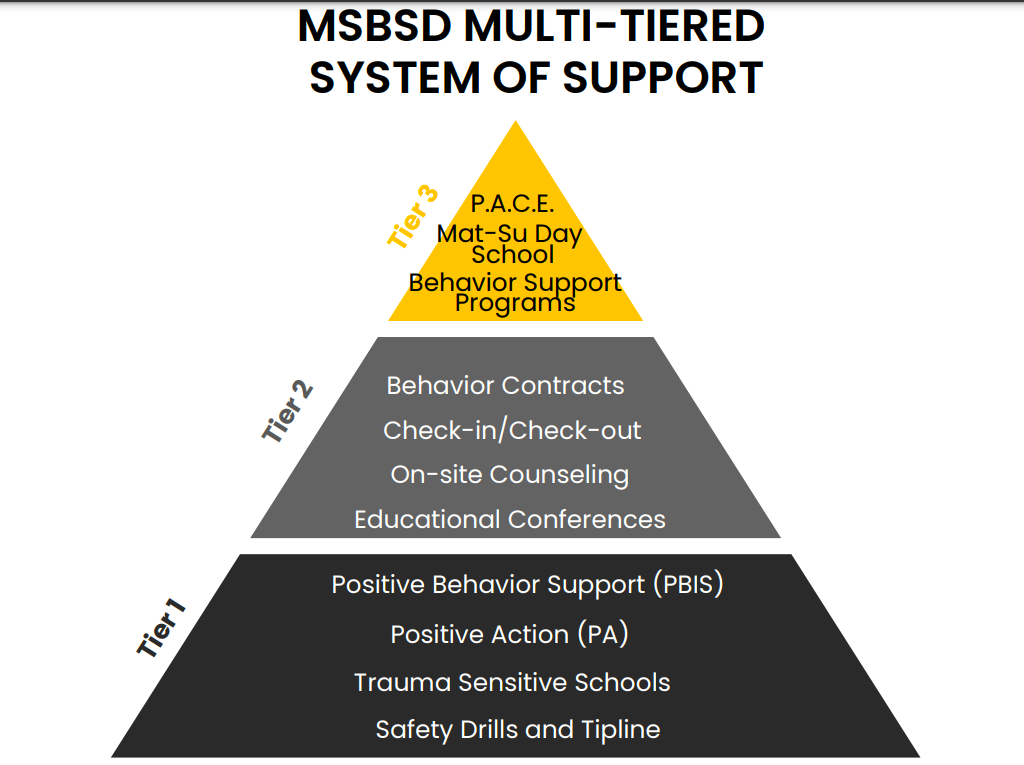
According to the report, prevention efforts are structured in a multi-tiered system of support, starting with prioritizing the social and emotional health of all students and staff. If a student is not connected and successful, schools work to provide interventions meant to increase the frequency of adult interactions for both supervision and support. All schools respond to troubled students in a structured manner, starting with assessing the situation, and after, placing the student in the most appropriate setting, which could be a behavior support program in the school or, if needed, a more restrictive setting off-site.
The National Threat Assessment, a component of the U.S. Secret Service in 2021, their most recent report demonstrates that in the more than 20 years since Columbine, 94% of individuals plotting school violence shared their intentions about carrying out an attack, whether via social media, text, or speaking about it.
“94%. We know it’s preventable.”
Within the MSBSD, a multi-tiered system of support has been implemented at all 47 MSBSD schools, along with 2 more restrictive environments. In MSBSD, students are kept safe through this comprehensive approach, monitoring data to determine effectiveness, and continually evaluating for improvement.
“Similar to how in academics we look at a multi-tiered system of support when students struggle academically, we use a similar approach when we’re talking about appropriate behavior,” Everett said, explaining that they often “tier” interventions when a student engages, or staff or others witness behavior that is emergent.
The first tier in the pyramid of prevention that is universal to all students includes systems implemented within the classrooms, including Positive Behavior Interventions and Supports (PBIS), a school-wide system of support that includes proactive strategies for creating positive school environments for students, and defining, teaching, and supporting appropriate student behaviors. The aim is to stop inappropriate behaviors by establishing clear expectations early and often, explicitly teaching suitable behaviors, and reinforcing those behaviors by making sure students receive frequent feedback on how well they are meeting the behavioral expectations.
To help implement PBIS, ‘Safe and Civil Schools’ provides professional development, materials, and practical tools needed to create the framework. MSBSD has been utilizing the ‘Safe and Civil Schools’ since 2010 to reduce discipline referrals and improve student safety.
Tier 1 also includes Positive Action, which integrates school, family, and community curricula that promote the positive development of the whole child; Trauma Sensitive Schools, which works in partnership with R.O.C.K. Mat-Su teams that participate in professional development to integrate trauma sensitive practices at their sites, supporting all students by encouraging positive behaviors instead of condemning negative behaviors, and cultivating safe and supportive learning environments where students feel safe to take academic risks, support their peers, and report at risk students/behaviors to a trusted adult; and a tip line that provides students, staff, and the community an outlet to report any safety concern, whether it’s bullying, drugs, or violence. Reports can be made anonymously. The tip line is available via the MSBSD app.
Tier 2 is applied if a student is engaging and just needs a little more support. It centers on daily checking in and out with a trusted adult, usually in the morning and again in the afternoon. The focus is to have a conversation, check on student behavior, what their goals are and if they reached them, and emotional support.
There is also work with mental and behavioral health coordinators. These coordinators focus on crisis, educational, violence/conflict resolution, relationship building, and problem-solving interventions.
There is also the Behavior Threat Assessment, a documented process when a student threatens violent action. All reports of risk that warrant a threat assessment are reviewed by the school site supervisor and an after action debrief is conducted with the principal to monitor progress and provide support.
“Making sure that we have a documented process to ensure number 1, safety but also support for that student that may have engaged in that behavior,” Everett told the board.
Finally, Tier 3 provides alternatives when the students exhibit the most concerning behaviors.
“That’s where we know that a student has demonstrated behaviors that necessitate a more structured environment.”
Under this tier, families and educators may turn to Positive Alternative for Continuing Education (P.A.C.E.), which provides an alternative to suspensions with meals and transportation. Students participate in online learning for credit recovery and participate with site mentors to develop skills for academic, personal, and lifelong success.
If a student is suspended for drug or alcohol use, they complete “Prime for Life”, an intervention for drug and alcohol abuse.
And there is Mat-Su Day School, which offers behavioral, social, and emotional learning in a restrictive, therapeutic environment with an emphasis on academics. Students with Individualized Education Plans (IEPs) can also attend the Day School while suspended. Evening classes are available for students currently expelled from school. Other students with IEPs are placed in this environment based on their need for support.
“Part of prevention is the partnerships with various programs,” Everett said, explaining that the exhaustive list supports the old adage that “it takes a village.”
“I know that’s cliché, but what we know that in order to make sure our children are safe, it takes all of us adults, as professionals with that vested interest to make sure our students are successful.”
Among those partnerships are law enforcement, the Knik Tribal Council, United Way, and community-based behavioral health providers, to name a few.
“There are programs where we teach social skills and the way to deal with conflict. We know that our schools are a place where students congregate from a variety of different backgrounds, so that mutual respect is explicitly taught.”
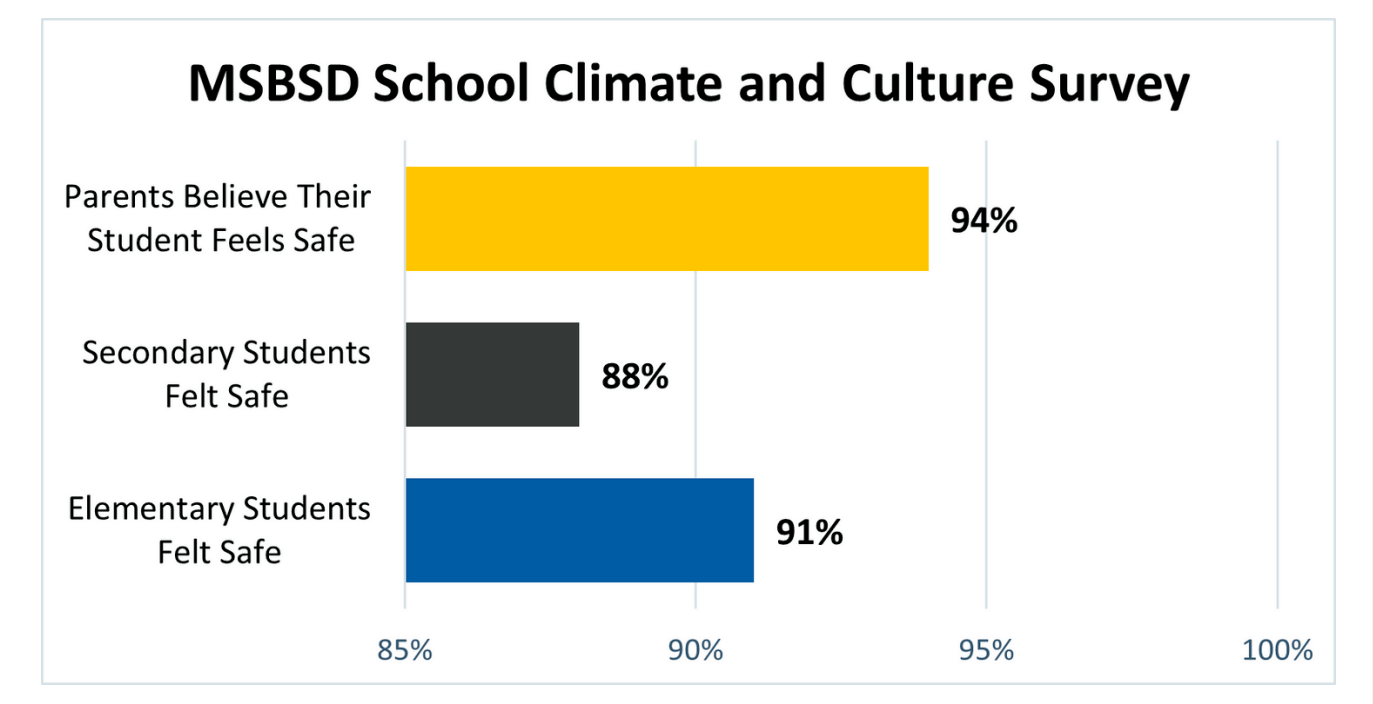
In March 2022, MSBSD completed a school climate and culture survey, conducted as part of the district’s accreditation process. Of the 2,411parents surveyed, 94% of parents believe their student feels safe at school, up from91% in2018. The survey also said that they were welcomed and treated with respect.
“Prevention is really difficult to quantify. The ways we do that is through student surveys through internal, district-created, and district-delivered student surveys, and safety is one of the big questions we ask.”

By Jeremiah Bartz Frontiersman.com A football coach using a hockey reference as the centerpiece for his keynote address may

Frontiersman.com With its headquarters in Wasilla, the Frontiersman has been a primary source of news for the Matanuska-Susitna

By Katie Stavick Frontiersman.com The next generation of leaders took flight this week as the Houston High School Class

By Kyle Wilkinson For the Frontiersman Keynote speaker and Carry the Cure President Bill Pagaran’s words boomed through the