Retiring teacher, coach urges Colony grads to ‘find their 68’
By Jeremiah Bartz Frontiersman.com A football coach using a hockey reference as the centerpiece for his keynote address may


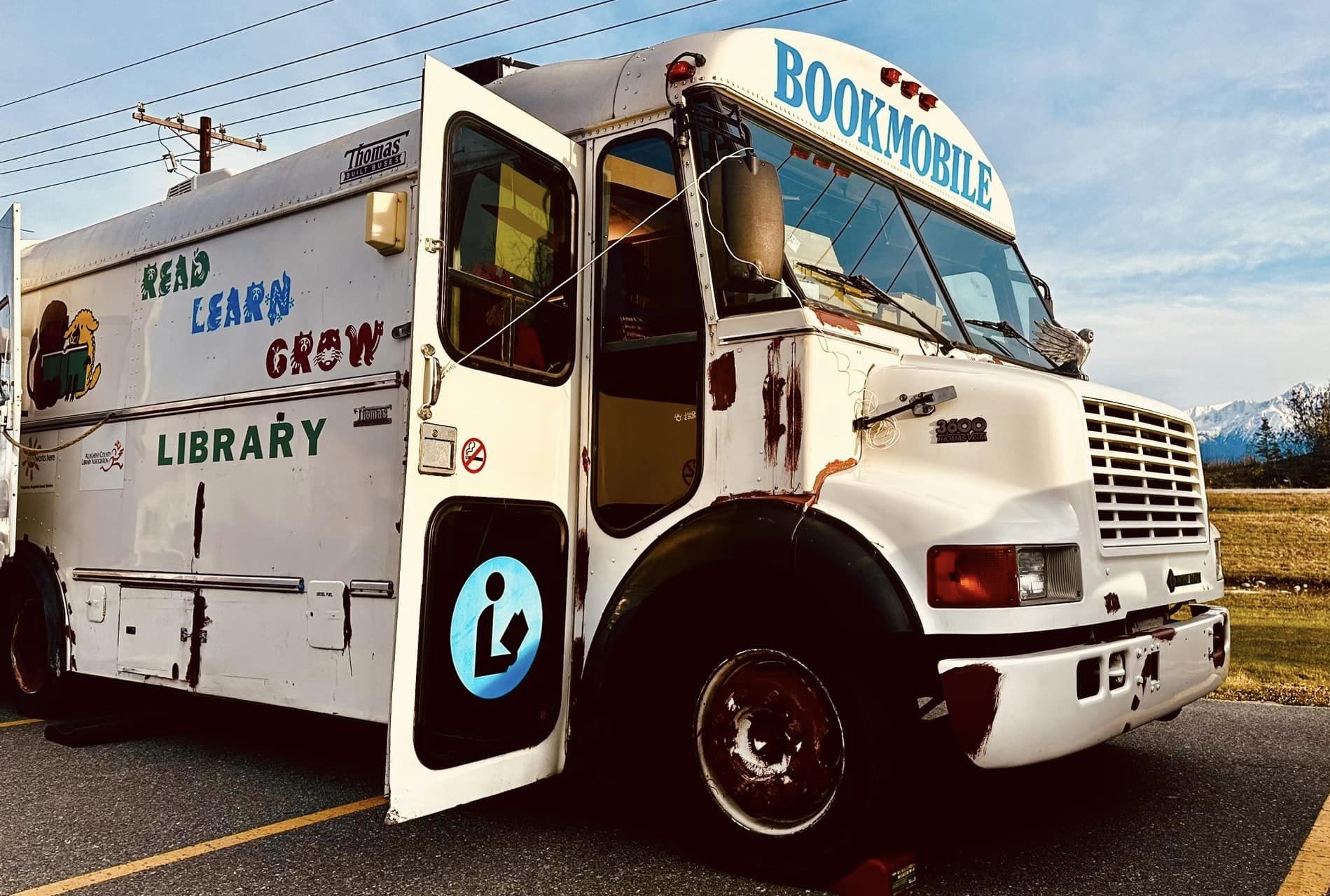
October 1-7 marks Banned Book Week, and on Wednesday, Black Birch Books in Wasilla marked the week by hosting a pop-up Banned Book Mobile from the non-profit Out North, a group that supports the freedom to read.
Out North, the Alaska Bookmobile, the ACLU of Alaska, along with local bookstores and other partners came together for the fourth annual unAUTHORized series - a project highlighting banned and challenged books.
“UnAUTHORized started in 2020 in response to the Mat-Su School District’s first attempt to remove books from the students, then we worked with the Anchorage Public Library, and it became a wider project celebrating the freedom to read during Banned Books Week,” says Out North Executive Director Erin Willahan.
“We also discuss censorship in general, censorship at the intersection of race, sexuality, and other relevant themes.”
This is the 4th annual unAUTHORized event, and Willahan says community members have the opportunity to contribute recorded excerpts from their favorite banned books, which are then broadcast on the Out North radio network.
“This year, we’re really excited to have partnered with the ACLU and the Alaska Book Mobile, as well as Black Birch Books, Fireside Books, and Writers’ Blocks, and other nonprofits and community organizations to celebrate with the Banned Book Mobile.”
Willahan says that local bookstores have been collecting donations of banned and challenged books, whether by buying them outright or bringing in their own donated books. While people are invited to come in and read aloud from their favorite banned or challenged books, she says that they can also take a book.
“It’s a celebration of reading!”
One participant, Betsy Woodin, who read “Three to Tango,” said she was excited to read and have it put on the radio.
“I love it!” she said after she finished reading.
“This has been awesome to become a part of this,” says Jimmy Riordan, who owns the Alaska Book Mobile. “It just seemed obvious to work with them. They’ve been doing this for 4 years, and I’ve got a bunch of shelves on a bus, we’ve got the FM transmitter to broadcast as some people read, so why not?”
Riordan says that the whole point of the book mobile is that it can pop out and serve as a resource for things people are already excited about, such as reading.
“The idea of a more nimble, mobile space has come up time and time again. We hope for this to not only be such a space, but to also have the ability to collaborate and make connections between other groups.”
Book bans in public schools are nothing new, having occurred throughout American history most notably during the McCarthy era during the late 1940s and 1950s, and again during the early 1980s. Banning and challenging books, while long present, has seen the scope has expanded drastically fashion since the beginning of the 2021–22 school year.
Willahan worries that the ways in which youth, schools, and education are being weaponized is unfortunate, limiting their freedom of speech, freedom of thought and expression and how they process information when there is limited access to books.
“I think that so many of the books that are on the challenged list, especially nationally, and the ones here, are representative of stories by and about LGBTQ, as well as Black authors and Indigenous, and we need access to a plurality of narratives, and what better place to explore difficult, challenging things than in a book.”
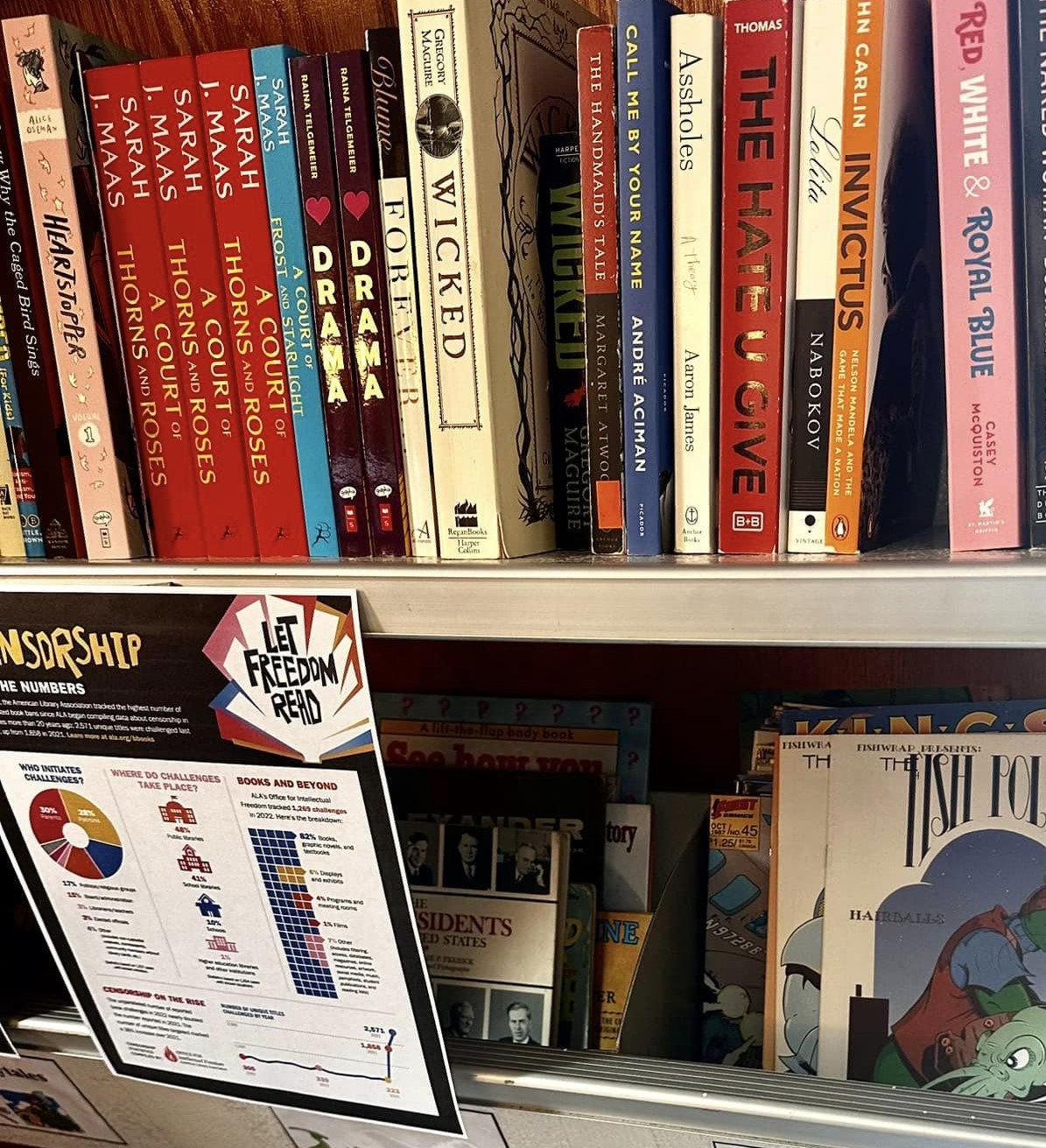
In the current times of intense political polarization, library staff in every state are facing an unprecedented number of attempts to ban books. The American Library Association’s (ALA) Office for Intellectual Freedom documented 1,269 demands to censor library books and resources in 2022, the highest number of attempted book bans since ALA began compiling data about censorship in libraries more than 20 years ago. That is nearly double the number of reported 729 book challenges reported in 2021. Of the record 2,571 unique titles targeted for censorship, most were by or about LGBTQIA+ persons and Black, Indigenous, and people of color.
Taylor Jordan, owner of Black Birch Books said that when Out North reached out to her to host the event, she could not have been more excited to host the event.
“I love it. All the books, everything. It’s such an interesting concept-that somebody would ever ban a book for any reason, because never has someone who’s banned a book been on the right side of history. When has someone ever been hurt by a book?”
Black Birch Books also hosted their book club, who were meeting up to discuss ”Kite Runner,” which the Library Citizens’ Advisory Committee is reviewing this month.
Jordan says that she read all kinds of books, including banned books growing up and she gained a lot from doing so.
“The only thing I got was empathy, seeing and learning about the world around me differently, and that was lovely. To live in a different world for a moment, places I wasn’t used to seeing, gave me the opportunity to understand something that I wouldn’t have previously understood.”
As people lined up in the bookmobile to take a turn reading their favor, they were able to peruse the displays of stacked with books from different genres for different ages and interests of readers. There is also information graphics of the work the Mat-Su Borough’s Library Citizens’ Advisory Committee, including the books they have recommended for limited access or removal from school libraries. The decision to officially remove books still remains with the school district and administration.
The pop-up at Black Birch Books was the first unAUTHORized event, and will be followed by a pop-up in Anchorage later this week.
For more information about Out North, please visit www.outnorth.org.
To learn more about the Alaska Book Mobile, please visit their Facebook page.

By Jeremiah Bartz Frontiersman.com A football coach using a hockey reference as the centerpiece for his keynote address may

Frontiersman.com With its headquarters in Wasilla, the Frontiersman has been a primary source of news for the Matanuska-Susitna

By Katie Stavick Frontiersman.com The next generation of leaders took flight this week as the Houston High School Class

By Kyle Wilkinson For the Frontiersman Keynote speaker and Carry the Cure President Bill Pagaran’s words boomed through the