Retiring teacher, coach urges Colony grads to ‘find their 68’
By Jeremiah Bartz Frontiersman.com A football coach using a hockey reference as the centerpiece for his keynote address may


Teachers are always looking for new and creative ways to engage students, often thinking outside of the box to find new and interesting collaborations as a way to show real-world applications of what they are teaching. Recently, students at Wasilla High School (WHS) Chemistry and 3D art classes had the opportunity to collaborate with a resident artist to emphasize the correlation between art and science.
“The purpose of the Chemistry of Ceramics program is to help students to realize that when they are learning different topics in school, that these topics don’t exist in isolation,” says Leslie Wangeman, who teaches Robotics, Physical Science and Chemistry at WHS.
The idea came to fruition when Wangeman and artist Alida van Almelo were out for a run and talk turned to how the very different worlds have much more in common than people, and students, often realize.
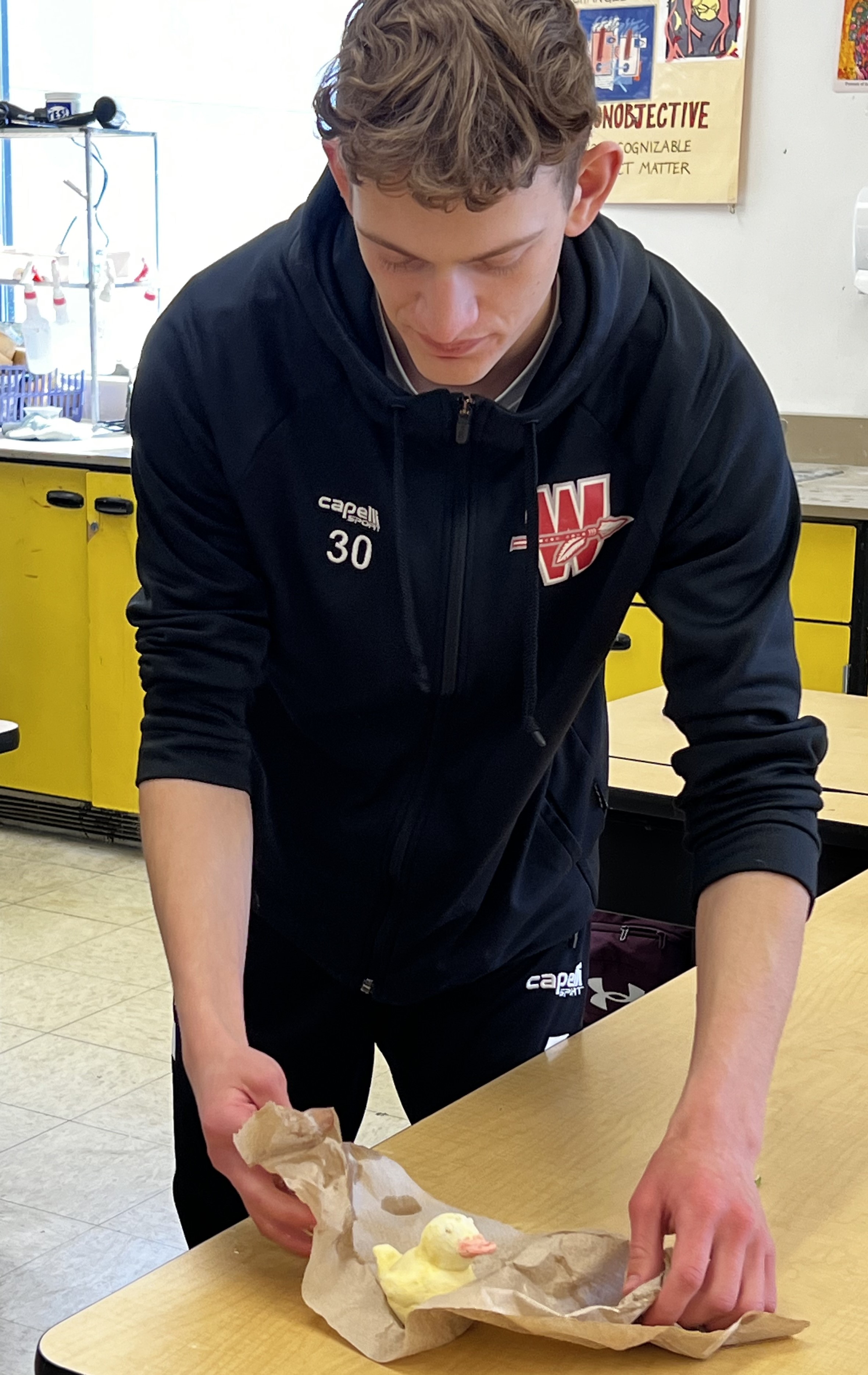
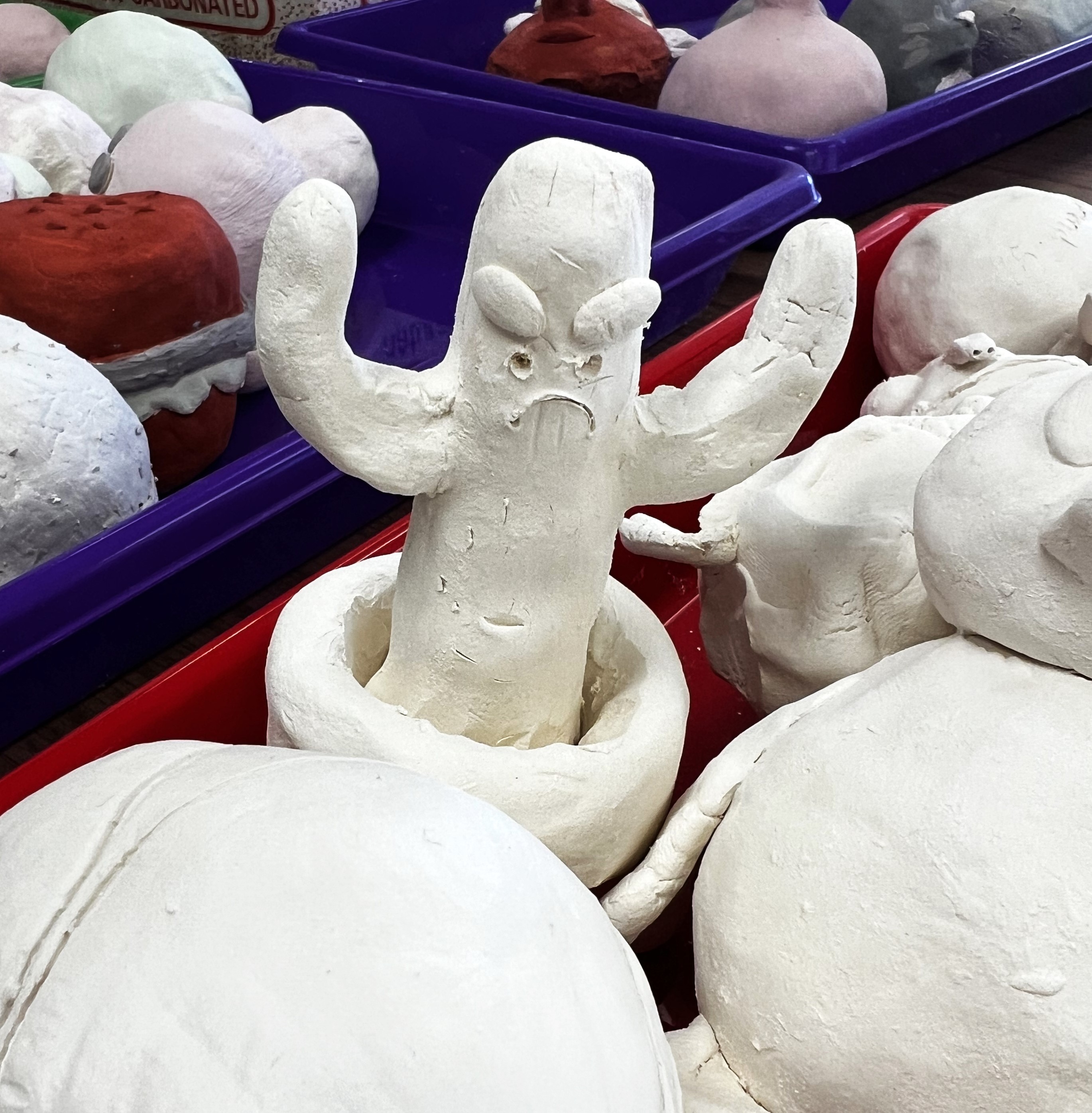
The students were able to use clay to create almost anything they could dream up, from small ducks and mice popping out of a cheese wedge, to small funny faces to an angry cactus. Once they created pieces, they could add details before having them fired. Then the students were able to use their creative side to paint their pieces.
The science then comes into play as the pieces go back into the kiln and the colors have a chance to oxidize, which could drastically change the final appearance of the piece.
“For instance, copper changes to red when it oxidizes, turning to either blue or green depending on how much oxygen is in there,” explains van Almelo. The alternative, reduction, is without the oxygen, another way artists can fire up kilns. “It’s neat, the amount of chemistry crossover there is art.”
“It’s the same thing they are learning in AP Chemistry,” explains Melinda Ragsdale, a fellow Chemistry teacher at WHS.
“You cannot learn about Ceramics without talking about Le Chatelier’s Principle and Specific Heat. While simultaneously demonstrating the purpose of learning these Chemistry topics,” says Wangeman. “This project exemplified that Chemistry is not just learned and used by scientists wearing white lab coats in a lab.”
The project was made possible by a generous grant provided by the Alaska State Council on the Arts. Ragsdale is hopeful for more crossover collaborations in the future just like this.
“I think that the kids have overwhelmingly enjoyed it and it’s just a chance for them to do something that’s outside of the box with the curriculum,” she says.
Van Almelo shares that hope as well, and would jump at the chance to return, saying, “I have my own studio and work in my own space, so I don’t talk through the process. I’m an expert on many of the ceramic processes but don’t get to often exercise that, share the craft, so this has been a wonderful opportunity.”
“I am fortunate to work in a school and community where people believe in collaboration and investing in our students,” said Wangeman.

By Jeremiah Bartz Frontiersman.com A football coach using a hockey reference as the centerpiece for his keynote address may

Frontiersman.com With its headquarters in Wasilla, the Frontiersman has been a primary source of news for the Matanuska-Susitna

By Katie Stavick Frontiersman.com The next generation of leaders took flight this week as the Houston High School Class

By Kyle Wilkinson For the Frontiersman Keynote speaker and Carry the Cure President Bill Pagaran’s words boomed through the