Retiring teacher, coach urges Colony grads to ‘find their 68’
By Jeremiah Bartz Frontiersman.com A football coach using a hockey reference as the centerpiece for his keynote address may


It’s your first few days tasting the freedom from prison. Maybe you committed a misdemeanor that landed you a few years behind bars. Or perhaps you are a repeat offender with drug and firearm convictions. Whatever it was, you are now free. Sort of. You now have a list of people and places to check in that may include meeting with a probation officer, attending NA or AA meetings, finding some type of housing, even getting food. And you now have to navigate all of this. Perhaps you’ve been in prison for so long that you need to acquire a new identification card or Social Security card so you can get a job.
Its challenges like these that can make navigating re-entry back into society frustrating and confusing, and leading some to recidivism. That was the point of the Mat-Su Reentry simulation held on February 28 at the Menard Center.
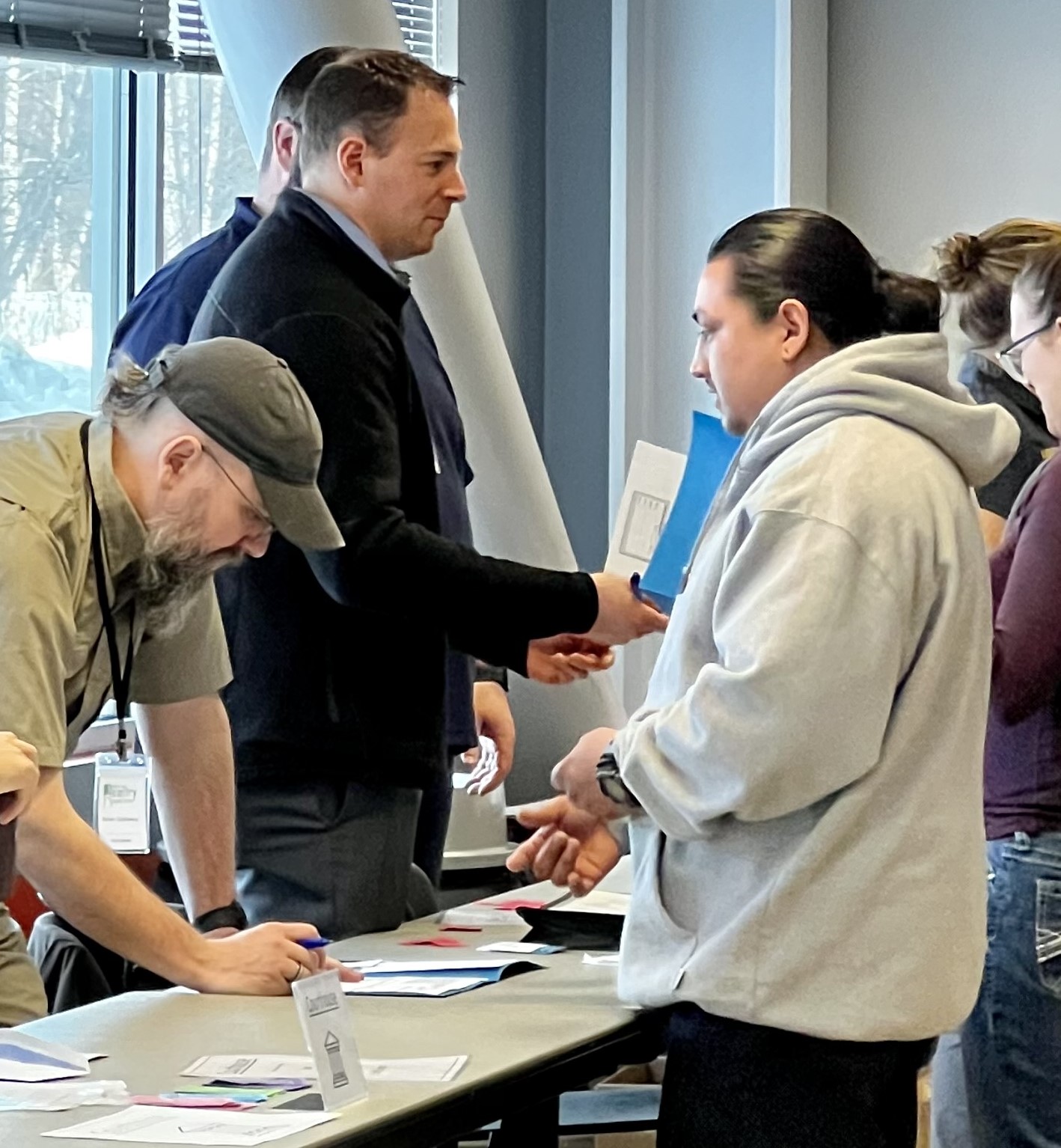
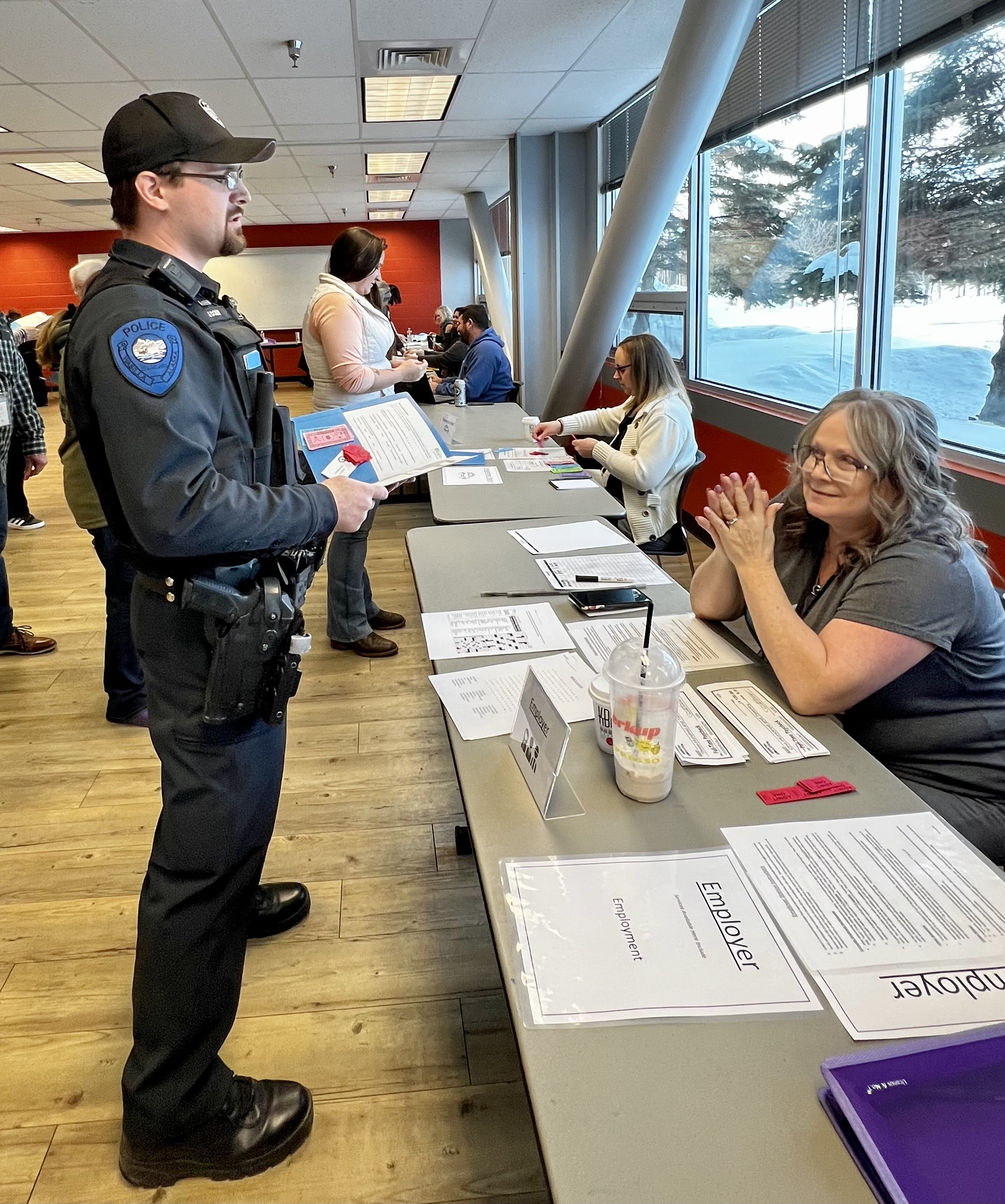
Hosted by the Mat-Su Reentry Coalition, the simulation set up stations and scenarios for people to work through in an effort to demonstrate the challenges that a lot of people face when re-entering society after serving time in prison.
“It’s a hands-on activity, and the reason that we do it is to make people understand how difficult it might be to come out of prison with very little resources and having to do a lot of the things people need to do when on probation or parole, and getting everything done in a reasonable amount of time,” explained Barbara Mongar, Coordinator, Mat-Su Reentry Coalition.
Participants received a packet ex-offender and receives a packet of materials, including a “Life Card” that explains the reentrant’s criminal background outlining what he or she served time for, how long, what they may have accomplished while in prison, such as earning a GED or participating in programs. Also, an explanation of the current financial situation including if employed or is help needed finding a job, housing needs, and other specific weekly tasks that must be accomplished in order to avoid the risk of being sent back to prison for non-compliance with the requirements of his or her supervised release. Participants had a week to complete their tasks, which was simulated in 15 minutes.
One of the biggest challenges for people was acquiring a new Identification card to get the entire process started, while others got stuck overcoming trying to attend drug and alcohol treatment, AA/NA meetings, and also providing a clean UA to the probation officers. That led many to face having to return to the mock jail and find a way to meet the requirements.
“I missed more than one task, I haven’t reported to work, and I haven’t gotten food for several weeks, and went to jail my first week,” said Raven, a participant who had the opportunity to participate through work. While she works with the DOC program and Outpatient program at Set Free, for the simulation, she served 20 years for a felony violent crime along with possession of a firearm and drug possession, but had earned a GED while serving.
The event drew in dozens of participants, from a Wasilla Police officer, to a counselor from Set-Free and staff members from the Department of Juvenile Justice, to people who have experienced or are currently experiencing re-entry.
“I’ve never done this before, but I heard a lot about it over the years and was really excited to come,” Raven said after spending her time in the mock jail, opting to not bond herself out like many others had done. “I wouldn’t have been able to make it through the rest of the ‘week’ without it. That was so hard.”
And just as in real life, there were also wild cards thrown at some of the participants during their visits to the different stations, like leaving a AA/NA meeting for an emergency or taking too long for a break, being late on rent and incurring a late fee which was more than the money people might have on hand, or not having transportation to needing to pawn something to pay bills.
At the end of each “week,” participants were required to meet with their probation officers to determine how successful they were in satisfying the conditions of their release and accomplishing their assigned tasks. If they were successful they will remain free to start another week; if they were unsuccessful they might find themselves remanded back to jail.
At the end of the Reentry Simulation, Mongar held a short debrief discussion with all the participants, who were able to share takeaways from their experience with the activity.
One participant, who is currently on probation herself, shared that the simulation was very realistic to her own experiences, and another said that she hit a wall trying to get a job because “every time it was something,” she explained, whether it was failing a background check or not having work clothes, while another expressed frustration that no matter who he did, he ended up back in jail.
“Sometimes, a lot of people feel that way. We’ve seen it again and again, that no matter how hard they try, they can’t get everything done or it doesn’t turn out right, which is why we do these, so others can glimpse into the processes former inmates face,” said Mongar.
“The reentry program works with individuals that are releasing or have released from incarceration within the last six months, and all of those frustrations that you experienced today are legitimately what our clients go through every day, every week, and every month,” Brian Galloway, a Reentry Case Manager with the Mat-Su Reentry Program, who acted as a pretty forgiving probation officer during the simulation. He said one thing that was not part of the simulation was whether or not people needed to attend anger management, mental health assessments.
“There’s a lot more that actually goes into reentry than we can put into one simulation.”
Galloway said that they do hear about people struggling quite frequently, which is why he and the coalition work so hard to put their names out into the public.
“Services for every single barrier that participants faced today are in place here in Mat-Su, not just through the Reentry Program, but through the Job Center, through the Probation office, through the courts. There is so much out there, and if you find somebody in the community struggling, send them our way. We will get them whatever services they need.”
For those considering participating, Raven says to do it.
“Already, my heart, my compassion is growing for people, like my clients, who go through it in real life. Definitely do it, it’s been pretty eye-opening.”
To learn more about the Mat-Su Reentry Coalition, call 907-414-4077 or email barbara.mongar@valleycharities.org

By Jeremiah Bartz Frontiersman.com A football coach using a hockey reference as the centerpiece for his keynote address may

Frontiersman.com With its headquarters in Wasilla, the Frontiersman has been a primary source of news for the Matanuska-Susitna

By Katie Stavick Frontiersman.com The next generation of leaders took flight this week as the Houston High School Class

By Kyle Wilkinson For the Frontiersman Keynote speaker and Carry the Cure President Bill Pagaran’s words boomed through the