Retiring teacher, coach urges Colony grads to ‘find their 68’
By Jeremiah Bartz Frontiersman.com A football coach using a hockey reference as the centerpiece for his keynote address may


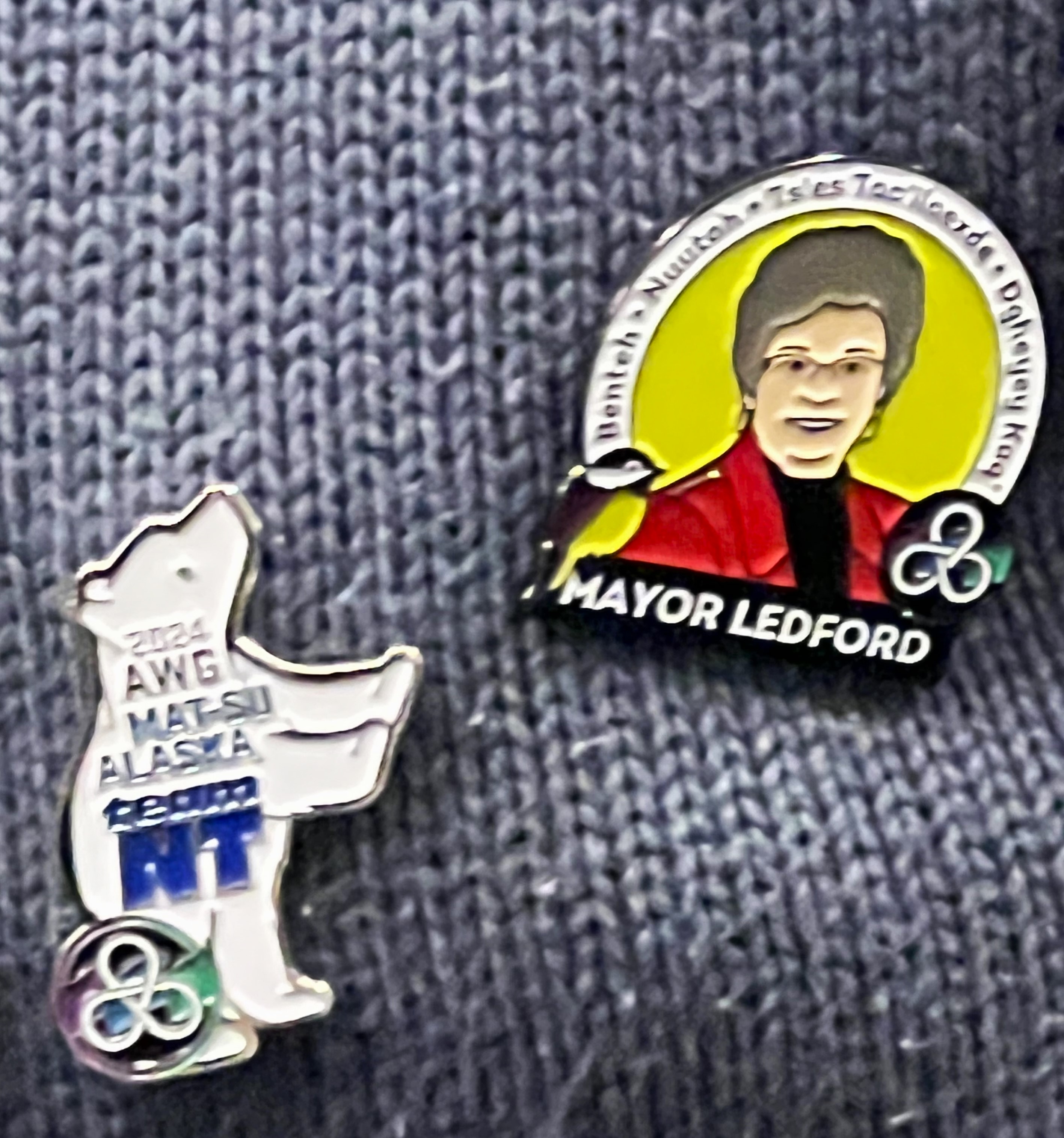
For some, it is about owning a piece of memorabilia from the Arctic Winter Games, a simple desire to have a souvenir. For others, pin trading is its own sport, as people young and old trade pieces of enamel that tell the story of each sport from each contingency in the different games. Trading pins among fans, friends, and strangers who turn into friends goes back to the beginning of the Arctic Winter Games.
George Smith, former Deputy Director of Alaska State Libraries who retired in 2005, is an expert on the AWG and gave a presentation and touched on the AWG phenomenon. And he knows his stuff, as he and his wife have attended every AWG, and he has been asked to collect the pins, until he confesses, the size of the collection became untenable.
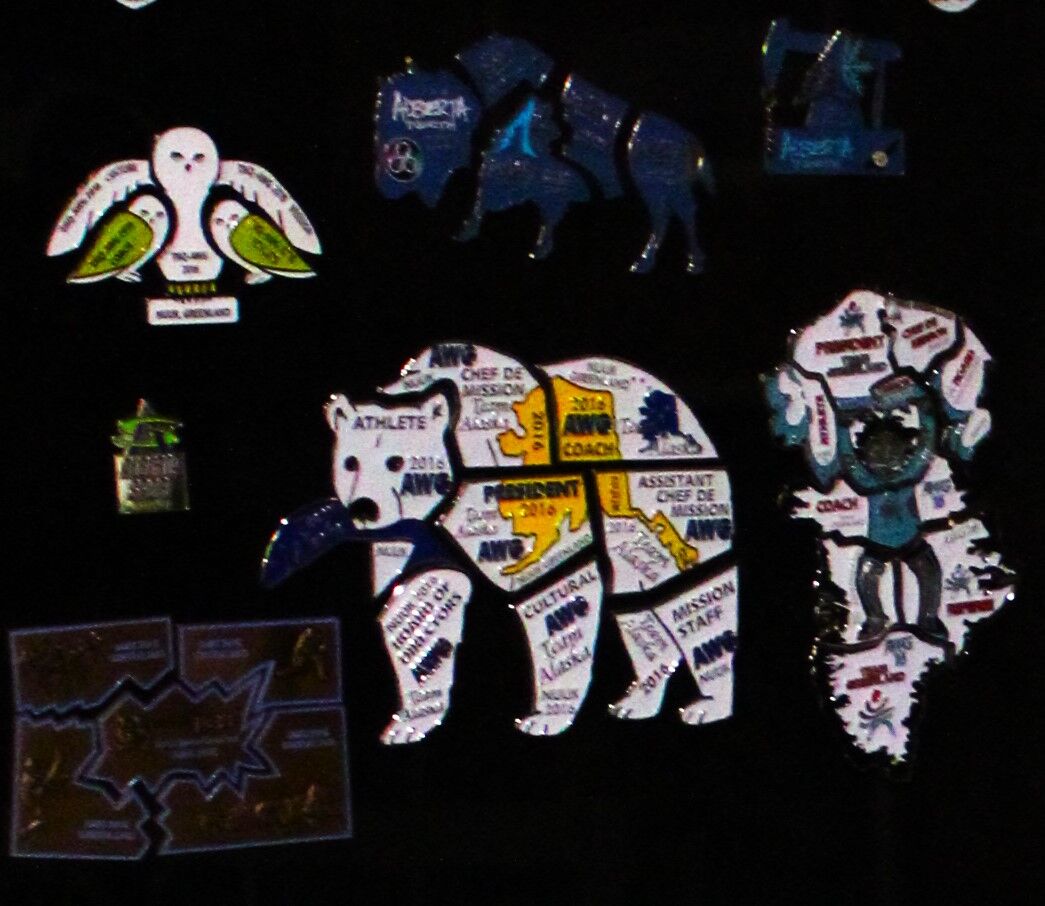
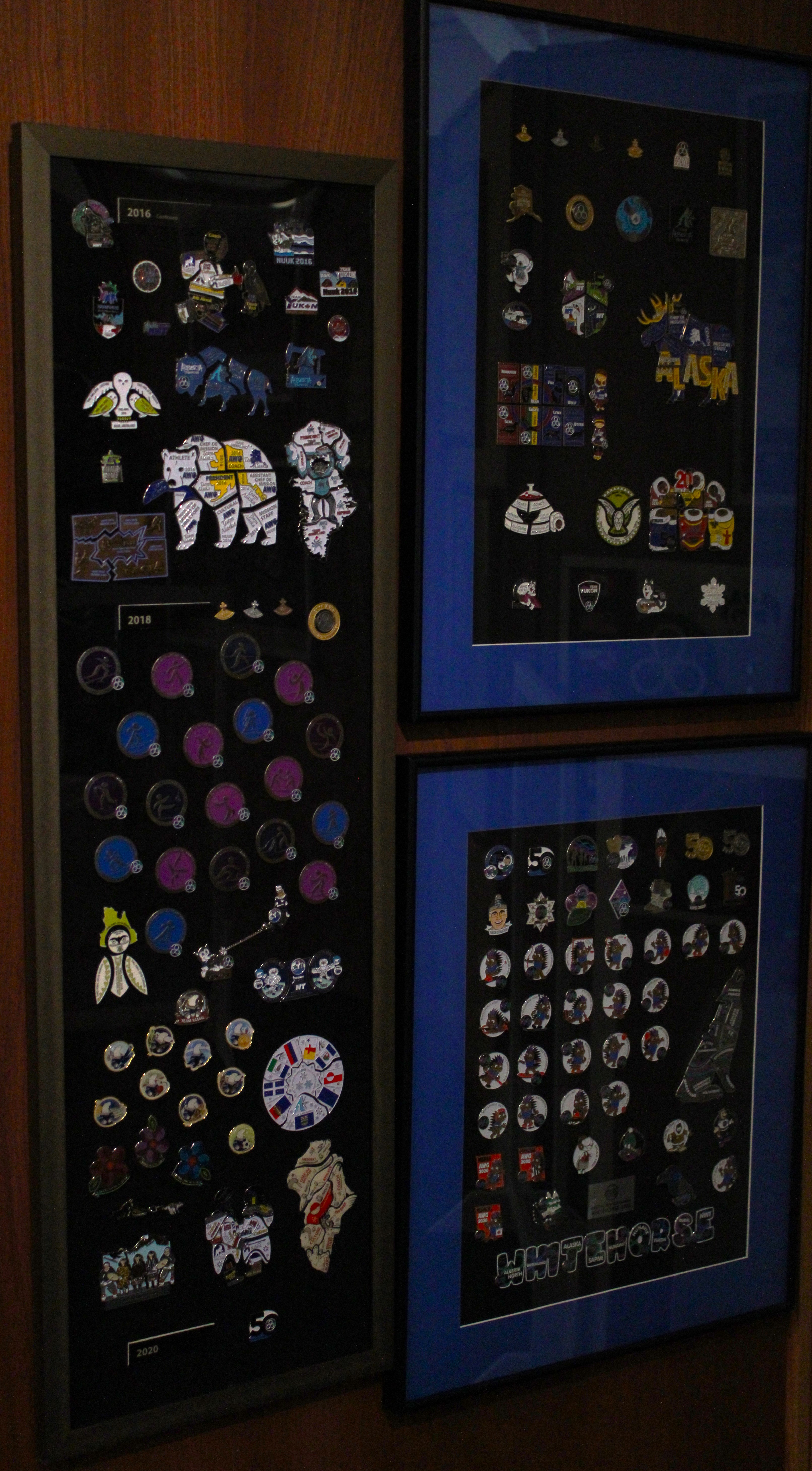
“After 2010, we decided to only add certain number of pins, the ones that are the representative of the AWG, the best visual representation of the Games, and that’s what you’re going to see,” Smith told the audience, pointing to the many panels of AWG pins from throughout the history of the Games, which are currently on display at the Wasilla Museum and Visitor Center.
Smith donated his collection to Arctic Winter Games, which the Host Society graciously accepted and framed.
As for the sport of pin trading, Smith traces it back to the beginning of the AWG in 1970, when there were actually no pins, but pin traders and collectors from the Olympics thought the Arctic Winter Games would be a great place to expand their pin trades.
“So these Olympic pin traders showed up expecting a lot of activity, and there wasn’t any, and after attending two (events), they gave up and left. But the International Committee kind of encouraged pin trading, suggesting people bring things from their village, or town.” Smith then recounts that the International Committee noticed that some groups, particularly the youth, many of whom came from very, very small towns and villages, were very shy and thought about what could be done to increase the interaction between the groups and thought the pin trading might be a good idea for that.
Smith says in 1972, there was only one pin, a small gold ulu, which was created by the International Committee. In 1974, there were two pins, and that by 1980, people got the idea.
“They started, all the contingencies came together and made pins that were identifiably AWG pins from their territory or state.”
Smith says the real turning point for the pins came just two years later when the Northwest Territory put together the first collection of pins for each of the sports, expanding the number of pins that people were exposed to. Then it just went wild.”
He says by1986, there were 80 different pins for the AWG, and in 1994, there were 108, and finally in 2020, which saw the cancellation of the Games one week prior due to COVID-19, there were a whopping 195 pins.
Smith was able to get a full collection of all 195pins from the cancelled 2020 AWG. He only had to contact all of the agents, the International Committee, and the Host Society, but says that everyone was gracious and sent him a copy of the pin.
He says the 2023 AWG, which were held in Wood Buffalo, were down to a more reasonable and manageable 110 pins.
For the current 2024 AWG, he says there are about 157 pins.
While each pin is unique and represents the spirit of each event and Game, Smith says that there have been years where collecting or trading for every pin was like finding a piece to a puzzle, such as in 1992, when the Northwest Territory put its own unique touch to the pins
“They had a pin for every sport, and every pin was a different shape. Really odd shapes. I had to ask myself ‘what is going on here?’ And on Friday, just before they closed the Games, they put out a piece of paper that said, ‘oh, by the way, if you arrange the pins in this order, you’re going to get an A, a W, and a G.’”
Another year that saw a twist to the pins was in 2006, when the pins formed an igloo. The trend took off later in the 2010s, when Smith says everyone was presenting pins that go together, usually to form an animal or cultural icon like throat singers.
“This year, Alaska did a salmon with separate fishing boat with a moving net. They are just making such spectacular things, and everyone just looks forward every year to who’s going to do what in terms of creativity.” Smith believes that each contingent spends a lot of time thinking and creating about what they can do that will surprise people, and have come up with some wonderful designs.
“It’s really a wonderful idea and something you just don’t see everywhere.”

By Jeremiah Bartz Frontiersman.com A football coach using a hockey reference as the centerpiece for his keynote address may

Frontiersman.com With its headquarters in Wasilla, the Frontiersman has been a primary source of news for the Matanuska-Susitna

By Katie Stavick Frontiersman.com The next generation of leaders took flight this week as the Houston High School Class

By Kyle Wilkinson For the Frontiersman Keynote speaker and Carry the Cure President Bill Pagaran’s words boomed through the